Traditional Chinese - At the Pharmacy

Lesson 116 of 152

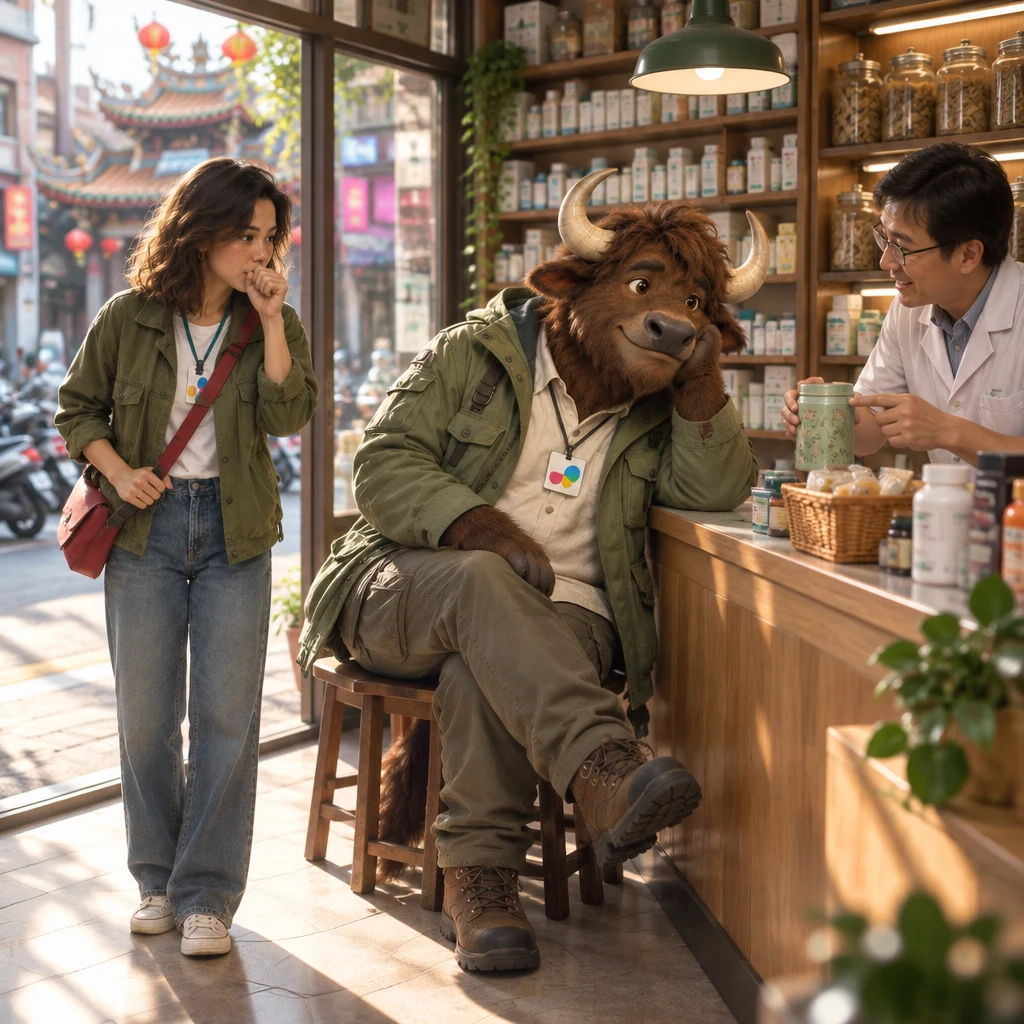
A bright Taiwan pharmacy counter with medicine boxes, a friendly pharmacist, and Traditional Chinese signs; the Taiwan Mandarin lesson topic is asking for medicine safely at the pharmacy.

Goal: Ask clearly, check safely, and leave with the right medicine.

Free traditional Chinese lessons with Taiwan Mandarin audio and speaking practice.

Feeling under the weather in Taiwan? A pharmacy visit can be surprisingly smooth when you have a few ready-to-use phrases in your pocket.

In this lesson, you’ll sound calm and prepared—very “I’ve got this,” even if your nose is saying otherwise.

Level A2: Today you’ll practice practical pharmacy phrases for asking for medicine, describing symptoms, checking prescriptions, dosage, food timing, side effects, and whether there is a generic option like 學名藥 (xué míng yào). You’ll also learn how to mention daily medicines and ask if something is safe for a child, pregnant person, or older adult. Tiny pharmacy mission, big Yak Yacker energy.

After this lesson you'll be able to:

  • Ask for medicine using 我想要買治 ___ 的藥 (wǒ xiǎng yào mǎi zhì ___ de yào) and 請問有治 ___ 的藥嗎? (qǐngwèn yǒu zhì ___ de yào ma) in a Taiwan pharmacy.
  • Describe symptoms with 我有 ___ 的症狀 (wǒ yǒu ___ de zhèngzhuàng).
  • Ask safety and dosage questions such as 這個多久吃一次? (zhège duōjiǔ chī yí cì), 一次要吃幾顆? (yí cì yào chī jǐ kē), and 會有什麼副作用嗎? (huì yǒu shénme fùzuòyòng ma).
  • Tell the pharmacist about regular medicine with 我每天都有吃 ___ (wǒ měitiān dōu yǒu chī ___) and ask if medicine is safe for someone with 這個給 ___ 用安全嗎? (zhège gěi ___ yòng ānquán ma).
A learner holding a small note with Traditional Chinese pharmacy phrases while standing in a Taiwan Mandarin pharmacy aisle, looking at cold medicine and allergy medicine.

Ready? Let's go!

When you tap play on phrases, we track your progress through this lesson.

1. Reading + Listening Practice

Hear core phrases, repeat aloud.

我想要買治 ___ 的藥。

wǒ xiǎng yào mǎi zhì ___ de yào.

I need something for ___.

Meaning: I need something for ___.

When to use: Use this when you already know the symptom or problem and want to buy medicine for it.

我想要買治咳嗽的藥。

wǒ xiǎng yào mǎi zhì késòu de yào.

I need something for a cough.
我想要買治胃痛的藥。

wǒ xiǎng yào mǎi zhì wèitòng de yào.

I need something for stomach pain.

請問有治 ___ 的藥嗎?

qǐngwèn yǒu zhì ___ de yào ma?

Do you have anything for ___?

Meaning: Do you have anything for ___?

When to use: Use this polite question at the pharmacy counter when asking what they have available.

請問有治頭痛的藥嗎?

qǐngwèn yǒu zhì tóutòng de yào ma?

Do you have anything for a headache?
請問有治過敏的藥嗎?

qǐngwèn yǒu zhì guòmǐn de yào ma?

Do you have anything for allergies?

我有 ___ 的症狀。

wǒ yǒu ___ de zhèngzhuàng.

I have a ___.

Meaning: I have a ___. / I have symptoms of ___.

When to use: Use this to describe what you are experiencing before the pharmacist recommends something.

Tip: Use 症狀 (zhèngzhuàng) for “symptom.” 狀況 (zhuàngkuàng) means “situation/condition,” so it does not sound as specific here.

我有喉嚨痛的症狀。

wǒ yǒu hóulóng tòng de zhèngzhuàng.

I have a sore throat.
我有過敏的症狀。

wǒ yǒu guòmǐn de zhèngzhuàng.

I have allergy symptoms.

這個需要處方箋嗎?

zhège xūyào chǔfāngjiān ma?

Do I need a prescription?

Meaning: Do I need a prescription?

When to use: Use this when you are not sure whether the medicine can be bought directly.

這個需要處方箋嗎?

zhège xūyào chǔfāngjiān ma?

Do I need a prescription for this?
請問,這個需要處方箋嗎?

qǐngwèn, zhège xūyào chǔfāngjiān ma?

Excuse me, do I need a prescription for this?

這個多久吃一次?

zhège duōjiǔ chī yí cì?

How often should I take it?

Meaning: How often should I take it?

When to use: Use this after the pharmacist shows you a medicine and you need the schedule.

這個多久吃一次?

zhège duōjiǔ chī yí cì?

How often should I take this?
感冒藥這個多久吃一次?

gǎnmào yào zhège duōjiǔ chī yí cì?

How often should I take this cold medicine?

一次要吃幾顆

yí cì yào chī jǐ kē?

How many should I take?

Meaning: How many should I take?

When to use: Use this for pills or tablets when you need the amount per dose.

Tip: For pills, 顆 (kē) is natural. 個 (ge) can sound less precise for tablets.

一次要吃幾顆

yí cì yào chī jǐ kē?

How many pills should I take each time?
這個藥一次要吃幾顆?

zhège yào yí cì yào chī jǐ kē?

How many of this medicine should I take each time?

這個要飯後吃嗎?

zhège yào fànhòu chī ma?

Should I take it with food?

Meaning: Should I take it with food? / Should I take it after meals?

When to use: Use this to check whether the medicine should be taken after eating.

Tip: 飯後 (fànhòu) means “after meals.” 飯前 (fànqián) means “before meals.”

這個要飯後吃嗎?

zhège yào fànhòu chī ma?

Should I take this after meals?
胃藥這個要飯後吃嗎?

wèiyào zhège yào fànhòu chī ma?

Should I take this stomach medicine after meals?

會有什麼副作用嗎?

huì yǒu shénme fùzuòyòng ma?

Are there any side effects?

Meaning: Are there any side effects?

When to use: Use this to ask what might happen after taking the medicine, especially if you need to drive, work, or study.

會有什麼副作用嗎?

huì yǒu shénme fùzuòyòng ma?

Are there any side effects?
這個藥會有什麼副作用嗎?

zhège yào huì yǒu shénme fùzuòyòng ma?

Does this medicine have any side effects?

這個可以跟 ___ 一起吃嗎?

zhège kěyǐ gēn ___ yìqǐ chī ma?

Can I take this with ___?

Meaning: Can I take this with ___?

When to use: Use this when you already take another medicine or supplement and want to check if combining them is safe.

這個可以跟維他命一起吃嗎?

zhège kěyǐ gēn wéitāmìng yìqǐ chī ma?

Can I take this with vitamins?
這個可以跟感冒藥一起吃嗎?

zhège kěyǐ gēn gǎnmào yào yìqǐ chī ma?

Can I take this with cold medicine?

這個不用處方箋也買得到嗎?

Zhège bú yòng chǔfāngjiān yě mǎi de dào ma?

Is this available without a prescription?

Meaning: Is this available without a prescription?

When to use: Use this when you want to know whether the medicine is over-the-counter.

這個不用處方箋也買得到嗎?

zhège bú yòng chǔfāngjiān yě mǎi de dào ma?

Is this available without a prescription?
請問,這個不用處方箋也買得到嗎?

qǐngwèn, zhège bú yòng chǔfāngjiān yě mǎi de dào ma?

Excuse me, is this available without a prescription?

有學名藥嗎

Yǒu xuémíngyào ma?

Is there a generic version?

Meaning: Is there a generic version?

When to use: Use this to ask if there is a non-brand option that is often cheaper.

有學名藥嗎

yǒu xuémíngyào ma?

Is there a generic version?
這個有學名藥嗎?

zhège yǒu xuémíngyào ma?

Is there a generic version of this?

我每天都有吃___。

Wǒ měitiān dōu yǒu chī ___.

I take ___ every day.

Meaning: I take ___ every day.

When to use: Use this to tell the pharmacist about medicine or supplements you regularly take.

我每天都有吃維他命。

wǒ měitiān dōu yǒu chī wéitāmìng.

I take vitamins every day.
我每天都有吃降血壓藥。

wǒ měitiān dōu yǒu chī jiàng xiěyā yào.

I take blood pressure medicine every day.

這個給___用安全嗎?

Zhège gěi ___ yòng ānquán ma?

Is this safe for ___?

Meaning: Is this safe for ___?

When to use: Use this to ask if the medicine is safe for a child, pregnant person, older adult, or another specific person.

這個給小孩用安全嗎?

zhège gěi xiǎohái yòng ānquán ma?

Is this safe for children?
這個給孕婦用安全嗎?

zhège gěi yùnfù yòng ānquán ma?

Is this safe for pregnant women?

2. Conversational Listening Practice

Hear phrases in a real mini-conversation.

Anna is at a pharmacy in Taiwan. David is the pharmacist helping her choose allergy medicine.

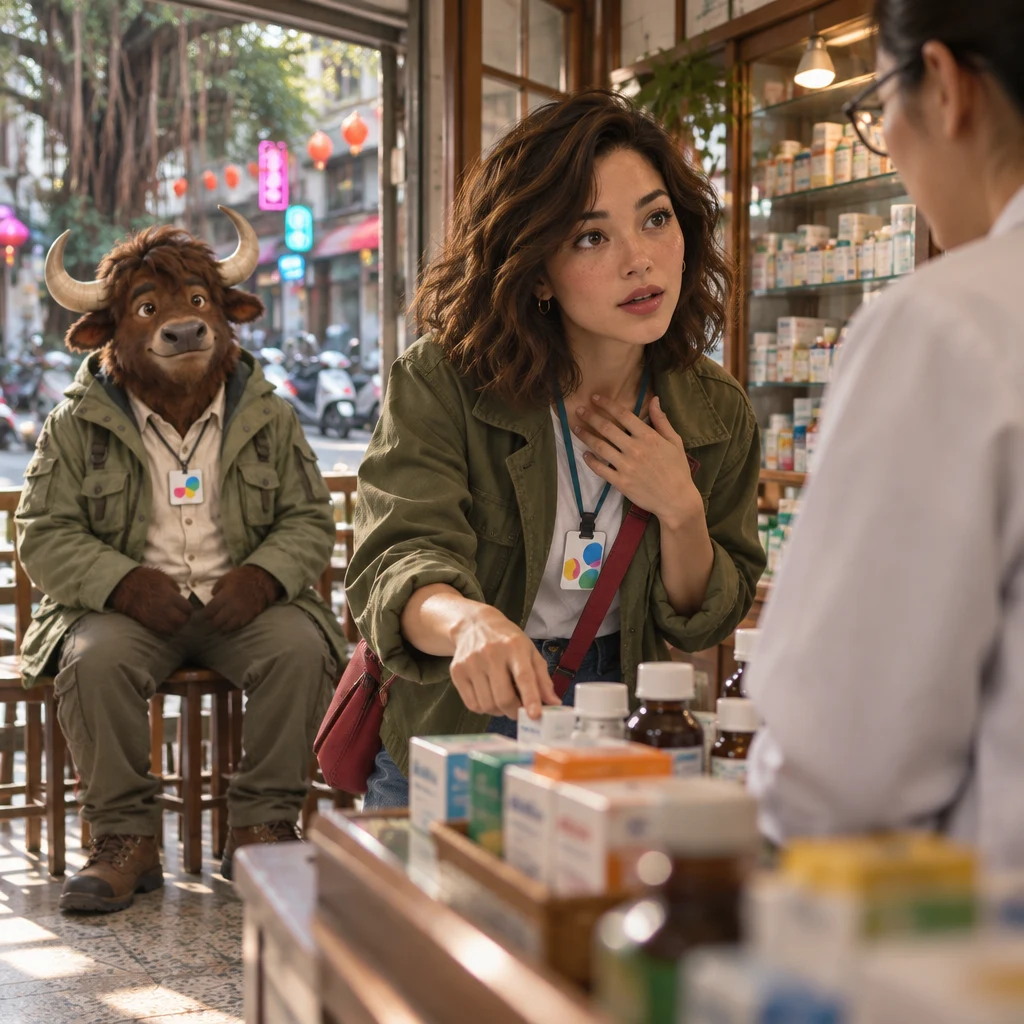
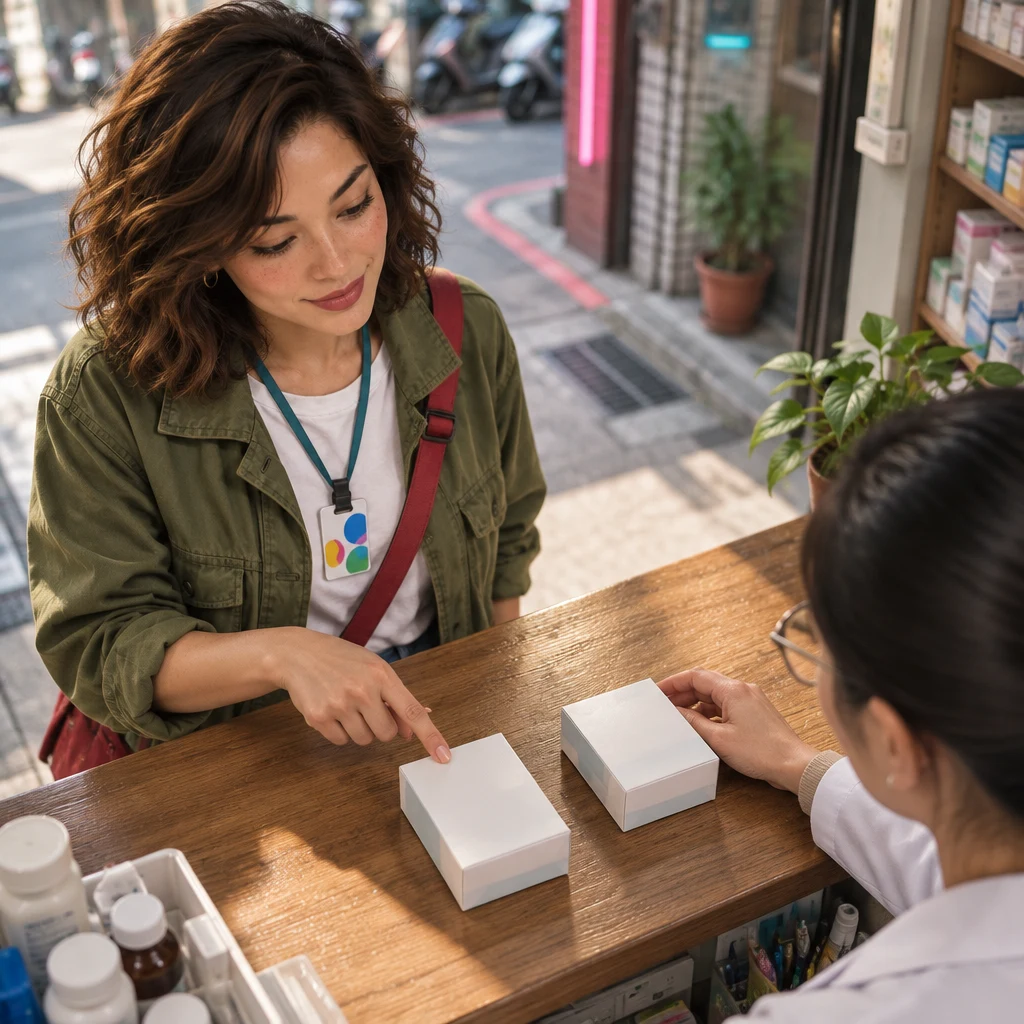
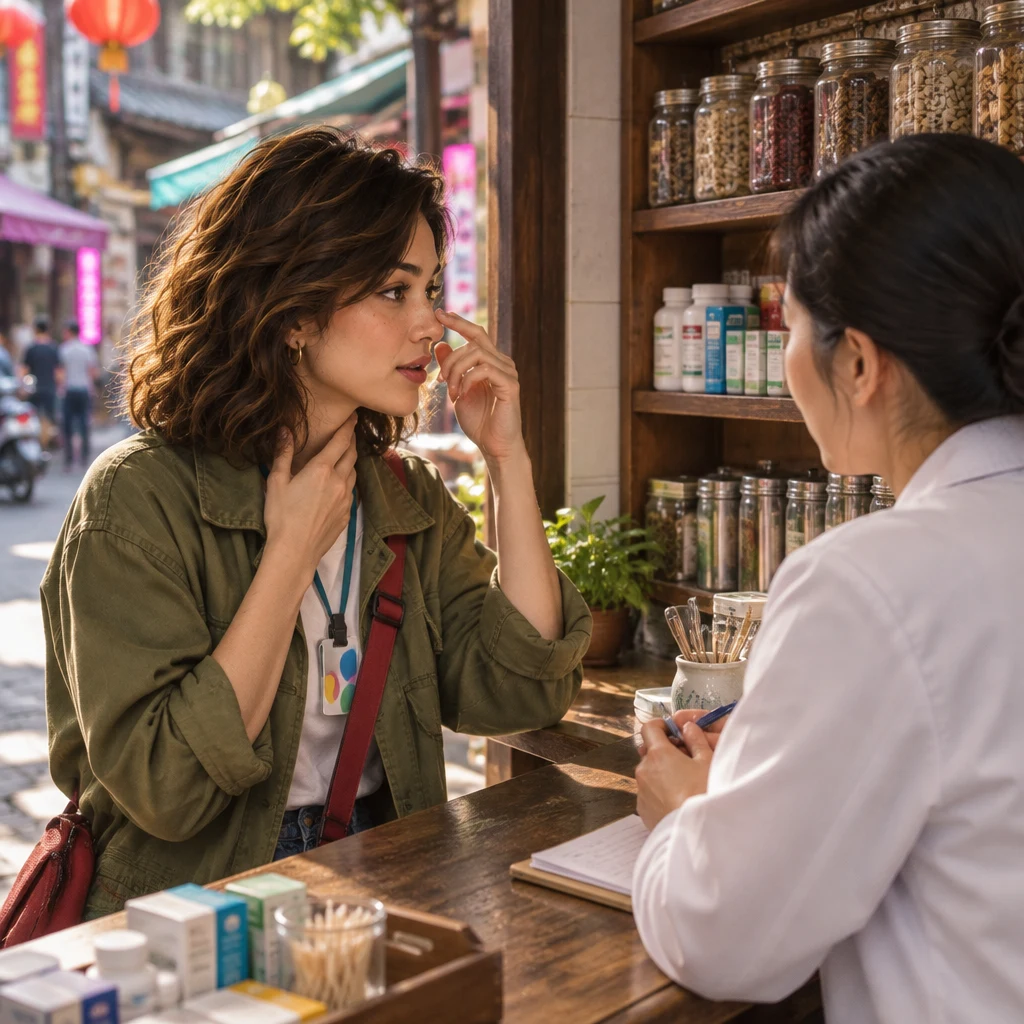
Anna talks with David the pharmacist at a Taiwan pharmacy counter, practicing Traditional Chinese Taiwan Mandarin phrases about symptoms, prescriptions, dosage, and side effects.

What kind of medicine is Anna asking about?

Portrait of Anna in a Traditional Chinese lesson dialogue

Anna

請問有治過敏的藥嗎?

qǐngwèn yǒu zhì guòmǐn de yào ma?

Do you have anything for allergies?

Portrait of David in a Traditional Chinese lesson dialogue

David

有。你有什麼症狀?

yǒu. nǐ yǒu shénme zhèngzhuàng?

Yes. What symptoms do you have?

Portrait of Anna in a Traditional Chinese lesson dialogue

Anna

我有流鼻水和打噴嚏的症狀。

wǒ yǒu liú bíshuǐ hé dǎ pēntì de zhèngzhuàng.

I have a runny nose and sneezing.

Portrait of David in a Traditional Chinese lesson dialogue

David

這個不用處方箋也買得到。

zhège bú yòng chǔfāngjiān yě mǎi de dào.

You can buy this without a prescription.

Portrait of Anna in a Traditional Chinese lesson dialogue

Anna

這個多久吃一次?一次要吃幾顆?

zhège duōjiǔ chī yí cì? yí cì yào chī jǐ kē?

How often should I take it? How many should I take?

Portrait of David in a Traditional Chinese lesson dialogue

David

一天一次,一次一顆,飯後吃。

yì tiān yí cì, yí cì yì kē, fànhòu chī.

Once a day, one pill each time, after meals.

Portrait of Anna in a Traditional Chinese lesson dialogue

Anna

我每天都有吃維他命。這個可以跟維他命一起吃嗎?

wǒ měitiān dōu yǒu chī wéitāmìng. zhège kěyǐ gēn wéitāmìng yìqǐ chī ma?

I take vitamins every day. Can I take this with vitamins?

Portrait of David in a Traditional Chinese lesson dialogue

David

可以,不過如果想睡或不舒服,就先不要開車。

kěyǐ, búguò rúguǒ xiǎng shuì huò bù shūfú, jiù xiān bú yào kāichē.

Yes, but if you feel sleepy or unwell, don’t drive for now.

3. Guided Practice

Quizzes and matching to lock in meaning.

You want medicine for stomach pain. What should you say?

Which phrase asks whether you need a prescription?

The pharmacist gives you pills, and you want to ask how many to take each time. Which phrase fits?

You want a cheaper non-brand option. What do you ask?

Do you have anything for a cough?

我一直咳,請問有 ___ 嗎?

Should I take this after meals?

藥師,這個藥會傷胃嗎?這個要 ___ 吃嗎?

I take vitamins every day.

藥師問我有沒有固定吃什麼;我說,我每天都有吃 ___。

Match the core phrases

Match the extra phrases

4. Speaking Practice

Say phrases yourself (mic/recording).

Recording stays on your device only. Check speech uses your browser's speech tools when available.

Say this phrase out loud:

我想要買治 ___ 的藥。

wǒ xiǎng yào mǎi zhì ___ de yào.

I need something for ___.

Say this phrase out loud:

請問有治 ___ 的藥嗎?

qǐngwèn yǒu zhì ___ de yào ma?

Do you have anything for ___?

Say this phrase out loud:

我有 ___ 的症狀。

wǒ yǒu ___ de zhèngzhuàng.

I have a ___.

Say this phrase out loud:

這個需要處方箋嗎?

zhège xūyào chǔfāngjiān ma?

Do I need a prescription?

Say this phrase out loud:

這個多久吃一次?

zhège duōjiǔ chī yí cì?

How often should I take it?

Say this phrase out loud:

一次要吃幾顆

yí cì yào chī jǐ kē?

How many should I take?

Say this phrase out loud:

這個要飯後吃嗎?

zhège yào fànhòu chī ma?

Should I take it with food?

Say this phrase out loud:

會有什麼副作用嗎?

huì yǒu shénme fùzuòyòng ma?

Are there any side effects?

Say this phrase out loud:

這個可以跟 ___ 一起吃嗎?

zhège kěyǐ gēn ___ yìqǐ chī ma?

Can I take this with ___?

Say this phrase out loud:

這個不用處方箋也買得到嗎?

Zhège bú yòng chǔfāngjiān yě mǎi de dào ma?

Is this available without a prescription?

Say this phrase out loud:

有學名藥嗎

Yǒu xuémíngyào ma?

Is there a generic version?

Say this phrase out loud:

我每天都有吃___。

Wǒ měitiān dōu yǒu chī ___.

I take ___ every day.

Say this phrase out loud:

這個給___用安全嗎?

Zhège gěi ___ yòng ānquán ma?

Is this safe for ___?