
New here? This is lesson 91 of a free 240-lesson Traditional Chinese course.
Wow, really? in Traditional Chinese
At Banyan Breakfast, A-Li reaches into a raincoat pocket and pulls out a second stamp card. Maya cannot believe it.
Learn six ways to react to a surprise, from a quick “no way” to a delighted “what a surprise.” Some question whether news is real; others show amazement.
Listen as Maya responds while A-Li checks both cards. His soy milk remains unfinished, and the fortune slip is still unexplained.
By the end of this lesson
React naturally to surprising news with disbelief, amazement, or delight.
- 不會吧!No way!
- 你是認真的嗎?Are you serious?
- 真的假的?Seriously?
- 太不可思議了!That's incredible!
- 怎麼可能?How is that possible?
- 真是驚喜!What a surprise!
Scene — another card
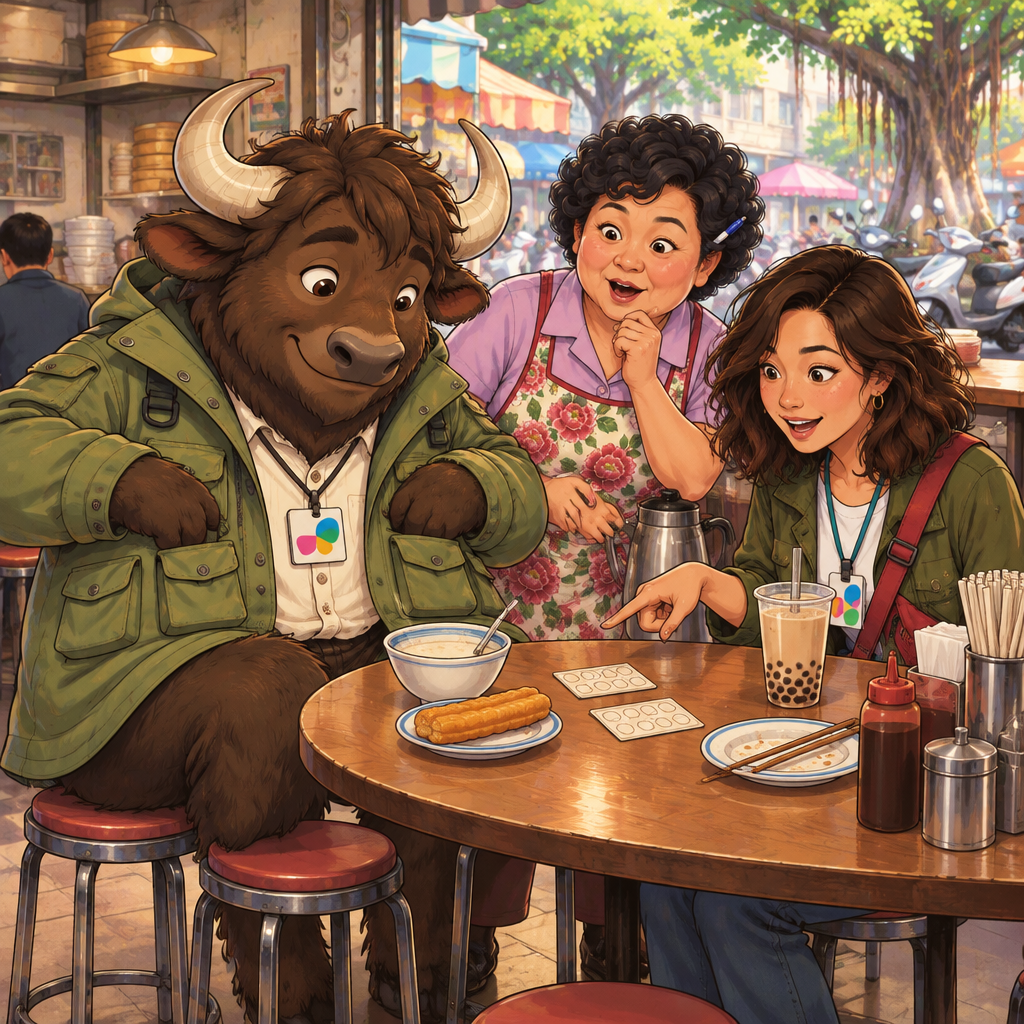
At the back table of Banyan Breakfast, A-Li pats his raincoat pockets while Auntie Lin watches. He finds one stamp card, then pulls out another.
Maya sees both cards beside his unfinished soy milk. No one expected a second card, and the small discovery leaves everyone surprised.
Learn — six ways to react
These six short lines give you different ways to sound surprised. Some are questions, while others are excited reactions.
Listen first, then say each one as though you have just seen A-Li's second card.
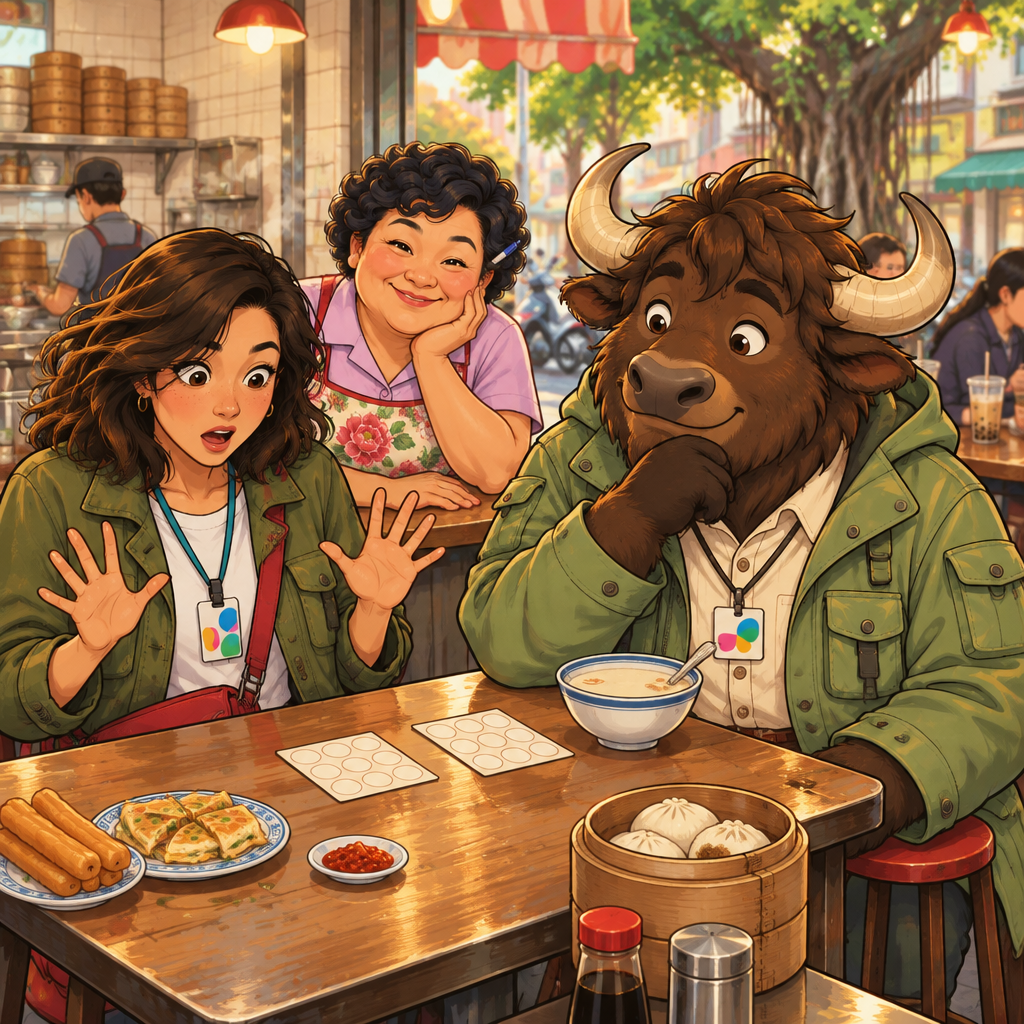
不會吧!
No way!
When to use it: Say this when unexpected news is hard to believe.
Say it: 不 changes to a rising tone before the fourth-tone 會.
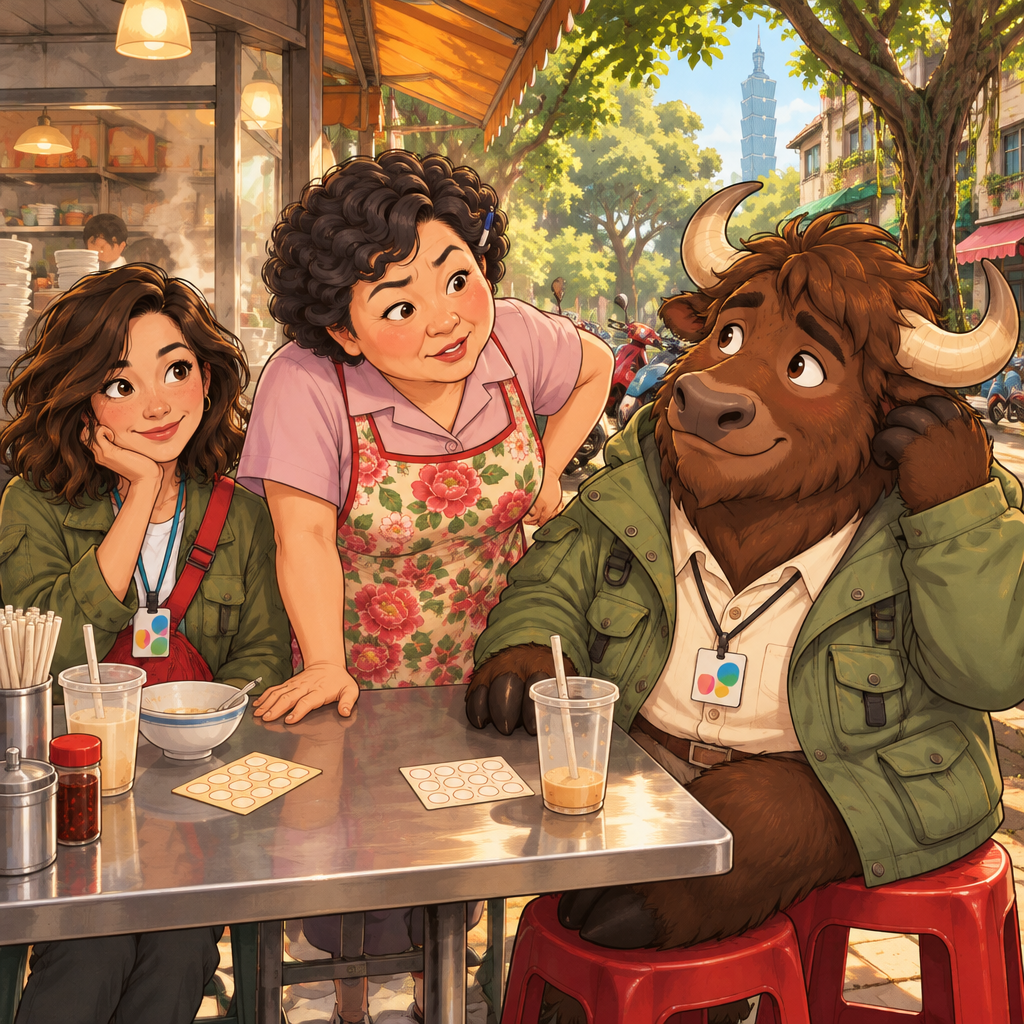
你是認真的嗎?
Are you serious?
When to use it: Ask this when someone's surprising claim sounds almost like a joke.
嗎 turns this statement into a yes-or-no question.

真的假的?
Seriously?
When to use it: Use this quick reaction to check whether surprising news is true.
Say it: The 的 syllable is light and neutral.

太不可思議了!
That's incredible!
When to use it: Say this when something is so surprising that you can hardly believe it.
太 and 了 frame this as a strong reaction.

怎麼可能?
How is that possible?
When to use it: Ask this when you cannot see how something surprising could have happened.

真是驚喜!
What a surprise!
When to use it: Use this when an unexpected discovery makes you happy.
Story — a surprise at breakfast
A-Li searches his raincoat pockets at breakfast and finds something he did not know was there. Listen as Auntie Lin asks what happened and Maya tries several reactions.
The two cards stay on the table beside his unfinished drink.
 Auntie Lin阿犛,你在找什麼?A-Li, what are you looking for?
 A-Li集點卡。欸,雨衣裡還有一張!My stamp card. Hey, there's another one in my raincoat!
- Auntie Lin發生什麼事了?What happened?
- A-Li我找到第二張集點卡。I found a second stamp card.
 Maya不會吧!No way!
- Auntie Lin真的假的?Seriously?
- A-Li對啊,兩張都在這裡。Yeah, both are right here.
- Maya你是認真的嗎?Are you serious?
- A-Li真的,我剛拿出來。Yes, I just took it out.
- Maya真的假的?Seriously?
- Auntie Lin真的嗎?Really?
- A-Li對啊,我也嚇到了。Yeah. I'm surprised too.
- Maya怎麼可能?How is that possible?
- Auntie Lin這張還差一格就滿了喔。This one only needs one more stamp.
- Maya太不可思議了!That's incredible!
- Maya真是驚喜!What a surprise!
Practice — choose your reaction
Choose reactions that match both the news and the feeling in each prompt. Pay attention to the difference between disbelief and a pleasant surprise.
You will also revisit two familiar questions.
0 of 8 done
What does it mean?
What does it mean?
不會吧!
Build the line
Build the line
Are you serious?
?
Tap the words in order.
What did you hear?
What did you hear?
Fill the gap
Fill the gap
That's incredible!
太____了!
Swap the word
Swap the word
You see A-Li pull a second stamp card from his raincoat and wonder how that is possible.
怎麼____?
What do you say?
What do you say?
Auntie Lin says the second card needs only one more stamp for a free breakfast, and you feel happy about the unexpected bonus.
What do you say?
What do you say?
A friend shares unexpected news. Use the mild question meaning “Really?” that you learned earlier.
True or false?
True or false?
Maya saw A-Li find the second card, then asks what happened.
Say it — your turn to react
Play Maya at the breakfast-shop table. Listen to each discovery, then react aloud in your own turn.
Try to sound doubtful at first and delighted when you hear about the nearly full card.
- A-Li欸,雨衣裡還有一張集點卡!Hey, there's another stamp card in my raincoat!
- Maya (you)React with a quick “no way!”
React with a quick “no way!”
不會吧!
No way!
0 of 6 said
Recap — what you can say now
| Traditional Chinese | English | Play |
|---|---|---|
| 不會吧! | No way! | |
| 你是認真的嗎? | Are you serious? | |
| 真的假的? | Seriously? | |
| 太不可思議了! | That's incredible! | |
| 怎麼可能? | How is that possible? | |
| 真是驚喜! | What a surprise! |
Save your progress — it’s free
Keep your place in the course and see which lines you’ve learned.
Want the next lesson in your inbox?
Get the next lesson by email, one a day.
Join the newsletterDaily lesson emails are coming soon. Newsletter subscribers get them first.
Keep practicing with Yak Cards
Keep these reactions handy in Yak Cards for the next piece of unexpected news.
Review the cards and practise choosing between disbelief and delight.
Open Yak Cards