
New here? This is lesson 177 of a free 240-lesson Traditional Chinese course.
Wait, what? in Traditional Chinese
A-Li unfolds a map of Banyan Lane and circles the breakfast shop. Your face does the talking now: stop him, ask what he did, and press for the next beat.
Lesson 78 was the first jolt. Here you follow up, check if it is serious, and ask how someone knows.
Keep the fortune unsolved. His soy milk still sits unfinished on the table.
By the end of this lesson
Follow up on a surprise: stop someone, ask what happened, check if it is serious, and press for the next beat.
- 等等,什麼?Wait, what?
- 他做了什麼?What did he do?
- 認真的嗎?Seriously?
- 你怎麼知道的?How do you know?
- 然後呢?And then?
- 不會是真的吧It can't be true.
Scene — a circled shop
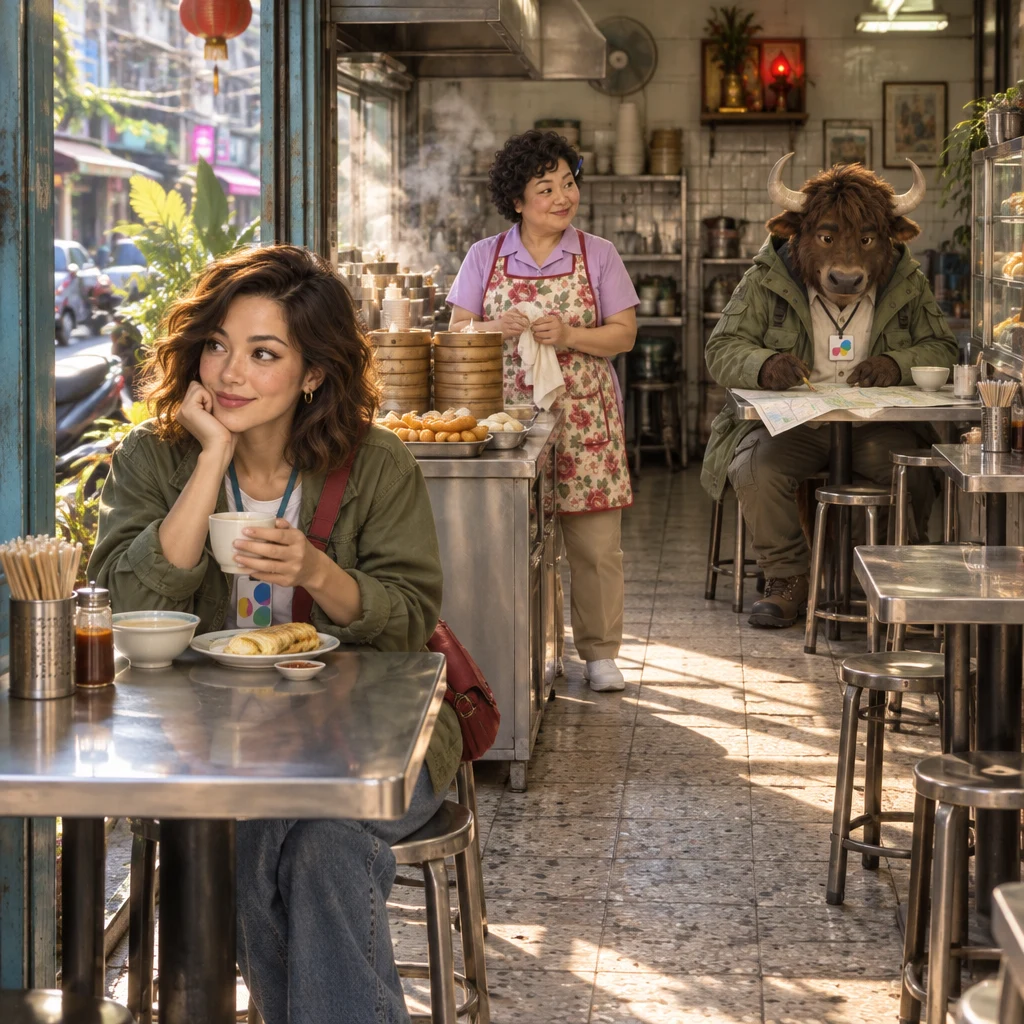
Morning at Banyan Breakfast. A-Li sits at the back on two stools, a paper map of the lane spread beside his soy milk. A small pencil circle marks the shop.
Auntie Lin saw him draw it. Maya has not. The fortune stays in the till; nobody reads it aloud today.
Learn — follow up a surprise
These six lines help you follow a surprise. Stop someone, ask what happened next, and check if it can be true.
Listen for the light tone on 的 and 吧. They soften a question or a guess.

等等,什麼?
Wait, what?
When to use it: Use this to stop someone when you missed a word.
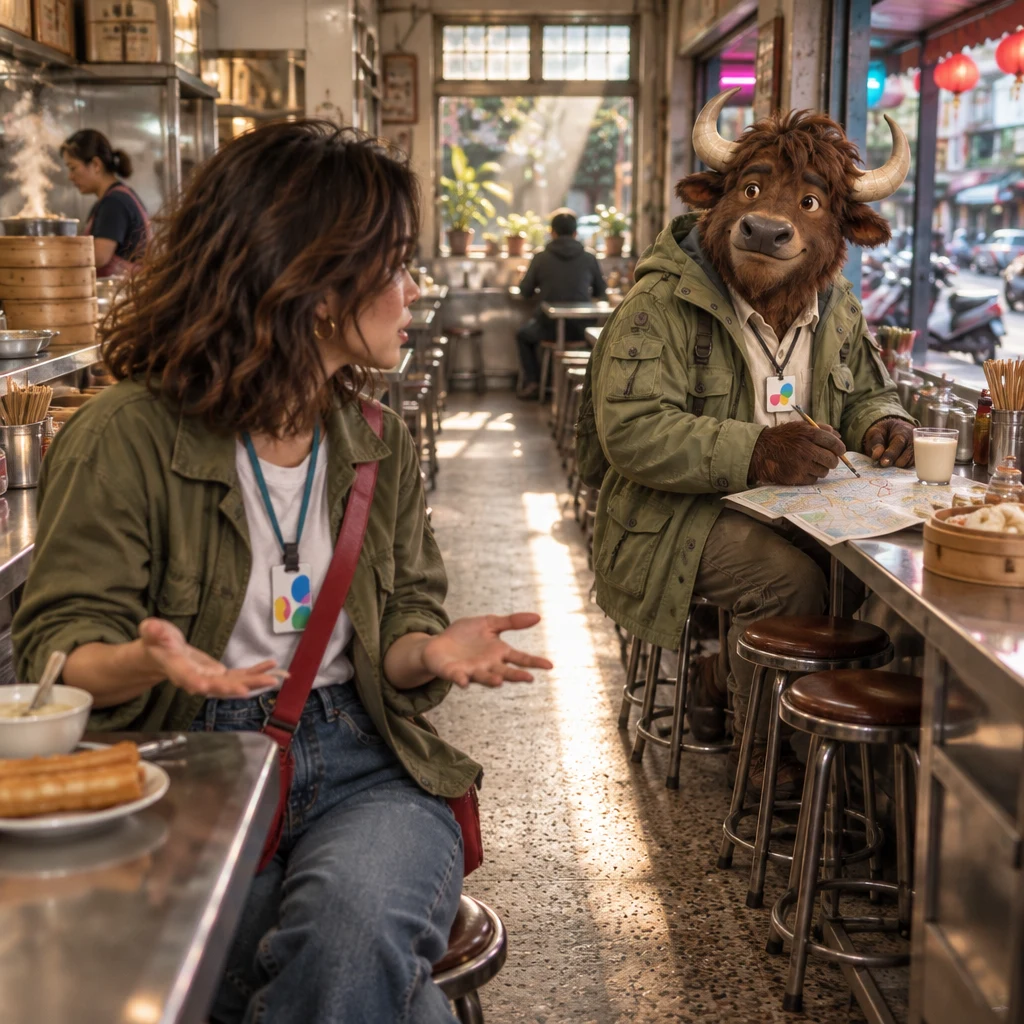
他做了什麼?
What did he do?
When to use it: Ask what someone already did.
了 marks a finished event, not something still going on.
Say it: 了 is a light neutral tone after the verb.

認真的嗎?
Seriously?
When to use it: Check whether the speaker really means it.
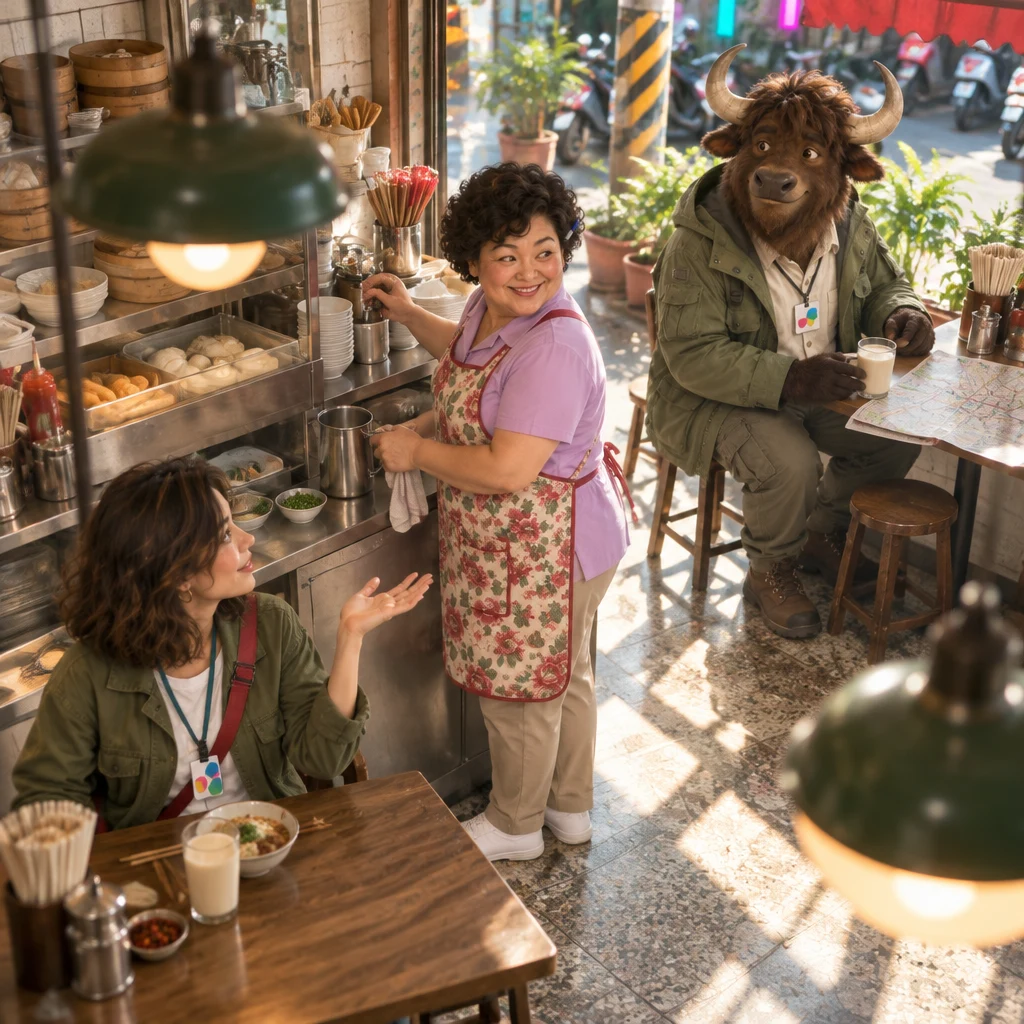
你怎麼知道的?
How do you know?
When to use it: Ask how someone learned a fact.
The 的 at the end asks how the knowing happened.

然後呢?
And then?
When to use it: Ask for the next beat after a pause.
呢 keeps the question open for the next part.

不會是真的吧
It can't be true.
When to use it: Show you doubt a surprising claim.
吧 softens the guess so it is not a hard no.
Say it: 不 rises before a falling-tone syllable.
Story — a map on the table
Listen as Auntie Lin tells Maya about A-Li's map. Maya's face asks every follow-up.
A-Li stays at the back table. His drink is still unfinished.
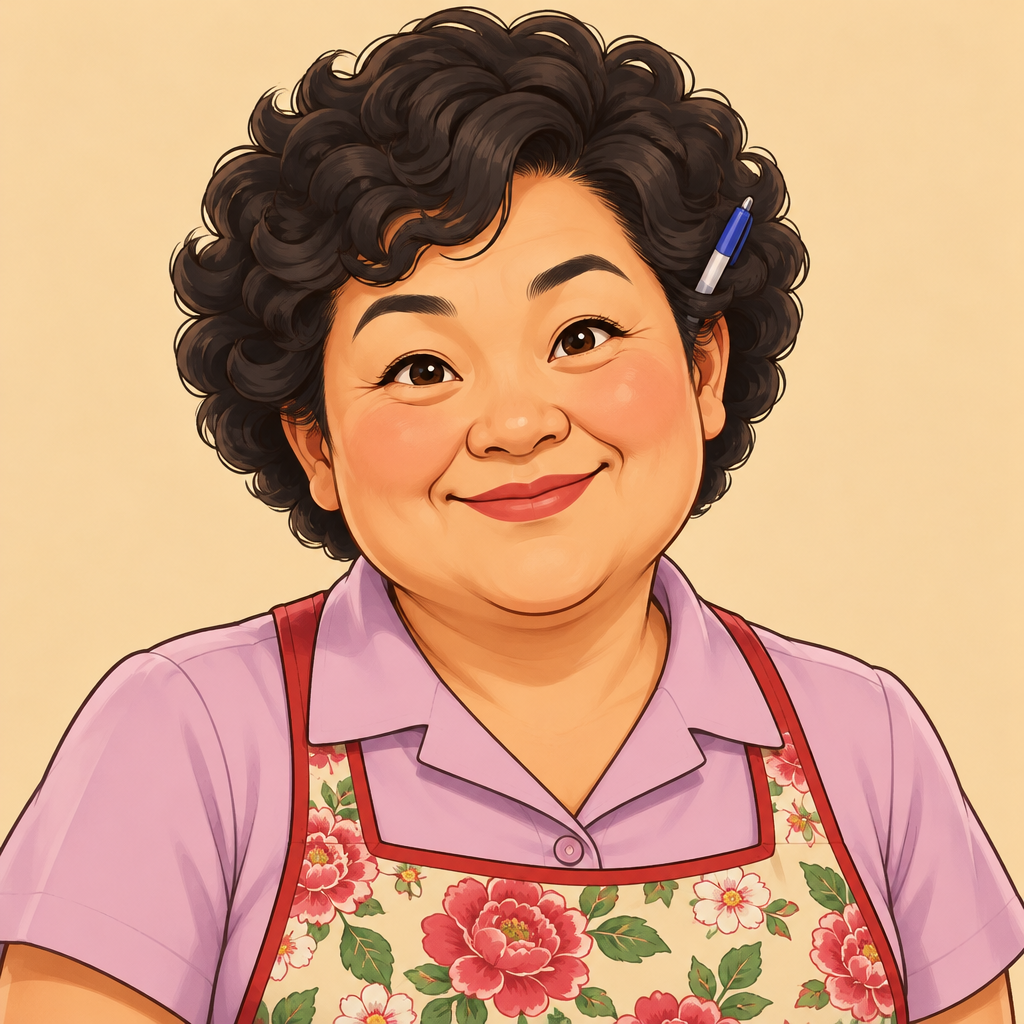 Auntie Lin阿犛拿出一張地圖。A-Li took out a map.
 Maya等等,什麼?Wait, what?
- Auntie Lin巷子的地圖,上面有一個圈。A map of the lane, with a circle on it.
- Maya他做了什麼?What did he do?
- Auntie Lin他把我們店圈起來了。He circled our shop.
- Maya認真的嗎?Seriously?
- Auntie Lin對啊,圈就在店上面。Yeah, the circle is right on the shop.
- Maya你怎麼知道的?How do you know?
- Auntie Lin我早上看到他在後面畫。I saw him drawing it at the back this morning.
- Maya然後呢?And then?
- Auntie Lin然後地圖就放在桌上。Then the map was left on the table.
- Maya walks over to A-Li's table.
- Maya發生什麼事了?What happened?
 A-Li我剛剛把店圈起來了。I just circled the shop.
- Maya不會是真的吧It can't be true.
- A-Li豆漿還沒喝完。The soy milk still isn't finished.
Practice — ask what happened
Work through these short drills to stop a story, ask what someone did, and then press for the next part.
After each item, read why the other options fail, then say the winning line out loud once more.
0 of 10 done
What does it mean?
What does it mean?
等等,什麼?
What do you say?
What do you say?
Auntie Lin says A-Li finished an action at the back table. Ask what that action was.
Fill the gap
Fill the gap
Seriously?
認真的____?
Swap the word
Swap the word
Auntie Lin already knows about the map. Ask how she learned that.
你怎麼知道____?
What did you hear?
What did you hear?
Build the line
Build the line
It can't be true.
Tap the words in order.
Pick the reply
A-Li says:
Pick the reply
剛剛店裡好像發生了一件事。
Something just seemed to happen in the shop.
And you reply with:
What does it mean?
What does it mean?
真的嗎?
Match the pairs
Traditional Chinese
等等,什麼?Drop the English here認真的嗎?Drop the English here然後呢?Drop the English here不會是真的吧Drop the English hereEnglish
What does it mean?
What does it mean?
不會吧!
Say it — your follow-ups
You play Maya at the counter. Auntie Lin has just seen the map. Listen to each cue, then ask the follow-up out loud.
Tap the microphone to speak. You can replay the other line before your turn.
- Auntie Lin looks toward A-Li's table and starts to tell you.
- Auntie Lin阿犛畫了一張巷子的地圖。A-Li drew a map of the lane.
- Maya (you)Stop her; you missed that.
Stop her; you missed that.
等等,什麼?
Wait, what?
0 of 6 said
Recap — what you can say now
| Traditional Chinese | English | Play |
|---|---|---|
| 等等,什麼? | Wait, what? | |
| 他做了什麼? | What did he do? | |
| 認真的嗎? | Seriously? | |
| 你怎麼知道的? | How do you know? | |
| 然後呢? | And then? | |
| 不會是真的吧 | It can't be true. |
Save your progress — it’s free
Keep your place in the course and see which lines you’ve learned.
Want the next lesson in your inbox?
Get the next lesson by email, one a day.
Join the newsletterDaily lesson emails are coming soon. Newsletter subscribers get them first.
Keep practicing with Yak Cards
Today's follow-ups are in Yak Cards with more lines for surprises.
Review a few reaction cards each day so the follow-ups come quickly.
Open Yak Cards