
New here? This is lesson 178 of a free 240-lesson Traditional Chinese course.
That must be hard in Traditional Chinese
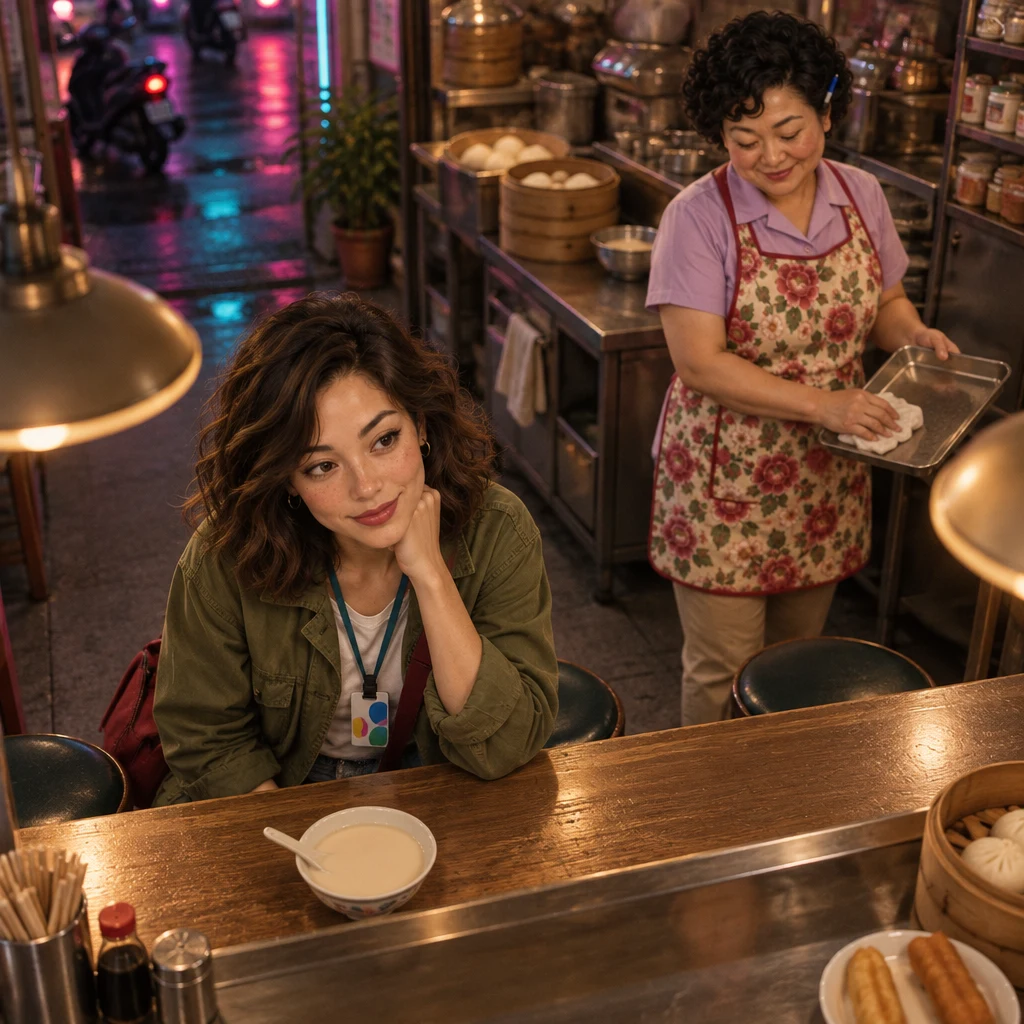
Maya walks into Banyan Breakfast after a long workday. Auntie Lin sees her face and does not rush her.
Learn kind replies for a hard day: that must be tough, that is awful, and thanks for the effort. You can also mark something as interesting, show you get it, or offer rest.
A-Li still has not finished his soy milk. The fortune slip stays in the till; nobody solves it today.
By the end of this lesson
Respond when someone has had a hard day, mark news as awful or interesting, show you understand, and offer rest.
- 那一定很辛苦That must be tough.
- 這太糟了That's awful.
- 這蠻有趣的That's pretty interesting.
- 這樣我就知道了Now I know.
- 你要不要先休息?Do you want to rest first?
- 辛苦你了You've had a hard time.
Scene — a long day at breakfast
Late light hits the counter at Banyan Breakfast. Maya comes in from a long meeting. Auntie Lin watches her, then sets a bowl down without a speech.
A-Li sits on two stools with soy milk still waiting. The talk is about a hard day, not about the slip in the till.

Learn — replies for a hard day
Here are six lines for answering a hard day. Listen, then say each one out loud.
Notice 一定 for a guess, and 要不要 when you offer rest.

那一定很辛苦
That must be tough.
When to use it: Use this when someone's task or day sounds exhausting.
一定 here means you are guessing it was hard, not promising a future fact.
Say it: 一 in 一定 rises before the following fourth tone.

這太糟了
That's awful.
When to use it: Use this when news sounds really bad.
太 plus 了 makes a strong reaction, not a calm description.
Say it: 了 after 糟 is a light neutral tone.

這蠻有趣的
That's pretty interesting.
When to use it: Use this when a detail sounds unexpectedly fun or odd.
蠻 is a Taiwan way to say quite or pretty before an adjective.
這樣我就知道了
Now I know.
When to use it: Use this when a new detail finally makes the situation clear.
就 shows the understanding comes right after you hear the reason.

你要不要先休息?
Do you want to rest first?
When to use it: Offer this when someone looks tired and should pause first.
要不要 asks a yes-or-no choice and leaves the verb in place.
Say it: The middle 不 is a light neutral tone in this yes-no choice.

辛苦你了
You've had a hard time.
When to use it: Say this after someone has been through a hard stretch.
This is a warm acknowledgment of someone's hard work or a hard time they have had.
Story — a bowl and a quiet thank-you
Listen as Maya comes in after a long day. Auntie Lin checks whether Maya is okay, and A-Li asks what happened.
Later, Lin sets a bowl down and thanks Maya for the hard stretch.
 Auntie Lin美女,你還好嗎?Are you okay?
 Maya今天真的很累。Today is really tiring.
 A-Li發生什麼事了?What happened?
- Maya開會開很久,後來又加班。The meeting ran long, and then I worked late.
- A-Li那一定很辛苦。That must be tough.
- Auntie Lin這太糟了。That's awful.
- A-Li志明說其實沒那麼急。Zhi-Ming said it was not actually that urgent.
- Auntie Lin這蠻有趣的。That's pretty interesting.
- Maya這樣我就知道了。Now I know.
- Auntie Lin你要不要先休息?Do you want to rest first?
- Maya好喔。Okay.
- Auntie Lin sets a bowl down and stays quiet for a moment.
- Auntie Lin辛苦你了。You've had a hard time.
- A-Li我今天也等很久。I waited a long time today too.
- Maya那一定很辛苦。That must be tough.
- A-Li豆漿還沒喝完。The soy milk still isn't finished.
Practice — choose a kind reply
Try these exercises to pick the right reaction. Match each line to a small moment at the shop.
After you answer, read why the other choices do not fit.
0 of 10 done
What does it mean?
What does it mean?
那一定很辛苦
What do you say?
What do you say?
A friend says the report file vanished before the meeting.
Swap the word
Swap the word
A-Li says his soy milk is still hot only because he never took a sip. Call that pretty interesting.
這蠻____的
Build the line
Build the line
Now I know.
Tap the words in order.
Fill the gap
Fill the gap
Do you want to rest first?
你要不要____休息?
What did you hear?
What did you hear?
Pick the reply
Auntie Lin says:
Pick the reply
今天開會開很久,還加班。
The meeting ran long, and then I worked late.
And you reply with:
What do you say?
What do you say?
A friend sits down looking wiped out. Check if they are okay.
What do you say?
What do you say?
A-Li looks upset at the back table but has not explained yet. Ask what happened.
Match the pairs
Traditional Chinese
那一定很辛苦Drop the English here這太糟了Drop the English here這蠻有趣的Drop the English here這樣我就知道了Drop the English hereEnglish
Say it — your replies
You play Maya and answer people who had a hard stretch. Listen to each cue, then say the line out loud.
Tap the microphone to speak. You can replay the other person's line before your turn.
- Maya sits with A-Li, who looks worn out from waiting.
- A-Li我今天等很久。I waited a long time today.
- Maya (you)Tell him that wait sounds exhausting.
Tell him that wait sounds exhausting.
那一定很辛苦
That must be tough.
0 of 6 said
Recap — what you can say now
| Traditional Chinese | English | Play |
|---|---|---|
| 那一定很辛苦 | That must be tough. | |
| 這太糟了 | That's awful. | |
| 這蠻有趣的 | That's pretty interesting. | |
| 這樣我就知道了 | Now I know. | |
| 你要不要先休息? | Do you want to rest first? | |
| 辛苦你了 | You've had a hard time. |
Save your progress — it’s free
Keep your place in the course and see which lines you’ve learned.
Want the next lesson in your inbox?
Get the next lesson by email, one a day.
Join the newsletterDaily lesson emails are coming soon. Newsletter subscribers get them first.
Keep practicing with Yak Cards
Today's replies for a hard day are in Yak Cards with more lines for checking on people.
Review a few reaction cards each day so a kind reply comes quickly.
Open Yak Cards