
New here? This is lesson 19 of a free 240-lesson Traditional Chinese course.
Order breakfast in Traditional Chinese
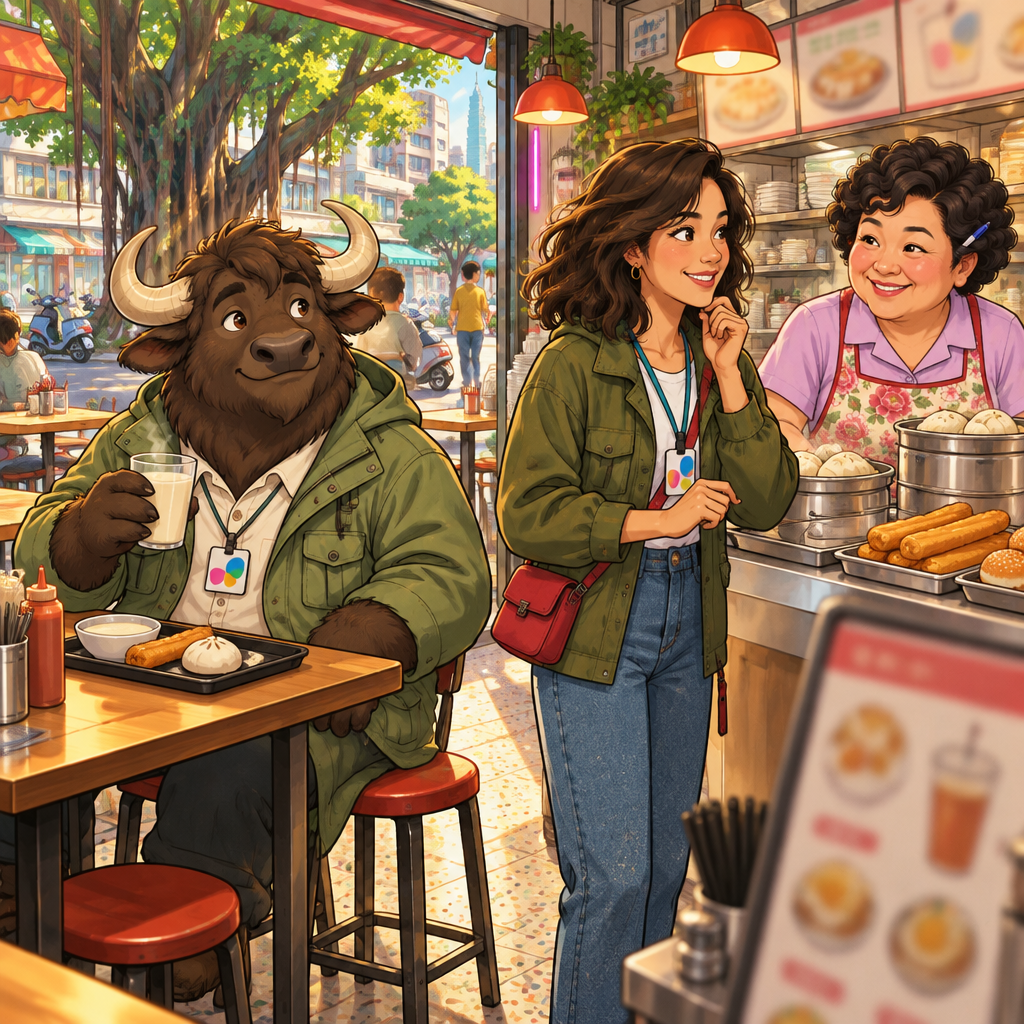
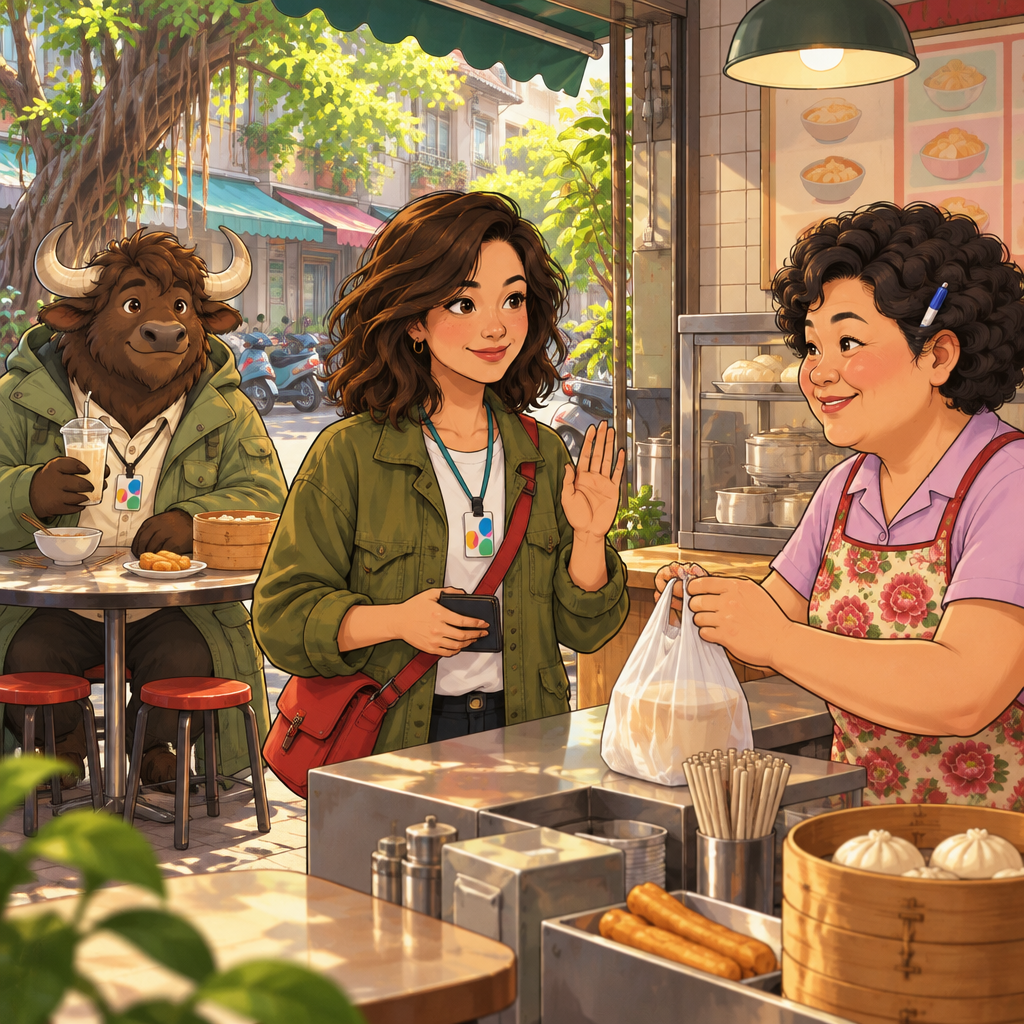
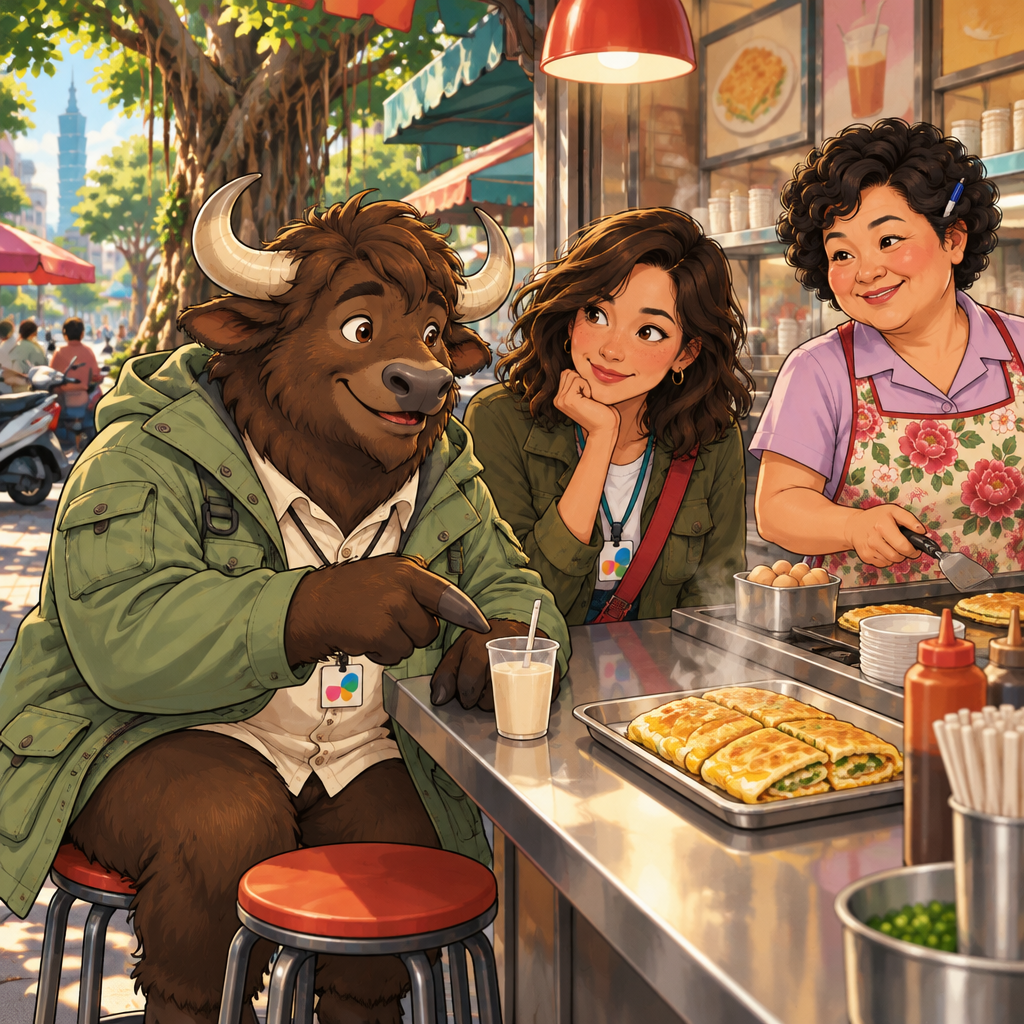
At Banyan Breakfast, Auntie Lin welcomes Maya while A-Li points to an order number before Maya has seen the menu.
Learn to name an egg pancake, ask to order, choose a drink, and let the shop know you are finished.
The number is right, but A-Li is simply a helpful regular. His soy milk remains unfinished, as usual.
By the end of this lesson
Order an egg pancake and a drink, then say that is all.
- 我想要___I'd like ___.
- 我想點___I'd like to order ___.
- 一份___,謝謝One order of ___, please.
- 可以看一下菜單嗎?May I see the menu?
- 這樣就好,謝謝That's all, thanks.
- 蛋餅Egg pancake.
Scene — a helpful number
Morning at Banyan Breakfast: Maya is ready to order, but she has not seen the menu yet. A-Li, already at his usual table, tells her which number to choose.
His suggestion is right. Auntie Lin is at the counter, and A-Li's soy milk is still unfinished.
Learn — ordering breakfast
These six useful lines help you order an egg pancake and a drink at a breakfast shop. Listen, then say each one aloud.
Learn each short chunk as one piece.
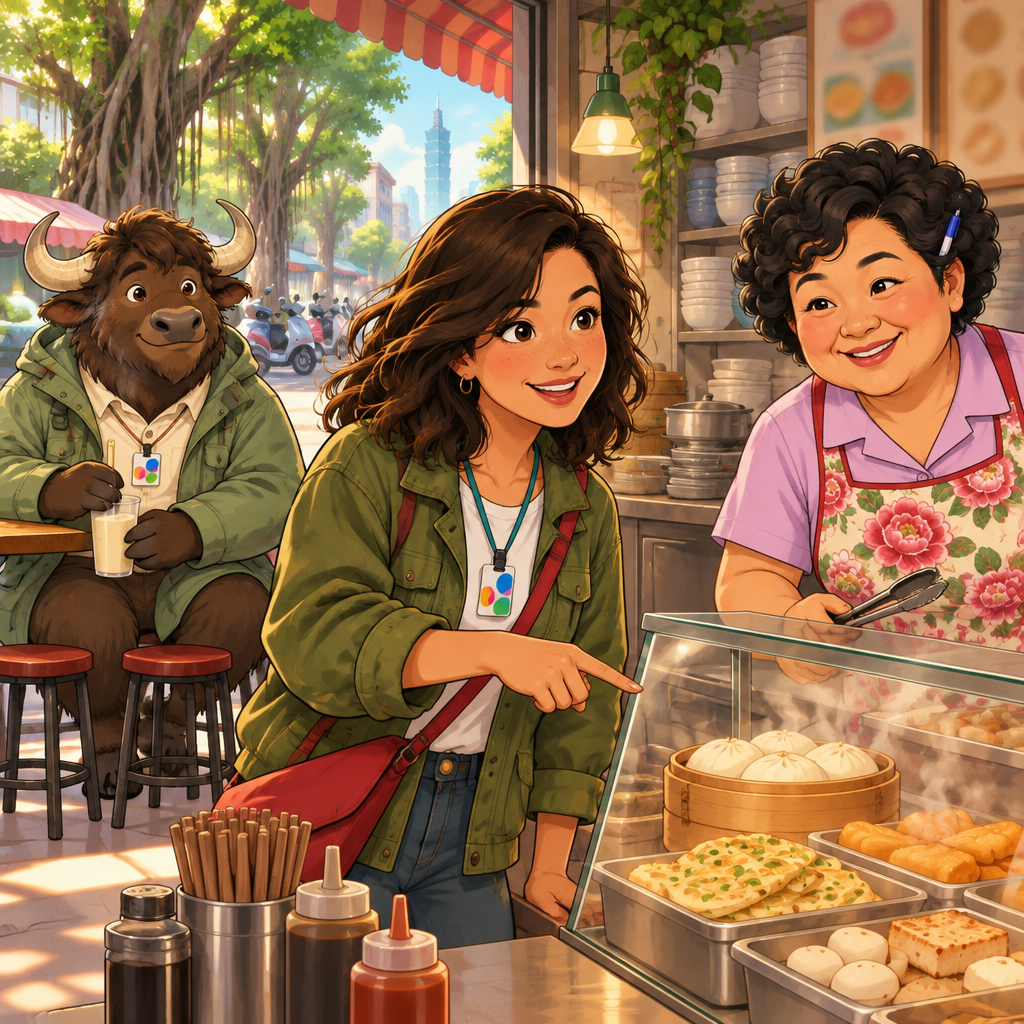
我想要___
I'd like ___.
When to use it: Use this to say what you would like.
Learn it as one piece.
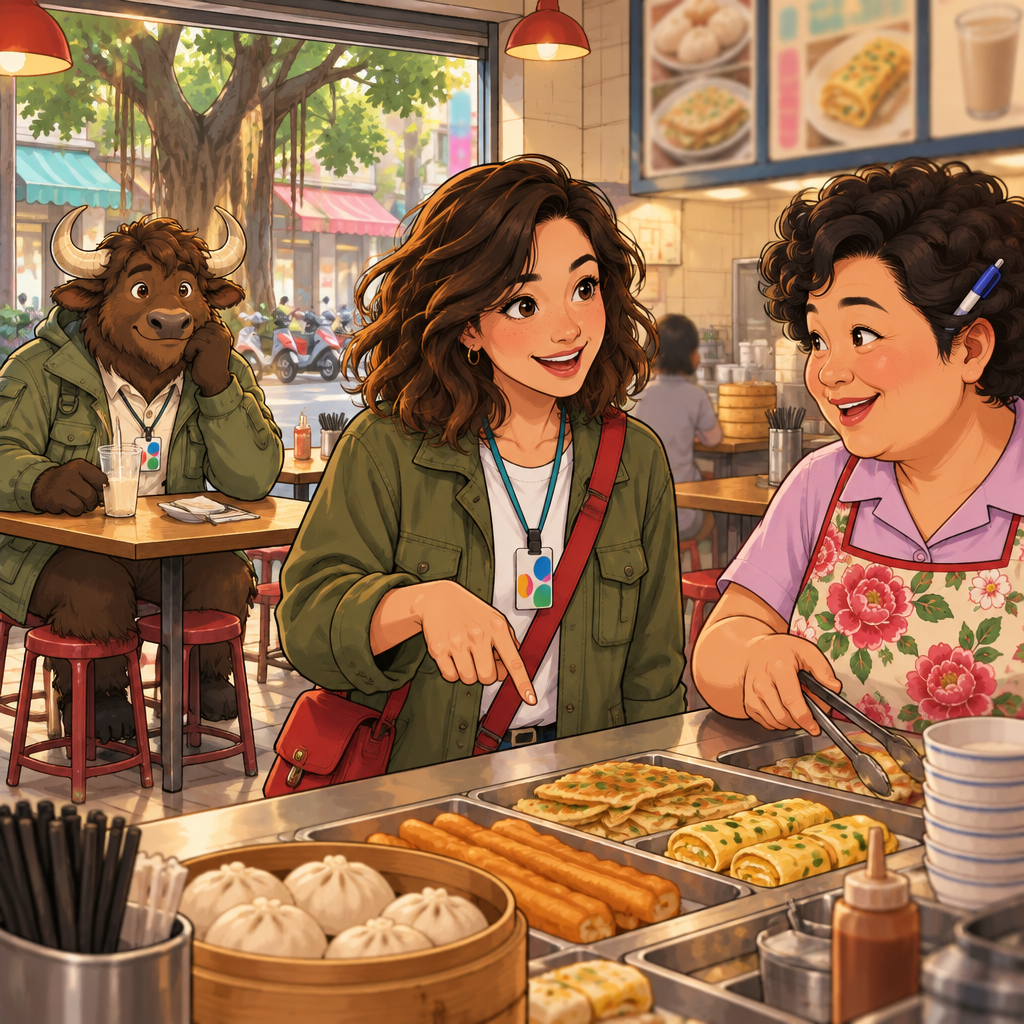
我想點___
I'd like to order ___.
When to use it: Use this to name the food you want to order.
Learn it as one piece.
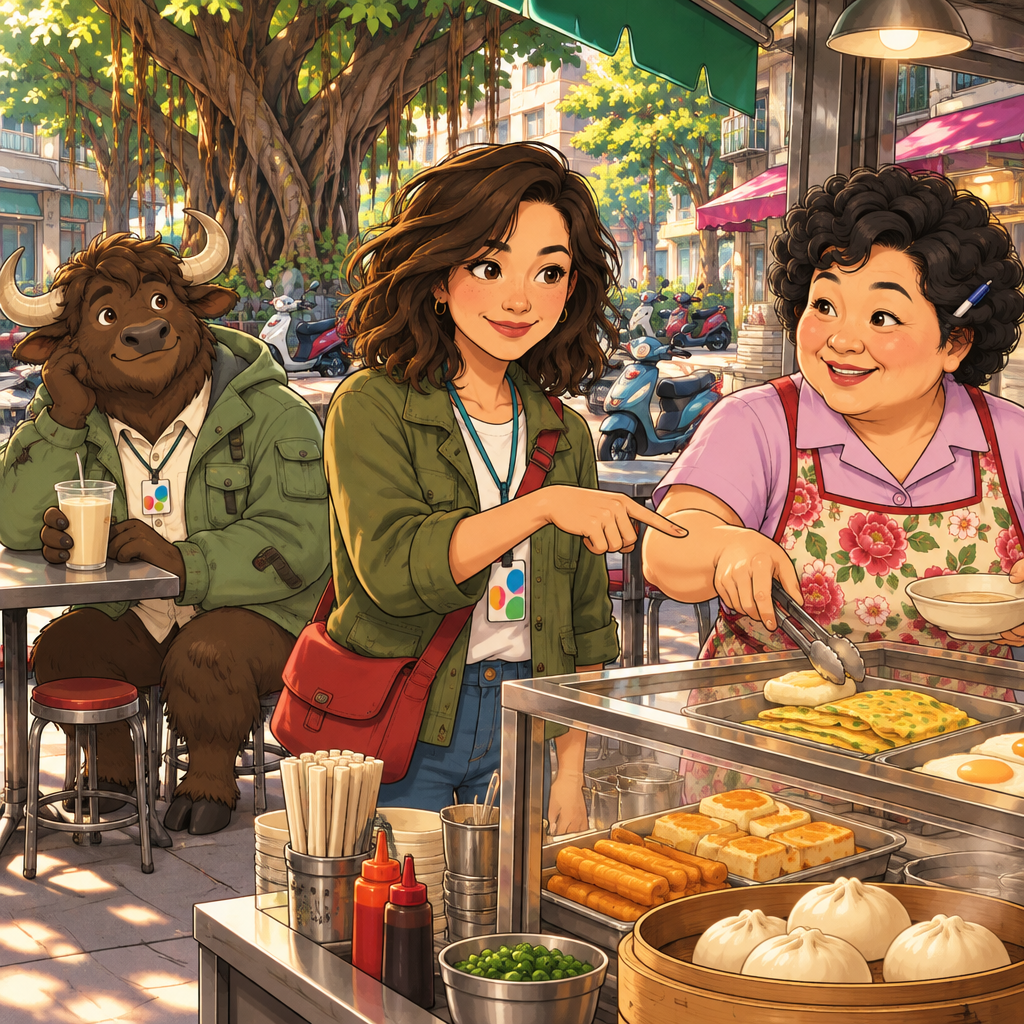
一份___,謝謝
One order of ___, please.
When to use it: Use this to order one portion politely.
Learn it as one piece.
Say it: 一 changes to a rising tone before a fourth tone.

可以看一下菜單嗎?
May I see the menu?
When to use it: Ask this politely when you want to see the menu.
Learn it as one piece.
這樣就好,謝謝
That's all, thanks.
When to use it: Say this when you have finished ordering.
Learn it as one piece.
蛋餅
Egg pancake.
When to use it: Use this to order a common breakfast dish.
Learn it as one piece.
Story — A-Li knows the number
A-Li tells Maya which number to choose before she has seen the menu. His recommendation is right, and Auntie Lin helps Maya finish her order.
Maya orders an egg pancake and soy milk. A-Li stays at his table with his own drink still unfinished.
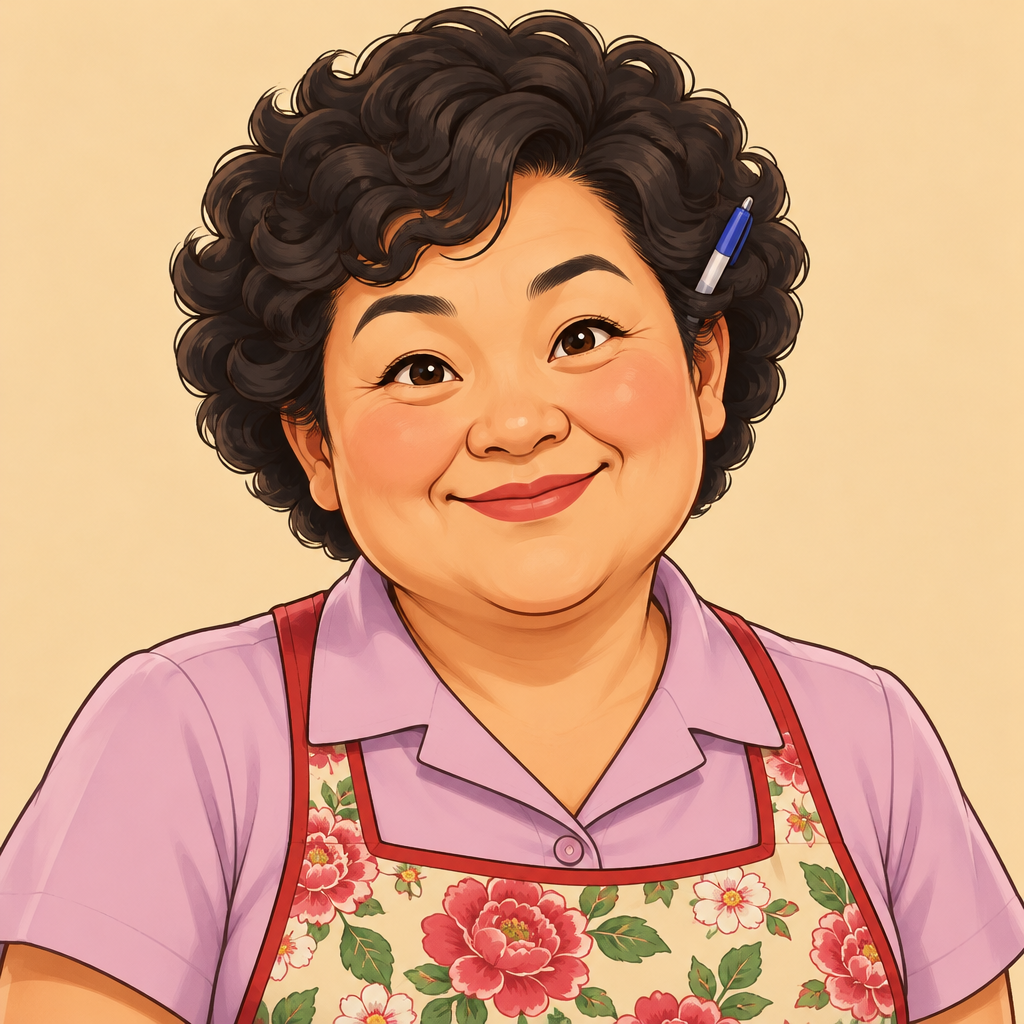 Auntie Lin美女,早安!Good morning, beautiful!
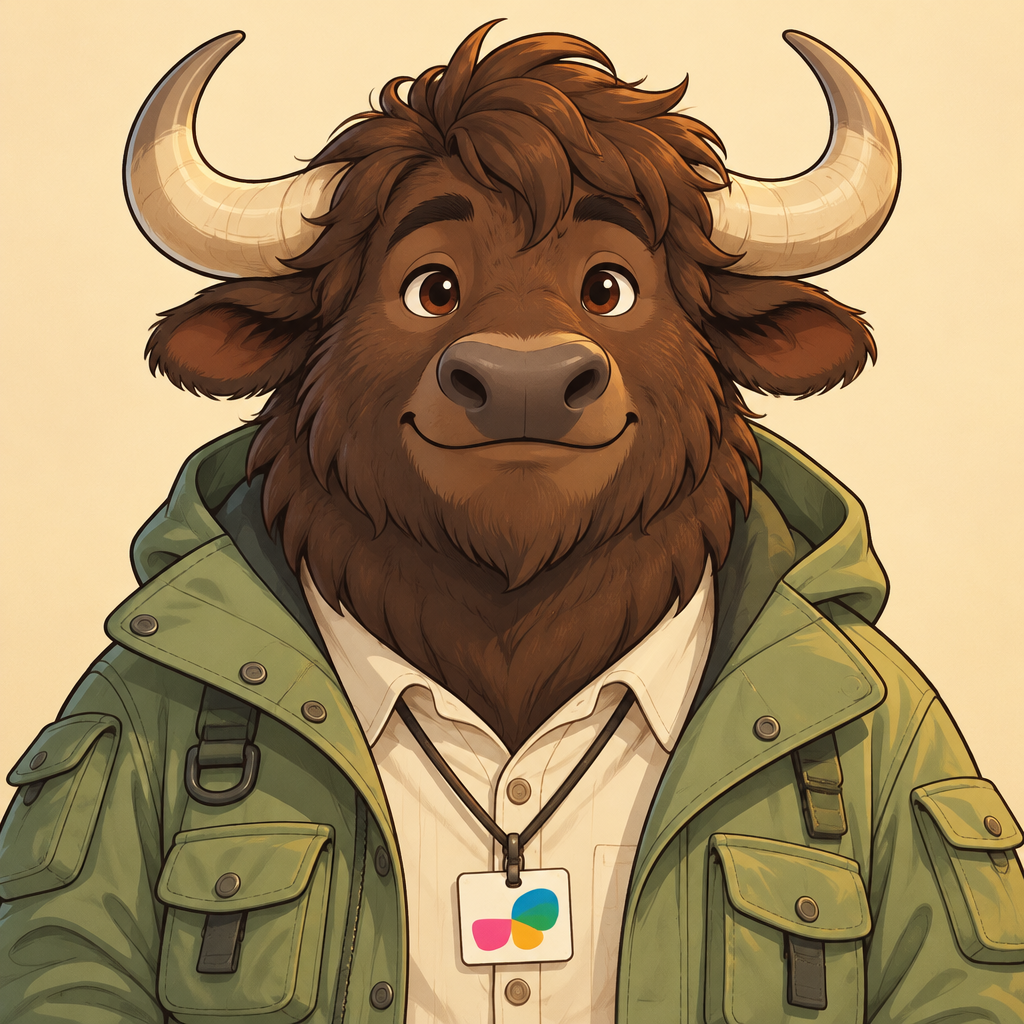 A-Li先點三號,蛋餅喔。Order number three first, the egg pancake.
 Maya可以看一下菜單嗎?May I see the menu?
- Auntie Lin好喔,三號是蛋餅。Sure, number three is the egg pancake.
- Maya我想點蛋餅。I'd like to order an egg pancake.
- Maya一份蛋餅,謝謝。One egg pancake, please.
- Auntie Lin還要喝什麼?What else would you like to drink?
- Maya我想要豆漿。I'd like soy milk.
- Auntie Lin還要別的嗎?Anything else?
- Maya這樣就好,謝謝。That's all, thanks.
- A-Li豆漿還沒喝完。The soy milk still isn't finished.
Practice — place your order
Practice choosing the dish, asking for the menu, and finishing a simple order. Read each situation carefully and listen for the useful words.
Then take Maya's turn at the counter.
0 of 11 done
What does it mean?
What does it mean?
早安
What do you say?
What do you say?
You want to look at the menu before choosing. Ask Auntie Lin politely.
Build the line
Build the line
That's all, thanks.
,
Tap the words in order.
Fill the gap
Fill the gap
May I see the menu?
可以看一下____嗎?
What did you hear?
What did you hear?
Swap the word
Swap the word
Change the dish in this question to the word for menu.
可以看一下____嗎?
Pick the reply
Auntie Lin says:
Pick the reply
要點什麼?
What would you like to order?
And you reply with:
Match the pairs
Traditional Chinese
我想要___Drop the English here我想點___Drop the English here這樣就好,謝謝Drop the English here蛋餅Drop the English hereEnglish
What do you say?
What do you say?
A-Li points out the breakfast dish he recommends. Name the dish.
What does it mean?
What does it mean?
謝謝
What do you say?
What do you say?
Auntie Lin asks what drink you would like. You want soy milk, so fill the frame with soy milk.
Say it — your breakfast order
You are Maya at Banyan Breakfast. Listen to Auntie Lin, then take your turn ordering the egg pancake and a drink.
Use the ordering frames with the foods from the cues, then finish by letting her know that is all. Say each line aloud before moving on.
- Maya is ready to order, but has not seen the menu.
- Auntie Lin美女,想點什麼?What would you like to order, beautiful?
- Maya (you)Ask to see the menu.
Ask to see the menu.
可以看一下菜單嗎?
May I see the menu?
0 of 4 said
Recap — what you can say now
| Traditional Chinese | English | Play |
|---|---|---|
| 我想要___ | I'd like ___. | |
| 我想點___ | I'd like to order ___. | |
| 一份___,謝謝 | One order of ___, please. | |
| 可以看一下菜單嗎? | May I see the menu? | |
| 這樣就好,謝謝 | That's all, thanks. | |
| 蛋餅 | Egg pancake. |
Save your progress — it’s free
Keep your place in the course and see which lines you’ve learned.
Want the next lesson in your inbox?
Get the next lesson by email, one a day.
Join the newsletterDaily lesson emails are coming soon. Newsletter subscribers get them first.
Keep practicing with Yak Cards
Review today's breakfast-ordering lines with Yak Cards.
Practice a few order cards before your next breakfast.
Open Yak Cards