
New here? This is lesson 20 of a free 240-lesson Traditional Chinese course.
Eat here or take away in Traditional Chinese
At Banyan Breakfast, Maya first says she will eat at the shop. A-Li's tray is already crowded, and his soy milk is still unfinished.
Then Maya changes her mind and asks to take her food away. Practice simple counter requests for eating here, packing food, and paying.
Ask for an ingredient to be left out or put on the side. The situation is ordinary, even with A-Li's already-full tray.
By the end of this lesson
Say whether you will eat here or take food away, ask for a change, and ask to pay.
- 內用Eat here.
- 外帶Take away.
- 不要加___Don't add ___.
- 麻煩另外放Could you put it on the side?
- 幫我打包Pack it up for me.
- 可以結帳嗎?Can I pay now?
Scene — a change of plans
Morning light falls across the counter at Banyan Breakfast. Maya orders breakfast while Auntie Lin serves the next customer.
A-Li is at the back table, with his tray already full. His soy milk is still unfinished beside him.
Maya first plans to eat at the shop, then changes her mind and asks to take her order away.

Learn — food counter requests
Learn how to say you will eat here or take food away. You can also ask for an ingredient to be left out or put on the side.
Listen to each short request, then try it aloud as if you were ordering at a breakfast shop.

內用
Eat here.
When to use it: Say this when you will eat your food at the shop.

外帶
Take away.
When to use it: Say this when you want to take your food away.

不要加___
Don't add ___.
When to use it: Use this to ask the counter staff to leave out an ingredient.
Learn it as one piece; the blank names an ingredient.

麻煩另外放
Could you put it on the side?
When to use it: Ask for an ingredient or sauce to be packed separately.
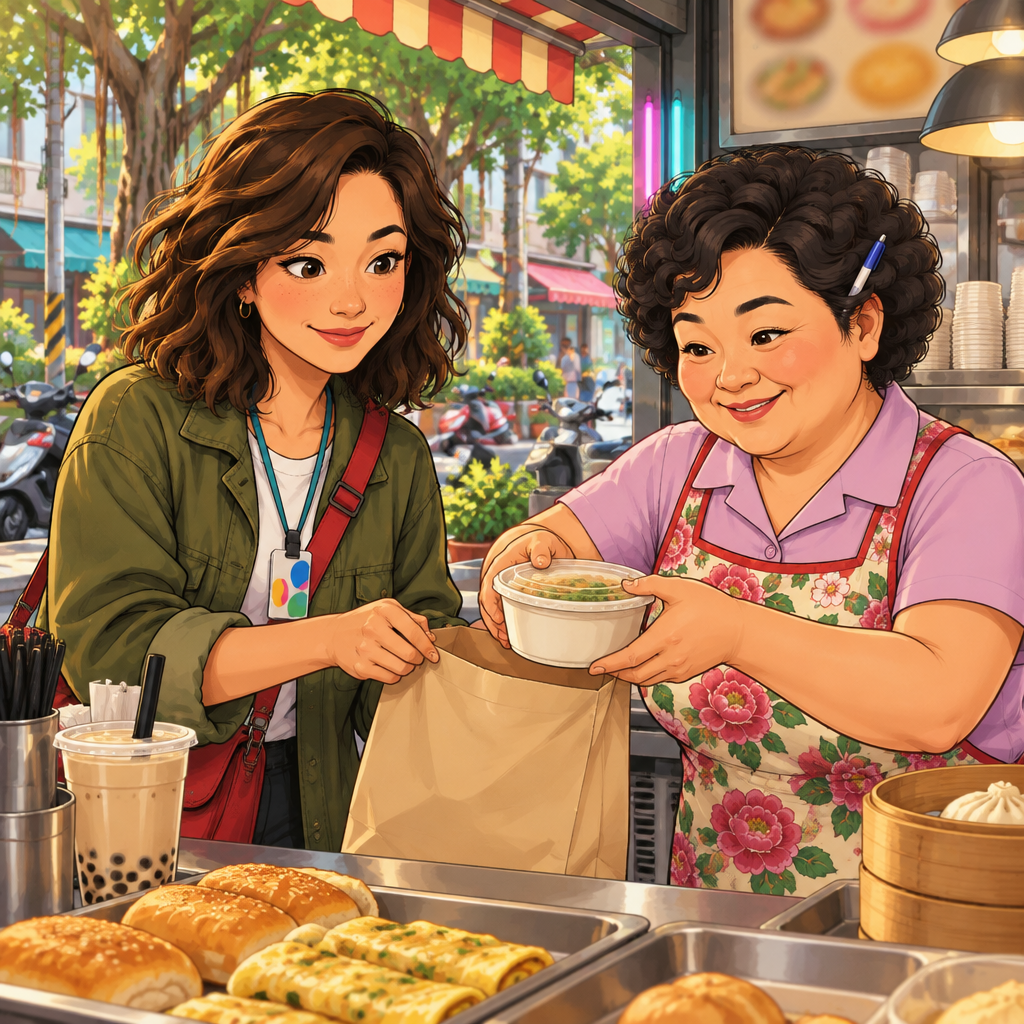
幫我打包
Pack it up for me.
When to use it: Ask someone to pack your food to take away.
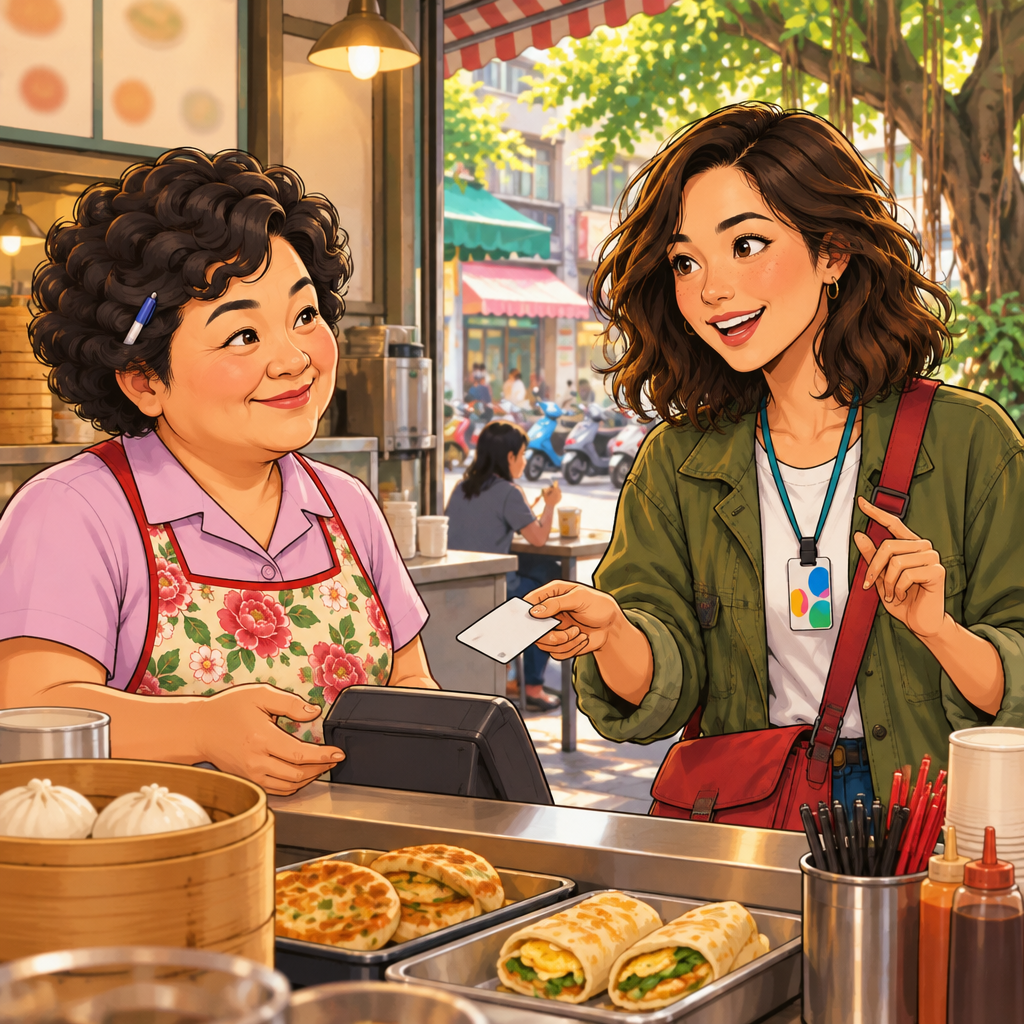
可以結帳嗎?
Can I pay now?
When to use it: Ask when you are ready to pay at the counter.
Story — Maya changes her order
Maya orders breakfast at Banyan Breakfast. She first chooses to eat there, but then notices A-Li's already crowded tray.
She changes her mind, asks for her order to go, and checks whether she can pay.
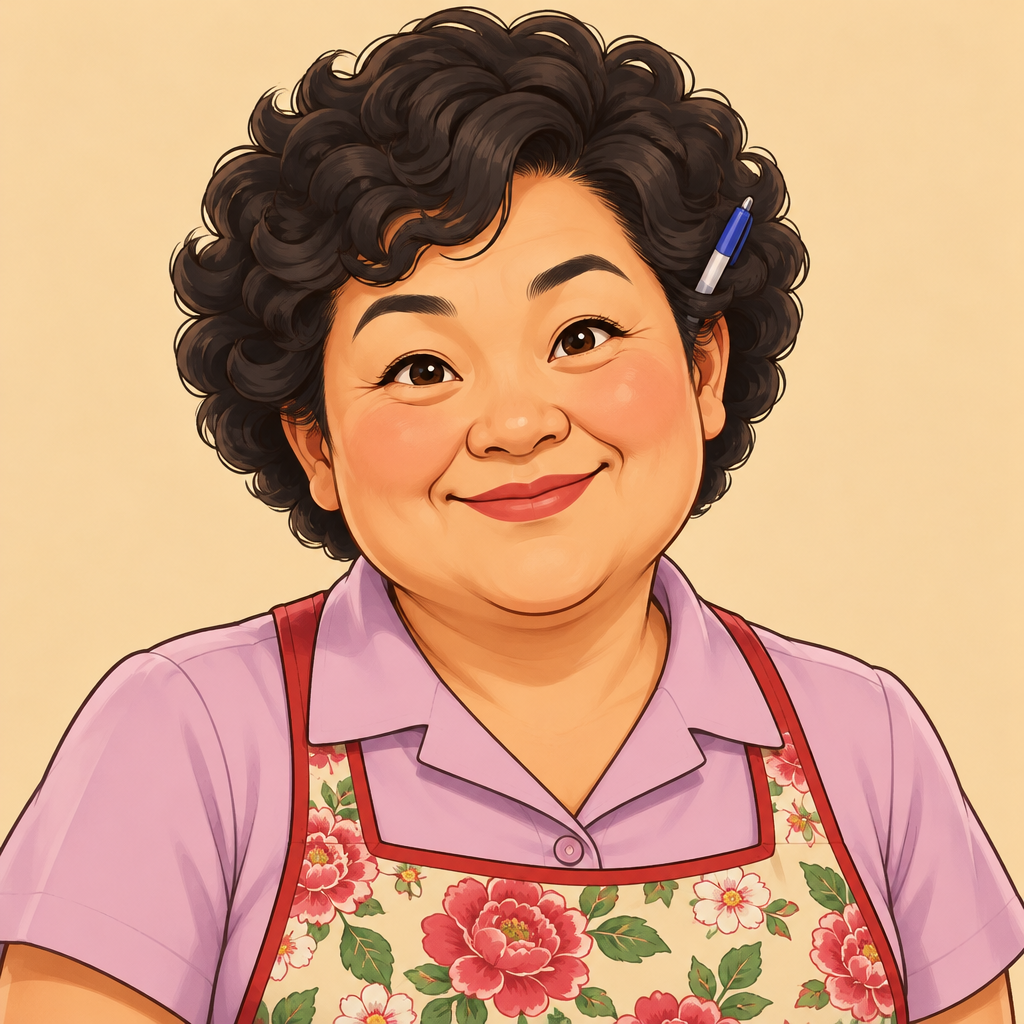 Auntie Lin美女,內用還是外帶?Would you like to eat here or take it away, beautiful?
 Maya內用。Eat here.
 A-Li托盤快滿了,豆漿還沒喝完。My tray is almost full, and I still haven't finished my soy milk.
- Maya不要加蔥。Don't add scallions.
- Auntie Lin好喔。Okay.
- Maya不好意思,我要外帶。Excuse me, I want it to go.
- Auntie Lin好喔。Okay.
- Maya辣椒,麻煩另外放。Chili, could you put it on the side?
- Auntie Lin好喔。Okay.
- Maya幫我打包。Pack it up for me.
- Maya可以結帳嗎?謝謝。Can I pay now? Thank you.
- Counter staff好喔。Sure.
Practice — choose your counter words
Try nine quick exercises about ordering, packing food, and paying at the counter. Choose the line that fits each situation.
Some questions revisit familiar breakfast words. Read each explanation, then try saying the answer again.
0 of 9 done
What does it mean?
What does it mean?
內用
What do you say?
What do you say?
The counter staff asks whether you will eat here or take your food away. Choose take away.
Build the line
Build the line
Could you put it on the side?
Tap the words in order.
Fill the gap
Fill the gap
Can I pay now?
可以____嗎?
What do you say?
What do you say?
At the counter, say the taught phrase frame for asking that an ingredient not be added. Leave the ingredient blank.
What did you hear?
What did you hear?
Pick the reply
Auntie Lin says:
Pick the reply
還要別的嗎?
Would you like anything else?
And you reply with:
Build the line
Build the line
Can I pay now?
?
Tap the words in order.
What does it mean?
What does it mean?
謝謝
Say it — order and pay
You are Maya, ordering breakfast at Banyan Breakfast. Listen to each cue and say your response aloud.
Tell Auntie Lin how you want your food, then finish your order and ask to pay.
- Maya is at the counter, placing her breakfast order.
- Maya (you)Tell Auntie Lin you will eat here.
Tell Auntie Lin you will eat here.
內用
Eat here.
0 of 6 said
Recap — what you can say now
| Traditional Chinese | English | Play |
|---|---|---|
| 內用 | Eat here. | |
| 外帶 | Take away. | |
| 不要加___ | Don't add ___. | |
| 麻煩另外放 | Could you put it on the side? | |
| 幫我打包 | Pack it up for me. | |
| 可以結帳嗎? | Can I pay now? |
Save your progress — it’s free
Keep your place in the course and see which lines you’ve learned.
Want the next lesson in your inbox?
Get the next lesson by email, one a day.
Join the newsletterDaily lesson emails are coming soon. Newsletter subscribers get them first.
Keep practicing with Yak Cards
Today's food-counter lines are in Yak Cards with more useful phrases for ordering.
Review a few counter cards each day so your requests come easily.
Open Yak Cards