
New here? This is lesson 230 of a free 240-lesson Traditional Chinese course.
Everyday idioms in Traditional Chinese
Auntie Lin drops a four-character saying into breakfast talk as if the lane already knows it.
A new neighbor hesitates at the counter, and Maya answers with an idiom of her own.
Learn six everyday sayings people use when a plan is hard, a move is new, or two jobs can be one trip. Then hear how they land in a real exchange.
The fortune slip stays in the till. A-Li's soy milk is still unfinished.
By the end of this lesson
Use six everyday Taipei idioms in speech when a situation is new, a plan is hard, or one trip can do two jobs.
- 入境隨俗When in Rome, do as the locals do.
- 一舉兩得You get two benefits from one action.
- 順其自然Let things take their course.
- 說得容易,做得難Easier said than done.
- 隨遇而安Adapt and settle wherever you find yourself.
- 慢慢來比較快Slow and steady gets you there faster.
Scene — sayings at breakfast
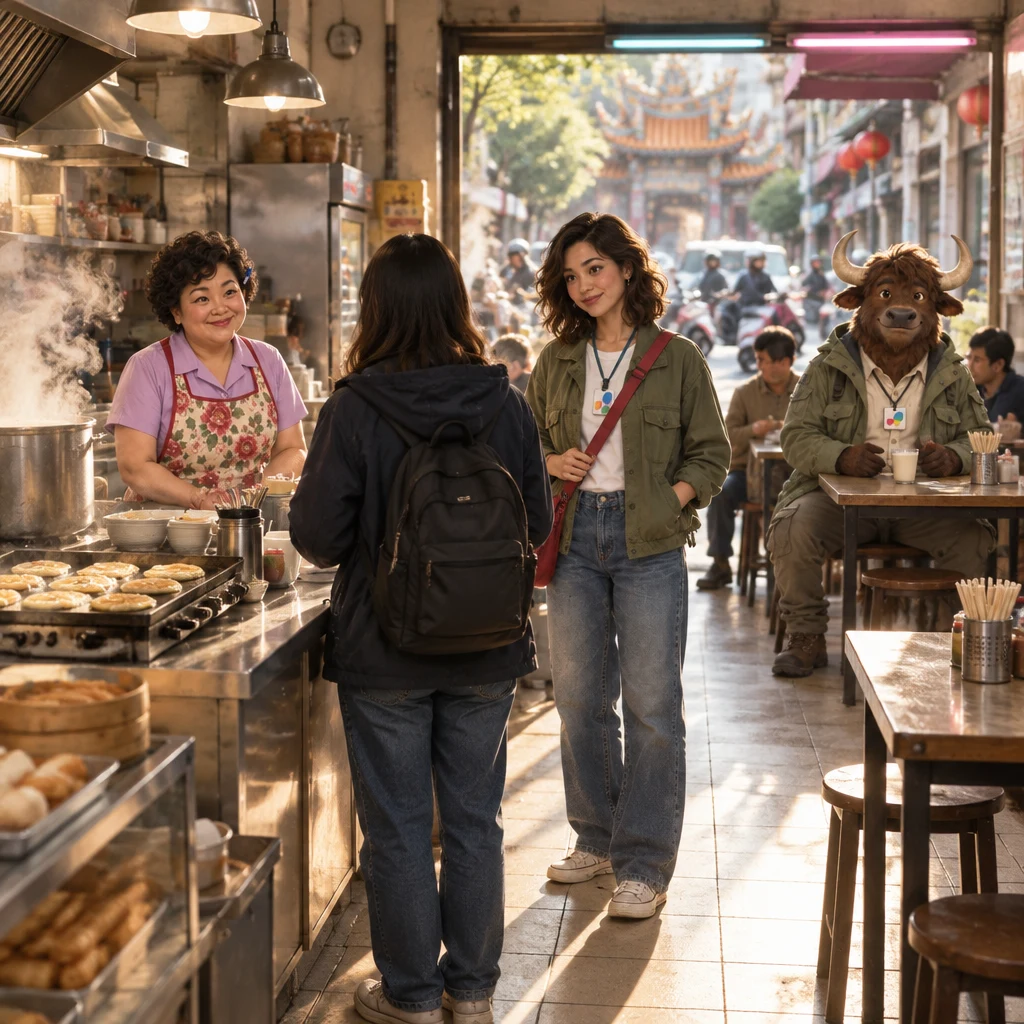
Morning at Banyan Breakfast. A newcomer stands at the counter, unsure what to order. Auntie Lin quotes an old saying, and Maya answers with one of her own.
A-Li sits on two stools with his soy milk still unfinished. Nobody reads the slip today.
Learn — everyday idioms
These six sayings show up in ordinary Taipei talk, not in speeches. Listen to each one, then say it as a whole piece.
Notice how 得 marks degree in the longer line, and how 比較 sets up a contrast.

入境隨俗
When in Rome, do as the locals do.
When to use it: Say this when someone should follow local habits in a new place.
Treat this four-character saying as one comment, not as separate verbs you conjugate.

一舉兩得
You get two benefits from one action.
When to use it: Use this when one action accomplishes two goals at once.
Use the whole chunk when one action gives you two useful results.
Say it: 一 stays falling before the third-tone syllable 舉.

順其自然
Let things take their course.
When to use it: Use this when pushing a plan would only make it worse.
Drop this in as a whole attitude when forcing a plan would not help.

說得容易,做得難
Easier said than done.
When to use it: Reply with this when a suggestion sounds simple but is hard to carry out.
得 after the verb marks degree, so 容易 and 難 describe how saying and doing feel.
Say it: The 得 after each verb is a light neutral tone, not a full tone.
隨遇而安
Adapt and settle wherever you find yourself.
When to use it: Use this when someone should make peace with a new or messy situation.
This set phrase means to adapt and settle; use it as one piece of advice.

慢慢來比較快
Slow and steady gets you there faster.
When to use it: Use this to tell someone not to rush, because rushing backfires.
比較 here marks a contrast: going slower actually turns out faster.
Story — an idiom at the counter
A new neighbor freezes at the counter. Auntie Lin offers a saying, and Maya answers with one back.
Listen for how each idiom lands in ordinary breakfast talk, not as a lecture.
 Auntie Lin美女,這位是新來的。Morning, beautiful. This person is new here.
- New neighbor早安,我還不太會點。Good morning. I still don't really know how to order.
- Auntie Lin入境隨俗,看別人點就好。When in Rome, just watch what other people order.
 Maya我剛來的時候也一樣。I was the same when I first arrived.
- New neighbor我想吃飯,也想認識鄰居。I want to eat, and I also want to meet the neighbors.
- Auntie Lin來這裡吃,又能認識人,一舉兩得。Eat here and you get to know people too; two benefits from one sitting.
- Maya說得容易,做得難。我剛來的時候也很慌。Easier said than done. I was flustered too when I first arrived.
- New neighbor那我該怎麼辦?Then what should I do?
- Maya慢慢來比較快,我幫你說。Slow and steady is faster; I'll say it for you.
- Auntie Lin對啊,隨遇而安就好,慢慢就熟悉了。Right, settle in where you find yourself; you'll get used to it in time.
- New neighbor好喔,那就蛋餅。Okay, then an egg pancake.
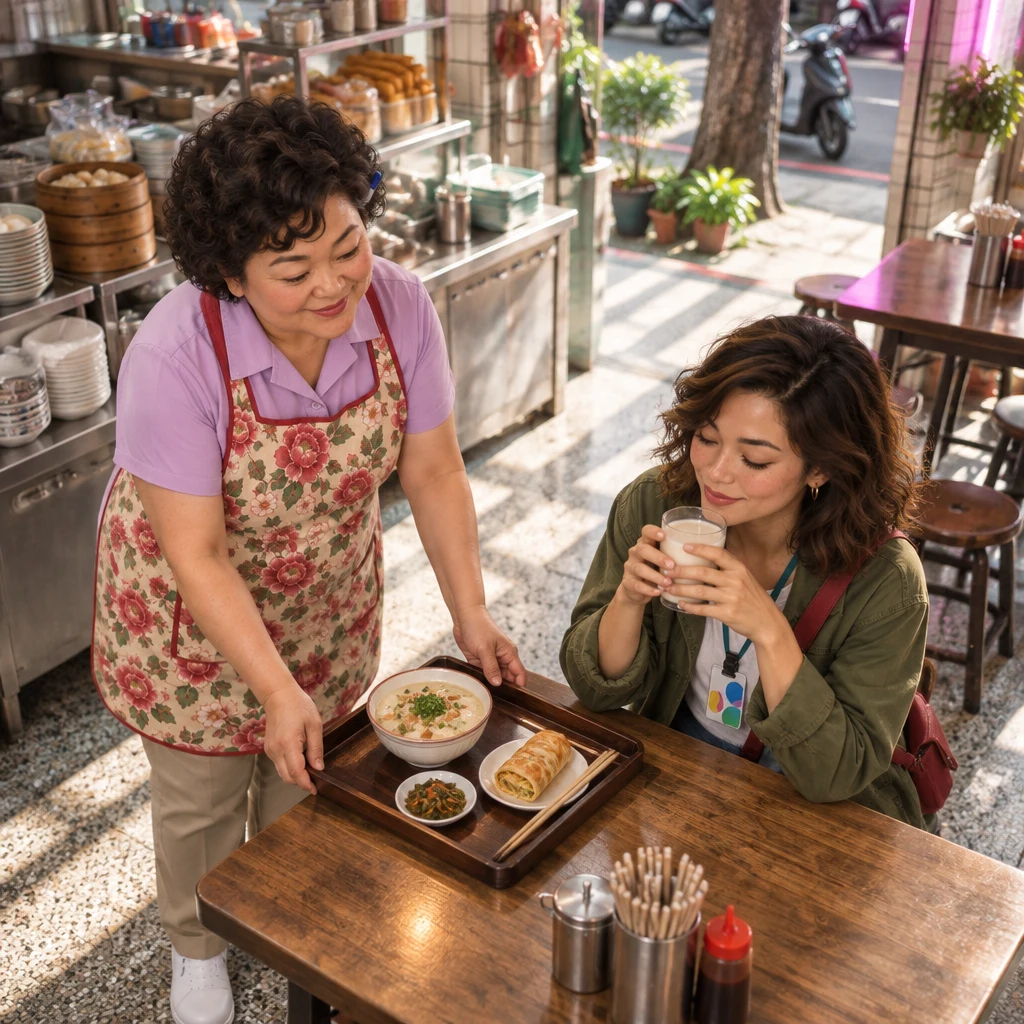
 A-Li豆漿我還在喝,你們先吃。I'm still drinking the soy milk; you eat first.
- Auntie Lin順其自然,吃完再走。Let it take its course; go after you finish eating.
- Maya慢慢來,不用急。Take your time, no rush.
- New neighbor謝謝你們。Thank you both.
Practice — pick the saying
Work through these items to pick the saying that fits each small moment at the counter.
After each answer, read why the other choices miss, then say the line again.
0 of 10 done
What does it mean?
What does it mean?
入境隨俗
What do you say?
What do you say?
You sit down for breakfast and meet the neighbors in one go. Auntie Lin names that double benefit.
What did you hear?
What did you hear?
Fill the gap
Fill the gap
Easier said than done.
說得____,做得難
Pick the reply
Auntie Lin says:
Pick the reply
什麼都不熟,心裡很亂。
Nothing feels familiar, and I feel unsettled.
And you reply with:
Build the line
Build the line
Slow and steady gets you there faster.
Tap the words in order.
Match the pairs
Traditional Chinese
入境隨俗Drop the English here一舉兩得Drop the English here順其自然Drop the English here隨遇而安Drop the English hereEnglish
Swap the word
Swap the word
Someone is rushing the breakfast order. Fix the last word of this saying.
慢慢來比較____
What do you say?
What do you say?
A newer foreigner looks lost at the counter. Tell them you felt the same when you first arrived.
Pick the reply
New neighbor says:
Pick the reply
我好緊張,怕點錯。
I'm so nervous I'll order the wrong thing.
And you reply with:
Say it — your idioms
You play Maya at Banyan Breakfast. A new neighbor needs a hand, and Auntie Lin is quoting sayings.
Listen to each cue, then say the idiom that fits. You can replay the other line first.
- A new neighbor is stuck at the counter, and Auntie Lin looks over.
- Maya (you)Tell them they should follow local habits here.
Tell them they should follow local habits here.
入境隨俗
When in Rome, do as the locals do.
0 of 5 said
Recap — what you can say now
| Traditional Chinese | English | Play |
|---|---|---|
| 入境隨俗 | When in Rome, do as the locals do. | |
| 一舉兩得 | You get two benefits from one action. | |
| 順其自然 | Let things take their course. | |
| 說得容易,做得難 | Easier said than done. | |
| 隨遇而安 | Adapt and settle wherever you find yourself. | |
| 慢慢來比較快 | Slow and steady gets you there faster. |
Save your progress — it’s free
Keep your place in the course and see which lines you’ve learned.
Want the next lesson in your inbox?
Get the next lesson by email, one a day.
Join the newsletterDaily lesson emails are coming soon. Newsletter subscribers get them first.
Keep practicing with Yak Cards
Today's idioms are in Yak Cards with more everyday sayings for breakfast talk.
Review a few idiom cards each day so they come out in real conversations.
Open Yak Cards