
New here? This is lesson 147 of a free 240-lesson Traditional Chinese course.
Put it there in Traditional Chinese
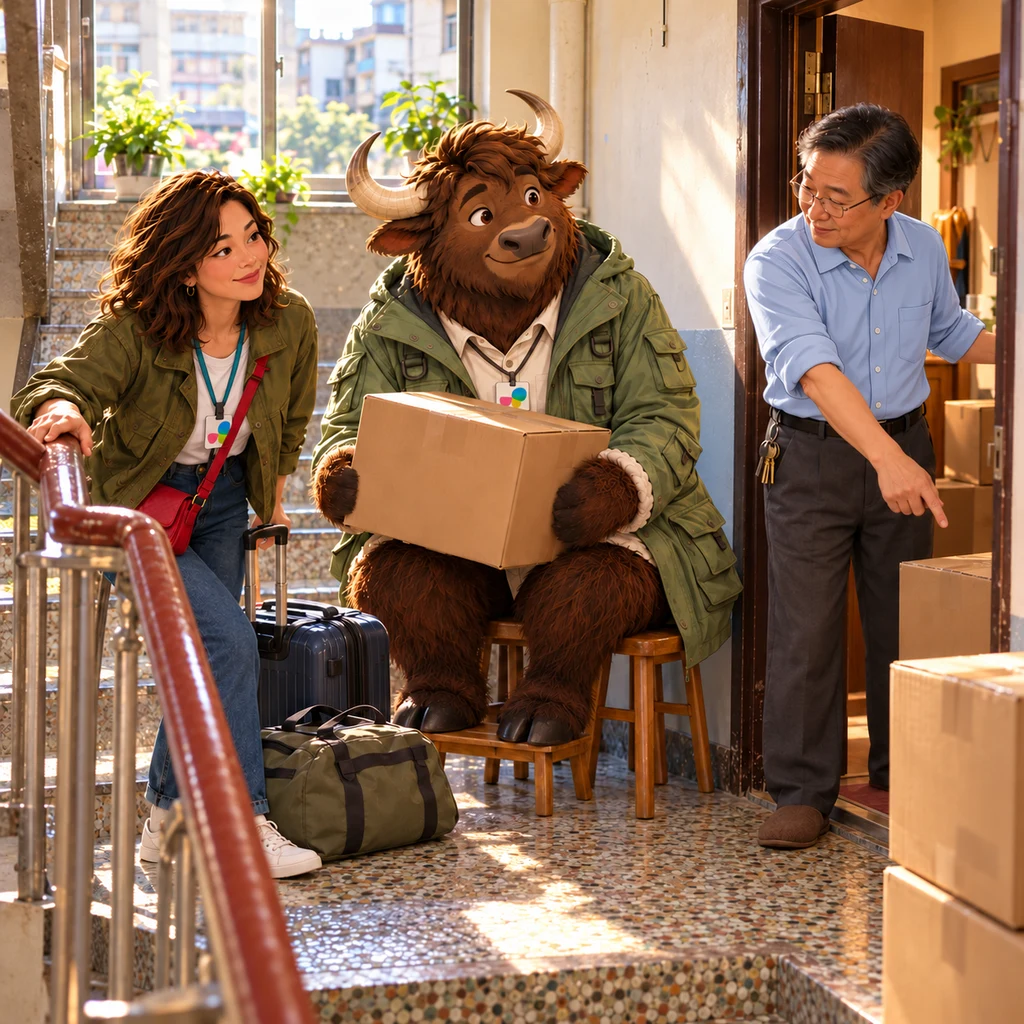
Maya is moving boxes into the flat on Banyan Lane. Mr. Wang waits in the doorway and tells her where each box goes. He keeps one carton for himself.
Learn 把 to name the thing you move, then say what you did with it. Put keys down, close a door, and say you left an umbrella on the bus.
A-Li comes up the stairs with one more box. The fortune slip stays in the till.
By the end of this lesson
Say where you put or moved something, using 把.
- 我把鑰匙放在桌上I put the keys on the table.
- 你可以把門關起來嗎?Can you close the door?
- 我把傘忘在公車上了I accidentally forgot my umbrella on the bus.
- 請把這個交給王先生Please hand this to Mr. Wang.
- 我把行李搬上樓了I carried the luggage upstairs.
- 先把它放著Leave it for now.
Scene — boxes in the doorway
The stairwell of Maya's building smells like cardboard. Mr. Wang stands in the doorway of the second-floor flat and points at each box.
Maya has just carried the luggage up. A-Li appears on the stairs with one more carton.
Nobody mentions the fortune, and A-Li is not magic today.
Learn — name it, then move it
Listen to six lines that put 把 before the thing you move. Then say what happens to it.
Notice how 把 names the object first. Repeat each line out loud after you hear it.
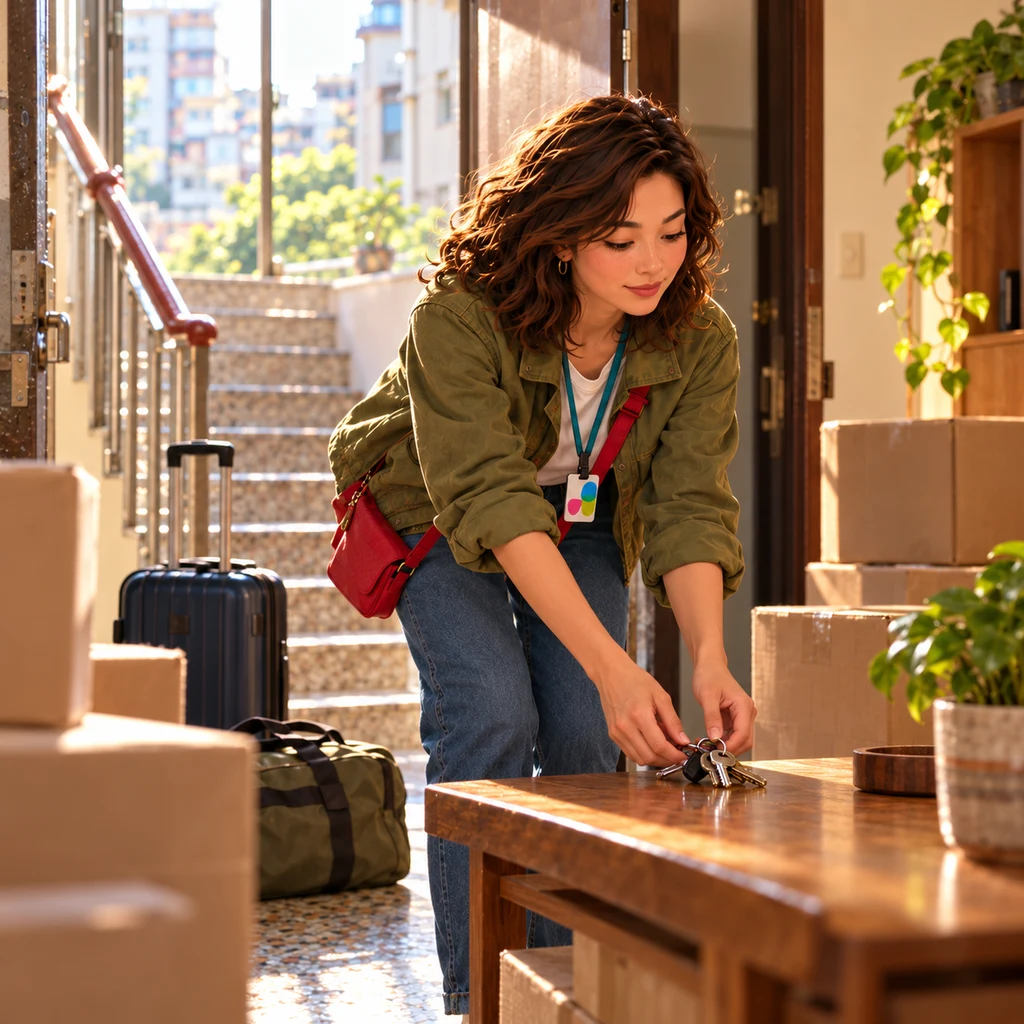
我把鑰匙放在桌上
I put the keys on the table.
When to use it: Use this when you placed keys on a table.
把 names the thing first, then the action you did to it.
Say it: The first third tone rises before the next third tone.
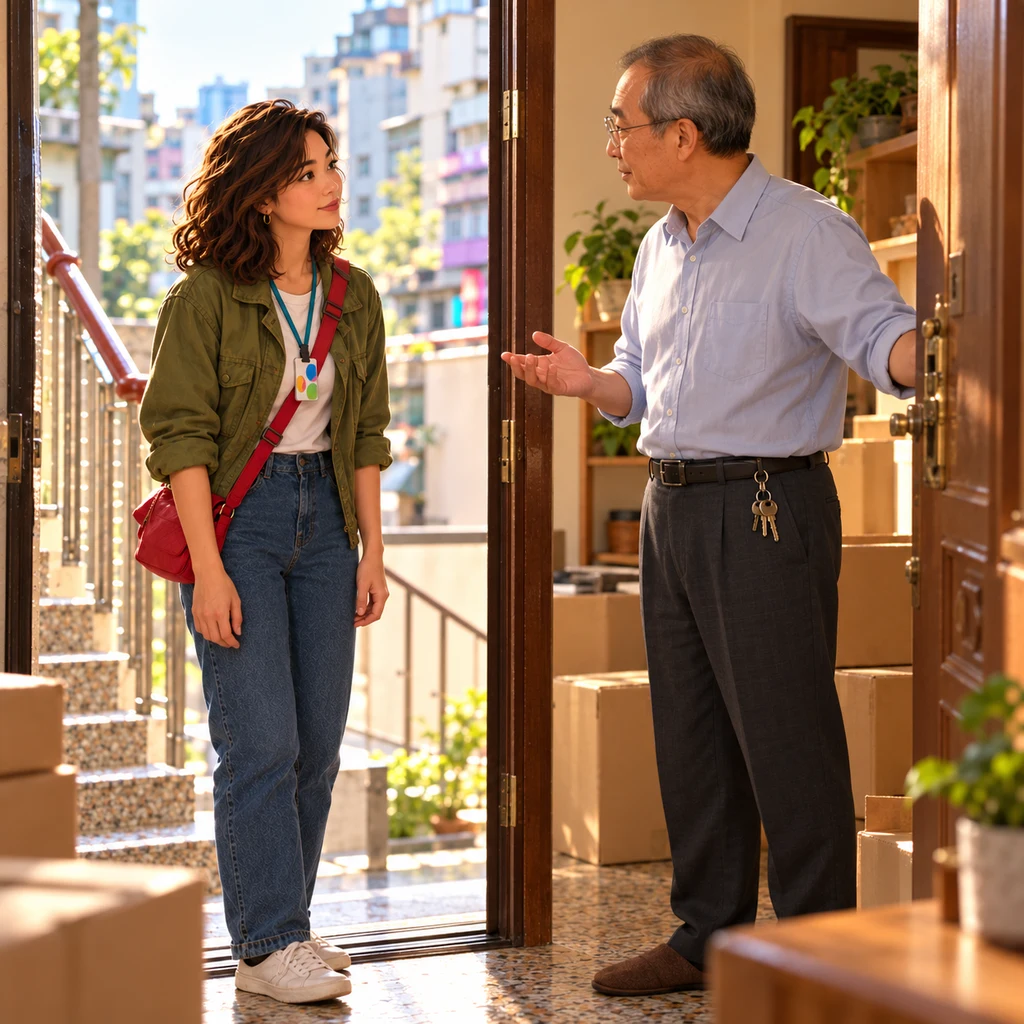
你可以把門關起來嗎?
Can you close the door?
When to use it: Ask someone to close the door for you.
起來 after 關 means close it so it stays shut.

我把傘忘在公車上了
I accidentally forgot my umbrella on the bus.
When to use it: Say you accidentally forgot your umbrella on the bus.
了 marks this as a finished event, not a habit.
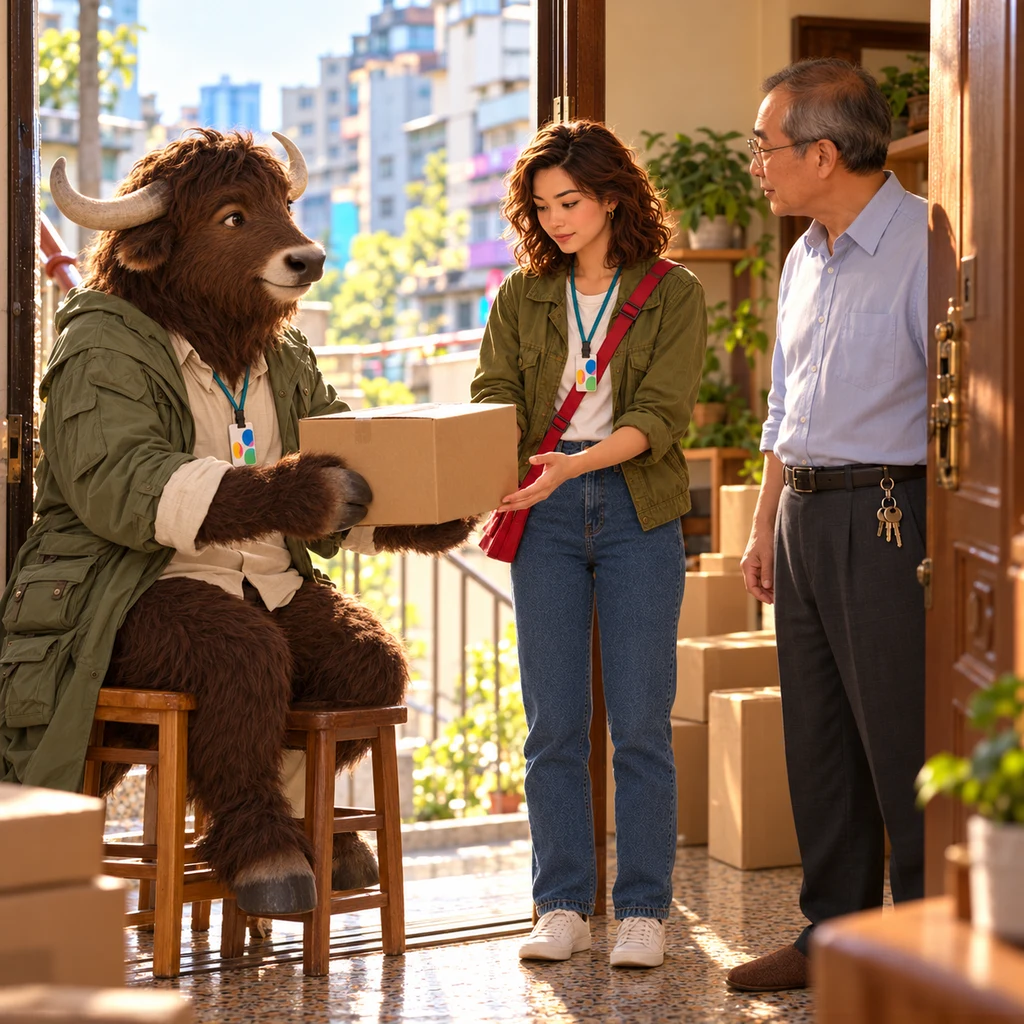
請把這個交給王先生
Please hand this to Mr. Wang.
When to use it: Ask someone to pass this object to Mr. Wang.
交給 means you give it to a person, not a place.
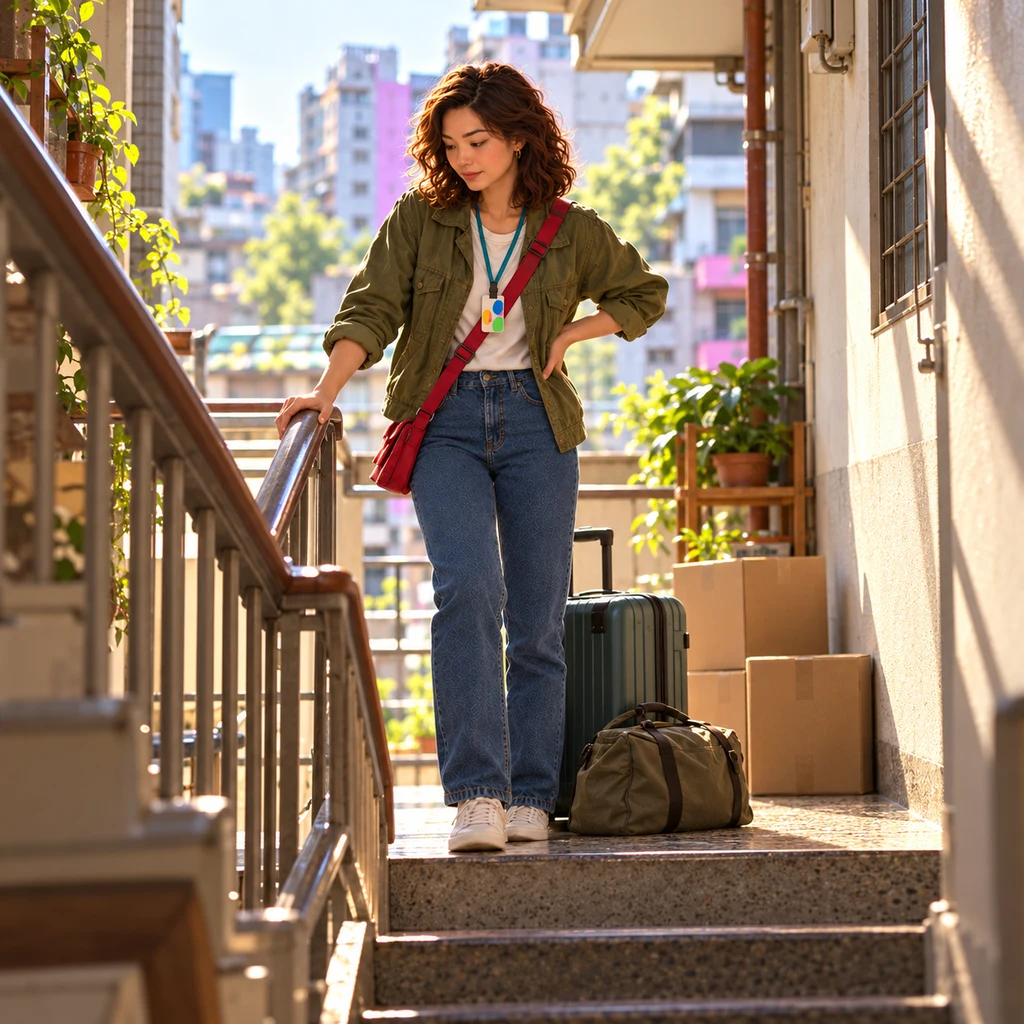
我把行李搬上樓了
I carried the luggage upstairs.
When to use it: Say you already carried the luggage upstairs.
上樓 is the direction: you carried it up, not down.
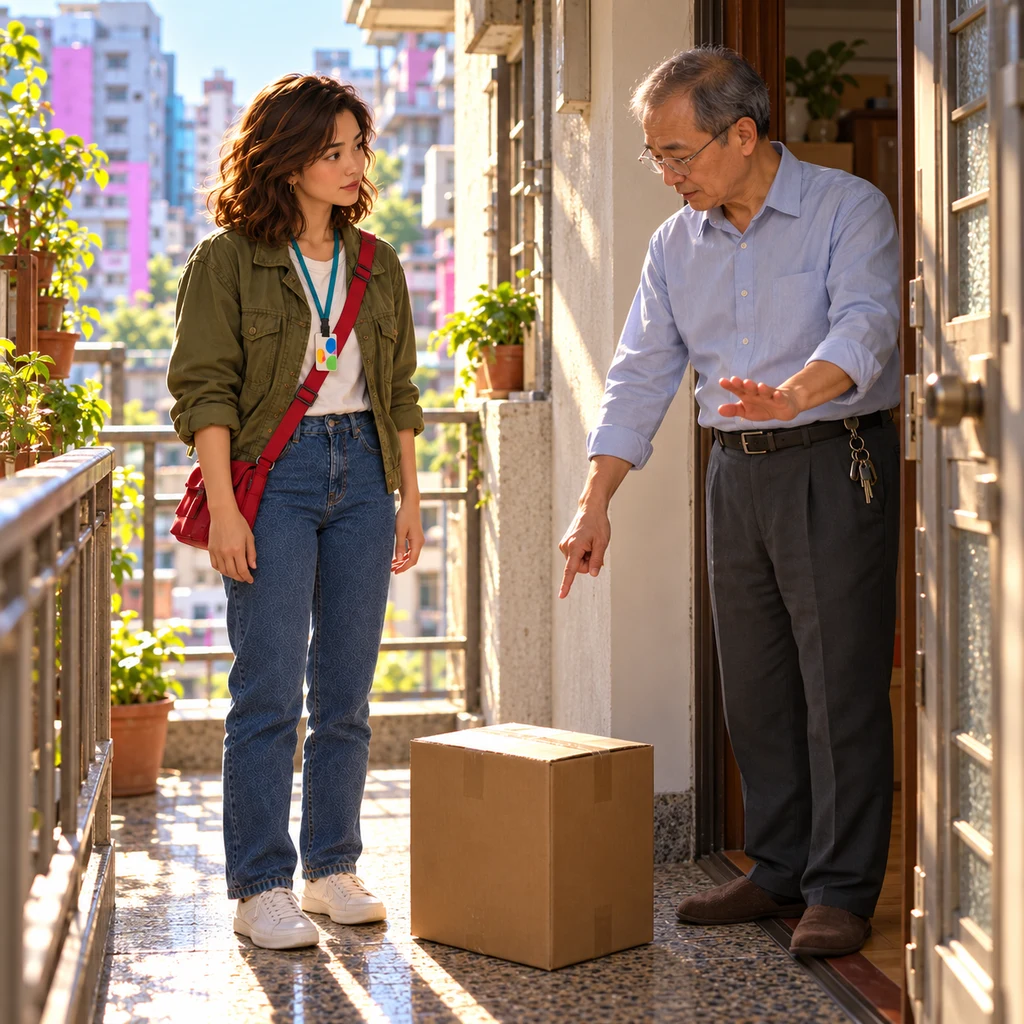
先把它放著
Leave it for now.
When to use it: Tell someone to leave an object where it is for now.
著 here marks leaving the object there for now.
Say it: The last syllable is a short, light tone.
Story — one carton for Mr. Wang
Listen as Maya moves boxes into the flat. Mr. Wang tells her where each one goes, and A-Li brings one more.
One carton stays with Mr. Wang. The fortune slip is not part of this errand.
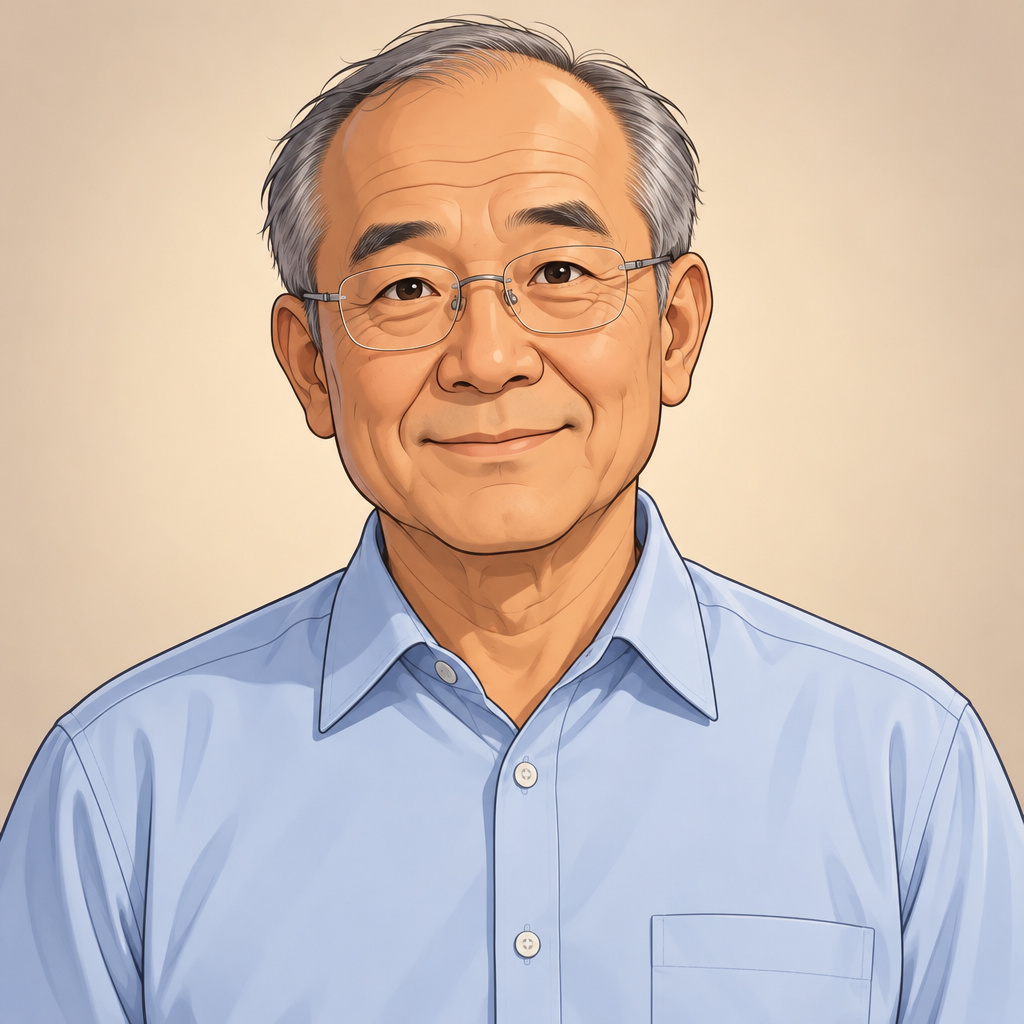 Mr. Wang請進。Please come in.
 Maya王先生,謝謝你。我把行李搬上樓了。Mr. Wang, thank you. I carried the luggage upstairs.
- Mr. Wang先把它放著。Leave it for now.
- Maya好喔。Okay.
- Mr. Wang那個紙箱,請放在門口。That cardboard box, please leave it at the door.
- Maya好。Okay.
- Mr. Wang你可以把門關起來嗎?Can you close the door?
- Maya好喔。Okay.
- A-Li comes up the stairs with a small carton.
 A-Li請把這個交給王先生。Please hand this to Mr. Wang.
- Maya好。Okay.
- Mr. Wang這箱我留下。I'll keep this box.
- Maya我把鑰匙放在桌上。I put the keys on the table.
- Mr. Wang你的傘呢?Where's your umbrella?
- Maya我把傘忘在公車上了。I accidentally forgot my umbrella on the bus.
- Mr. Wang沒關係。It's okay.
Practice — where did it go
Try ten short exercises with 把. Pick the line that fits each moment as Maya moves the boxes.
After each answer, read why it fits, then say the line again.
0 of 10 done
What does it mean?
What does it mean?
我把鑰匙放在桌上
What do you say?
What do you say?
The door is still open. Ask Mr. Wang to close it.
Build the line
Build the line
I carried the luggage upstairs.
Tap the words in order.
Fill the gap
Fill the gap
I accidentally forgot my umbrella on the bus.
我把傘____在公車上了
Match the pairs
Traditional Chinese
我把鑰匙放在桌上Drop the English here你可以把門關起來嗎?Drop the English here請把這個交給王先生Drop the English here先把它放著Drop the English hereEnglish
What did you hear?
What did you hear?
Swap the word
Swap the word
A-Li is holding a carton. Tell him to hand this one to Mr. Wang.
請把____交給王先生
Pick the reply
Mr. Wang says:
Pick the reply
請進。
Please come in.
And you reply with:
What do you say?
What do you say?
You are Mr. Wang. Maya is at the door with boxes. Tell her to come in.
Fill the gap
Fill the gap
Please leave it at the door.
請放在____
Say it — your 把 lines
You play Maya in the doorway. Listen to each cue, then say where you put something, using 把.
Tap the microphone to speak. You can replay the other person's line before your turn.
- Maya has the luggage at the door of the flat.
- Mr. Wang行李呢?What about the luggage?
- Maya (you)Tell him you already carried the luggage upstairs.
Tell him you already carried the luggage upstairs.
我把行李搬上樓了
I carried the luggage upstairs.
0 of 6 said
Recap — what you can say now
| Traditional Chinese | English | Play |
|---|---|---|
| 我把鑰匙放在桌上 | I put the keys on the table. | |
| 你可以把門關起來嗎? | Can you close the door? | |
| 我把傘忘在公車上了 | I accidentally forgot my umbrella on the bus. | |
| 請把這個交給王先生 | Please hand this to Mr. Wang. | |
| 我把行李搬上樓了 | I carried the luggage upstairs. | |
| 先把它放著 | Leave it for now. |
Save your progress — it’s free
Keep your place in the course and see which lines you’ve learned.
Want the next lesson in your inbox?
Get the next lesson by email, one a day.
Join the newsletterDaily lesson emails are coming soon. Newsletter subscribers get them first.
Keep practicing with Yak Cards
Today's 把 lines are in Yak Cards with more ways to say where you put things.
Review a few 把 cards each day so moving things feels easy.
Open Yak Cards