
New here? This is lesson 222 of a free 240-lesson Traditional Chinese course.
Now I see in Traditional Chinese
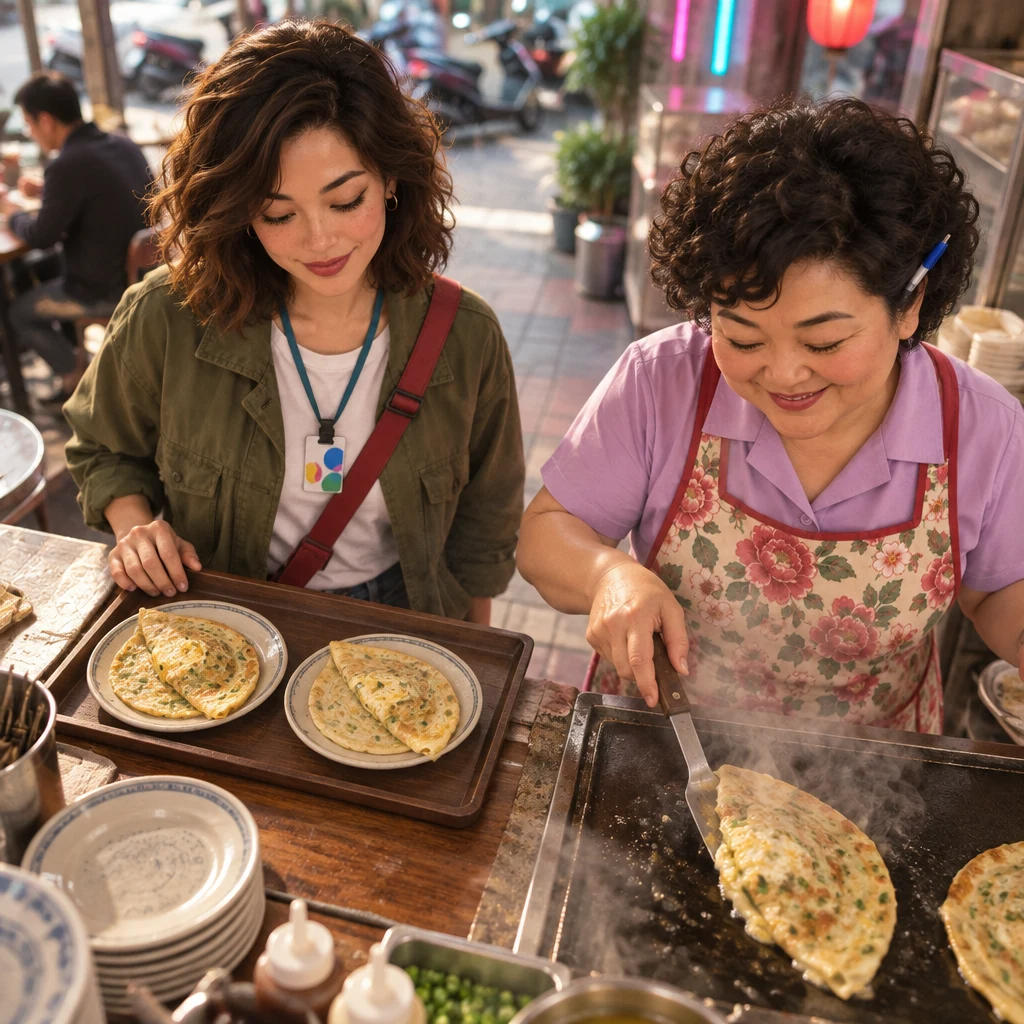
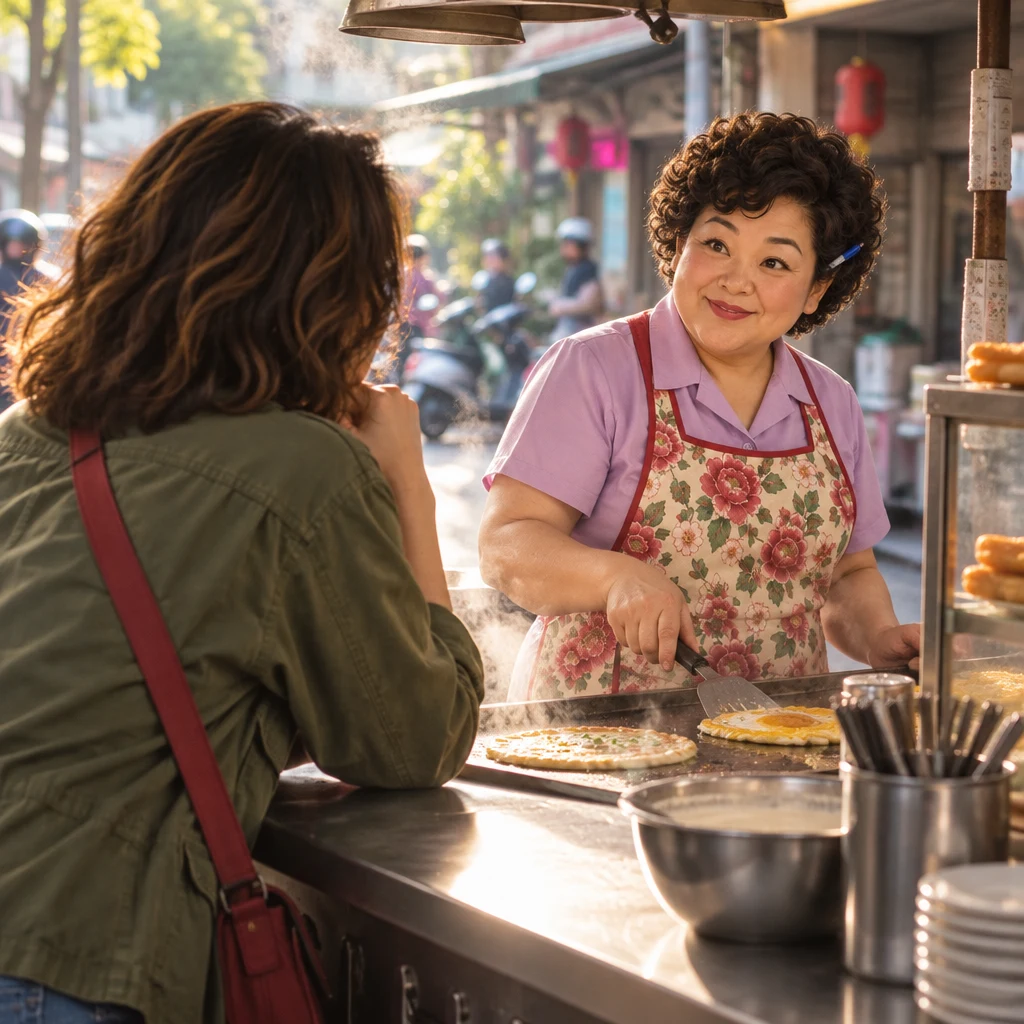
At Banyan Breakfast, Auntie Lin sets a second egg pancake in front of Maya again. Maya has always assumed it was simply extra food.
Then Lin explains what Maya missed: she used to share one pancake with A-Li, so Lin began making enough for both.
Practise reactions for a new realization, a misunderstanding, and the detail that finally makes the situation make sense.
By the end of this lesson
React when you understand something, explain that you had misunderstood, and say when a missing detail makes things make sense.
- 原來如此So that's how it is.
- 我現在才明白Only now do I understand.
- 我終於搞懂了I finally figured it out.
- 原來我一直誤會了So I'd been misunderstanding all along.
- 我之前沒想到這點I hadn't thought of this before.
- 這樣就說得通了That explains it.
Scene — the extra egg pancake
At Banyan Breakfast, Auntie Lin puts two egg pancakes on Maya's tray again. Maya has wondered for months why Lin always gives her an extra one.
A-Li sits at the back on his two stools, with his soy milk still unfinished. Today, one small detail finally clears up Maya's question.

Learn — putting the pieces together
These six lines help you react when a missing detail changes how you understand a situation.
Listen for the difference between a sudden realization, a conclusion you have finally reached, and something that now makes sense.
原來如此
So that's how it is.
When to use it: Use this as a complete reaction when a detail suddenly becomes clear.
This is a compact reaction to new information, rather than a full explanation.
我現在才明白
Only now do I understand.
When to use it: Say this when new information finally makes something clear.
才 highlights that the understanding came only now, later than expected.

我終於搞懂了
I finally figured it out.
When to use it: Use this when you have finally worked something out.
終於 emphasizes reaching an understanding after some time or effort.
Say it: In 搞懂, the first third tone rises before the second third tone.

原來我一直誤會了
So I'd been misunderstanding all along.
When to use it: Say this when you discover that your earlier understanding was mistaken.
一直 presents the misunderstanding as continuing over time, before the speaker recognizes it.

我之前沒想到這點
I hadn't thought of this before.
When to use it: Use this when someone points out a detail you had not considered.
之前 sets the thought in the past, while 沒想到 says it had not occurred to you.

這樣就說得通了
That explains it.
When to use it: Say this when new information makes an explanation seem logical.
得 links 說 to 通, describing an explanation that holds together.
Story — a breakfast-shop realization
Maya asks Auntie Lin why she always gets a second egg pancake. Lin explains the detail Maya had missed.
A-Li is ready to share the extra food, though his soy milk remains unfinished.
 Auntie Lin瑪雅,今天也多給你一份蛋餅喔。Maya, I'm giving you an extra egg pancake today too.
 Maya阿姨,我一直想問,你為什麼每次都多給我一份?Auntie, I've been meaning to ask: why do you give me an extra one every time?
- Auntie Lin你常把一份蛋餅分給阿犛,我才開始多做一份。You often share an egg pancake with A-Li, so I started making an extra one.
- Maya我現在才明白。Only now do I understand.
- Auntie Lin我看你們常常分著吃,就想說不如多準備一份。I saw you two sharing it often, so I thought I might as well prepare an extra one.
- Maya我一直以為你是怕我吃不飽。I always thought you were worried I wasn't getting enough to eat.
- Auntie Lin不是啦,我是看你把蛋餅分給阿犛。No, I saw you sharing your egg pancake with A-Li.
- Maya原來我一直誤會了。So I'd been misunderstanding all along.
- Maya我之前沒想到這點。I hadn't thought of this before.
 A-Li那我今天可以分一半嗎?Then can I have half today?
- Auntie Lin可以啊,這份本來就是多做的。Sure, this one was made extra anyway.
- Maya原來如此。So that's how it is.
- A-Li這樣就說得通了。That explains it.
- Maya難怪我每次都拿到兩份。No wonder I get two every time.
- Auntie Lin對啊,趁熱吃吧。That's right. Eat them while they're hot.
- Maya我終於搞懂了。I finally figured it out.
Practice — make sense of it
Try nine exercises to identify, build, and respond with the right realization.
Notice how a small piece of information can change your understanding of what happened.
0 of 10 done
What does it mean?
What does it mean?
原來如此
What do you say?
What do you say?
Lin just explained the extra pancake. Use 才 to say you understand this only now.
Build the line
Build the line
I finally figured it out.
Tap the words in order.
Fill the gap
Fill the gap
So I'd been misunderstanding all along.
原來我一直____了
Match the pairs
Traditional Chinese
我現在才明白Drop the English here我終於搞懂了Drop the English here我之前沒想到這點Drop the English here這樣就說得通了Drop the English hereEnglish
What did you hear?
What did you hear?
Pick the reply
Auntie Lin says:
Pick the reply
這樣說得通嗎?
Does that explanation hold together?
And you reply with:
What do you say?
What do you say?
React with a short set phrase meaning so that's how it is, not a sentence about your own understanding.
Build the line
Build the line
I understood it from reading.
Tap the words in order.
What do you say?
What do you say?
Auntie Lin explains why the extra pancake is for sharing. Say, “No wonder.”
Say it — your realization
You play Maya as Auntie Lin explains why she always gives you an extra egg pancake.
Listen to each neighbor's cue, then say your reaction aloud. Finish by telling Auntie Lin that the explanation makes sense.
- Auntie Lin points out the detail Maya had missed.
- Auntie Lin你常把一份蛋餅分給阿犛,我才多做一份。You often share an egg pancake with A-Li, so I started making an extra one.
- Maya (you)Say you had not thought of that detail before.
Say you had not thought of that detail before.
我之前沒想到這點
I hadn't thought of this before.
0 of 5 said
Recap — what you can say now
| Traditional Chinese | English | Play |
|---|---|---|
| 原來如此 | So that's how it is. | |
| 我現在才明白 | Only now do I understand. | |
| 我終於搞懂了 | I finally figured it out. | |
| 原來我一直誤會了 | So I'd been misunderstanding all along. | |
| 我之前沒想到這點 | I hadn't thought of this before. | |
| 這樣就說得通了 | That explains it. |
Save your progress — it’s free
Keep your place in the course and see which lines you’ve learned.
Want the next lesson in your inbox?
Get the next lesson by email, one a day.
Join the newsletterDaily lesson emails are coming soon. Newsletter subscribers get them first.
Keep practicing with Yak Cards
Today's realization phrases are in Yak Cards with more useful lines for understanding new information.
Review these reactions until you can choose the one that fits what you have just understood.
Open Yak Cards