
New here? This is lesson 237 of a free 240-lesson Traditional Chinese course.
The Tainan story, told properly in Traditional Chinese
Yi-Jun still tells the Tainan weekend bigger each time. At Banyan Breakfast she starts again, and you know the true version.
Learn six lines for retelling a story with a twist and a punchline. Start with how the day was going, then the turn, then what still makes you laugh.
Save the ending for last. Maya's version is the one that actually happened.
By the end of this lesson
Retell a story with a clear setup, an unexpected turn, and a punchline.
- 那天本來一切都很順利That day everything was going fine.
- 結果我們搭錯了車But we took the wrong train.
- 當時真的很想笑I really wanted to laugh then.
- 現在想起來還是覺得好笑Thinking back, it's still funny.
- 你猜怎麼著?Guess what?
- 最好笑的是結尾The funniest part is the ending.
Scene — the Tainan story again
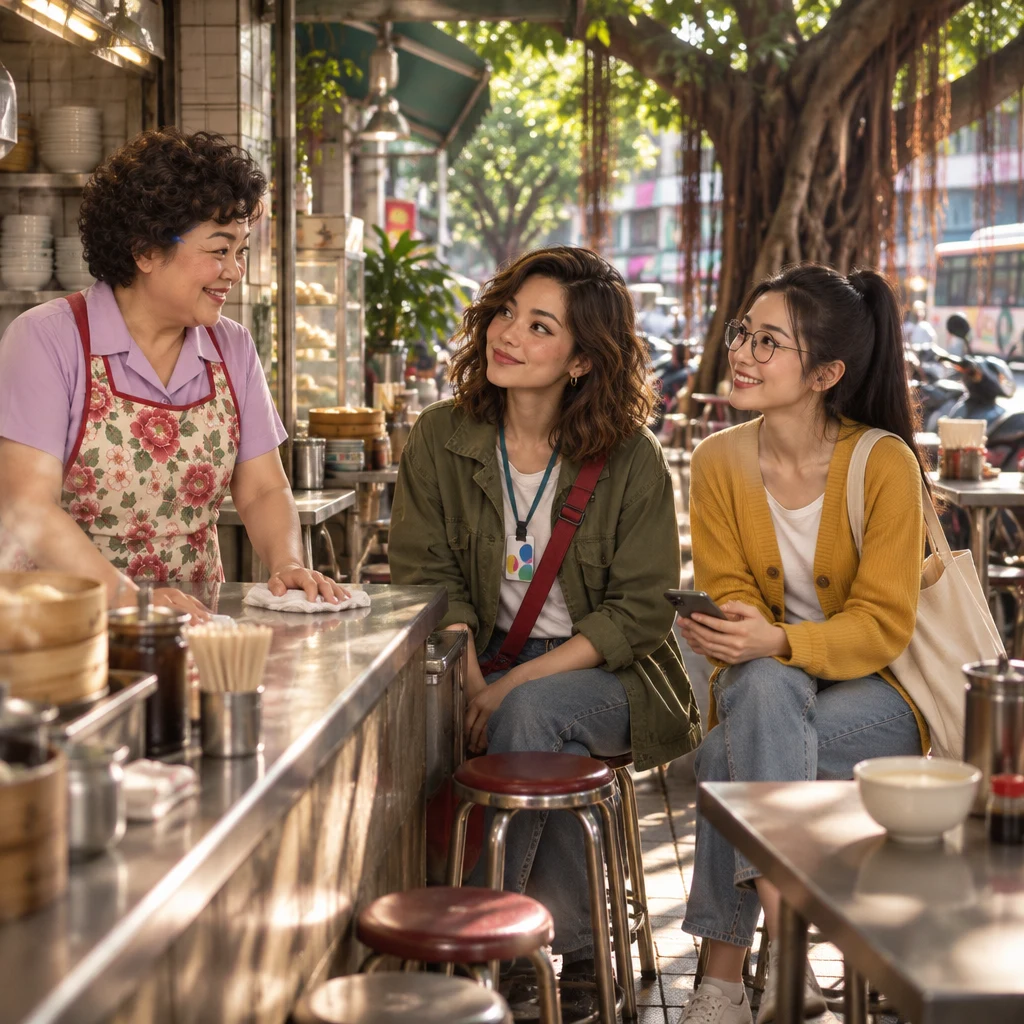
Auntie Lin wipes the counter and asks for the Tainan weekend again. Yi-Jun is already smiling, ready to make the wrong train even wilder.
Maya sits opposite her. A-Li is at the back table with two stools and soy milk he still has not finished. The fortune slip stays in the till; nobody reads it today.
Learn — retell it with a punchline
These six lines walk through a story in order: the calm start, the unexpected turn, the laugh, and the punchline.
Listen first, then say each line. Keep the twist until after the setup.

那天本來一切都很順利
That day everything was going fine.
When to use it: Start a story with how the day looked before the twist.
本來 looks back at how things stood before something else happened.
Say it: The first syllable of 一切 rises before the fourth-tone syllable.

結果我們搭錯了車
But we took the wrong train.
When to use it: Use this after a calm setup to name the unexpected turn.
結果 marks the turn you did not expect after that earlier setup.

當時真的很想笑
I really wanted to laugh then.
When to use it: Say how you felt at that moment in the story.
當時 points to that past moment, not to how you feel now.

現在想起來還是覺得好笑
Thinking back, it's still funny.
When to use it: After the event, say it still makes you laugh.
想起來 means the memory comes back to you as you speak.
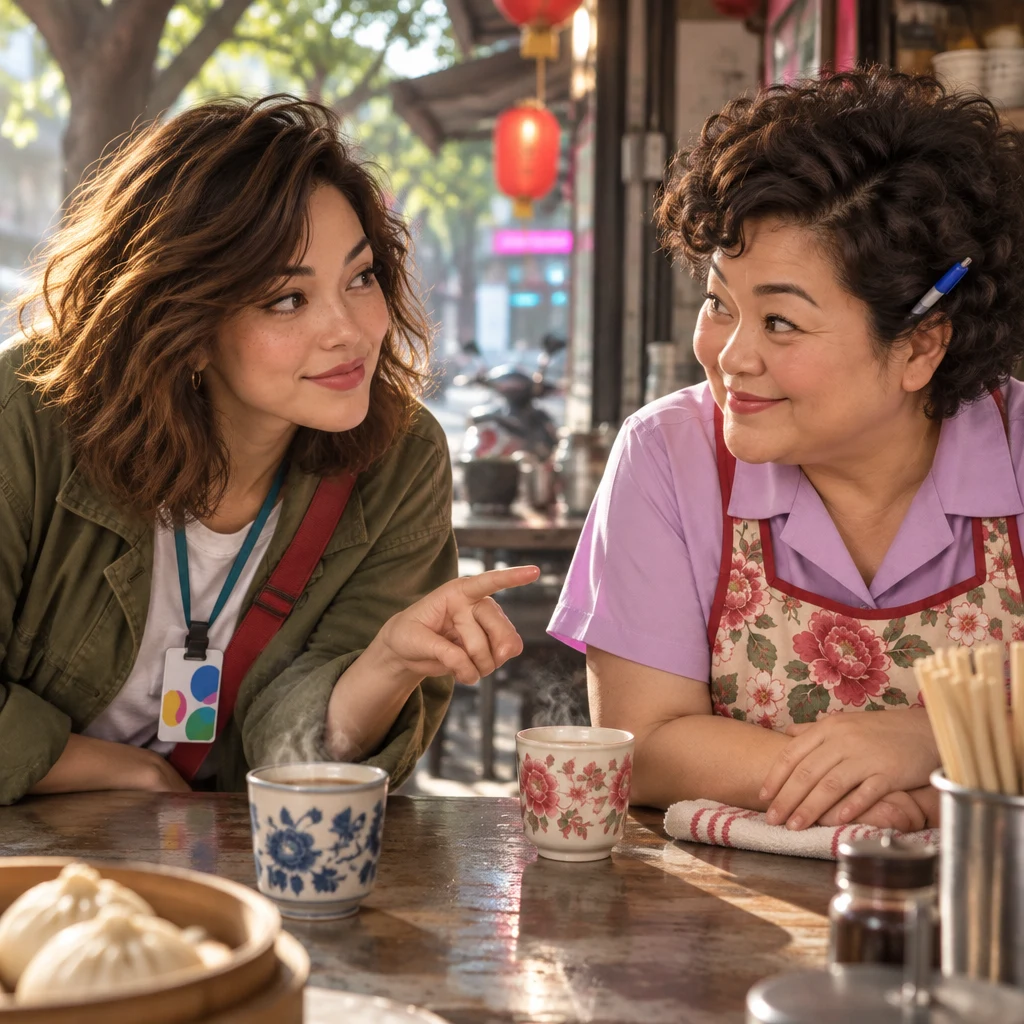
你猜怎麼著?
Guess what?
When to use it: Pause before a surprising detail so the listener leans in.
Say it: The last syllable of 怎麼著 is first tone, not a light tone.
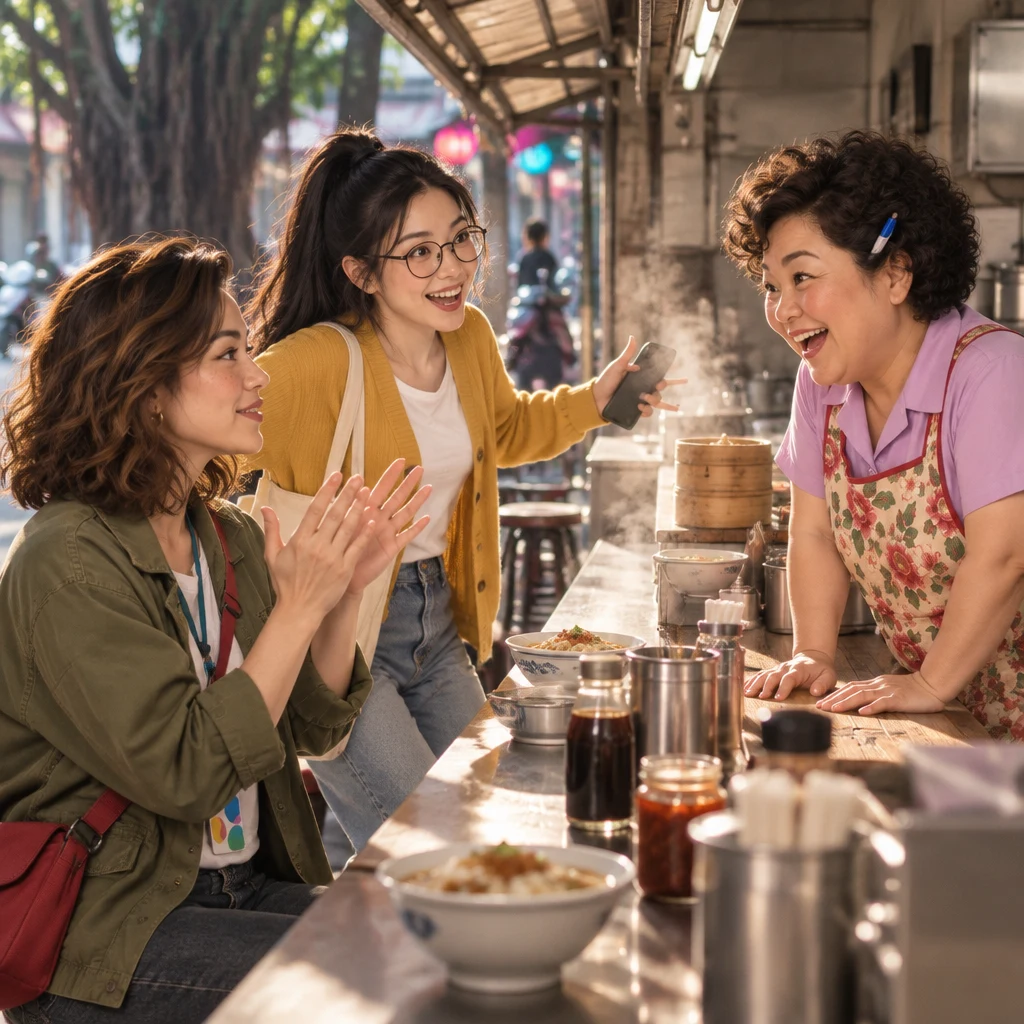
最好笑的是結尾
The funniest part is the ending.
When to use it: Save this line for the punchline of your story.
的 turns 最好笑 into the funniest part; 是 then identifies it as 結尾.
Story — Maya's version
Yi-Jun starts the Tainan story her way. Maya waits, then tells the version that actually happened.
Listen for the setup, the wrong train, and the punchline at the end.
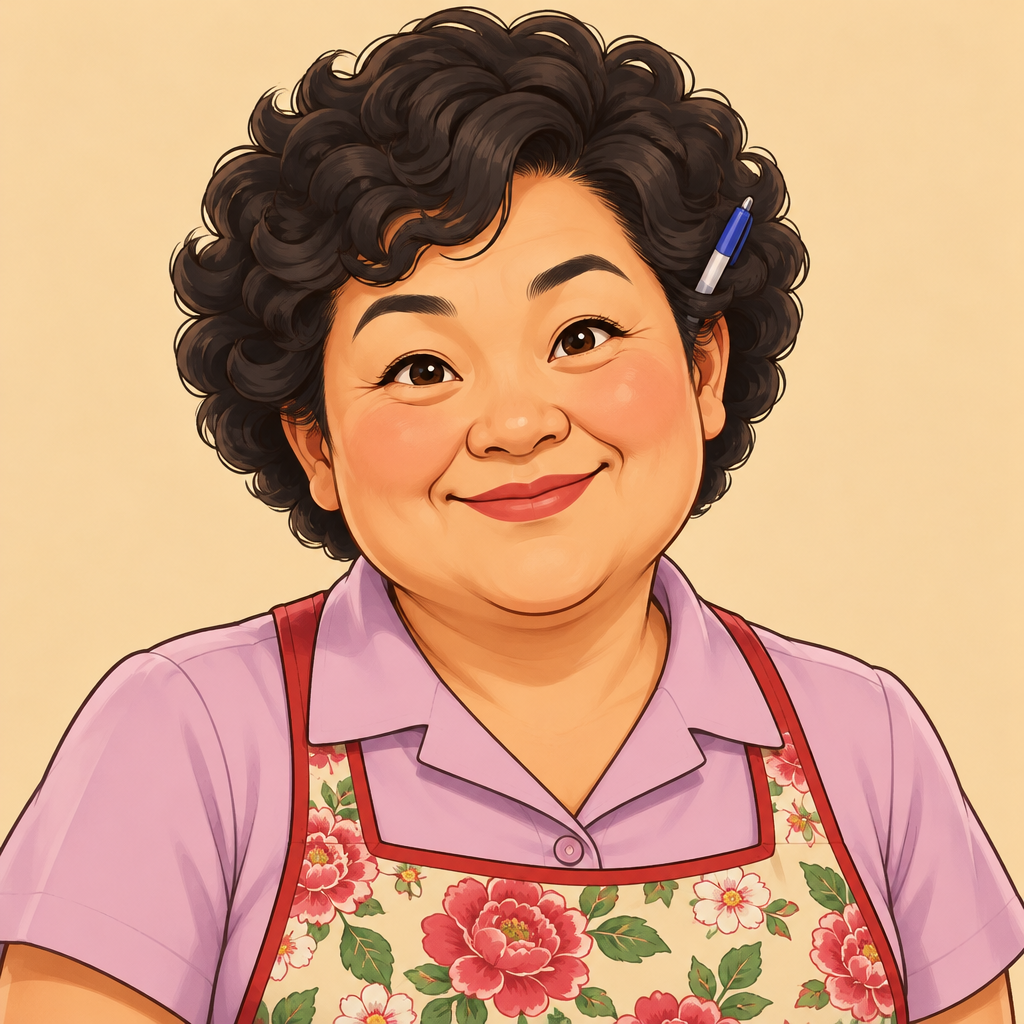 Auntie Lin臺南那趟,再說一次給我聽。That Tainan trip: tell it to me one more time.
 Yi-Jun事情是這樣的。Here's what happened.
- Yi-Jun我們差一點就回不來了啦。We almost couldn't get back.
 Maya不是這樣的啦。That's not how it was.
- Maya takes the story back and tells it in order.
- Maya那天本來一切都很順利。That day everything was going fine.
- Yi-Jun後來呢?And then?
- Maya結果我們搭錯了車。But we took the wrong train.
- Auntie Lin那時候你們怎麼樣?How were you then?
- Maya當時真的很想笑。I really wanted to laugh then.
- Yi-Jun我記得更誇張啊。I remember it being even wilder.
- Maya現在想起來還是覺得好笑。Thinking back, it's still funny.
- Auntie Lin還有更好笑的嗎?Is there something even funnier?
- Maya你猜怎麼著?Guess what?
- Auntie Lin怎麼了?What happened?
- Maya最好笑的是結尾。The funniest part is the ending.
- Maya結果我們還是吃到擔仔麵了。In the end we still got to eat danzai noodles.
- Yi-Jun好啦,你講的才對。All right, your version is the right one.
- Auntie Lin所以重點是麵,不是坐錯車。So the point is the noodles, not the wrong train.
- Maya對啊,故事不用越說越大。Right, the story doesn't need to grow each time.
 A-Li豆漿還是沒喝完。The soy milk still isn't finished.
Practice — keep the order
Work through ten short tasks. You will hear a line, fill a gap, build a sentence, and pick the next beat of the story.
After each answer, check the explanation and say the right line aloud.
0 of 10 done
What does it mean?
What does it mean?
那天本來一切都很順利
What do you say?
What do you say?
You have just said the day was going fine. Name the unexpected turn.
Fill the gap
Fill the gap
I really wanted to laugh then.
____真的很想笑
Build the line
Build the line
Thinking back, it's still funny.
Tap the words in order.
What did you hear?
What did you hear?
Swap the word
Swap the word
You reach the story's final part, where they finally eat 擔仔麵. Name that part.
最好笑的是____
Pick the reply
Yi-Jun says:
Pick the reply
我們差一點就回不來了啦。
We almost couldn't get back.
And you reply with:
What do you say?
What do you say?
You are about to tell the Tainan story from the start. Use the short lead-in, before any details.
What do you say?
What do you say?
Maya has finished the setup: that day everything was going fine. Ask what happened next.
Match the pairs
Traditional Chinese
那天本來一切都很順利Drop the English here結果我們搭錯了車Drop the English here你猜怎麼著?Drop the English here最好笑的是結尾Drop the English hereEnglish
Say it — tell it properly
You are Maya. Tell the Tainan story in the right order, and stop Yi-Jun when her version grows too big.
Listen to each cue, then speak. You can replay her line before you answer.
- Yi-Jun starts a bigger Tainan story at Banyan Breakfast.
- Yi-Jun我們那天差一點就回不來了。That day we almost couldn't get back.
- Maya (you)Start the true story: the day was going fine.
Start the true story: the day was going fine.
那天本來一切都很順利
That day everything was going fine.
0 of 7 said
Recap — what you can say now
| Traditional Chinese | English | Play |
|---|---|---|
| 那天本來一切都很順利 | That day everything was going fine. | |
| 結果我們搭錯了車 | But we took the wrong train. | |
| 當時真的很想笑 | I really wanted to laugh then. | |
| 現在想起來還是覺得好笑 | Thinking back, it's still funny. | |
| 你猜怎麼著? | Guess what? | |
| 最好笑的是結尾 | The funniest part is the ending. |
Save your progress — it’s free
Keep your place in the course and see which lines you’ve learned.
Want the next lesson in your inbox?
Get the next lesson by email, one a day.
Join the newsletterDaily lesson emails are coming soon. Newsletter subscribers get them first.
Keep practicing with Yak Cards
Today's story lines are in Yak Cards with more ways to retell a trip.
Review a few story cards so the setup and punchline stay in order.
Open Yak Cards