Traditional Chinese - Simple Explanations

Lesson 44 of 152

A friendly Taiwan Mandarin lesson scene with Traditional Chinese phrases about simple explanations on a notebook. A learner points to cause-and-effect arrows while practicing spoken Mandarin.

Goal: Make your Mandarin explanations clearer, calmer, and easier to follow.

Free traditional Chinese lessons with Taiwan Mandarin audio and speaking practice.

Sometimes the hard part is not the idea—it is explaining it without getting tangled up. Today you’ll learn friendly Mandarin “explanation glue” so your thoughts can line up nicely.

Level B1: this lesson helps you explain causes, purposes, conditions, and main points in natural Taiwan Mandarin. You’ll practice phrases like 因為___,所以___ (Yīnwèi ___, suǒyǐ ___.) and 這樣說清楚嗎? (Zhèyàng shuō qīngchǔ ma?) so your explanations feel smoother. Basically, we’re giving your ideas a comfy little roadmap—Yak Yacker style.

After this lesson you'll be able to:

  • Explain cause and result with 因為___,所以___ (Yīnwèi ___, suǒyǐ ___.).
  • Clarify your meaning with 我的意思是___ (Wǒ de yìsi shì ___.), 簡單來說,___ (Jiǎndān lái shuō, ___.), and 基本上,___ (Jīběn shàng, ___.).
  • State the main point or purpose with 重點是___ (Zhòngdiǎn shì ___.), 重點是要___ (Zhòngdiǎn shì yào ___.), and 我們這樣做是為了___ (Wǒmen zhèyàng zuò shì wèile ___.).
  • Check whether your explanation is clear with 這樣說清楚嗎? (Zhèyàng shuō qīngchǔ ma?).
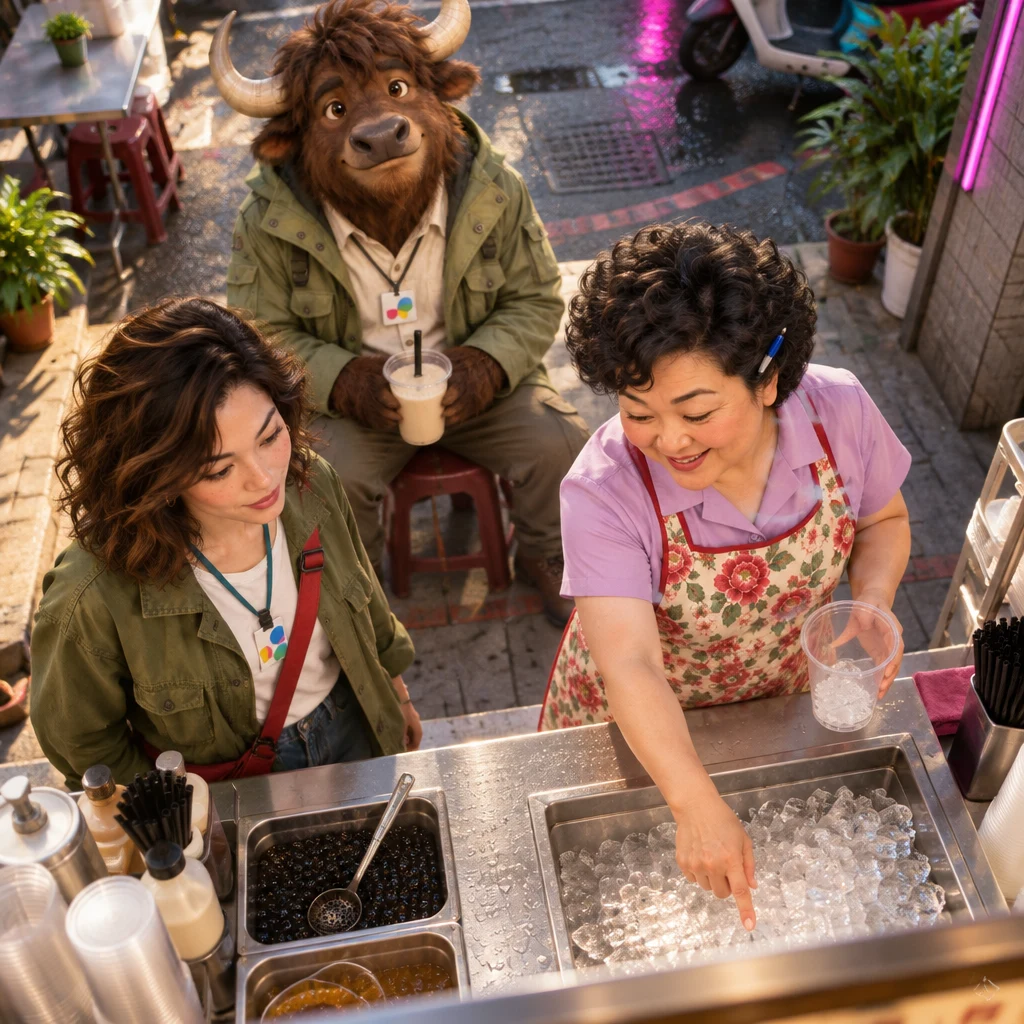
Two people in a bright Taipei café discussing an idea in Taiwan Mandarin, with Traditional Chinese notes showing the lesson topic: simple explanations. The scene feels relaxed and practical.

Ready? Let's go!

When you tap play on phrases, we track your progress through this lesson.

1. Reading + Listening Practice

Hear core phrases, repeat aloud.

因為___,所以___。

Yīnwèi ___, suǒyǐ ___.

Because of ___, ___.

Meaning: 因為___,所以___ (Yīnwèi ___, suǒyǐ ___.) means “Because ___, so ___.” Use it to connect a reason and a result clearly.

When to use: Use it when you want to explain why something happened or why you made a choice.

Tip: In casual speech, you can sometimes drop 所以 (suǒyǐ), but for practice, keep both parts to make the logic clear.

因為今天下雨,所以我不想出門。

Yīnwèi jīntiān xià yǔ, suǒyǐ wǒ bù xiǎng chūmén.

Because it’s raining today, I don’t want to go out.
因為我明天很忙,所以今晚要先準備。

Yīnwèi wǒ míngtiān hěn máng, suǒyǐ jīnwǎn yào xiān zhǔnbèi.

Because I’ll be busy tomorrow, I need to prepare tonight.

我的意思是___。

Wǒ de yìsi shì ___.

What I mean is ___.

Meaning: 我的意思是___ (Wǒ de yìsi shì ___.) means “What I mean is ___.” It helps you clarify your point.

When to use: Use it after someone looks confused, or when you want to say the same idea more simply.

我的意思是,我們可以晚一點再討論。

Wǒ de yìsi shì, wǒmen kěyǐ wǎn yìdiǎn zài tǎolùn.

What I mean is, we can discuss it a little later.
我的意思是,這個方法比較省時間。

Wǒ de yìsi shì, zhège fāngfǎ bǐjiào shěng shíjiān.

What I mean is, this method saves more time.

簡單來說,___。

Jiǎndān lái shuō, ___.

In simple words, ___.

Meaning: 簡單來說,___ (Jiǎndān lái shuō, ___.) means “In simple words, ___.” It signals that you are simplifying an idea.

When to use: Use it before a short summary or easier explanation.

簡單來說,這個活動就是大家一起練習中文。

Jiǎndān lái shuō, zhège huódòng jiùshì dàjiā yìqǐ liànxí Zhōngwén.

In simple words, this activity is everyone practicing Chinese together.
簡單來說,我們先做小的版本。

Jiǎndān lái shuō, wǒmen xiān zuò xiǎo de bǎnběn.

In simple words, we’ll make a small version first.

重點是要___。

Zhòngdiǎn shì yào ___.

The idea is to ___.

Meaning: 重點是要___ (Zhòngdiǎn shì yào ___.) means “The idea is to ___.” It explains the main action or goal.

When to use: Use it when the important thing is what people should do.

Tip: Use 重點是要 (Zhòngdiǎn shì yào) before an action. Use 重點是 (Zhòngdiǎn shì) before a noun phrase or full point.

重點是要讓大家聽得懂。

Zhòngdiǎn shì yào ràng dàjiā tīng de dǒng.

The idea is to make it understandable for everyone.
重點是要先試試看,不要想太多。

Zhòngdiǎn shì yào xiān shì shì kàn, bú yào xiǎng tài duō.

The idea is to try it first and not overthink it.

我們這樣做是為了___。

Wǒmen zhèyàng zuò shì wèile ___.

We do this to ___.

Meaning: 我們這樣做是為了___ (Wǒmen zhèyàng zuò shì wèile ___.) means “We do this to ___.” It explains purpose.

When to use: Use it when explaining why a group is doing something in a certain way.

我們這樣做是為了節省時間。

Wǒmen zhèyàng zuò shì wèile jiéshěng shíjiān.

We do this to save time.
我們這樣做是為了讓流程更清楚。

Wǒmen zhèyàng zuò shì wèile ràng liúchéng gèng qīngchǔ.

We do this to make the process clearer.

如果___,那就___。

Rúguǒ ___, nà jiù ___.

If ___, then ___.

Meaning: 如果___,那就___ (Rúguǒ ___, nà jiù ___.) means “If ___, then ___.” It explains a condition and result.

When to use: Use it for simple plans, rules, or next steps.

如果你有問題,那就直接問我。

Rúguǒ nǐ yǒu wèntí, nà jiù zhíjiē wèn wǒ.

If you have questions, then just ask me directly.
如果時間不夠,那就明天再做。

Rúguǒ shíjiān bù gòu, nà jiù míngtiān zài zuò.

If there isn’t enough time, then we’ll do it tomorrow.

其實沒有聽起來那麼難。

Qíshí méiyǒu tīng qǐlái nàme nán.

It's not as difficult as it sounds.

Meaning: 其實沒有聽起來那麼難 (Qíshí méiyǒu tīng qǐlái nàme nán.) means “It’s not as difficult as it sounds.” It reassures the listener.

When to use: Use it when someone feels nervous about a task or explanation.

你先看一次,其實沒有聽起來那麼難。

Nǐ xiān kàn yí cì, qíshí méiyǒu tīng qǐlái nàme nán.

Look at it once first; it’s not as difficult as it sounds.
這個流程有三步,其實沒有聽起來那麼難。

Zhège liúchéng yǒu sān bù, qíshí méiyǒu tīng qǐlái nàme nán.

This process has three steps; it’s not as difficult as it sounds.

基本上,___。

Jīběn shàng, ___.

Basically, ___.

Meaning: 基本上,___ (Jīběn shàng, ___.) means “Basically, ___.” It introduces a simple summary.

When to use: Use it to give the general idea without too many details.

基本上,我們今天只要完成第一部分。

Jīběn shàng, wǒmen jīntiān zhǐ yào wánchéng dì yī bùfen.

Basically, we only need to finish the first part today.
基本上,這個App是用來訂位的。

Jīběn shàng, zhège App shì yòng lái dìngwèi de.

Basically, this app is used for making reservations.

這樣說清楚嗎

Zhèyàng shuō qīngchǔ ma?

Does that make sense?

Meaning: 這樣說清楚嗎? (Zhèyàng shuō qīngchǔ ma?) means “Does that make sense?” It checks if your explanation is clear.

When to use: Use it after explaining something, especially if you want to be helpful and polite.

Tip: This sounds more natural for checking understanding than directly translating “Does it have reason?”

你先登入,再選時間。這樣說清楚嗎?

Nǐ xiān dēngrù, zài xuǎn shíjiān. Zhèyàng shuō qīngchǔ ma?

Log in first, then choose a time. Does that make sense?
我再說一次流程。這樣說清楚嗎?

Wǒ zài shuō yí cì liúchéng. Zhèyàng shuō qīngchǔ ma?

I’ll explain the process one more time. Does that make sense?

重點是___

Zhòngdiǎn shì ___.

The main point is ___ .

Meaning: 重點是___ (Zhòngdiǎn shì ___.) means “The main point is ___.” It highlights the key idea.

When to use: Use it when you want the listener to remember one important point.

重點是,我們要先確認時間。

Zhòngdiǎn shì, wǒmen yào xiān quèrèn shíjiān.

The main point is, we need to confirm the time first.
重點是這個方法比較簡單。

Zhòngdiǎn shì zhège fāngfǎ bǐjiào jiǎndān.

The main point is that this method is simpler.

它是這樣運作的:___。

Tā shì zhèyàng yùnzuò de: ___.

It works like this: ___ .

Meaning: 它是這樣運作的:___ (Tā shì zhèyàng yùnzuò de: ___.) means “It works like this: ___.” It explains how something functions.

When to use: Use it before describing steps, rules, or a system.

它是這樣運作的:你先選餐廳,再選時間。

Tā shì zhèyàng yùnzuò de: nǐ xiān xuǎn cāntīng, zài xuǎn shíjiān.

It works like this: you choose a restaurant first, then choose a time.
它是這樣運作的:大家先投票,然後我們再決定。

Tā shì zhèyàng yùnzuò de: dàjiā xiān tóupiào, ránhòu wǒmen zài juédìng.

It works like this: everyone votes first, and then we decide.

這是用來___的一種方法。

Zhè shì yòng lái ___ de yì zhǒng fāngfǎ.

It's a way to ___ .

Meaning: 這是用來___的一種方法 (Zhè shì yòng lái ___ de yì zhǒng fāngfǎ.) means “It’s a way to ___.” It explains what a method or tool is for.

When to use: Use it when introducing a strategy, tool, or simple solution.

這是用來記單字的一種方法。

Zhè shì yòng lái jì dānzì de yì zhǒng fāngfǎ.

It’s a way to memorize vocabulary.
這是用來整理想法的一種方法。

Zhè shì yòng lái zhěnglǐ xiǎngfǎ de yì zhǒng fāngfǎ.

It’s a way to organize ideas.

原因是___

Yuányīn shì ___.

The reason is that ___ .

Meaning: 原因是___ (Yuányīn shì ___.) means “The reason is that ___.” It directly gives a reason.

When to use: Use it when you want a clear, simple explanation for why something is true or happening.

原因是今天人比較多。

Yuányīn shì jīntiān rén bǐjiào duō.

The reason is that there are more people today.
原因是這個選項比較便宜。

Yuányīn shì zhège xuǎnxiàng bǐjiào piányí.

The reason is that this option is cheaper.

2. Conversational Listening Practice

Hear phrases in a real mini-conversation.

Anna is explaining to David how a restaurant reservation app works.

Anna and David talk through how something works using Traditional Chinese explanation phrases in Taiwan Mandarin. Speech bubbles show cause, purpose, and main point language.

What is Anna explaining to David?

Portrait of David in a Traditional Chinese lesson dialogue

David

這個訂位App看起來有點複雜。

Zhège dìngwèi App kàn qǐlái yǒudiǎn fùzá.

This reservation app looks a little complicated.

Portrait of Anna in a Traditional Chinese lesson dialogue

Anna

其實沒有聽起來那麼難。它是這樣運作的:你先選餐廳,再選時間。

Qíshí méiyǒu tīng qǐlái nàme nán. Tā shì zhèyàng yùnzuò de: nǐ xiān xuǎn cāntīng, zài xuǎn shíjiān.

It’s not as difficult as it sounds. It works like this: you choose a restaurant first, then choose a time.

Portrait of David in a Traditional Chinese lesson dialogue

David

所以我們為什麼要先登入?

Suǒyǐ wǒmen wèishéme yào xiān dēngrù?

So why do we need to log in first?

Portrait of Anna in a Traditional Chinese lesson dialogue

Anna

原因是系統要確認你的電話。因為要確認資料,所以需要登入。

Yuányīn shì xìtǒng yào quèrèn nǐ de diànhuà. Yīnwèi yào quèrèn zīliào, suǒyǐ xūyào dēngrù.

The reason is that the system needs to confirm your phone number. Because it needs to confirm your information, you need to log in.

Portrait of David in a Traditional Chinese lesson dialogue

David

喔,我懂了。重點是要先確認身分。

Ō, wǒ dǒng le. Zhòngdiǎn shì yào xiān quèrèn shēnfèn.

Oh, I get it. The idea is to confirm your identity first.

Portrait of Anna in a Traditional Chinese lesson dialogue

Anna

對。簡單來說,這是用來讓訂位更安全的一種方法。這樣說清楚嗎?

Duì. Jiǎndān lái shuō, zhè shì yòng lái ràng dìngwèi gèng ānquán de yì zhǒng fāngfǎ. Zhèyàng shuō qīngchǔ ma?

Right. In simple words, it’s a way to make reservations safer. Does that make sense?

3. Guided Practice

Quizzes and matching to lock in meaning.

Which phrase best means “What I mean is ___”?

You want to explain a condition and result: “If ___, then ___.” Which phrase fits?

Which phrase checks whether your explanation was clear?

Which phrase means “It works like this: ___”?

Because there will be traffic, I’m leaving a little earlier today.

A:你為什麼今天早一點出門?B:___,所以我今天早一點出門。

Basically, we’ll first explain the problem clearly.

老師說:___,我們先把問題講清楚,再開始想辦法。

Try it once first; it’s not as difficult as it sounds.

老師:這個步驟看起來有點複雜,可是你先試一次,___

Match the core phrases

Match the extra phrases

4. Speaking Practice

Say phrases yourself (mic/recording).

Recording stays on your device only. Check speech uses your browser's speech tools when available.

Say this phrase out loud:

因為___,所以___。

Yīnwèi ___, suǒyǐ ___.

Because of ___, ___.

Say this phrase out loud:

我的意思是___。

Wǒ de yìsi shì ___.

What I mean is ___.

Say this phrase out loud:

簡單來說,___。

Jiǎndān lái shuō, ___.

In simple words, ___.

Say this phrase out loud:

重點是要___。

Zhòngdiǎn shì yào ___.

The idea is to ___.

Say this phrase out loud:

我們這樣做是為了___。

Wǒmen zhèyàng zuò shì wèile ___.

We do this to ___.

Say this phrase out loud:

如果___,那就___。

Rúguǒ ___, nà jiù ___.

If ___, then ___.

Say this phrase out loud:

其實沒有聽起來那麼難。

Qíshí méiyǒu tīng qǐlái nàme nán.

It's not as difficult as it sounds.

Say this phrase out loud:

基本上,___。

Jīběn shàng, ___.

Basically, ___.

Say this phrase out loud:

這樣說清楚嗎

Zhèyàng shuō qīngchǔ ma?

Does that make sense?

Say this phrase out loud:

重點是___

Zhòngdiǎn shì ___.

The main point is ___.

Say this phrase out loud:

它是這樣運作的:___。

Tā shì zhèyàng yùnzuò de: ___.

It works like this: ___.

Say this phrase out loud:

這是用來___的一種方法。

Zhè shì yòng lái ___ de yì zhǒng fāngfǎ.

It's a way to ___.

Say this phrase out loud:

原因是___

Yuányīn shì ___.

The reason is that ___.