
New here? This is lesson 119 of a free 240-lesson Traditional Chinese course.
What I did today in Traditional Chinese
At Banyan Breakfast, Auntie Lin asks Maya about her morning. Maya tells her where she went, what she bought, and what she has eaten so far.
Learn how 了 can mark a completed action, and how 還沒 says something has not happened yet. Then ask someone whether they have eaten.
A-Li also reports his morning in one short turn. His soy milk is still unfinished, and the fortune slip remains unexplained.
By the end of this lesson
Say what you did today, say what you have not done yet, and ask whether someone has eaten.
- 我今天去了市場I went to the market today.
- 我買了三個芭樂I bought three guavas.
- 我吃了早餐I ate breakfast.
- 我還沒吃午餐I haven't had lunch yet.
- 我寫完報告了I finished the report.
- 你吃飯了嗎?Have you eaten?
Scene — a morning report
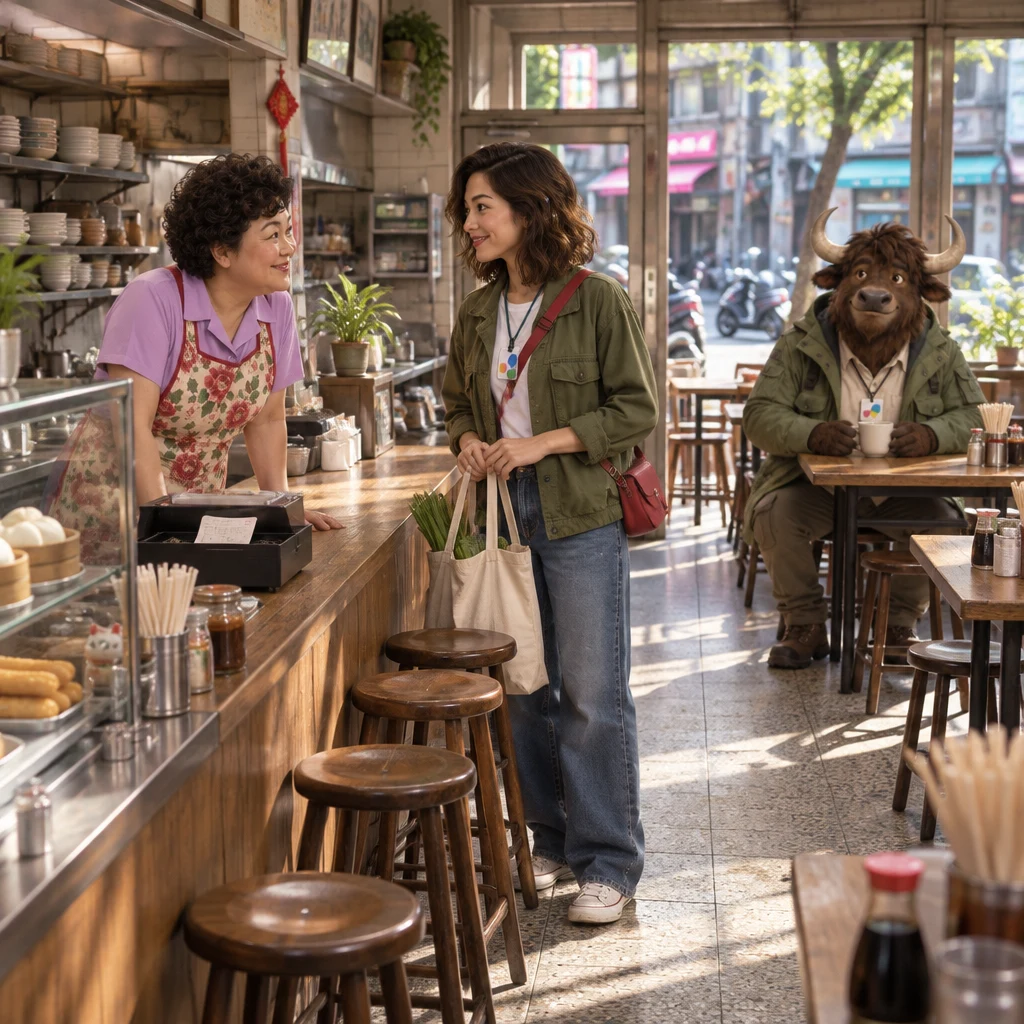
Late morning at Banyan Breakfast in Da'an, Auntie Lin asks Maya how her day has gone so far. Maya shares a quick report while A-Li listens from the back table.
A-Li has his usual soy milk beside him, still unfinished. The folded slip remains in the till, and nobody solves its mystery today.
Learn — talk about today
These lines help you report completed activities and say what you have not done yet. Notice where 了 appears in each completed-action line.
The question with 了 asks whether someone has eaten.
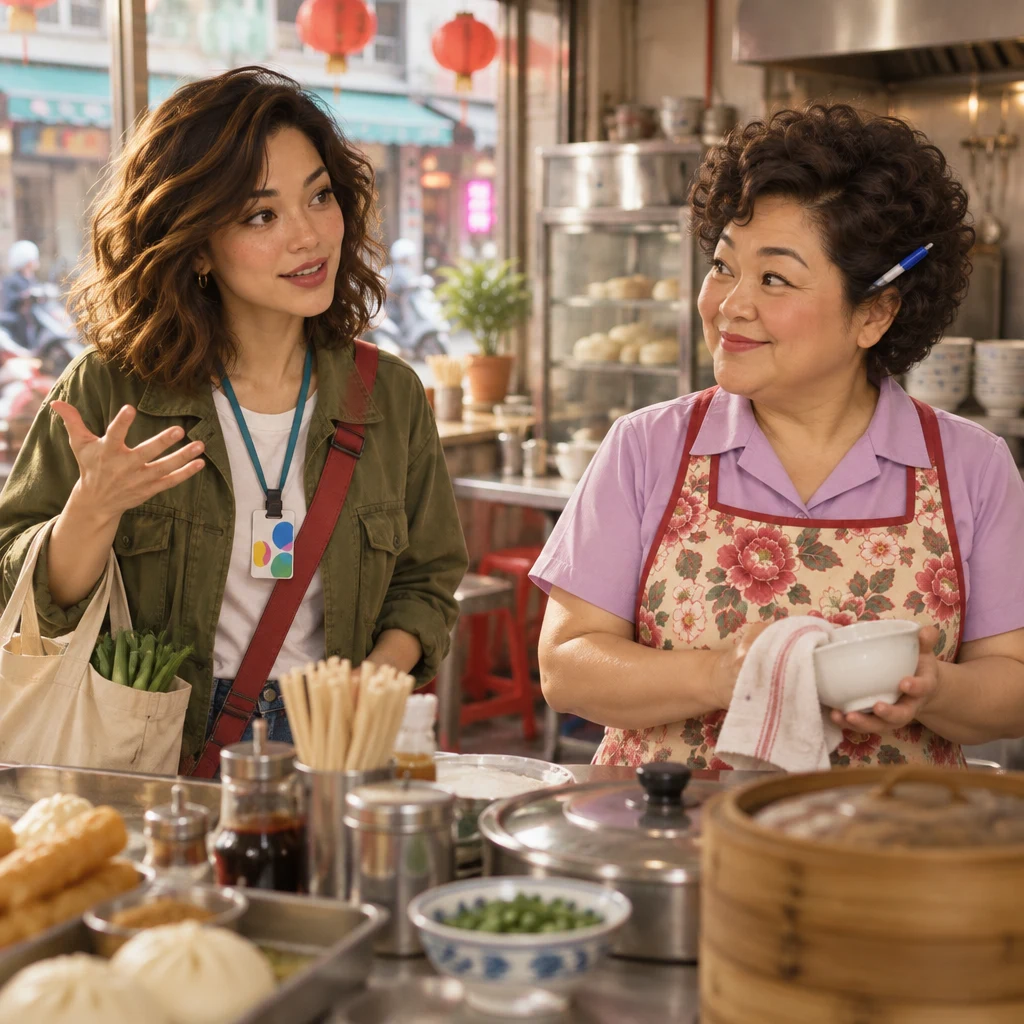
我今天去了市場
I went to the market today.
When to use it: Use this to report a completed trip to the market today.
了 after 去 marks the trip as completed.
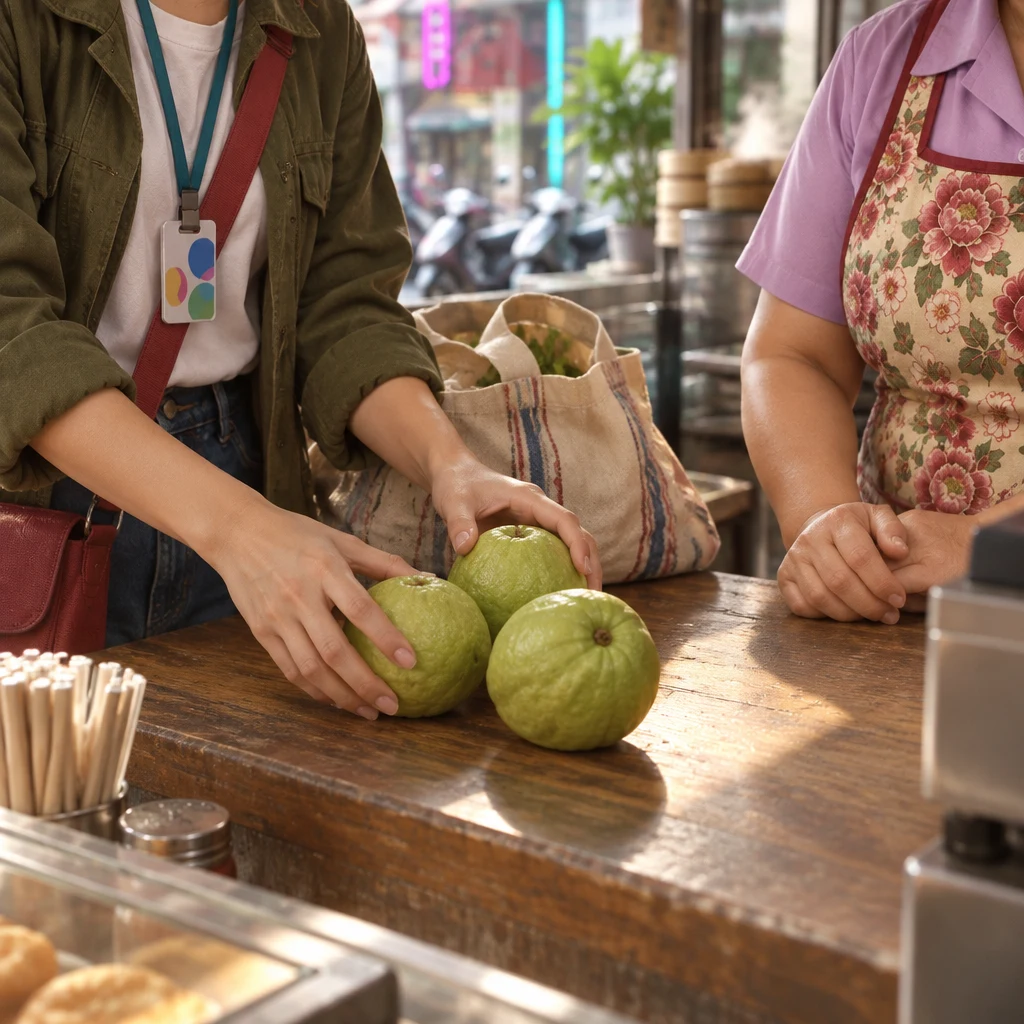
我買了三個芭樂
I bought three guavas.
When to use it: Use this to say you bought three guavas.
個 is the measure word used here to count guavas.
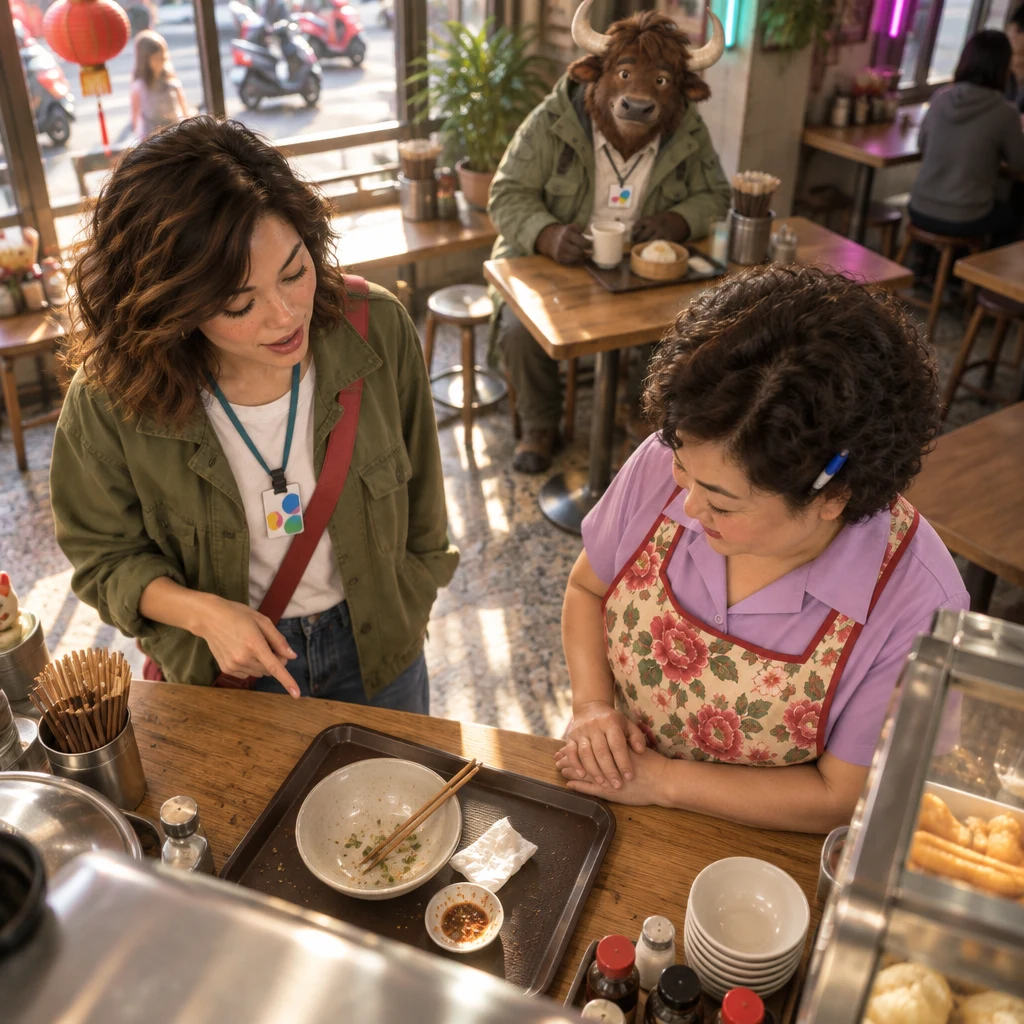
我吃了早餐
I ate breakfast.
When to use it: Use this to say that you ate breakfast.
了 after 吃 marks the meal as completed.

我還沒吃午餐
I haven't had lunch yet.
When to use it: Use this when you have not eaten lunch yet.
還沒 says an action has not happened yet.

我寫完報告了
I finished the report.
When to use it: Use this to say that your report is finished.
完 shows the report is finished; final 了 presents that result as complete.
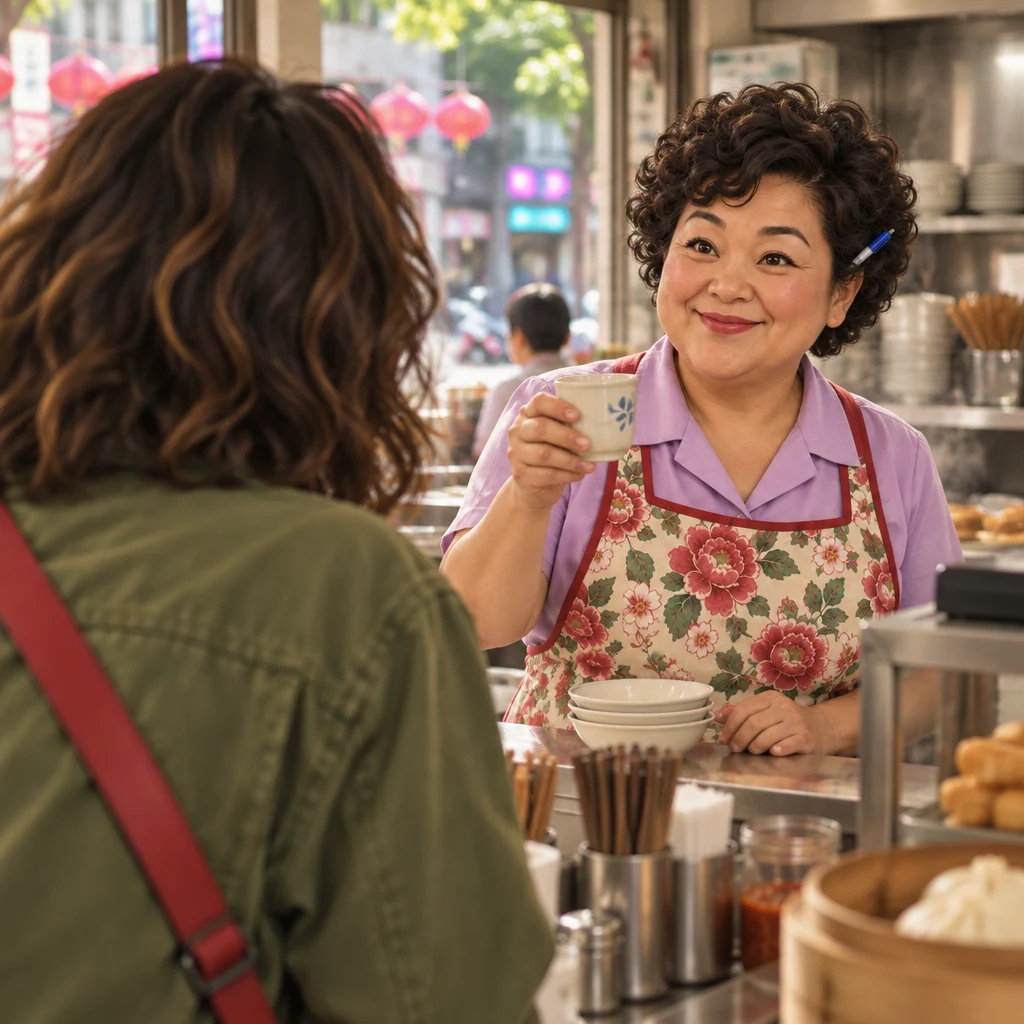
你吃飯了嗎?
Have you eaten?
When to use it: Ask this to check whether someone has eaten.
了 in this question asks whether the action is already complete.
Story — morning at breakfast
Auntie Lin asks Maya about her morning. Maya answers in six short sentences, then asks Auntie Lin if she has eaten.
A-Li listens from the back table and gives his own brief report.
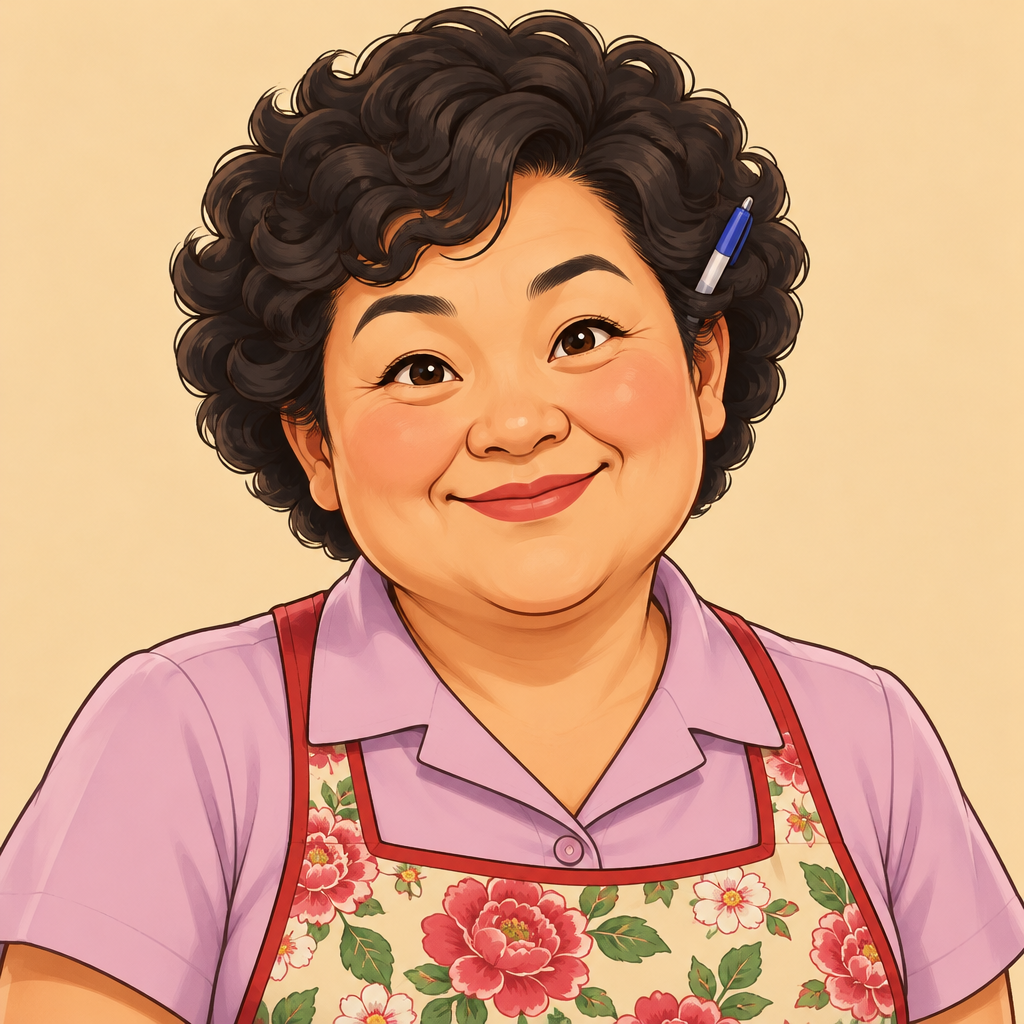 Auntie Lin你好嗎?How are you?
 Maya我很好,謝謝I'm good, thanks.
- Auntie Lin今天早上做了什麼?What did you do this morning?
- Maya我今天去了市場。I went to the market today.
- Maya我買了三個芭樂。I bought three guavas.
- Maya我吃了早餐。I ate breakfast.
- Maya我還沒吃午餐。I haven't had lunch yet.
- Maya我寫完報告了。I finished the report.
- Maya你吃飯了嗎?Have you eaten?
- Auntie Lin吃了,謝謝。I have, thanks.
 A-Li我今天去了市場,買了三個芭樂,還沒吃午餐。I went to the market today, bought three guavas, and haven't had lunch yet.
Practice — report your day
Try nine exercises to talk about what happened today, what is still unfinished, and whether someone has eaten.
Choose carefully between completed actions and 還沒, then review a greeting and its answer.
0 of 10 done
What does it mean?
What does it mean?
我今天去了市場
Build the line
Build the line
I bought three guavas.
Tap the words in order.
Pick the reply
Auntie Lin says:
Pick the reply
你早上吃了什麼?
What did you eat this morning?
And you reply with:
Fill the gap
Fill the gap
I haven't had lunch yet.
我還沒吃____
What do you say?
What do you say?
Auntie Lin asks whether your report is finished. Tell her you finished it.
What did you hear?
What did you hear?
Match the pairs
Traditional Chinese
我今天去了市場Drop the English here我吃了早餐Drop the English here我寫完報告了Drop the English here你吃飯了嗎?Drop the English hereEnglish
Pick the reply
Auntie Lin says:
Pick the reply
你好嗎?
How are you?
And you reply with:
What do you say?
What do you say?
Ask Auntie Lin whether she has eaten.
What did you hear?
What did you hear?
Say it — tell Auntie Lin
You are Maya at Banyan Breakfast. Auntie Lin asks about your morning, and you share a few details about what you did.
Listen to each cue and say the matching line aloud. Finish by asking Auntie Lin whether she has eaten.
- Auntie Lin asks Maya about her day.
- Auntie Lin今天早上做了什麼?What did you do this morning?
- Maya (you)Tell Auntie Lin you went to the market today.
Tell Auntie Lin you went to the market today.
我今天去了市場
I went to the market today.
0 of 4 said
Recap — what you can say now
| Traditional Chinese | English | Play |
|---|---|---|
| 我今天去了市場 | I went to the market today. | |
| 我買了三個芭樂 | I bought three guavas. | |
| 我吃了早餐 | I ate breakfast. | |
| 我還沒吃午餐 | I haven't had lunch yet. | |
| 我寫完報告了 | I finished the report. | |
| 你吃飯了嗎? | Have you eaten? |
Save your progress — it’s free
Keep your place in the course and see which lines you’ve learned.
Want the next lesson in your inbox?
Get the next lesson by email, one a day.
Join the newsletterDaily lesson emails are coming soon. Newsletter subscribers get them first.
Keep practicing with Yak Cards
Review today's lines and save useful phrases in Yak Cards.
Practise the completed-action lines again when you talk about your day.
Open Yak Cards