
New here? This is lesson 24 of a free 240-lesson Traditional Chinese course.
Whose is this in Traditional Chinese
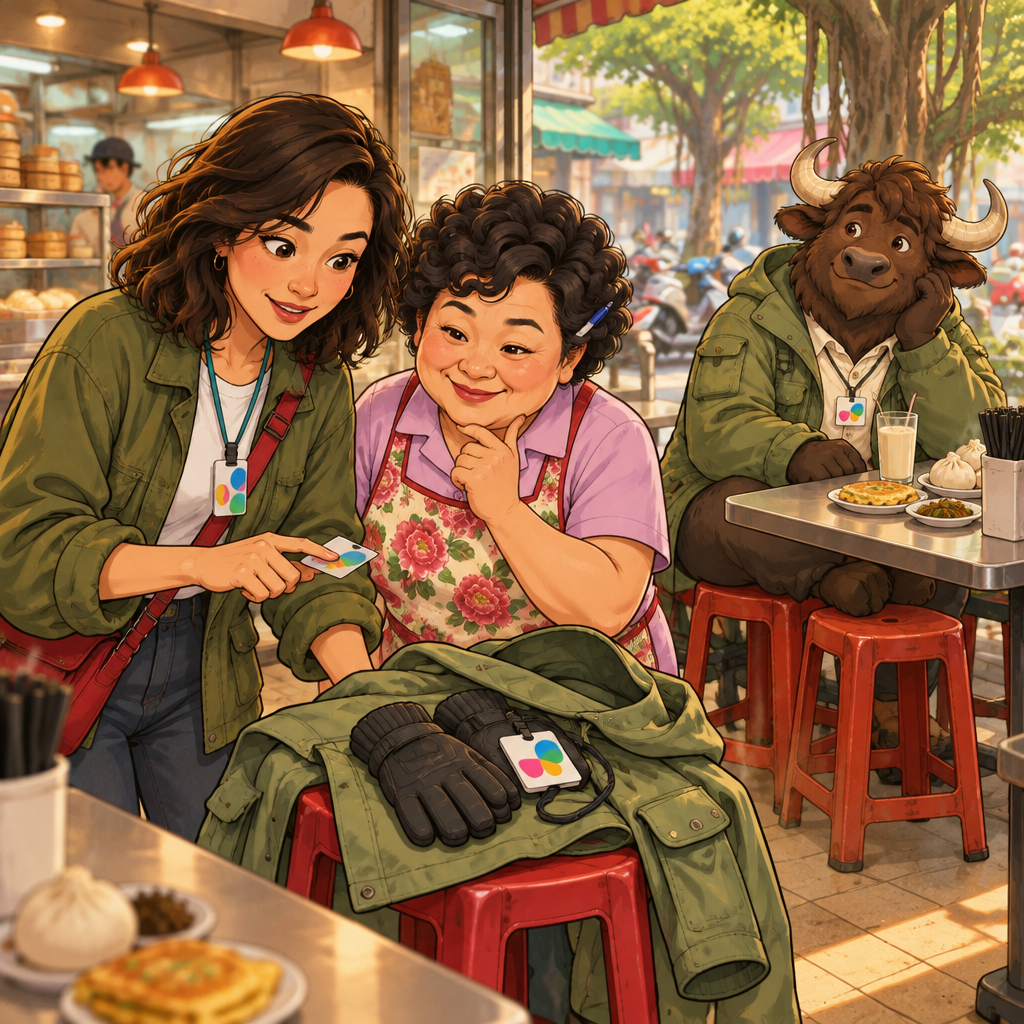
A raincoat is left on a stool at Banyan Breakfast. Maya and Auntie Lin check whether it belongs to either of them, while A-Li sits nearby with his unfinished soy milk.
Learn to ask if something is yours, say what belongs to you, and ask whose things they are. A-Li takes a long pause before answering.
Listen for the short ownership phrases, then try them in a small everyday conversation. The raincoat is ordinary; the yak's pause is not.
By the end of this lesson
Ask whether something is yours, say that it is or is not yours, and ask whose things they are.
- 這是你的嗎?Is this yours?
- 這是我的This is mine.
- 這不是我的This isn't mine.
- 那是他的That's his.
- 這些是誰的?Whose are these?
- 我的朋友的My friend's.
Scene — a raincoat on a stool
Morning at Banyan Breakfast: a raincoat rests on a stool, with gloves and A-Li's EasyCard nearby.
Maya and Auntie Lin check who owns what. A-Li is at the back table with his usual soy milk, which he still has not finished.
Learn — asking who owns something
These six useful chunks help you ask about ownership and say who something belongs to. Listen first, then repeat each line.
Notice the difference between asking about one thing and asking about several things.
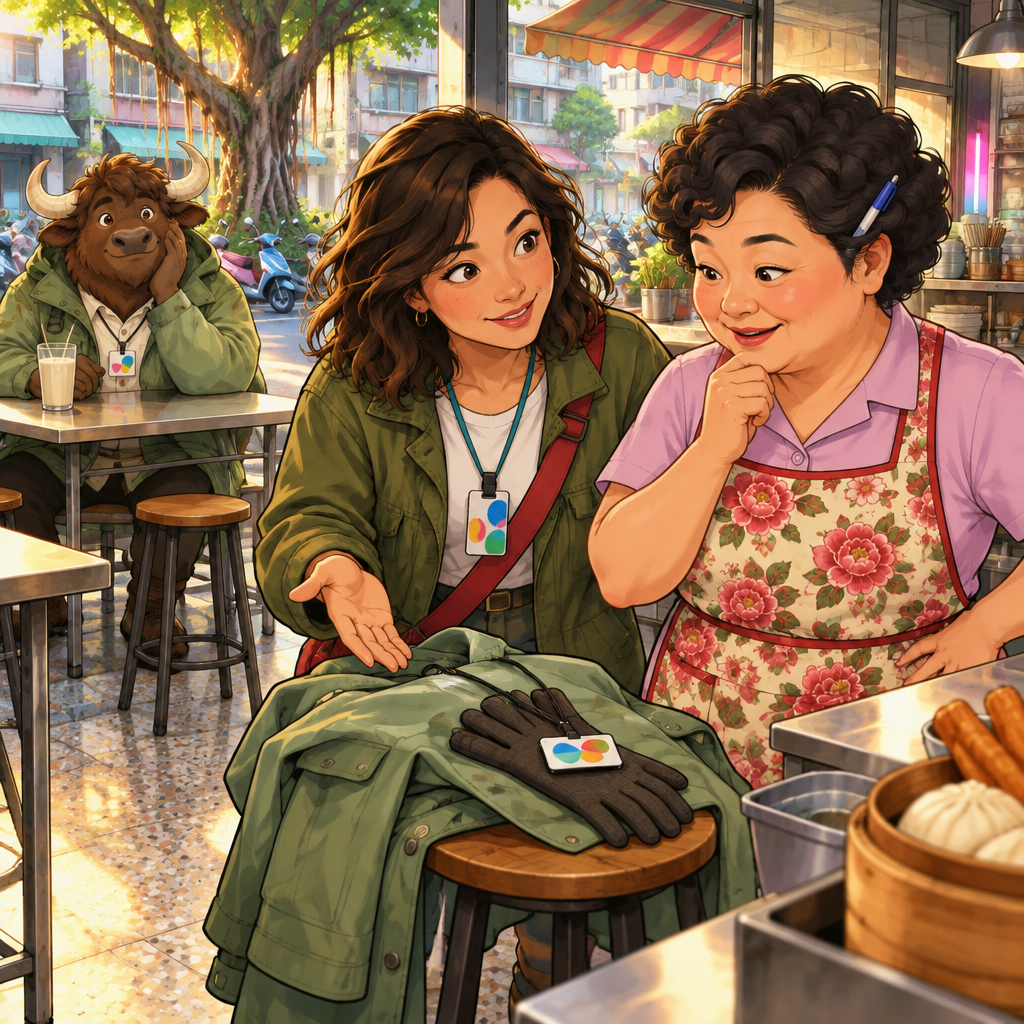
這是你的嗎?
Is this yours?
When to use it: Ask someone whether one nearby thing belongs to them.
Learn it as one piece.
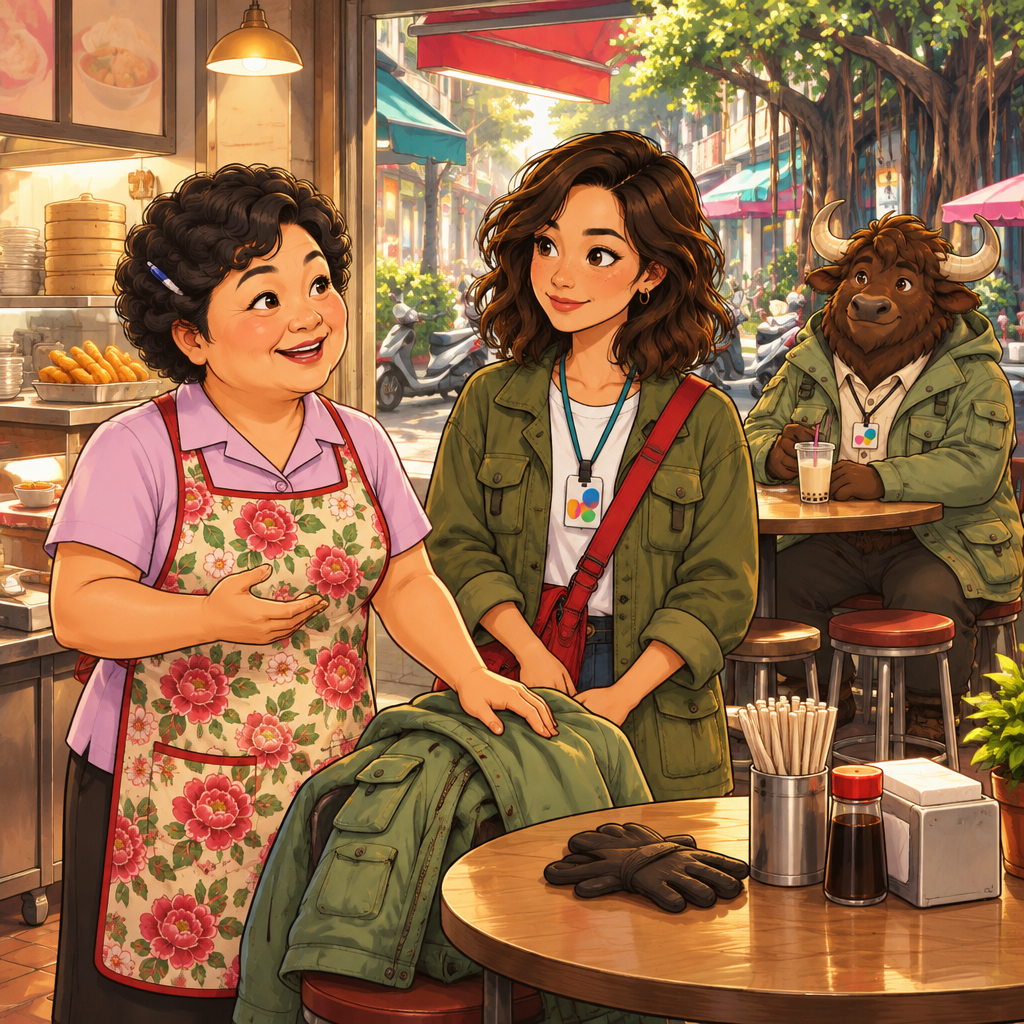
這是我的
This is mine.
When to use it: Say that a nearby thing belongs to you.
Learn it as one piece.
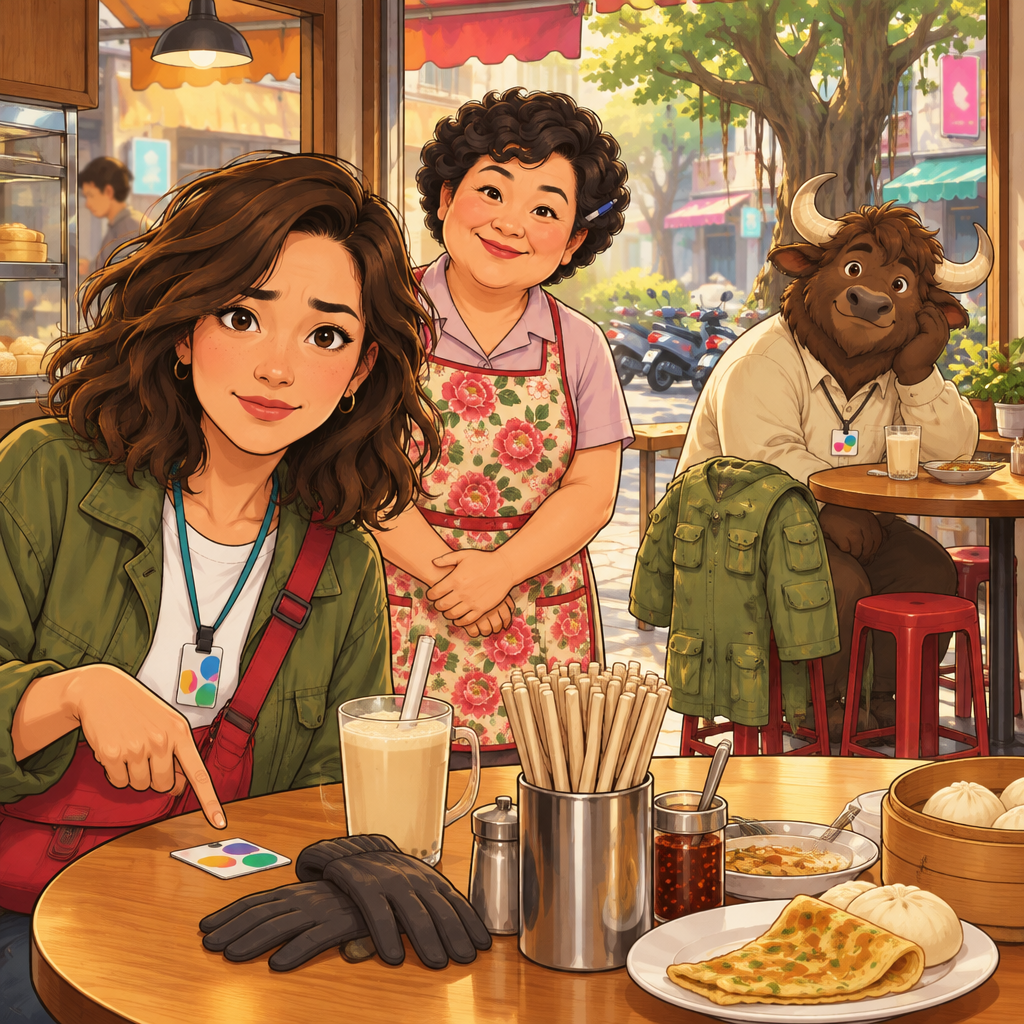
這不是我的
This isn't mine.
When to use it: Say that a nearby thing does not belong to you.
Learn it as one piece.
Say it: 不 changes to a rising tone before the fourth-tone 是.
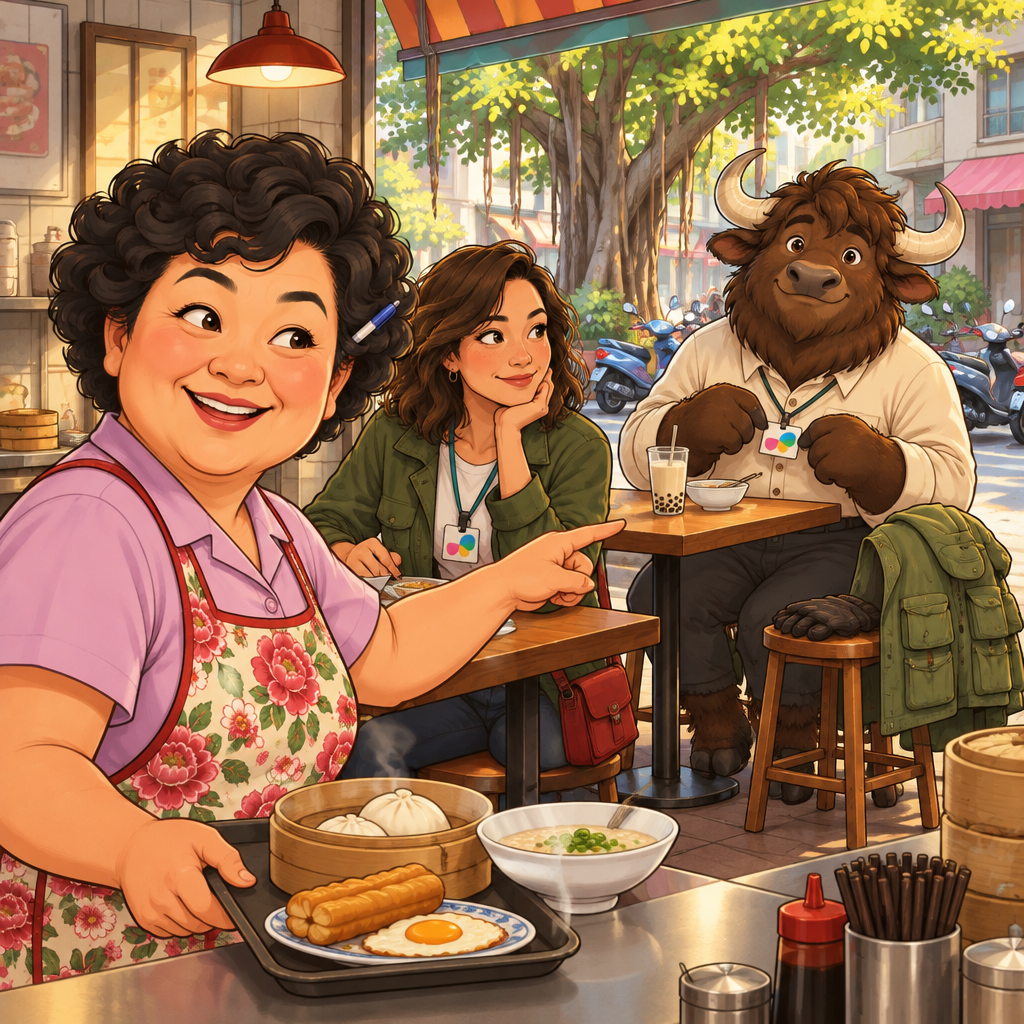
那是他的
That's his.
When to use it: Point out that something belongs to him.
Learn it as one piece.
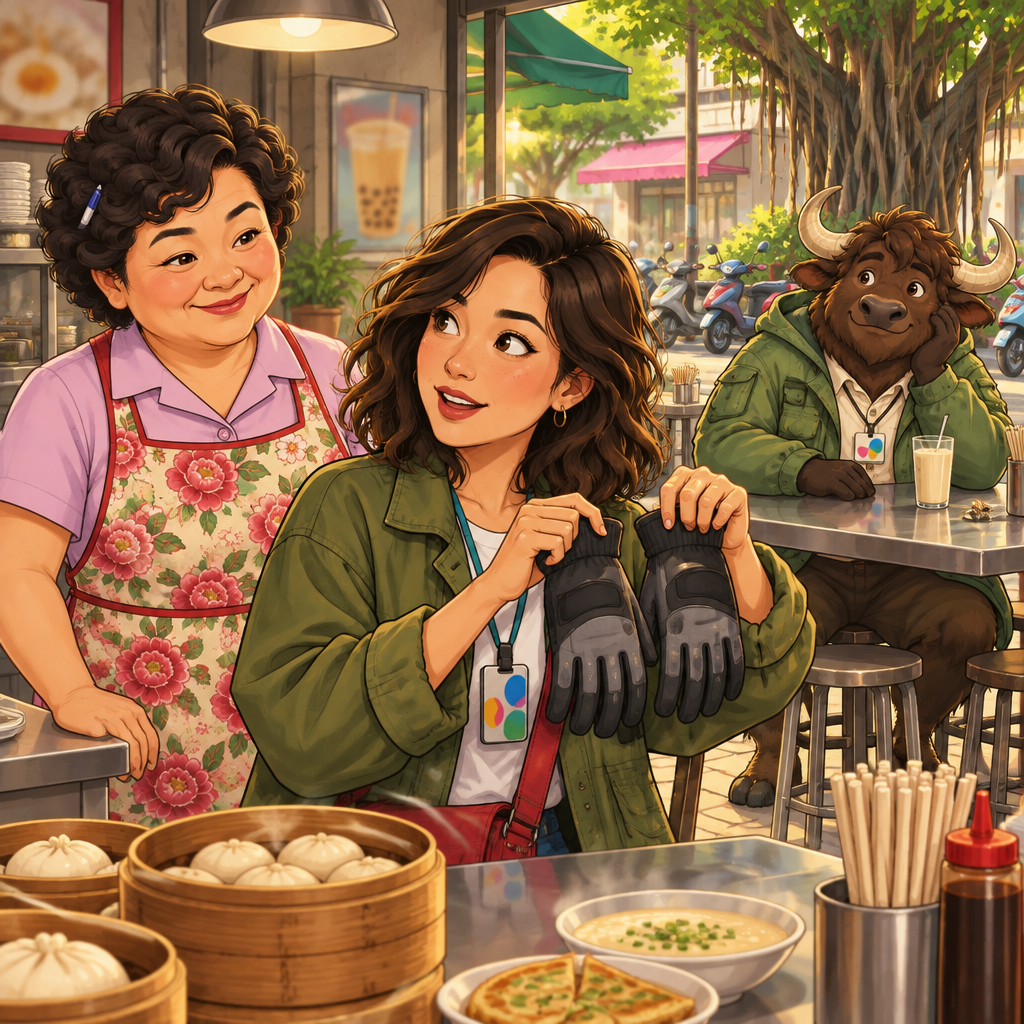
這些是誰的?
Whose are these?
When to use it: Ask who owns several nearby things.
Learn it as one piece.
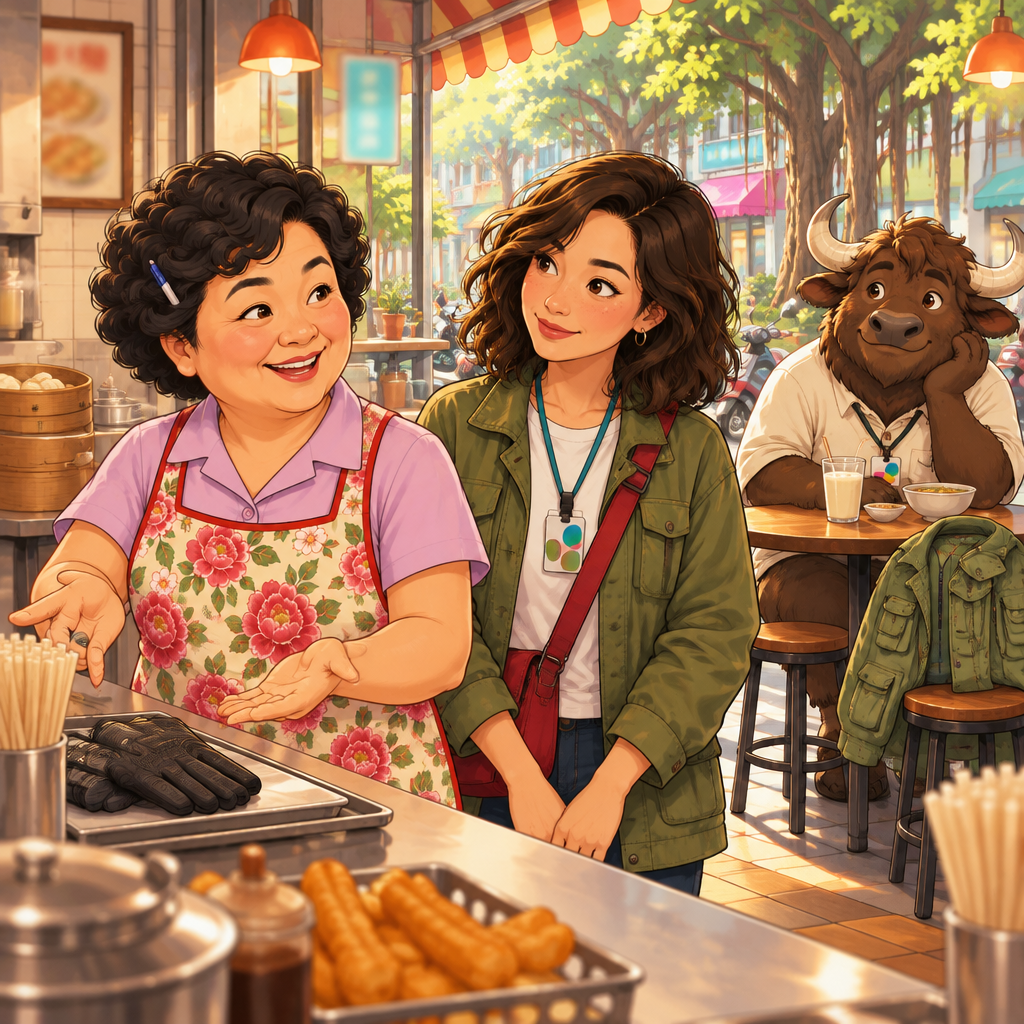
我的朋友的
My friend's.
When to use it: Answer that something belongs to your friend.
Learn it as one piece.
Story — the raincoat at breakfast
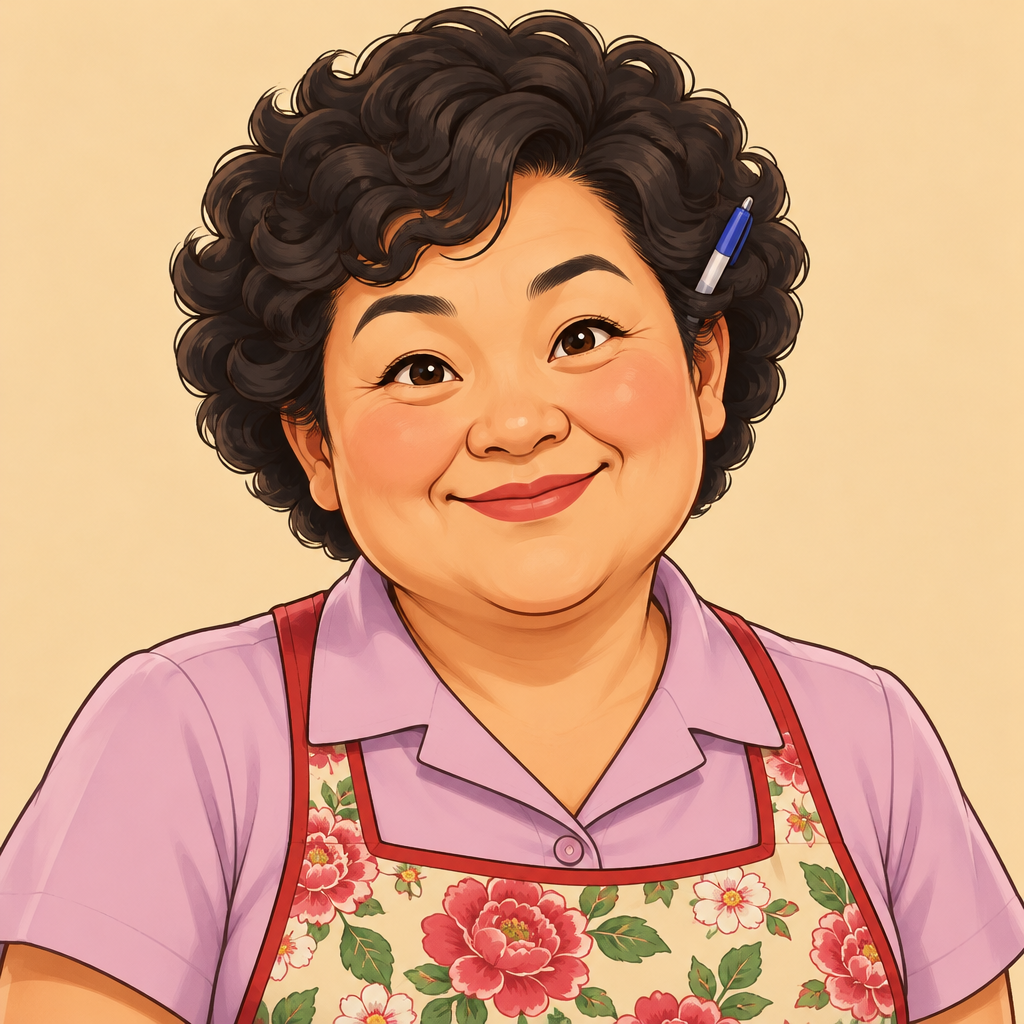
A raincoat is on a stool at Banyan Breakfast, beside gloves and A-Li's EasyCard. Maya and Auntie Lin check the things around them.
Neither claims the raincoat. When Auntie Lin finally asks A-Li, he pauses before answering.
 Auntie Lin美女,早安!Good morning, beautiful!
 Maya早安。Good morning.
- Maya這是你的嗎?Is this yours?
- Auntie Lin這不是我的。This isn't mine.
- Auntie Lin這是你的嗎?Is this yours?
- Maya這不是我的。This isn't mine.
- Maya這些是誰的?Whose are these?
- Auntie Lin我的朋友的。My friend's.
- Auntie Lin那是他的。That's his.
- Auntie Lin阿犛,這是你的嗎?A-Li, is this yours?
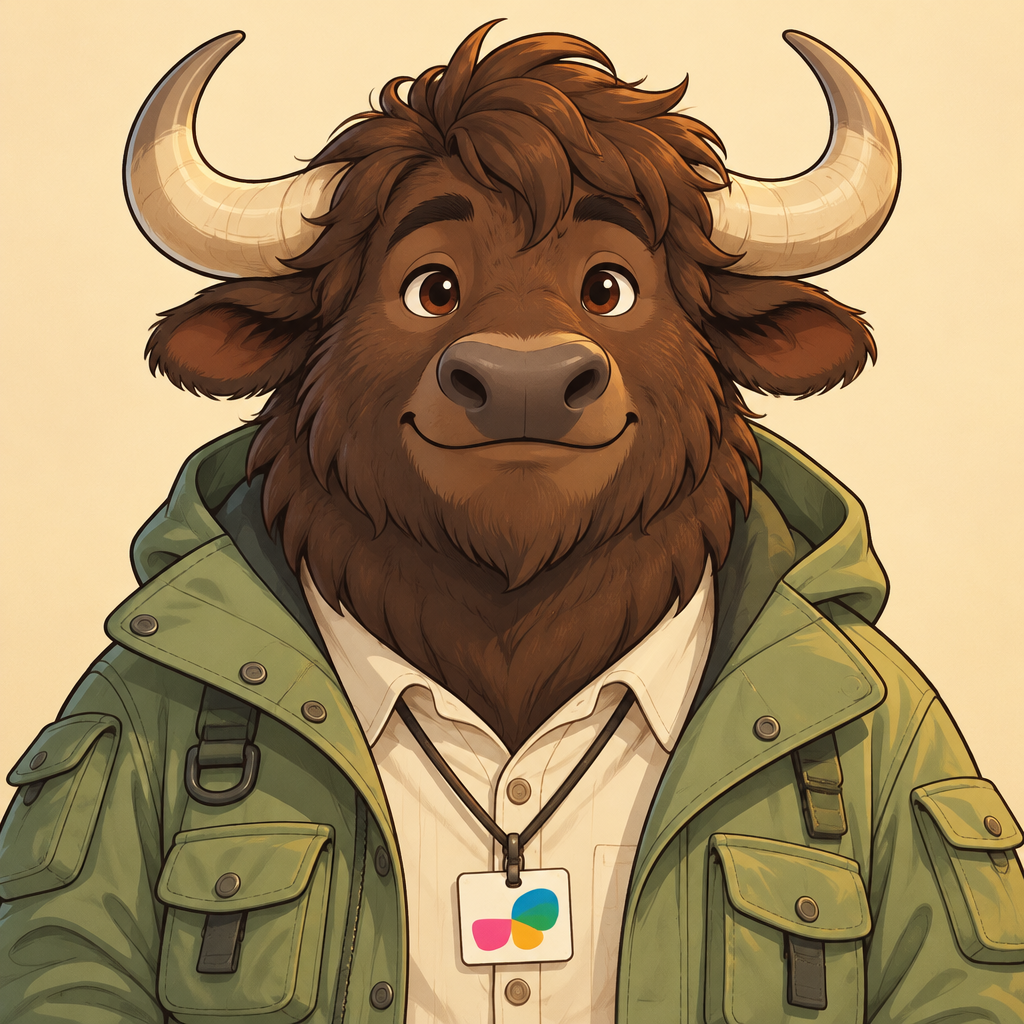 A-Li嗯……這是我的。Mm… this is mine.
- Auntie Lin謝謝喔。Thanks.
Practice — whose things are these
Try these quick exercises with the raincoat and the other things on the stools. Choose, build, and say the line that fits each moment.
The last questions bring back a couple of familiar greetings and polite words.
0 of 9 done
What does it mean?
What does it mean?
這是你的嗎?
What do you say?
What do you say?
Auntie Lin asks if the raincoat is yours. Tell her it is not.
Build the line
Build the line
This is mine.
Tap the words in order.
Fill the gap
Fill the gap
That's his.
那是____的
Match the pairs
Traditional Chinese
這是你的嗎?Drop the English here這是我的Drop the English here這不是我的Drop the English here那是他的Drop the English hereEnglish
What did you hear?
What did you hear?
Pick the reply
Auntie Lin says:
Pick the reply
這些是誰的?
Whose are these?
And you reply with:
What does it mean?
What does it mean?
早安
What do you say?
What do you say?
Auntie Lin thanks you for checking the raincoat. Thank her too.
Say it — claim what is yours
You play Maya at Banyan Breakfast. Answer Auntie Lin's questions about the things on the stools, then ask A-Li about the raincoat.
Listen to each cue, then say Maya's line out loud. A-Li pauses before he answers.
- Maya and Auntie Lin check the raincoat.
- Auntie Lin這是你的嗎?Is this yours?
- Maya (you)Tell Auntie Lin the raincoat is not yours.
Tell Auntie Lin the raincoat is not yours.
這不是我的
This isn't mine.
0 of 3 said
Recap — what you can say now
| Traditional Chinese | English | Play |
|---|---|---|
| 這是你的嗎? | Is this yours? | |
| 這是我的 | This is mine. | |
| 這不是我的 | This isn't mine. | |
| 那是他的 | That's his. | |
| 這些是誰的? | Whose are these? | |
| 我的朋友的 | My friend's. |
Save your progress — it’s free
Keep your place in the course and see which lines you’ve learned.
Want the next lesson in your inbox?
Get the next lesson by email, one a day.
Join the newsletterDaily lesson emails are coming soon. Newsletter subscribers get them first.
Keep practicing with Yak Cards
Today's ownership lines are in Yak Cards with more useful everyday phrases.
Review a few cards each day so the short phrases come to mind quickly.
Open Yak Cards