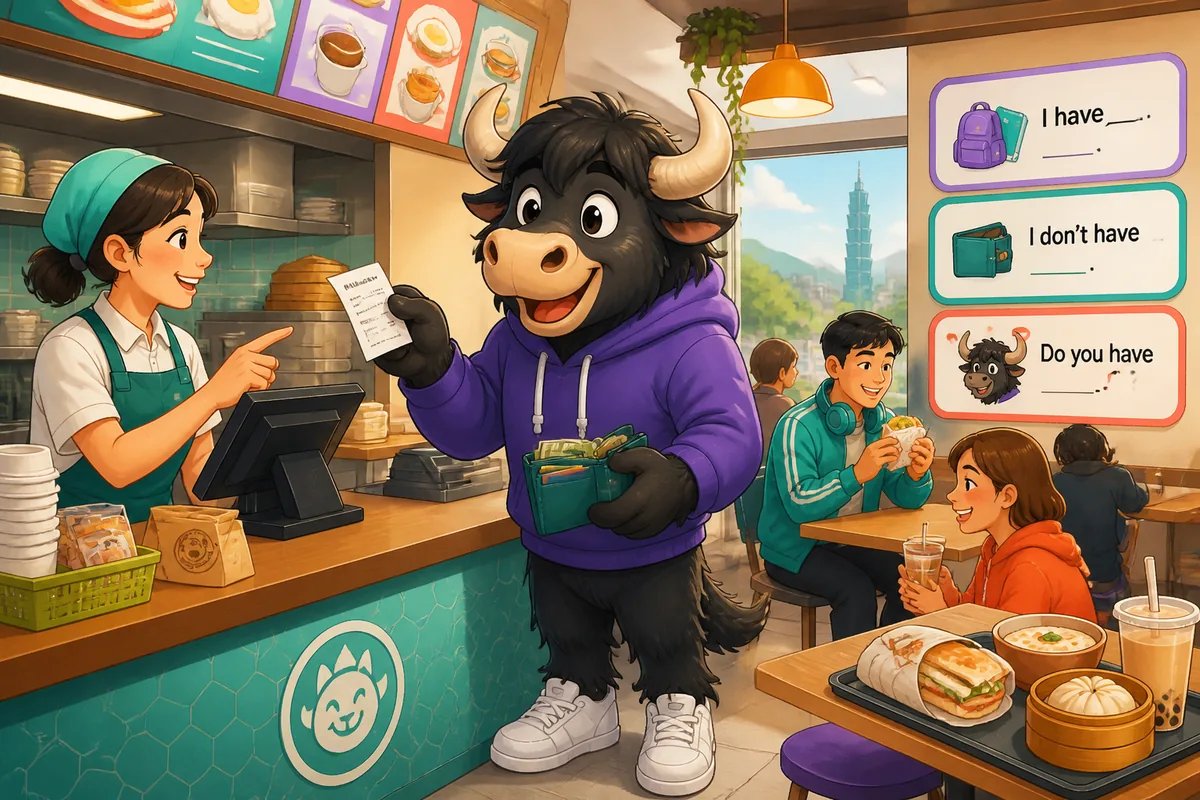
Welcome back! Today we’re doing a tiny but powerful thing: claiming your stuff in Mandarin—politely, clearly, and without starting a backpack mystery.
By the end, you’ll be able to ask “Do you have it?” and say “It’s mine” like you actually need the answer right now.
Level A1: In this lesson, you’ll practice possession phrases like 我有 ___ (Wǒ yǒu ___), 我沒有 ___ (Wǒ méiyǒu ___), and 這是我的 (Zhè shì wǒ de). You’ll also learn how to ask 這是你的___嗎? (Zhè shì nǐ de ___ ma?) when something might belong to someone else. Very useful for cafés, classrooms, travel days, and the classic “whose charger is this?” moment.
After this lesson you'll be able to:
Say you have something with 我有 ___ (Wǒ yǒu ___).
Say you don’t have something with 我沒有 ___ (Wǒ méiyǒu ___).
Ask if someone has something using 你有 ___ 嗎? (Nǐ yǒu ___ ma?).
Say something is yours with 這是我的___ (Zhè shì wǒ de ___) and 這是我的 (Zhè shì wǒ de).
At A1, answer possession questions naturally with 有,我有___ (Yǒu, wǒ yǒu ___) or 沒有,我沒有___ (Méiyǒu, wǒ méiyǒu ___).
Ready? Let's go!
When you tap play on phrases, we track your progress through this lesson.
1. Reading + Listening Practice
Hear core phrases, repeat aloud.
我有 ___
Wǒ yǒu ___.
I have ___.
Meaning: 我有 ___ (Wǒ yǒu ___) means “I have ___.”
When to use: Use it to say you have something. Examples: 我有手機。 (Wǒ yǒu shǒujī.) — I have a phone. 我有水。 (Wǒ yǒu shuǐ.) — I have water.
Tip: Don’t add 是 (shì) here. Say 我有手機 (Wǒ yǒu shǒujī), not 我是有手機 (Wǒ shì yǒu shǒujī).
我有手機
Wǒ yǒu shǒujī.
I have a phone.
我有水
Wǒ yǒu shuǐ.
I have water.
我沒有 ___
Wǒ méiyǒu ___.
I don't have ___.
Meaning: 我沒有 ___ (Wǒ méiyǒu ___) means “I don’t have ___.”
When to use: Use it to say you do not have something. Examples: 我沒有筆。 (Wǒ méiyǒu bǐ.) — I don’t have a pen. 我沒有鑰匙。 (Wǒ méiyǒu yàoshi.) — I don’t have keys.
Tip: For “don’t have,” use 沒有 (méiyǒu), not 不有 (bù yǒu).
我沒有筆
Wǒ méiyǒu bǐ.
I don’t have a pen.
我沒有鑰匙
Wǒ méiyǒu yàoshi.
I don’t have keys.
你有 ___ 嗎
Nǐ yǒu ___ ma?
Do you have ___?
Meaning: 你有 ___ 嗎? (Nǐ yǒu ___ ma?) means “Do you have ___?”
When to use: Use it to ask if someone has a specific thing. Examples: 你有手機嗎? (Nǐ yǒu shǒujī ma?) — Do you have a phone? 你有護照嗎? (Nǐ yǒu hùzhào ma?) — Do you have your passport?
Tip: Put 嗎 (ma) at the end of the question.
你有手機嗎
Nǐ yǒu shǒujī ma?
Do you have a phone?
你有護照嗎
Nǐ yǒu hùzhào ma?
Do you have your passport?
你有 ___ 嗎
Nǐ yǒu ___ ma?
Do you have any ___?
Meaning: 你有 ___ 嗎? (Nǐ yǒu ___ ma?) can also mean “Do you have any ___?”
When to use: Use it when English would say “any,” but Mandarin usually does not need an extra word. Examples: 你有水嗎? (Nǐ yǒu shuǐ ma?) — Do you have any water? 你有零錢嗎? (Nǐ yǒu língqián ma?) — Do you have any change?
你有水嗎
Nǐ yǒu shuǐ ma?
Do you have any water?
你有零錢嗎
Nǐ yǒu língqián ma?
Do you have any change?
有,我有___。
Yǒu, wǒ yǒu ___.
Yes, I have ___.
Meaning: 有,我有___ (Yǒu, wǒ yǒu ___) means “Yes, I have ___.”
When to use: Use it as a natural short yes-answer to a 有 (yǒu) question. Examples: 有,我有筆。 (Yǒu, wǒ yǒu bǐ.) — Yes, I have a pen. 有,我有水。 (Yǒu, wǒ yǒu shuǐ.) — Yes, I have water.
Tip: In Mandarin, answer with 有 (yǒu) for “yes, have,” not just 是 (shì).
有,我有筆
Yǒu, wǒ yǒu bǐ.
Yes, I have a pen.
有,我有水
Yǒu, wǒ yǒu shuǐ.
Yes, I have water.
沒有,我沒有___。
Méiyǒu, wǒ méiyǒu ___.
No, I don't have ___.
Meaning: 沒有,我沒有___ (Méiyǒu, wǒ méiyǒu ___) means “No, I don’t have ___.”
When to use: Use it as a natural short no-answer to a 有 (yǒu) question. Examples: 沒有,我沒有手機。 (Méiyǒu, wǒ méiyǒu shǒujī.) — No, I don’t have a phone. 沒有,我沒有水。 (Méiyǒu, wǒ méiyǒu shuǐ.) — No, I don’t have water.
沒有,我沒有手機。
Méiyǒu, wǒ méiyǒu shǒujī.
No, I don’t have a phone.
沒有,我沒有水。
Méiyǒu, wǒ méiyǒu shuǐ.
No, I don’t have water.
這是我的___。
Zhè shì wǒ de ___.
This is my ___.
Meaning: 這是我的___ (Zhè shì wǒ de ___) means “This is my ___.”
When to use: Use it to say a specific item belongs to you. Examples: 這是我的包包。 (Zhè shì wǒ de bāobāo.) — This is my bag. 這是我的手機。 (Zhè shì wǒ de shǒujī.) — This is my phone.
Tip: Remember 的 (de) after 我 (wǒ): 我的 (wǒ de) means “my.”
這是我的包包
Zhè shì wǒ de bāobāo.
This is my bag.
這是我的手機
Zhè shì wǒ de shǒujī.
This is my phone.
這是你的___嗎?
Zhè shì nǐ de ___ ma?
Is this your ___?
Meaning: 這是你的___嗎? (Zhè shì nǐ de ___ ma?) means “Is this your ___?”
When to use: Use it when you think something may belong to the listener. Examples: 這是你的筆嗎? (Zhè shì nǐ de bǐ ma?) — Is this your pen? 這是你的包包嗎? (Zhè shì nǐ de bāobāo ma?) — Is this your bag?
這是你的筆嗎
Zhè shì nǐ de bǐ ma?
Is this your pen?
這是你的包包嗎?
Zhè shì nǐ de bāobāo ma?
Is this your bag?
那不是我的___。
Nà bú shì wǒ de ___.
That's not my ___.
Meaning: 那不是我的___ (Nà bú shì wǒ de ___) means “That’s not my ___.”
When to use: Use it to deny that something belongs to you. Examples: 那不是我的包包。 (Nà bú shì wǒ de bāobāo.) — That’s not my bag. 那不是我的手機。 (Nà bú shì wǒ de shǒujī.) — That’s not my phone.
那不是我的包包。
Nà bú shì wǒ de bāobāo.
That’s not my bag.
那不是我的手機。
Nà bú shì wǒ de shǒujī.
That’s not my phone.
我有帶___
Wǒ yǒu dài ___.
I have ___ with me.
Meaning: 我有帶___ (Wǒ yǒu dài ___) means “I have ___ with me.”
When to use: Use it when you brought something and have it with you now. Examples: 我有帶護照。 (Wǒ yǒu dài hùzhào.) — I have my passport with me. 我有帶水。 (Wǒ yǒu dài shuǐ.) — I have water with me.
Tip: 我有帶___ (Wǒ yǒu dài ___) is about having it with you now; 我有___ (Wǒ yǒu ___) is more general.
我有帶護照
Wǒ yǒu dài hùzhào.
I have my passport with me.
我有帶水
Wǒ yǒu dài shuǐ.
I have water with me.
這是我的
Zhè shì wǒ de.
It's mine.
Meaning: 這是我的 (Zhè shì wǒ de) means “It’s mine.”
When to use: Use it when the object is already clear, so you don’t need to name it again. Examples: 這是我的。 (Zhè shì wǒ de.) — It’s mine. 對,這是我的。 (Duì, zhè shì wǒ de.) — Yes, it’s mine.
這是我的
Zhè shì wǒ de.
It’s mine.
對,這是我的
Duì, zhè shì wǒ de.
Yes, it’s mine.
這是你的
Zhè shì nǐ de.
It's yours.
Meaning: 這是你的 (Zhè shì nǐ de) means “It’s yours.”
When to use: Use it to say the item belongs to the listener. Examples: 這是你的。 (Zhè shì nǐ de.) — It’s yours. 這是你的,不是我的。 (Zhè shì nǐ de, bú shì wǒ de.) — It’s yours, not mine.
這是你的
Zhè shì nǐ de.
It’s yours.
這是你的,不是我的。
Zhè shì nǐ de, bú shì wǒ de.
It’s yours, not mine.
這是我的嗎
Zhè shì wǒ de ma?
Is it mine?
Meaning: 這是我的嗎? (Zhè shì wǒ de ma?) means “Is it mine?”
When to use: Use it when you are checking whether something belongs to you. Examples: 這是我的嗎? (Zhè shì wǒ de ma?) — Is it mine? 這個是我的嗎? (Zhège shì wǒ de ma?) — Is this one mine?
這是我的嗎
Zhè shì wǒ de ma?
Is it mine?
這個是我的嗎
Zhège shì wǒ de ma?
Is this one mine?
2. Conversational Listening Practice
Hear phrases in a real mini-conversation.
Anna and David are at a café in Taiwan, checking their things before they leave.
Anna
David,你有護照嗎?
David, nǐ yǒu hùzhào ma?
David, do you have your passport?
David
有,我有護照。我也有帶手機。
Yǒu, wǒ yǒu hùzhào. Wǒ yě yǒu dài shǒujī.
Yes, I have my passport. I also have my phone with me.
Anna
這是你的包包嗎?
Zhè shì nǐ de bāobāo ma?
Is this your bag?
David
沒有,那不是我的包包。
Méiyǒu, nà bú shì wǒ de bāobāo.
No, that’s not my bag.
Anna
這是我的嗎
Zhè shì wǒ de ma?
Is it mine?
David
對,這是你的
Duì, zhè shì nǐ de.
Yes, it’s yours.
3. Guided Practice
Quizzes and matching to lock in meaning.
How do you say “I have water”?
Which phrase asks “Do you have a pen?”
How do you say “It’s mine”?
Which answer means “No, I don’t have a phone”?
I have a passport.
出國需要護照。我可以出國,___ 護照。
Chūguó xūyào hùzhào. Wǒ kěyǐ chūguó, ___ hùzhào.
Do you have keys?
我們在門口,門打不開。___ 鑰匙嗎?
Wǒmen zài ménkǒu, mén dǎ bù kāi. ___ yàoshi ma?
This is my bag.
找包包時,我拿起一個包說:___ 包包。
Zhǎo bāobāo shí, wǒ ná qǐ yí ge bāo shuō: ___ bāobāo.
Match the core phrases
Match the extra phrases
4. Speaking Practice
Say phrases yourself (mic/recording).
Recording stays on your device only. Check speech uses your browser's speech tools when available.