
New here? This is lesson 56 of a free 240-lesson Traditional Chinese course.
Auntie, boss, miss in Traditional Chinese
At Banyan Breakfast, you call Lin 阿姨, though she is not your relative. A-Li is not your older brother either.
Learn friendly and polite titles for shopkeepers, women, men, familiar older men, and teachers. Choose by role and relationship.
Hear a shop greeting, then try the titles at class.
By the end of this lesson
Address a shop owner, a woman, a man, a friendly older-brother figure, and a teacher appropriately.
- 阿姨Auntie; a friendly title for an older woman.
- 老闆Boss; shop owner.
- 小姐Miss; a polite title for a woman.
- 先生Sir; a polite title for a man.
- 大哥Older brother; a friendly way to address a man.
- 老師Teacher.
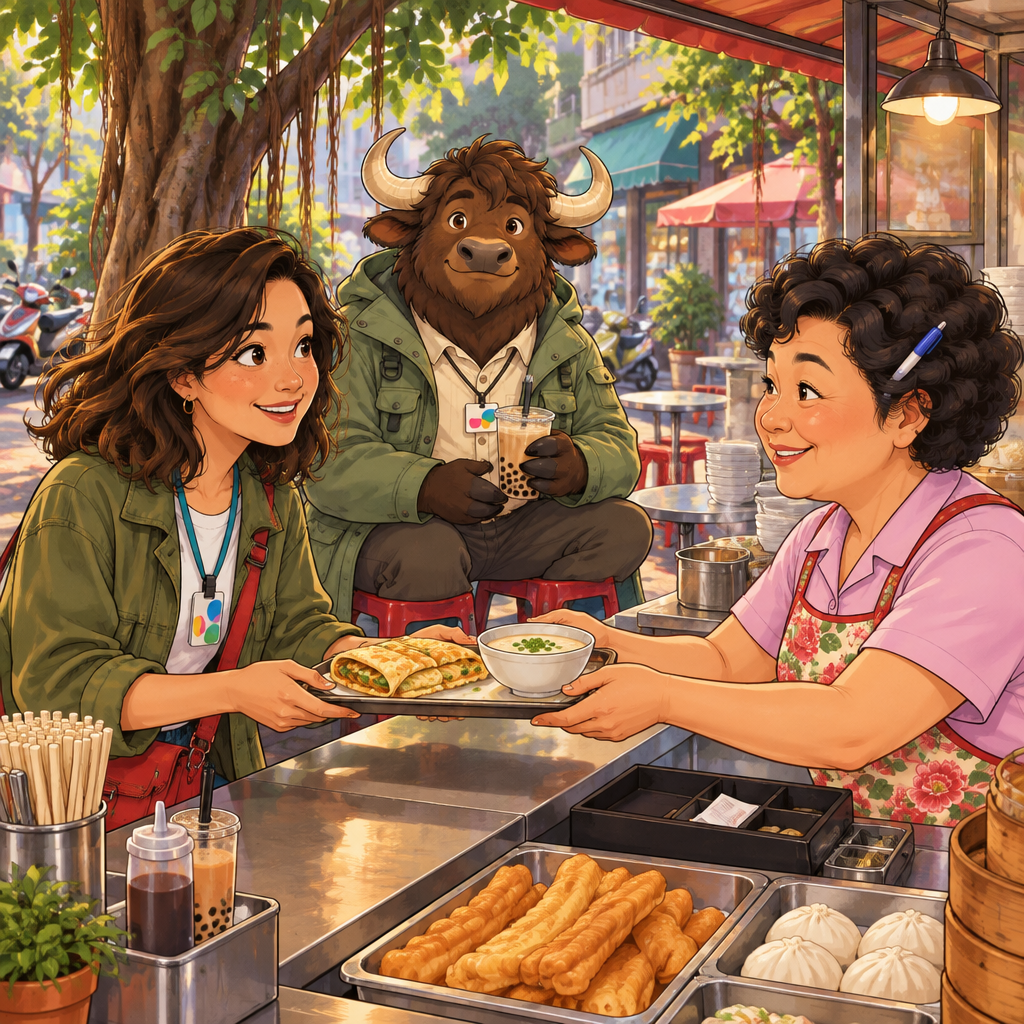
Scene — titles at breakfast
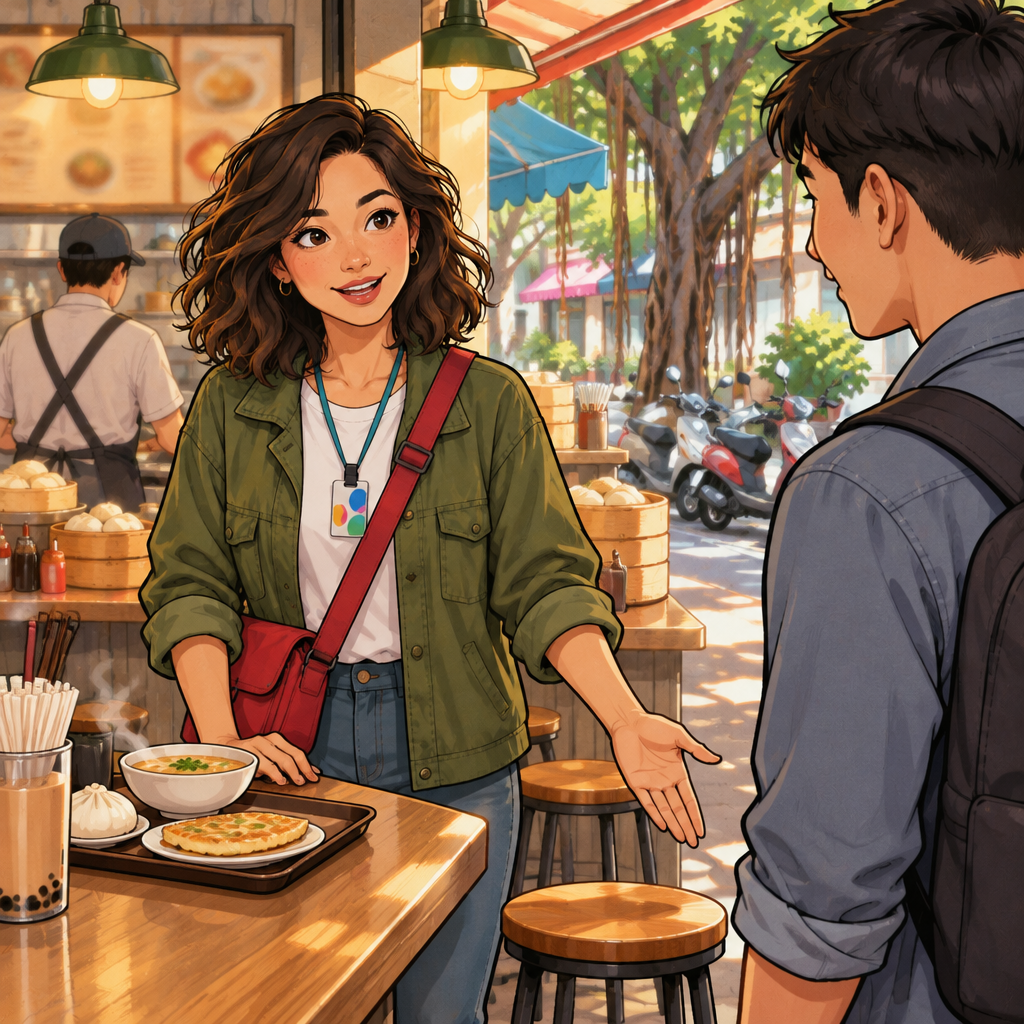
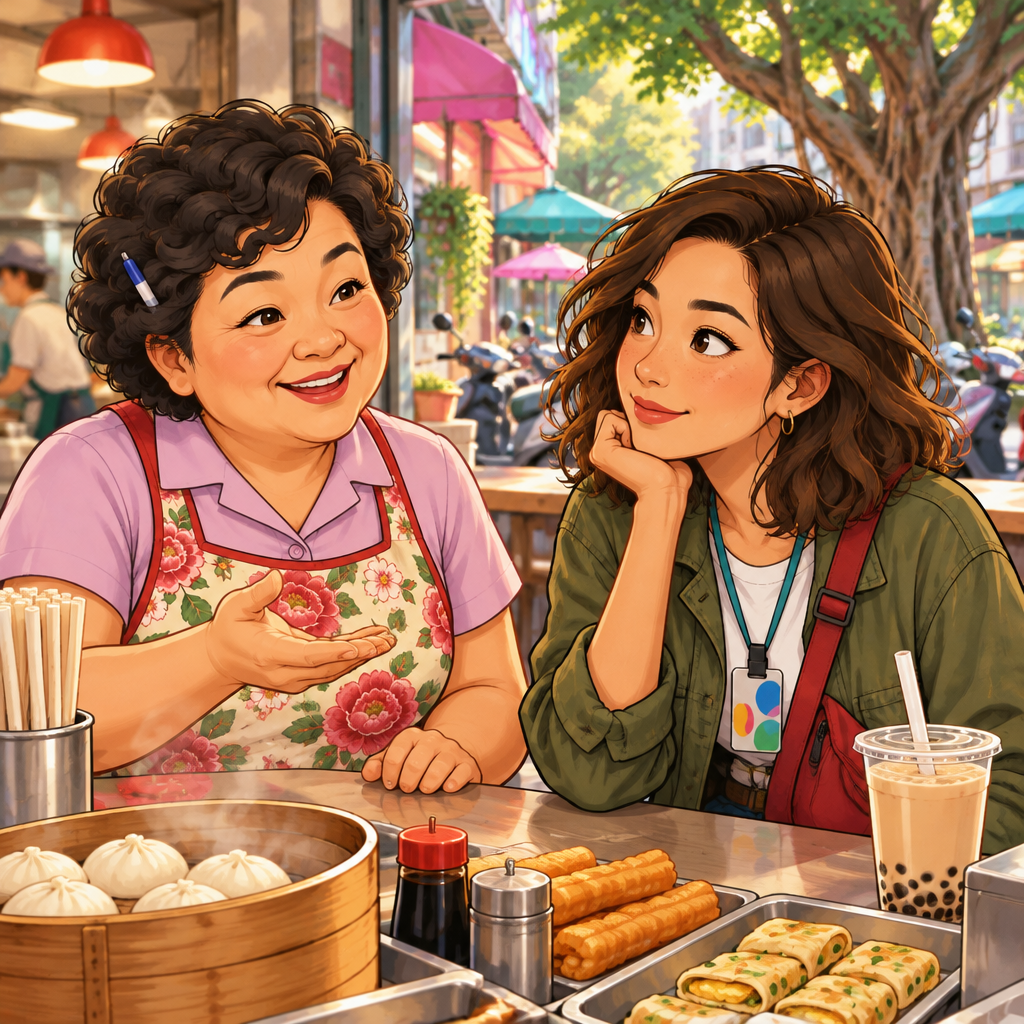
At Banyan Breakfast, Maya calls Lin 阿姨 and tries 大哥 for A-Li. Lin explains that 阿姨 is a friendly way to address an older woman, not proof of family.
A-Li is simply A-Li, and the folded slip stays in the till, still unexplained.
Learn — who to call what
These short titles help you address people in everyday Taiwan settings. Listen for the person's role or your relationship before choosing one.
Some titles also work as friendly forms of address.
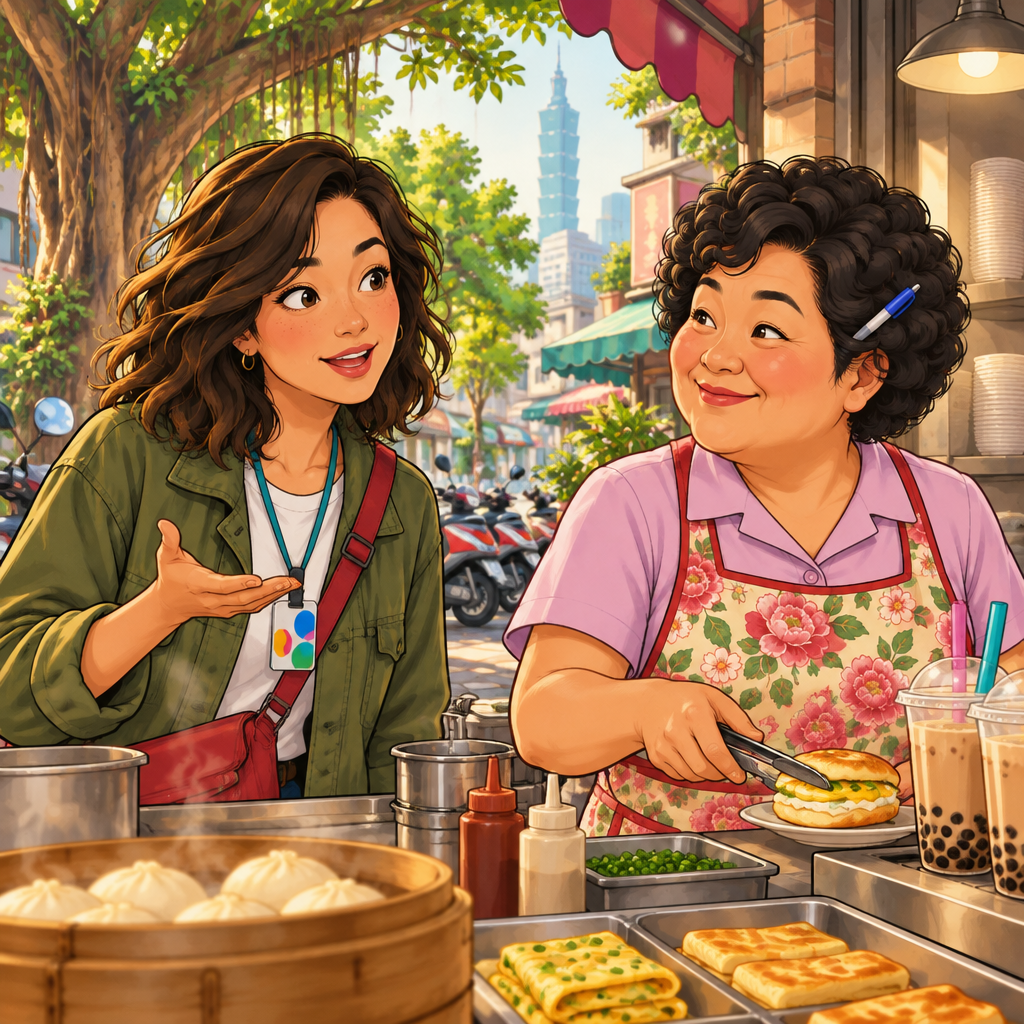
阿姨
Auntie; a friendly title for an older woman.
When to use it: Use this friendly title for an older woman, including a shopkeeper.
Learn it as one piece.
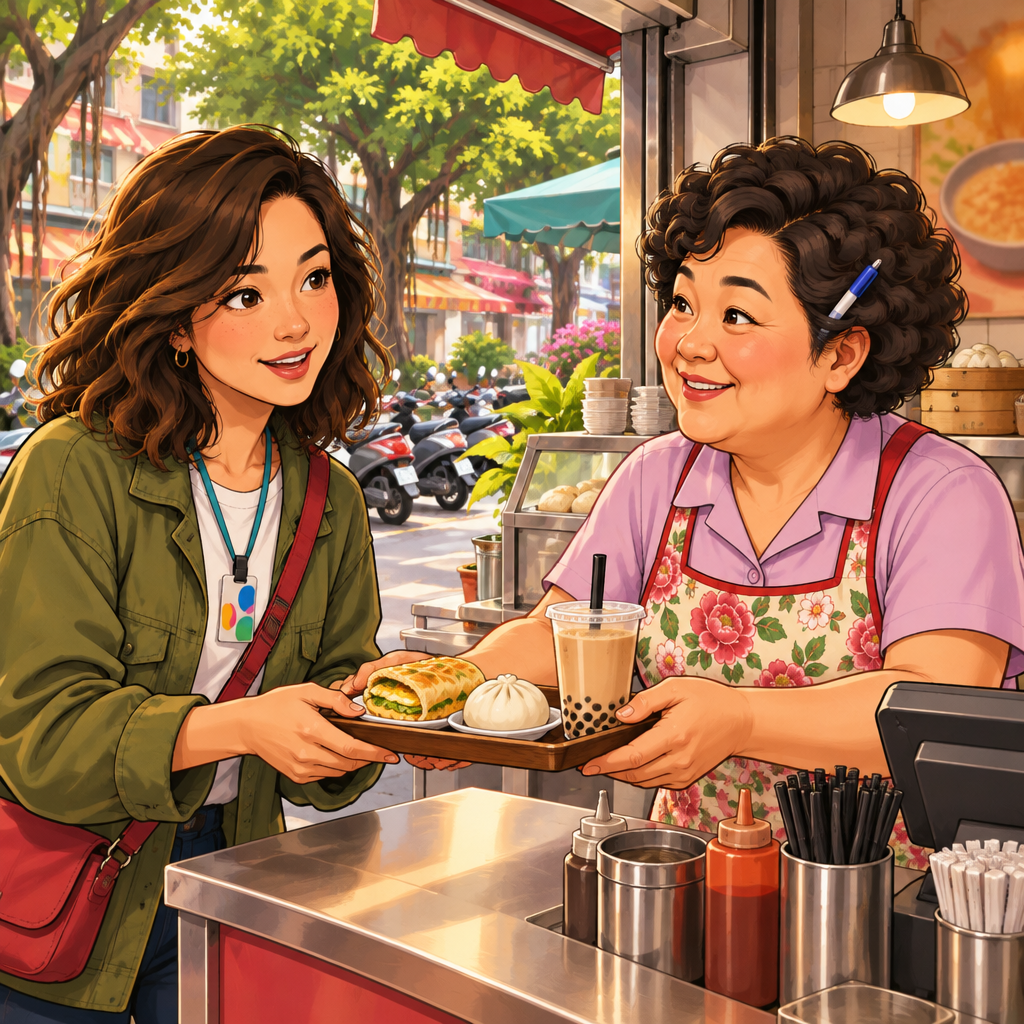
老闆
Boss; shop owner.
When to use it: Use this role title to address a shop owner.
Learn it as one piece.
Say it: In this third-tone pair, the first tone rises in speech.
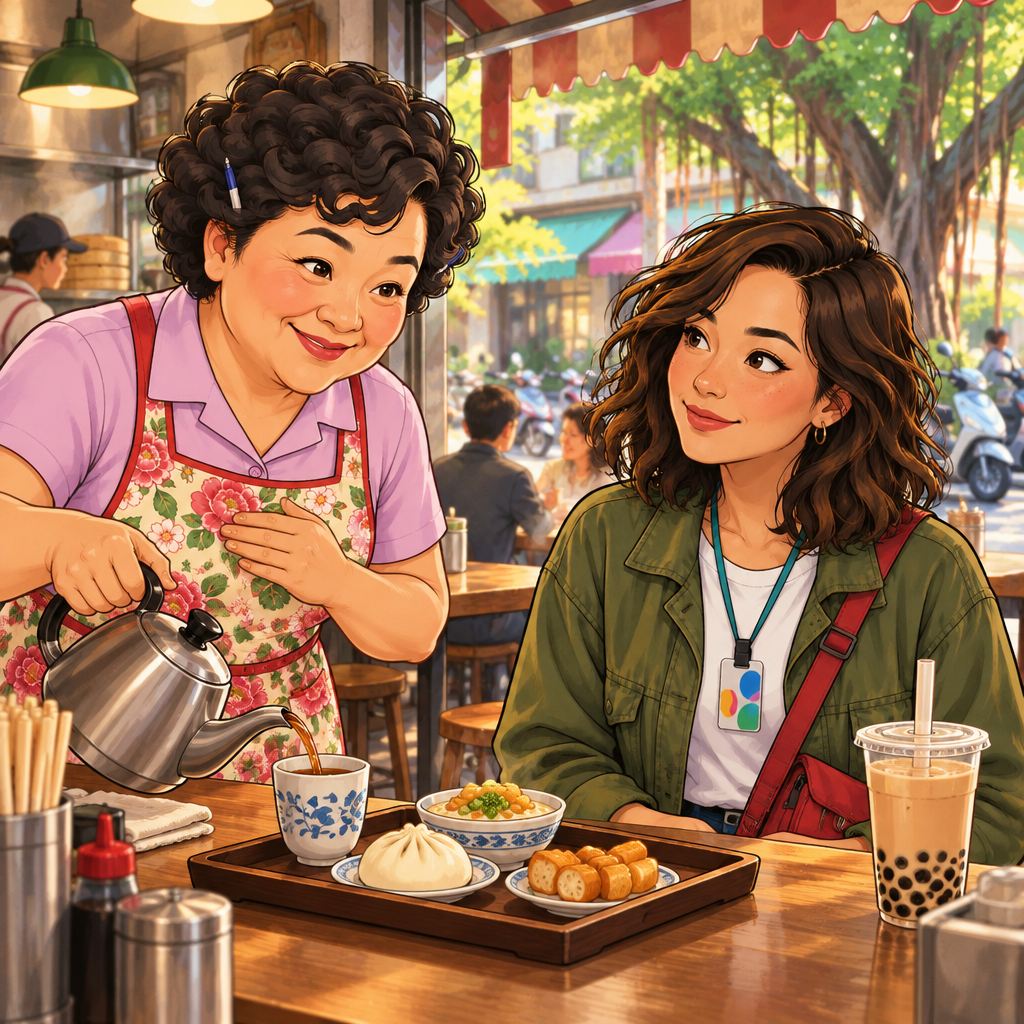
小姐
Miss; a polite title for a woman.
When to use it: Use this polite title to address a woman.
Learn it as one piece.
Say it: In this third-tone pair, the first tone rises in speech.
先生
Sir; a polite title for a man.
When to use it: Use this polite title to address a man.
Learn it as one piece.

大哥
Older brother; a friendly way to address a man.
When to use it: Use it for a man you address in a friendly, familiar way.
Learn it as one piece.
老師
Teacher.
When to use it: Use this title to address a teacher.
Learn it as one piece.
Story — not your aunt or brother
Listen as Maya tries familiar titles at Banyan Breakfast. Lin is the shop owner, not Maya's aunt, and A-Li is not her older brother.
Later, Maya carries the titles with her to class. The folded slip stays unexplained.
 Maya阿姨,早安。Good morning, Auntie.
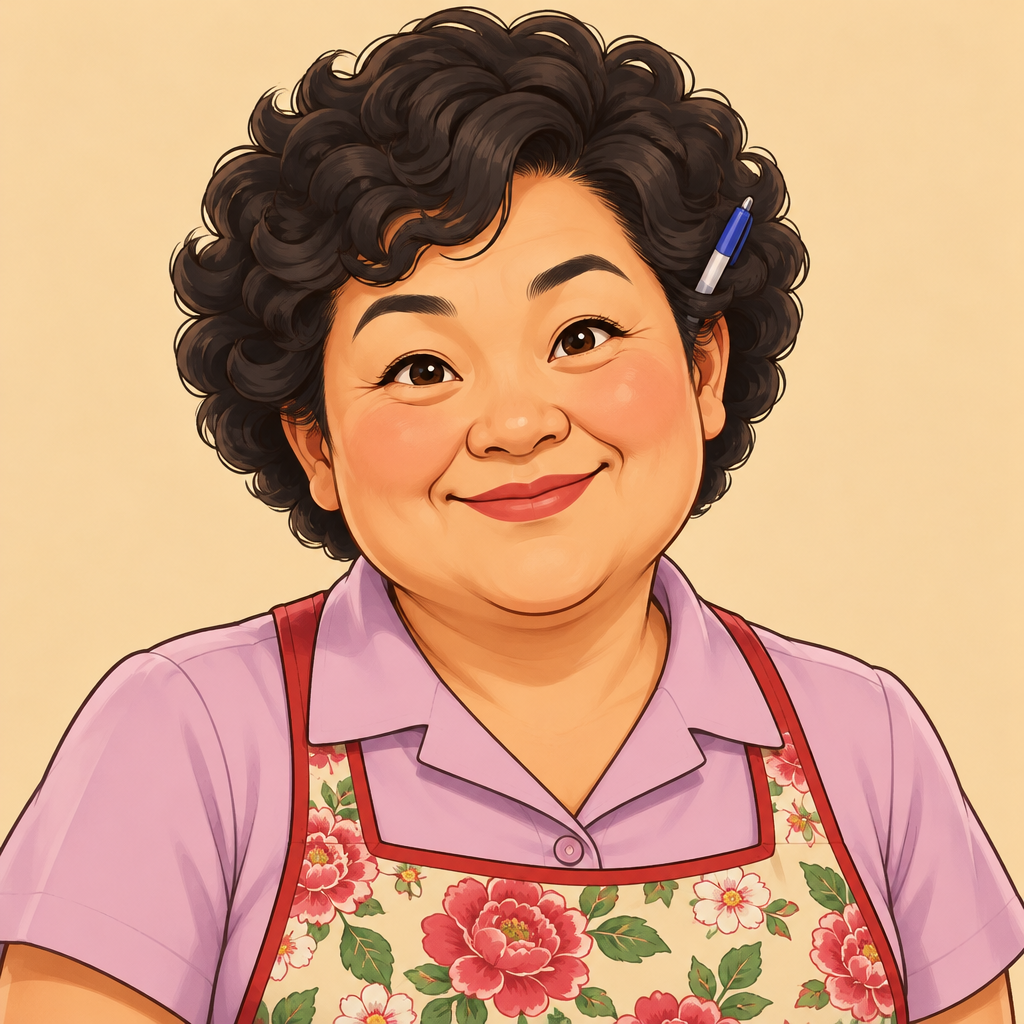 Auntie Lin早安!我是老闆,不是你阿姨啦。Good morning! I'm the shop owner, not your aunt.
- Maya好喔,老闆。Okay, boss.
- Maya大哥,早安。Good morning, big brother.
 A-Li我是阿犛,不是你大哥。I'm A-Li, not your older brother.
- Shop clerk小姐,這邊請。Miss, this way, please.
- Customer你好。Hello.
- Maya先生,您好。Hello, sir.
- Later, Maya arrives at her community Mandarin class.
- Maya老師,早安。Good morning, teacher.
- Classroom teacher早安,瑪雅。Good morning, Maya.
Practice — choose a title
Try eleven quick activities to choose a title for each person. Notice when a role title fits better than a friendly or polite form of address.
The last activities review familiar greetings.
0 of 11 done
What does it mean?
What does it mean?
阿姨
What do you say?
What do you say?
Address the shop owner by her role at the shop, not with a personal or classroom title.
What do you say?
What do you say?
Address a woman about your age politely, without suggesting a family role.
What did you hear?
What did you hear?
Pick the reply
Auntie Lin says:
Pick the reply
店裡誰負責?
Who is in charge of the shop?
And you reply with:
What do you say?
What do you say?
Address a familiar adult man in a friendly way, like an older-brother figure.
Pick the reply
Shop clerk says:
Pick the reply
男客人的禮貌稱呼是什麼?
What is a polite title for the male customer?
And you reply with:
What do you say?
What do you say?
You are speaking to your instructor at Mandarin class. Use the classroom title.
Match the pairs
Traditional Chinese
阿姨Drop the English here大哥Drop the English here老師Drop the English hereEnglish
What does it mean?
What does it mean?
你好
What do you say?
What do you say?
You are meeting your teacher and want to greet them politely. Choose a polite hello, not a title.
Say it — address your neighbors
You play Maya and speak to Lin, A-Li, and customers at the breakfast shop. Listen to each cue, then say the title or greeting out loud.
Take your time and choose a title that fits the person.
- Maya greets Lin at Banyan Breakfast.
- Auntie Lin美女,早安!Good morning, beautiful!
- Maya (you)Greet Lin with a friendly title.
Greet Lin with a friendly title.
阿姨
Auntie; a friendly title for an older woman.
0 of 6 said
Recap — what you can say now
| Traditional Chinese | English | Play |
|---|---|---|
| 阿姨 | Auntie; a friendly title for an older woman. | |
| 老闆 | Boss; shop owner. | |
| 小姐 | Miss; a polite title for a woman. | |
| 先生 | Sir; a polite title for a man. | |
| 大哥 | Older brother; a friendly way to address a man. | |
| 老師 | Teacher. |
Save your progress — it’s free
Keep your place in the course and see which lines you’ve learned.
Want the next lesson in your inbox?
Get the next lesson by email, one a day.
Join the newsletterDaily lesson emails are coming soon. Newsletter subscribers get them first.
Keep practicing with Yak Cards
Today's titles are in Yak Cards with more useful ways to address people.
Review a few title cards each day so the right form comes easily.
Open Yak Cards