
New here? This is lesson 13 of a free 240-lesson Traditional Chinese course.
What Is This in Traditional Chinese
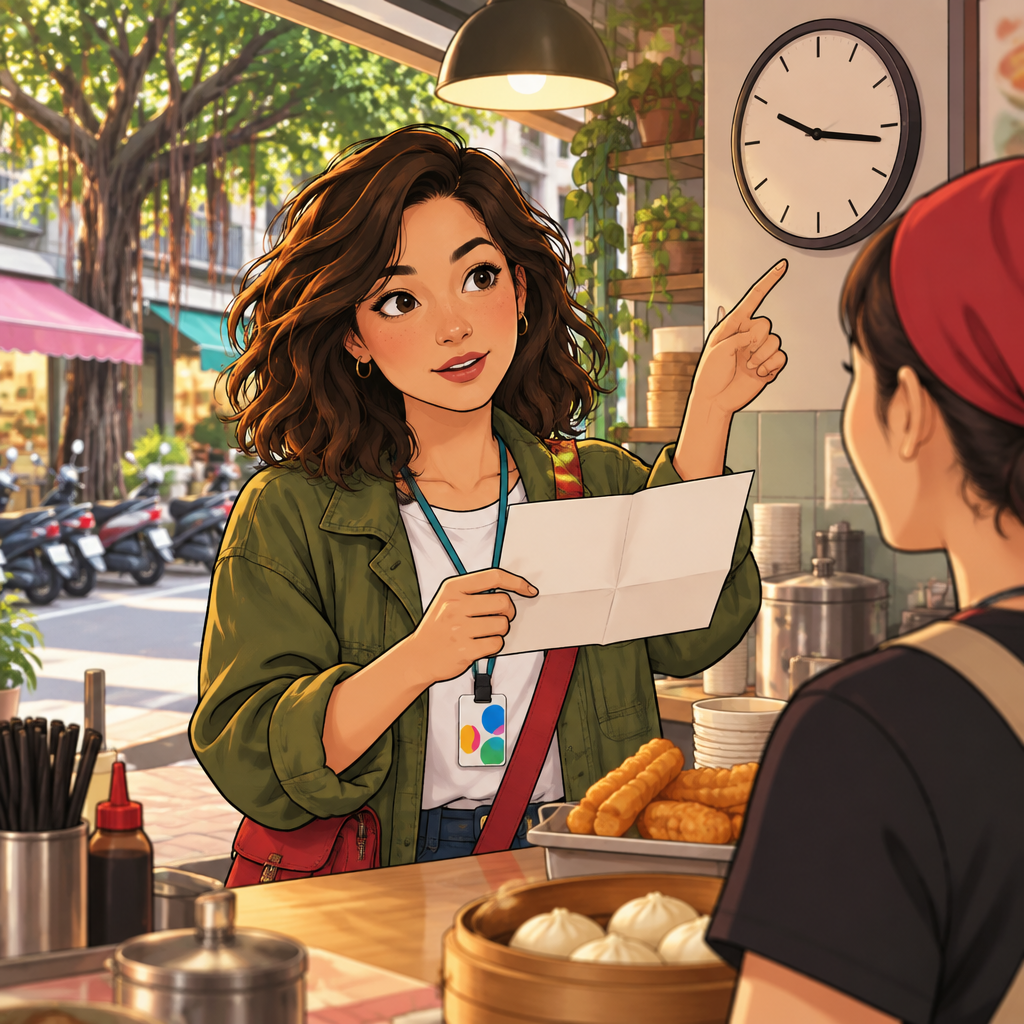
At Banyan Breakfast, Maya spots a folded paper tucked in the till.
She points to it and asks about it, but Auntie Lin keeps the mystery for another day and turns to the morning orders.
Learn to ask what something is, who someone is, whose an object is, and when something happens.
Then try a quick question for checking if someone is okay. These short questions help with things and people right in front of you.
By the end of this lesson
Ask what something is, who someone is, whose an object is, when something happens, and what is wrong.
- 這是什麼?What's this?
- 那是什麼?What's that?
- 那是誰?Who's that?
- 這是誰的?Whose is this?
- ___是什麼時候?When is ___?
- 怎麼了?What's wrong?
Scene — a paper by the till
The morning rush has just started at Banyan Breakfast. Maya points to a small folded paper tucked in the till and asks Auntie Lin about it.
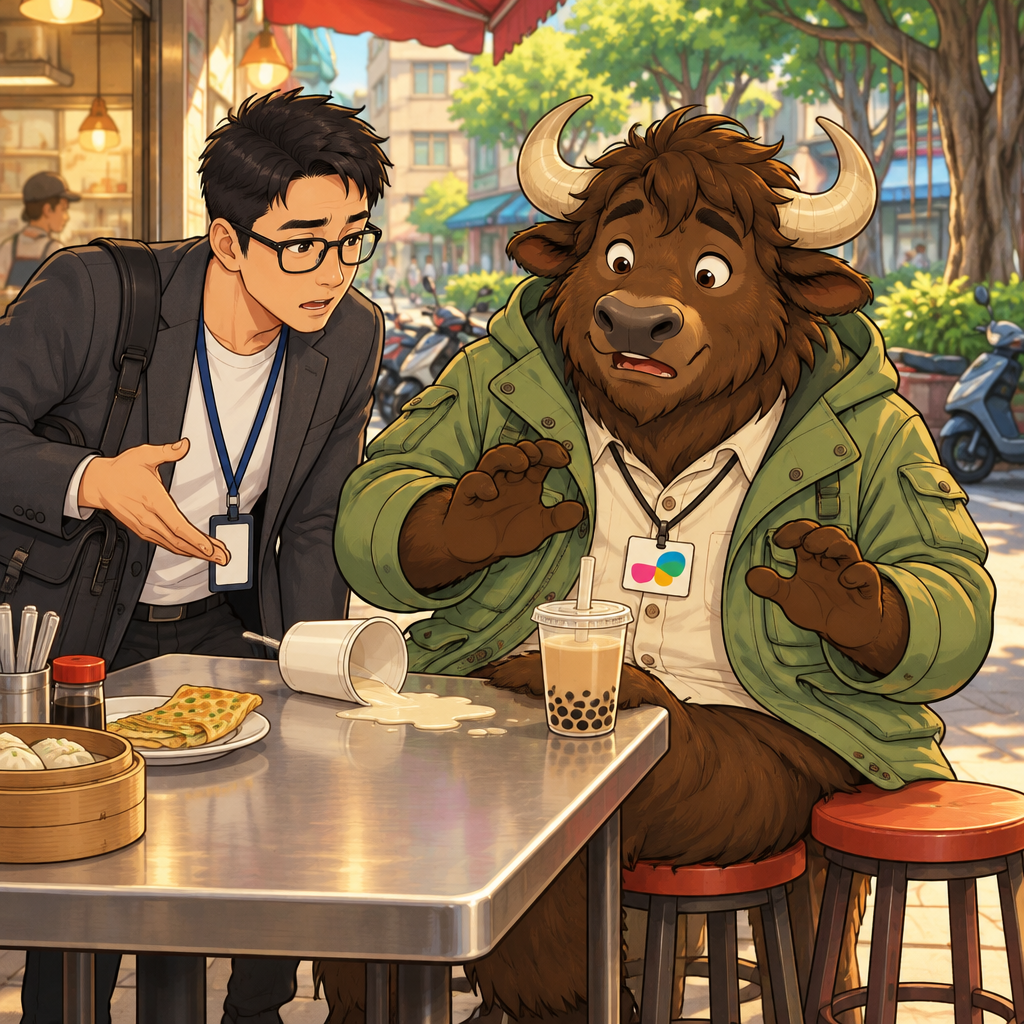
Auntie Lin keeps serving customers instead of explaining the paper. A-Li sits nearby with his soy milk, which is still unfinished.

Learn — questions about things
These questions help when you are looking at an object, pointing to someone, or asking about an event. Listen to each one, then say it out loud.
One question has a blank for the event you want to ask about.

這是什麼?
What's this?
When to use it: Ask about something close to you.
Learn it as one piece.
Say it: The second syllable in 什麼 is neutral.

那是什麼?
What's that?
When to use it: Ask what something is, often at a distance.
Learn it as one piece.
Say it: The second syllable in 什麼 is neutral.

那是誰?
Who's that?
When to use it: Ask who a person farther away is.
Learn it as one piece.

這是誰的?
Whose is this?
When to use it: Ask who owns something close to you.
Learn it as one piece.
___是什麼時候?
When is ___?
When to use it: Ask when an event happens.
Learn the whole question as one piece.
Say it: The second syllable in 什麼 is neutral.
怎麼了?
What's wrong?
When to use it: Ask when someone seems upset or something seems wrong.
Learn it as one piece.
Say it: The second syllable in 怎麼 is neutral.
Story — a mystery at breakfast
Maya notices the folded paper tucked in the till and points to it. Auntie Lin puts off explaining it and gets back to breakfast orders.
Maya asks about the people and things nearby, then asks A-Li when his birthday is. The paper's mystery remains for another day.
 Maya這是什麼?What's this?
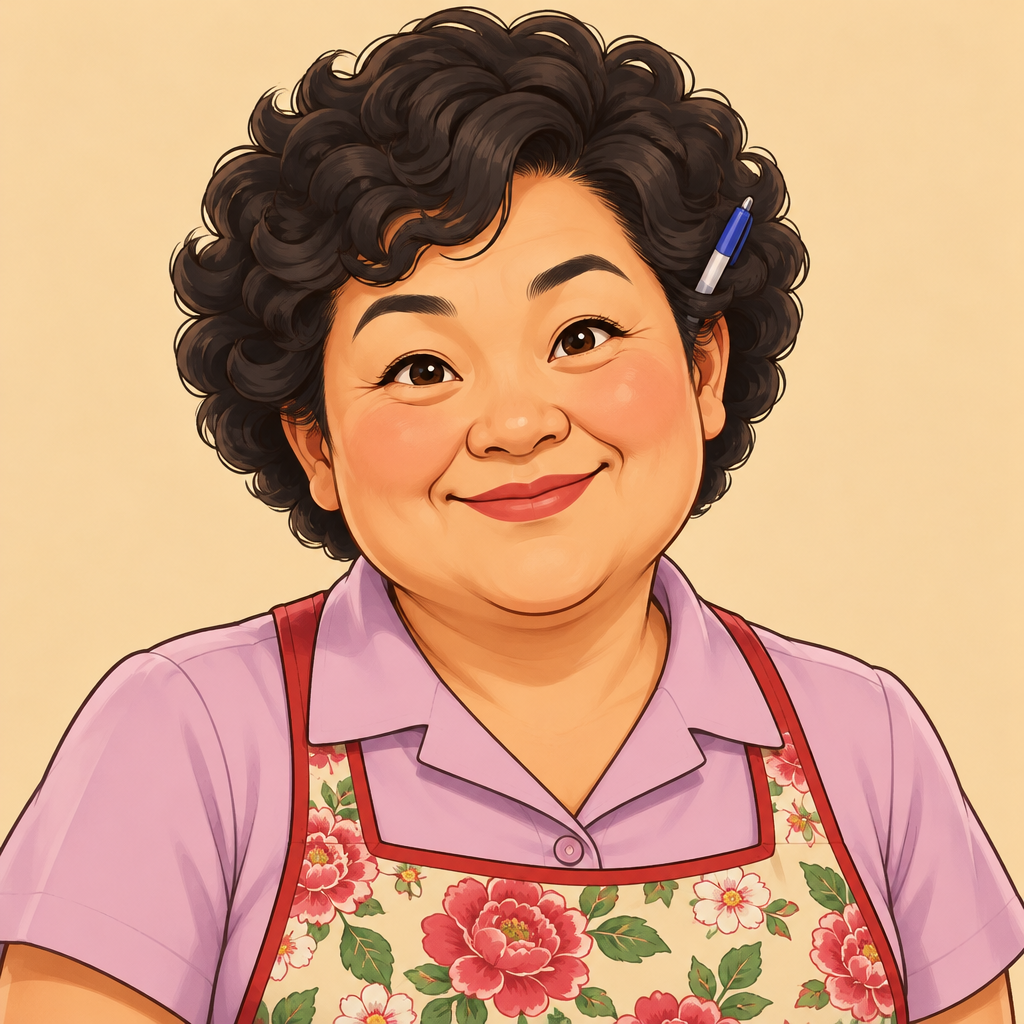 Auntie Lin那個改天再說吧。豆漿一杯。Let's talk about that another day. One soy milk.
- Maya這是誰的?Whose is this?
- Auntie Lin這個問題也改天再說吧。Let's talk about that question another day too.
- Maya那是誰?Who's that?
 A-Li我是阿犛。I'm A-Li.
- Maya那是什麼?What's that?
- A-Li兩張椅子。Two stools.
- Maya你的生日是什麼時候?When is your birthday?
- A-Li冬天。In winter.
- Maya怎麼了?What's wrong?
- A-Li我找不到悠遊卡。I can't find my EasyCard.
Practice — ask the right question
Try ten short exercises about things and people at the breakfast shop. Choose the question that fits each moment, then build and complete a few lines.
Pay attention to whether you are asking about an object, a person, or an event.
0 of 10 done
What does it mean?
What does it mean?
這是什麼?
What do you say?
What do you say?
You are holding a paper in your hand. Ask what this paper is.
Build the line
Build the line
Whose is this?
?
Tap the words in order.
Fill the gap
Fill the gap
Who's that?
那是____?
What did you hear?
What did you hear?
Match the pairs
Traditional Chinese
這是什麼?Drop the English here那是誰?Drop the English here這是誰的?Drop the English here___是什麼時候?Drop the English hereEnglish
What do you say?
What do you say?
Auntie Lin greets you politely. Return her polite greeting.
Fill the gap
Fill the gap
When is ___?
___是____?
What do you say?
What do you say?
A-Li looks worried and is searching for his EasyCard. Ask what is wrong.
What do you say?
What do you say?
Before asking Auntie Lin a question, use the polite opening.
Say it — your questions
You play Maya at Banyan Breakfast. Greet Auntie Lin, ask about the folded paper, and talk with A-Li.
Listen to each cue, then say the matching line out loud. The paper's mystery stays unanswered for now.
- Auntie Lin美女,早安!Good morning, beautiful!
- Maya (you)Greet Auntie Lin politely.
Greet Auntie Lin politely.
您好
Hello, politely.
0 of 4 said
Recap — what you can say now
| Traditional Chinese | English | Play |
|---|---|---|
| 這是什麼? | What's this? | |
| 那是什麼? | What's that? | |
| 那是誰? | Who's that? | |
| 這是誰的? | Whose is this? | |
| ___是什麼時候? | When is ___? | |
| 怎麼了? | What's wrong? |
Save your progress — it’s free
Keep your place in the course and see which lines you’ve learned.
Want the next lesson in your inbox?
Get the next lesson by email, one a day.
Join the newsletterDaily lesson emails are coming soon. Newsletter subscribers get them first.
Keep practicing with Yak Cards
Today's questions are in Yak Cards with more useful lines for asking about people and things.
Review a few question cards each day so the words come easily.
Open Yak Cards