
New here? This is lesson 105 of a free 240-lesson Traditional Chinese course.
At the clinic in Traditional Chinese
Dr. Chen's clinic is just across the lane from Banyan Breakfast. Maya goes in to register, but she has to check whether she brought her health card.
Learn how to register, answer the nurse about your card, ask about the queue, and find the registration desk.
A-Li reads Maya's number aloud while she waits. Listen for the tone pattern in 哪裡, and remember: the clinic visit is ordinary, even if A-Li's timing seems uncanny.
By the end of this lesson
Register at a clinic, answer whether you have your health card, and ask about your place in the queue.
- 我要掛號I'd like to register.
- 有健保卡I have my health card.
- 我忘記帶健保卡I forgot my health card.
- 叫到幾號了?What number are they on?
- 過號了My number has passed.
- 請問掛號在哪裡?Where is registration?
Scene — a visit across the lane
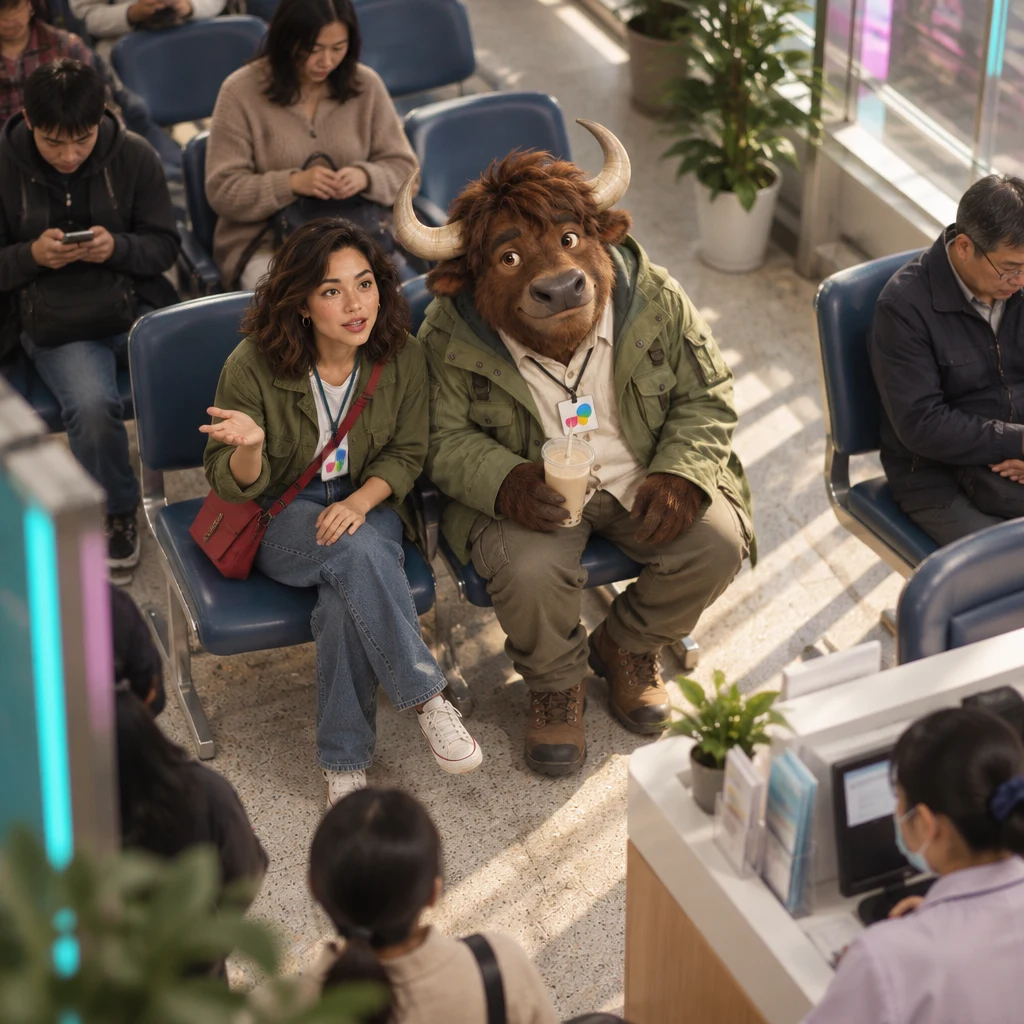
Dr. Chen's clinic is across the lane from Banyan Breakfast. Maya stops at the front desk to register, and the nurse asks about her health card.
A-Li waits nearby with his unfinished soy milk. He reads Maya's number aloud, but the queue still moves at an ordinary clinic pace.

Learn — checking in at the clinic
These six useful lines help you check in at a neighborhood clinic. You can register, explain that you forgot your card, and ask where to go.
Listen closely to the question about the queue and the short phrase for a number that has passed.

我要掛號
I'd like to register.
When to use it: Use this to tell the clinic desk you want to register for a visit.
掛號 is the word for registering at a clinic; 我要 makes this a clear request.
Say it: 掛號 has two falling tones; keep each syllable clear.

有健保卡
I have my health card.
When to use it: Say this when the nurse asks whether you have your health card with you.
In a short answer, 有 can mean “Yes, I have it”; the object follows 有.
Say it: 卡 has a third tone; let its pitch dip before rising.

我忘記帶健保卡
I forgot my health card.
When to use it: Use this to explain that you forgot to bring your health card.
帶 means to bring or carry; 忘記帶 says you forgot to bring something.
Say it: 帶 has a falling tone; 卡 has a third tone.
叫到幾號了?
What number are they on?
When to use it: Ask this when you want to know which queue number has been called.
了 here marks the current queue update; 幾號 asks which number.
Say it: 幾號 has a third tone followed by a falling tone.

過號了
My number has passed.
When to use it: Say this when your queue number has already been called.
過號了 means your turn has passed; 了 marks the changed situation.
Say it: 過號 has two falling tones; keep both clear.

請問掛號在哪裡?
Where is registration?
When to use it: Use this polite question to ask where the registration desk is.
哪裡 stays in place in a question asking where something is.
Say it: 哪裡 has two third tones; the first rises in speech.
Story — Maya takes a number
Maya visits the clinic across the lane and checks in with the nurse. A-Li is waiting nearby and reads Maya's number aloud.
On another visit, Maya remembers her health card. The small fortune slip stays folded in the breakfast shop.
 Maya不好意思,請問掛號在哪裡?Excuse me, where is registration?
- Clinic nurse您好,這裡就是掛號櫃檯。Hello, this is the registration desk.
- Maya我要掛號。I'd like to register.
- Clinic nurse請問有健保卡嗎?Do you have your health card?
- Maya我忘記帶健保卡。I forgot my health card.
- Clinic nurse沒關係,先拿號碼牌。That's okay. Take a number first.
 A-Li瑪雅,三號,是妳的!Maya, number three is yours!
- Maya叫到幾號了?What number are they on?
- Clinic nurse剛剛叫到三號了。They just called number three.
- Maya過號了。My number has passed.
- On her next visit, Maya remembers to bring her health card.
- Clinic nurse今天有健保卡嗎?Do you have your health card today?
- Maya有健保卡。I have my health card.
Practice — check in and answer
Try ten quick activities to check in and respond clearly to the nurse. You will recognize greetings, build a useful phrase, and choose a fitting answer.
Use the English meaning as a clue, then listen again and say the Chinese line aloud.
0 of 10 done
What does it mean?
What does it mean?
您好
What do you say?
What do you say?
At the desk, tell the nurse you'd like to register before discussing whether you have your health card.
Fill the gap
Fill the gap
I forgot my health card.
我忘記帶____
Match the pairs
Traditional Chinese
我要掛號Drop the English here有健保卡Drop the English here我忘記帶健保卡Drop the English here過號了Drop the English hereEnglish
What did you hear?
What did you hear?
Pick the reply
Clinic nurse says:
Pick the reply
請問有健保卡嗎?
The nurse asks if you have your health card; in this scene, you do.
And you reply with:
Build the line
Build the line
I'd like to register.
Tap the words in order.
What do you say?
What do you say?
You realize your queue number has already been called. Tell the nurse your turn has passed.
What do you say?
What do you say?
You need to get the clinic nurse's attention politely before asking a question.
True or false?
True or false?
You have just arrived and cannot find the clinic's registration desk. This line fits the moment.
Say it — your clinic visit
You play Maya as she checks in at Dr. Chen's clinic. Listen to each nurse cue, then say the line that fits your situation.
Speak at a comfortable pace and keep the health-card details clear. Your last turn is your response after your number has been called.
- Maya reaches the front desk.
- Maya (you)Tell the nurse you'd like to register.
Tell the nurse you'd like to register.
我要掛號
I'd like to register.
0 of 4 said
Recap — what you can say now
| Traditional Chinese | English | Play |
|---|---|---|
| 我要掛號 | I'd like to register. | |
| 有健保卡 | I have my health card. | |
| 我忘記帶健保卡 | I forgot my health card. | |
| 叫到幾號了? | What number are they on? | |
| 過號了 | My number has passed. | |
| 請問掛號在哪裡? | Where is registration? |
Save your progress — it’s free
Keep your place in the course and see which lines you’ve learned.
Want the next lesson in your inbox?
Get the next lesson by email, one a day.
Join the newsletterDaily lesson emails are coming soon. Newsletter subscribers get them first.
Keep practicing with Yak Cards
Review these clinic phrases in Yak Cards and practise answering the nurse.
Try a few clinic cards again tomorrow so the useful answers come quickly.
Open Yak Cards