
New here? This is lesson 86 of a free 240-lesson Traditional Chinese course.
Everyday etiquette in Traditional Chinese
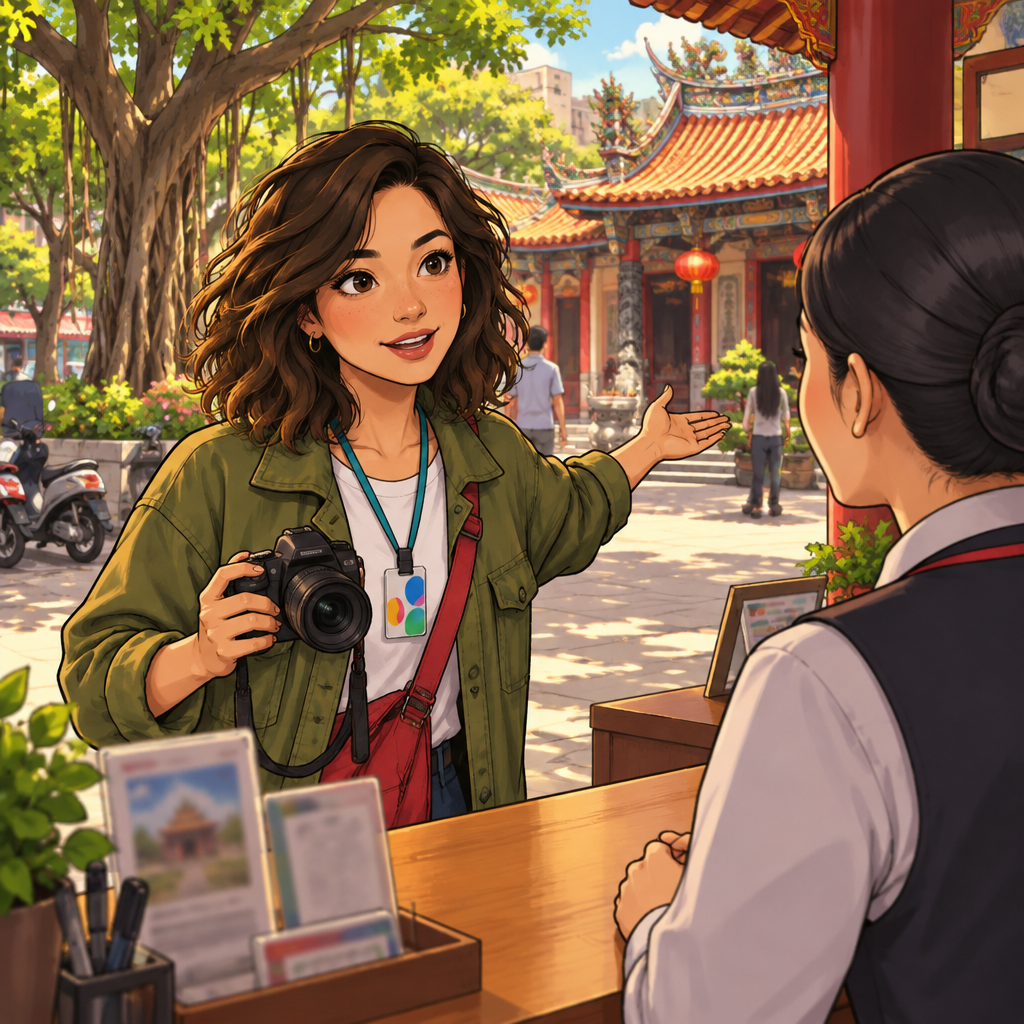
Maya and A-Li stop at a temple in a Taipei park. A-Li has already taken two photos outside, but Maya checks the rules before stepping in.
Learn how to ask someone to watch your things, say you are going to the restroom, and tell them you will be back.
You will also ask about photo rules, reservations, and waiting on site. These small, polite lines help a quick visit go smoothly.
By the end of this lesson
Ask someone to watch your belongings, explain a short absence, and check photo rules, reservations, and waiting times.
- 麻煩幫我看一下東西Could you watch my things for a moment?
- 我去一下廁所I'm going to the restroom.
- 我等一下回來I'll be right back.
- 這裡可以拍照嗎?May I take photos here?
- 要預約嗎?Do I need a reservation?
- 現場要等多久?How long is the wait on site?
Scene — a visit to the park temple
Maya and A-Li are visiting a temple in a small Taipei park. A-Li has already taken two photos in the courtyard, and Maya wants to check before going inside.
They are near the visitor desk for a short temple tour. A-Li's soy milk is still unfinished, and Maya needs to step away for a moment.

Learn — polite questions and requests
These six lines help you ask politely before entering, leaving belongings with someone, or joining a popular activity.
Listen for how 一下 makes a brief request sound gentler, and notice that question words fit different situations.

麻煩幫我看一下東西
Could you watch my things for a moment?
When to use it: Use this polite request when asking someone nearby to keep an eye on your belongings briefly.
一下 softens the request and suggests the favor will take only a moment.
Say it: 煩 has a second tone; keep its pitch rising.

我去一下廁所
I'm going to the restroom.
When to use it: Say this to explain that you are stepping away to use the restroom.
一下 makes this short errand sound brief.
Say it: 一 is rising before fourth-tone 下.

我等一下回來
I'll be right back.
When to use it: Tell someone nearby that you will return shortly.
等一下 means in a little while here, rather than asking someone to wait.
Say it: 一 changes to a rising tone before fourth-tone 下.
這裡可以拍照嗎?
May I take photos here?
When to use it: Ask before taking photos in a place where permission may matter.
嗎 turns this statement into a yes-or-no question.
Say it: 嗎 is usually light and neutral at the end of a question.

要預約嗎?
Do I need a reservation?
When to use it: Ask whether you need to book ahead.
嗎 makes this a yes-or-no question about whether booking is needed.
Say it: 嗎 is usually light and neutral at the end of a question.

現場要等多久?
How long is the wait on site?
When to use it: Ask a venue or event staff member about the current wait.
多久 already makes this a question, so you do not add 嗎.
Story — before stepping inside
Maya and A-Li visit a small temple in a park. A-Li has already taken two photos outside, but Maya checks before going in.
At the visitor desk, they ask about a reservation and the wait. A-Li keeps her things while she steps away; his soy milk remains unfinished.
 Maya不好意思,請問這裡可以拍照嗎?Excuse me, may I take photos here?
- Temple staff member廟外可以,裡面不行。You can take photos outside the temple, but not inside.
 A-Li我剛剛拍兩張了。I just took two photos.
- Maya麻煩幫我看一下東西。Could you watch my things for a moment?
- A-Li好,我幫你看。Sure, I'll watch them for you.
- Maya我去一下廁所。I'm going to the restroom.
- A-Li廁所在右邊。The restroom is on the right.
- Maya我等一下回來。I'll be right back.
- Maya要預約嗎?Do I need a reservation?
- Temple staff member不用,今天現場報名就好。No, you can sign up here today.
- Maya現場要等多久?How long is the wait on site?
- Temple staff member大概十分鐘。About ten minutes.
Practice — handle a quick visit
Use the lines to handle a quick visit to a park temple and its visitor desk. Choose the polite question or request that fits.
Check each explanation, then say the answer aloud as if you were there with A-Li.
0 of 9 done
What does it mean?
What does it mean?
這裡可以拍照嗎?
What do you say?
What do you say?
You need to step away briefly and want someone to keep an eye on your belongings.
Build the line
Build the line
I'm going to the restroom.
Tap the words in order.
Fill the gap
Fill the gap
I'll be right back.
我等一下____
Swap the word
Swap the word
Ask the visitor desk whether you need to book ahead.
要____嗎?
What did you hear?
What did you hear?
What do you say?
What do you say?
You need to get a staff member's attention before asking about temple rules. Apologize briefly.
What do you say?
What do you say?
You are about to ask the visitor desk a question politely. Choose the phrase meaning May I ask.
Match the pairs
Traditional Chinese
這裡可以拍照嗎?Drop the English here要預約嗎?Drop the English here現場要等多久?Drop the English hereEnglish
Say it — your temple visit
You play Maya during a quick visit to the park temple. Ask before taking photos, then speak to A-Li while you step away.
Listen to the other person, follow the English cue, and say your line out loud. The final line tells A-Li you will return soon.
- Maya is at the temple entrance and wants to check the photo rules.
- Maya (you)Get the staff member's attention politely.
Get the staff member's attention politely.
不好意思
Excuse me; sorry.
0 of 5 said
Recap — what you can say now
| Traditional Chinese | English | Play |
|---|---|---|
| 麻煩幫我看一下東西 | Could you watch my things for a moment? | |
| 我去一下廁所 | I'm going to the restroom. | |
| 我等一下回來 | I'll be right back. | |
| 這裡可以拍照嗎? | May I take photos here? | |
| 要預約嗎? | Do I need a reservation? | |
| 現場要等多久? | How long is the wait on site? |
Save your progress — it’s free
Keep your place in the course and see which lines you’ve learned.
Want the next lesson in your inbox?
Get the next lesson by email, one a day.
Join the newsletterDaily lesson emails are coming soon. Newsletter subscribers get them first.
Keep practicing with Yak Cards
Review today's polite requests and questions with Yak Cards.
Practise asking politely in small everyday moments so the lines come easily.
Open Yak Cards