
New here? This is lesson 126 of a free 240-lesson Traditional Chinese course.
Still learning in Traditional Chinese
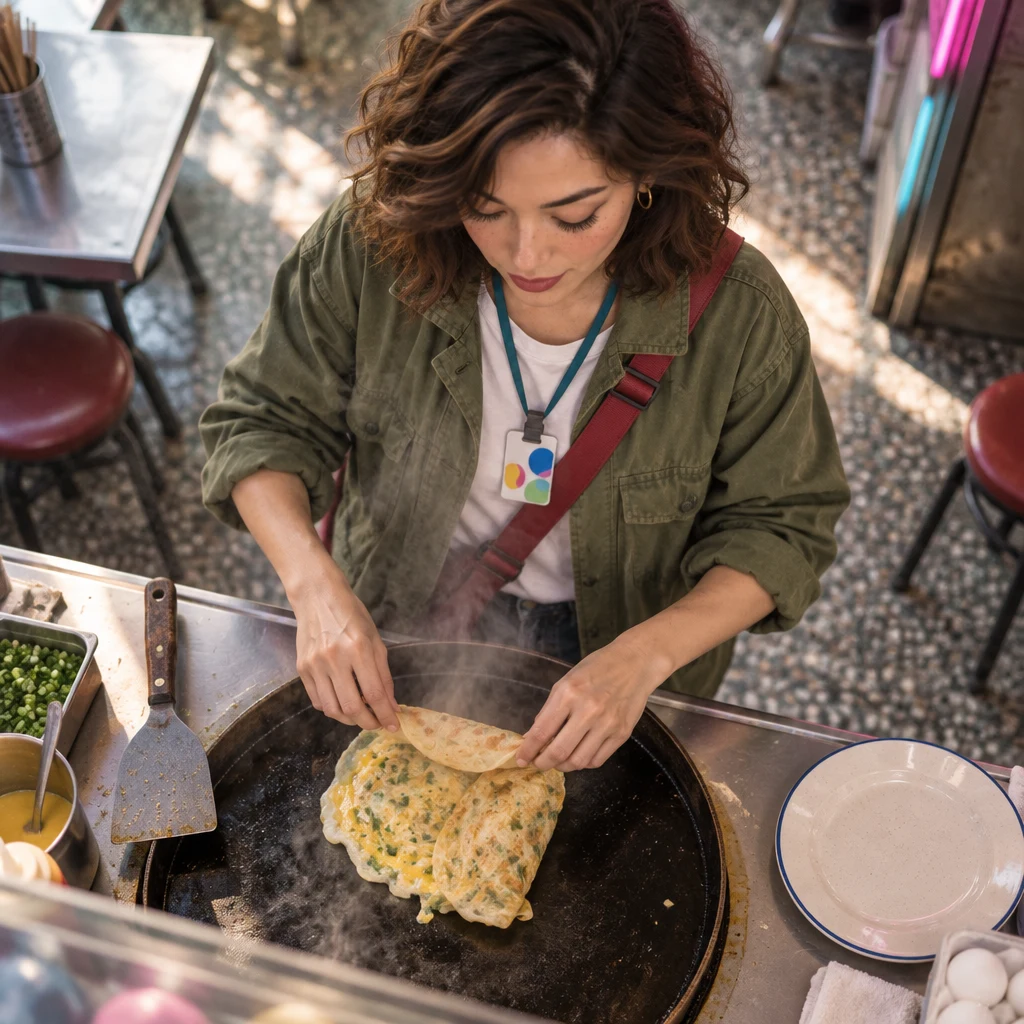
At Banyan Breakfast, Auntie Lin offers to teach Maya how to fold an egg pancake. Maya has never tried it, but she is ready to learn.
Practise saying what you are still learning, what you have not mastered yet, and what you have never tried.
Then ask for a chance to practise. Maya gets one fold right, though she still has more to learn.
By the end of this lesson
Say that you are still learning, have not learned something yet, or have never tried it, and ask to give it a try.
- 我還在學I'm still learning.
- 我還沒學會I haven't learned it yet.
- 我從來沒試過I've never tried it.
- 我還需要多練習I still need more practice.
- 讓我試試看Let me try.
- 有人教我的話,我可以If someone teaches me, I can.
Scene — a lesson at breakfast
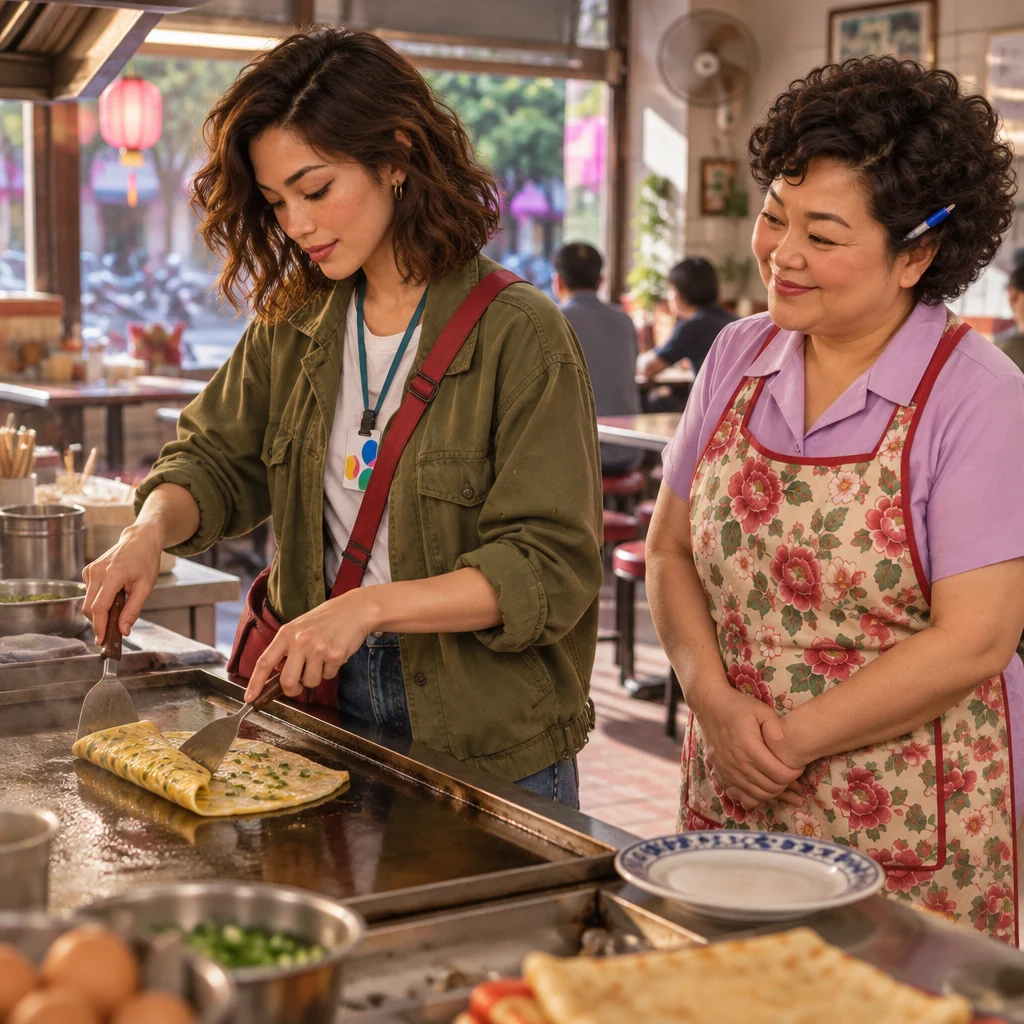
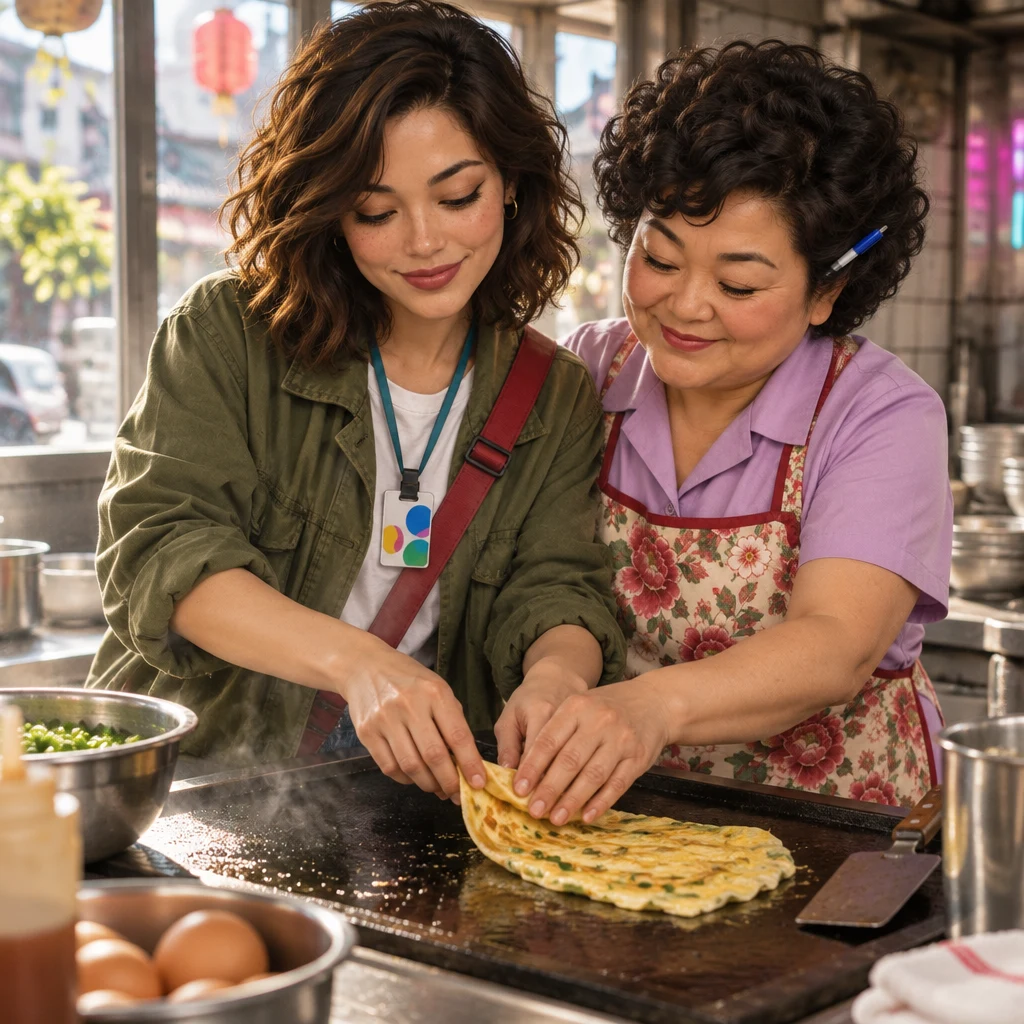
At Banyan Breakfast, Auntie Lin makes room at the counter and shows Maya how to fold an egg pancake.
A-Li watches from the back table, with his soy milk still unfinished. Maya has never tried folding one, so Auntie Lin guides her step by step.

Learn — learning and trying
These lines help you describe an ongoing skill, something you have not learned yet, and something you have never tried.
Listen for how each phrase fits a different moment in learning.

我還在學
I'm still learning.
When to use it: Use this to say you are learning something now.
還 places the learning in progress at this moment.
我還沒學會
I haven't learned it yet.
When to use it: Use this when you have not mastered a skill yet.
還沒 means the expected learning is not complete yet.

我從來沒試過
I've never tried it.
When to use it: Use this to say you have no past experience with something.
從來沒……過 describes something you have never experienced.
我還需要多練習
I still need more practice.
When to use it: Use this when you need more practice to improve.
多 before 練習 means doing extra practice.

讓我試試看
Let me try.
When to use it: Use this when you want a chance to try something.
試試看 is a casual way to suggest giving something a try.
有人教我的話,我可以
If someone teaches me, I can.
When to use it: Use this to say you can do something with a person's help.
的話 introduces a condition before the result.
Story — Maya folds an egg pancake
Auntie Lin shows Maya how to fold an egg pancake at Banyan Breakfast. Maya has never tried it, but she is willing to learn.
Listen as she asks for a chance to practise and gets one fold right.
 Auntie Lin瑪雅,你折過蛋餅嗎?Maya, have you folded an egg pancake before?
 Maya我從來沒試過。I've never tried it.
- Auntie Lin好啊,我教你。Sure, I'll teach you.
- Maya我還是新手。I'm still a beginner.
- Maya我還在學。I'm still learning.
- Auntie Lin先把餅皮放平,再慢慢折。Lay the pancake flat first, then fold it slowly.
- Maya有人教我的話,我可以。If someone teaches me, I can.
- Auntie Lin好,慢慢來。Okay, take it slowly.
- Maya讓我試試看。Let me try.
- Maya我還沒學會。I haven't learned it yet.
- Auntie Lin沒關係,再試一次。It's okay. Try one more time.
- Maya我還需要多練習。I still need more practice.
- Maya tries again and folds one egg pancake neatly.
- Auntie Lin折得很好欸!You folded it really well!
- Maya我盡量每個禮拜練習。I try to practise every week.
Practice — keep trying
Work through ten short exercises about learning a new skill. Choose, build, and complete phrases for each moment.
Some answers describe past experience; others show you are ready to practise.
0 of 10 done
What does it mean?
What does it mean?
我還在學
What do you say?
What do you say?
Auntie Lin asks about your past experience folding an egg pancake. Say you have never tried it.
Build the line
Build the line
Let me try.
Tap the words in order.
Fill the gap
Fill the gap
I haven't learned it yet.
我還____學會
Match the pairs
Traditional Chinese
我還在學Drop the English here我從來沒試過Drop the English here我還需要多練習Drop the English here讓我試試看Drop the English hereEnglish
What did you hear?
What did you hear?
What do you say?
What do you say?
Auntie Lin offers to teach you and asks if you can try. Say you can if someone teaches you.
Build the line
Build the line
I still need more practice.
Tap the words in order.
What do you say?
What do you say?
Choose the phrase that means exactly that you are a beginner at folding egg pancakes.
Pick the reply
Auntie Lin says:
Pick the reply
你打算怎麼練習?
How do you plan to practise?
And you reply with:
Say it — your next try
Play Maya as she learns to fold an egg pancake with Auntie Lin. Listen to each cue, then say the line that fits.
Try speaking smoothly and confidently, even when you are still learning.
- Auntie Lin asks Maya whether she has tried folding an egg pancake.
- Maya (you)Say that you have never tried it.
Say that you have never tried it.
我從來沒試過
I've never tried it.
0 of 5 said
Recap — what you can say now
| Traditional Chinese | English | Play |
|---|---|---|
| 我還在學 | I'm still learning. | |
| 我還沒學會 | I haven't learned it yet. | |
| 我從來沒試過 | I've never tried it. | |
| 我還需要多練習 | I still need more practice. | |
| 讓我試試看 | Let me try. | |
| 有人教我的話,我可以 | If someone teaches me, I can. |
Save your progress — it’s free
Keep your place in the course and see which lines you’ve learned.
Want the next lesson in your inbox?
Get the next lesson by email, one a day.
Join the newsletterDaily lesson emails are coming soon. Newsletter subscribers get them first.
Keep practicing with Yak Cards
Review these learning phrases in Yak Cards and practise them with other everyday skills.
Say one learning phrase aloud each day, and notice how your confidence grows.
Open Yak Cards