
New here? This is lesson 83 of a free 240-lesson Traditional Chinese course.
Try it on in Traditional Chinese
Typhoon season is coming, so Maya visits a shop to find rain gear. A-Li comes along and tries on a coat that seems made for two.
Ask to try something on, look for another size, and ask for a bigger one. Then decide whether to buy it or think it over.
Listen for how 一 changes its tone in 一點. The shop conversation is ordinary, even if A-Li's coat is unusually roomy.
By the end of this lesson
Ask to try on rain gear, ask about other sizes and colours, find the fitting room, and decide whether to buy an item.
- 這件可以試穿嗎?Can I try this on?
- 有別的尺寸嗎?Do you have other sizes?
- 有大一點的嗎?Do you have a bigger one?
- 我考慮一下I'll think about it.
- 這件我要了I'll take this one.
- 試衣間在哪裡?Where's the fitting room?
Scene — rain gear for the season
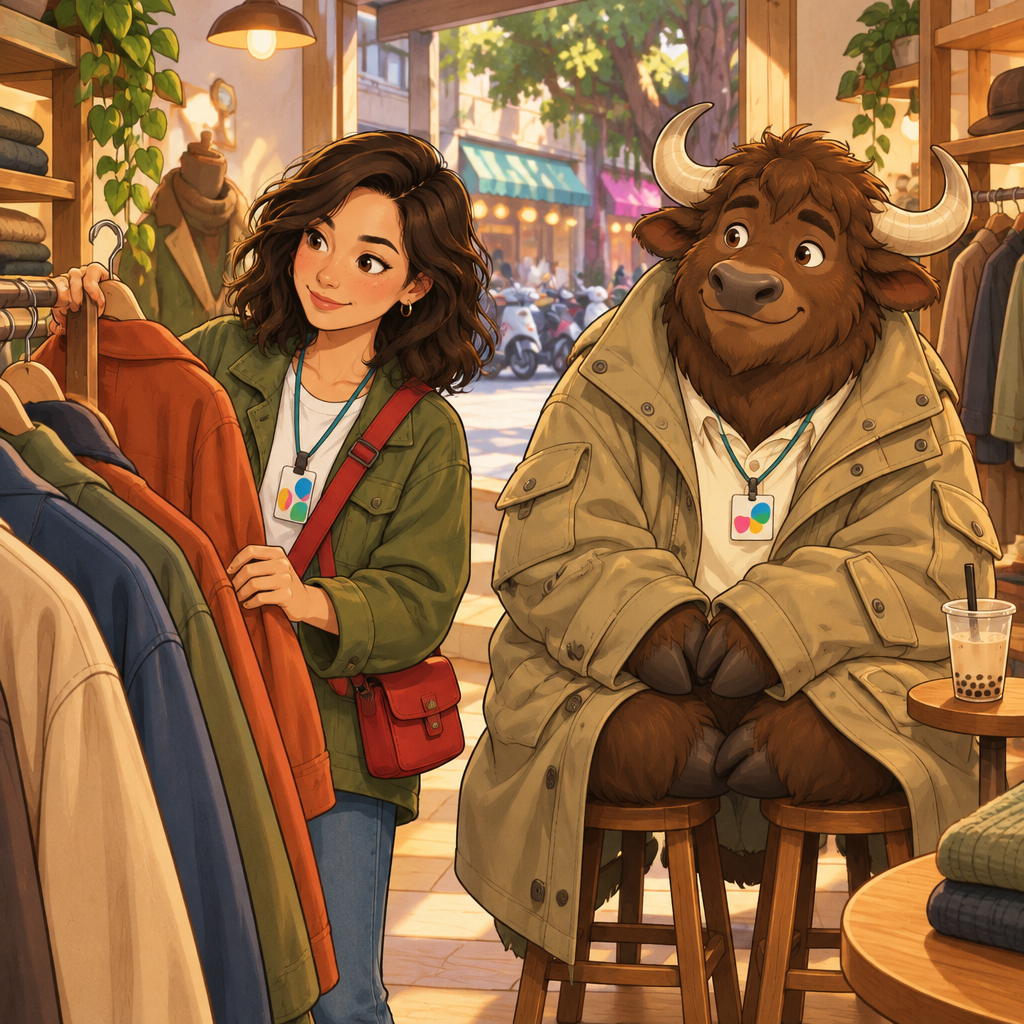
Rainy season is approaching in Taipei, and Maya wants a reliable coat. She stops at a clothing shop to compare sizes and colours.
A-Li comes with her, still carrying his unfinished soy milk. He finds a coat so large that it seems designed for two people.
Learn — trying on and choosing
Use these six lines to ask about trying on an item, sizes, and the fitting room. You can also take a moment to decide or say you will buy it.
Notice how a short question can help you shop without committing too soon.
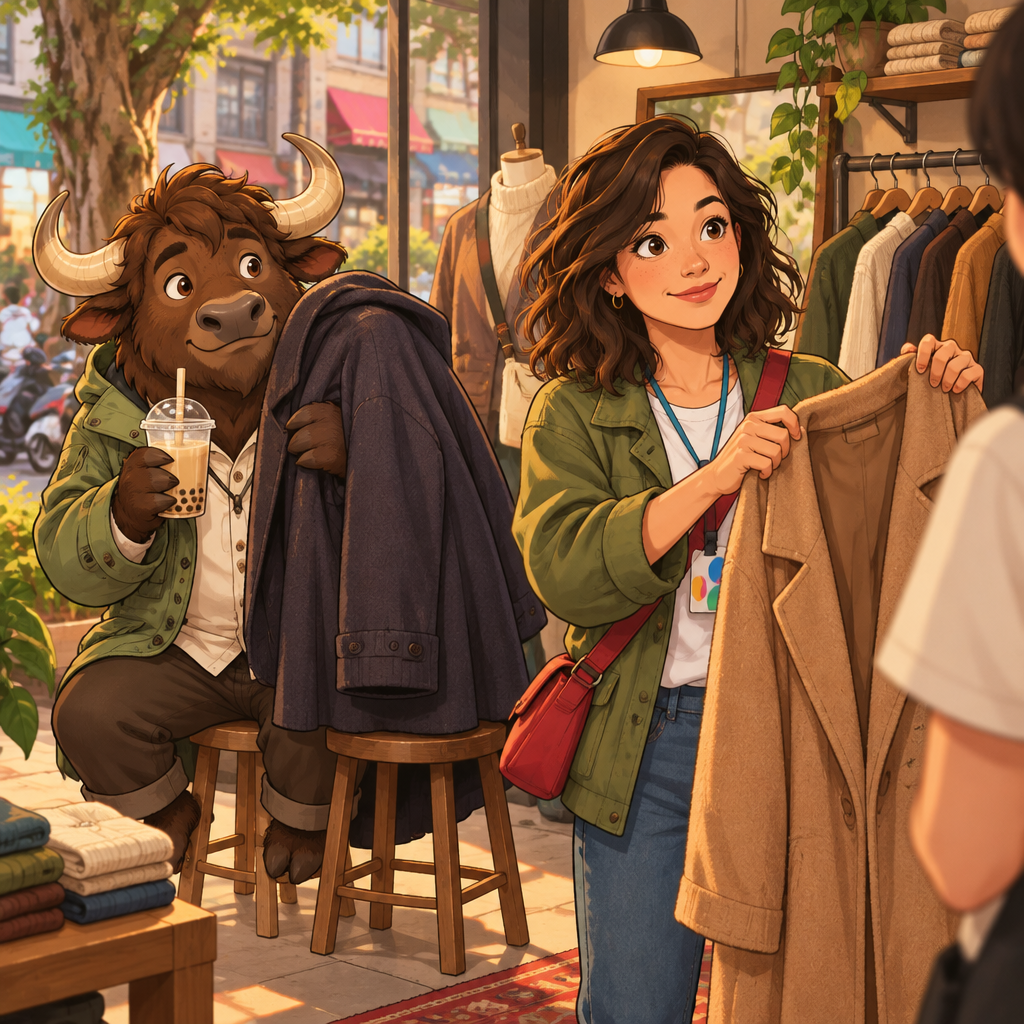
這件可以試穿嗎?
Can I try this on?
When to use it: Ask a shop clerk for permission to try on the item you are pointing to.
件 is the measure word used here for a garment.
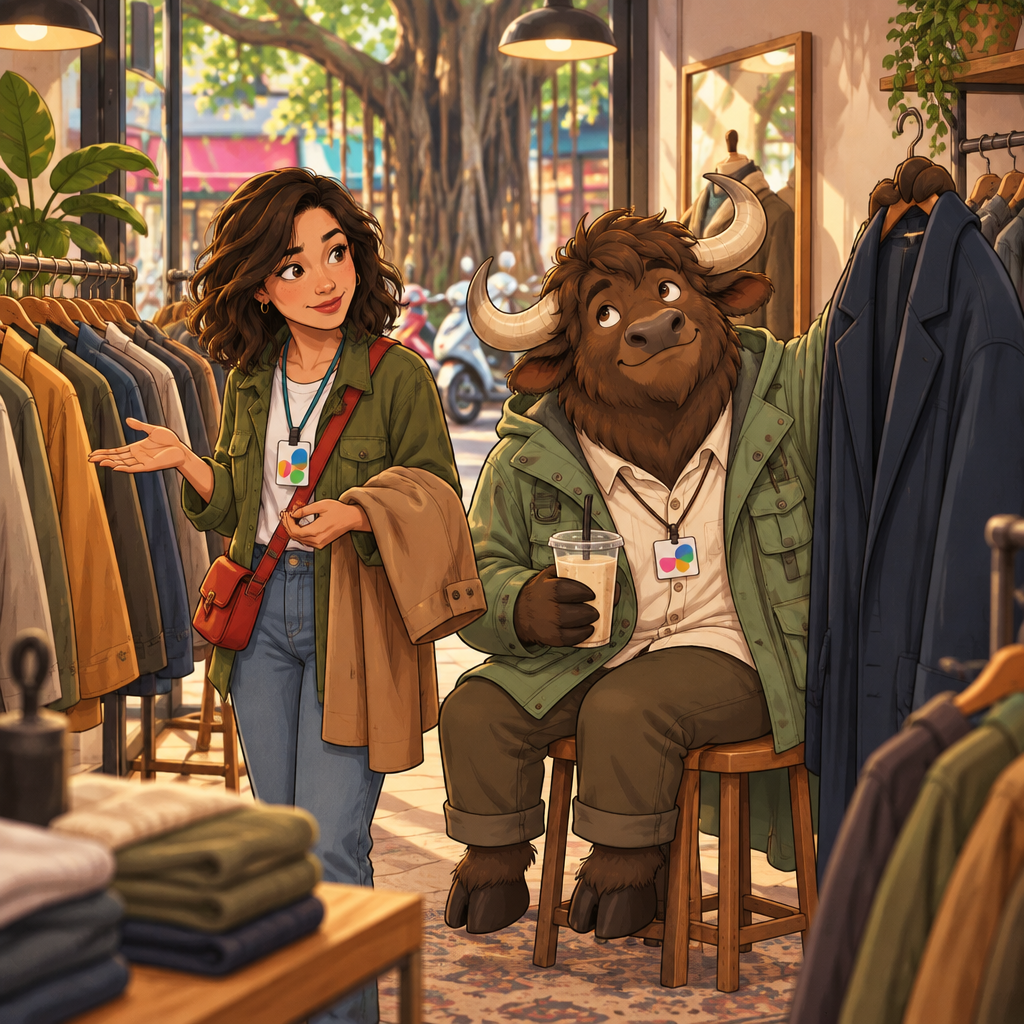
有別的尺寸嗎?
Do you have other sizes?
When to use it: Ask a clerk if the item is available in other sizes.
尺寸 means size, and 別的 asks about other options.
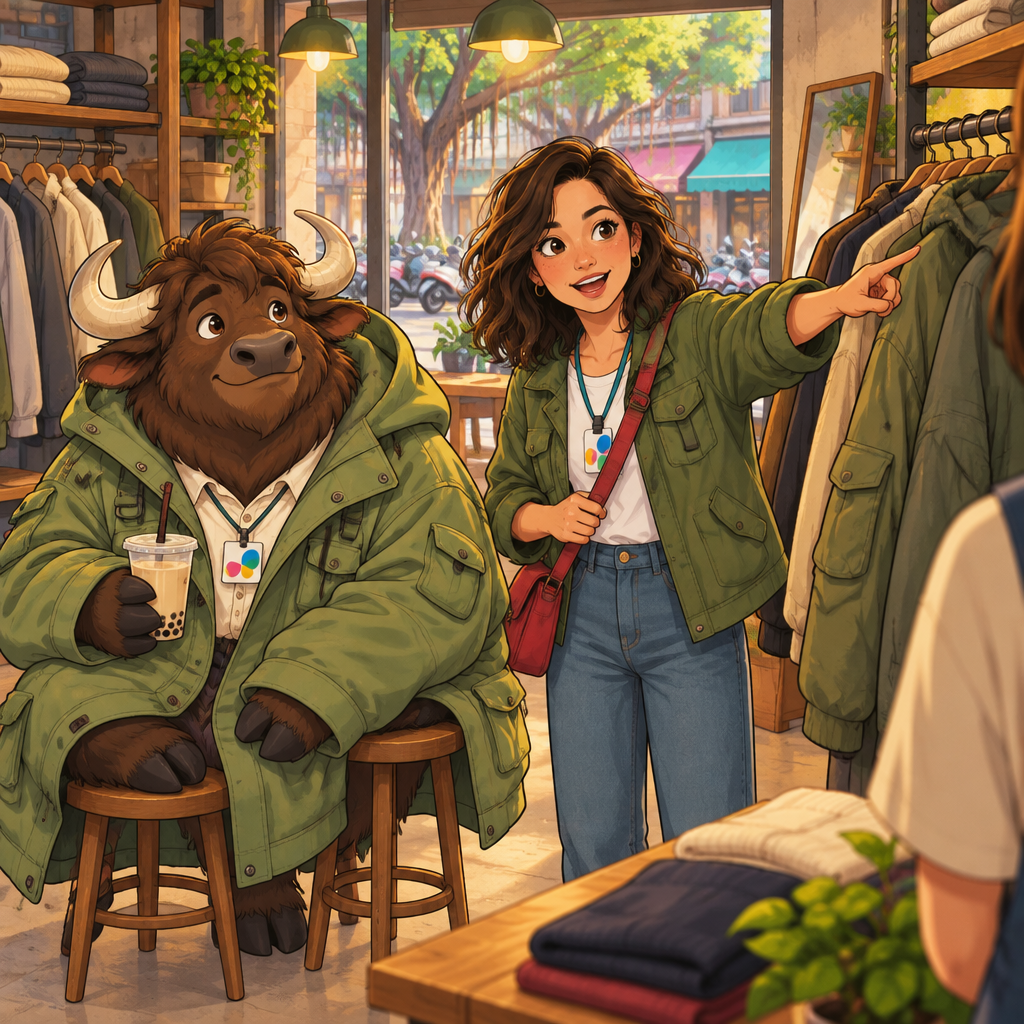
有大一點的嗎?
Do you have a bigger one?
When to use it: Ask whether the shop has an item that is a little bigger.
一點 after 大 softens the comparison to mean a little bigger.
Say it: In 一點, 一 changes to a falling fourth tone before the third-tone 點.
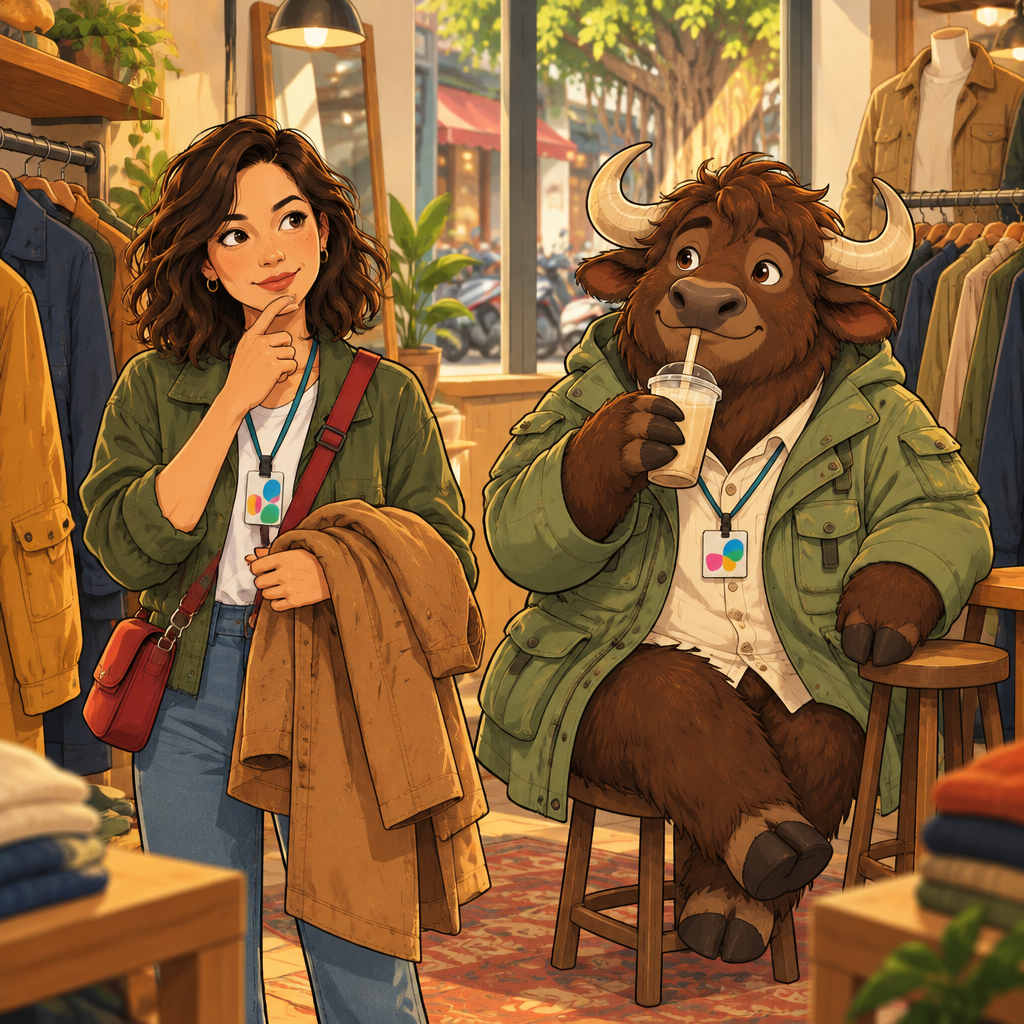
我考慮一下
I'll think about it.
When to use it: Say this when you want a little time before making a decision.
一下 makes the action sound brief and gives you a natural way to pause.
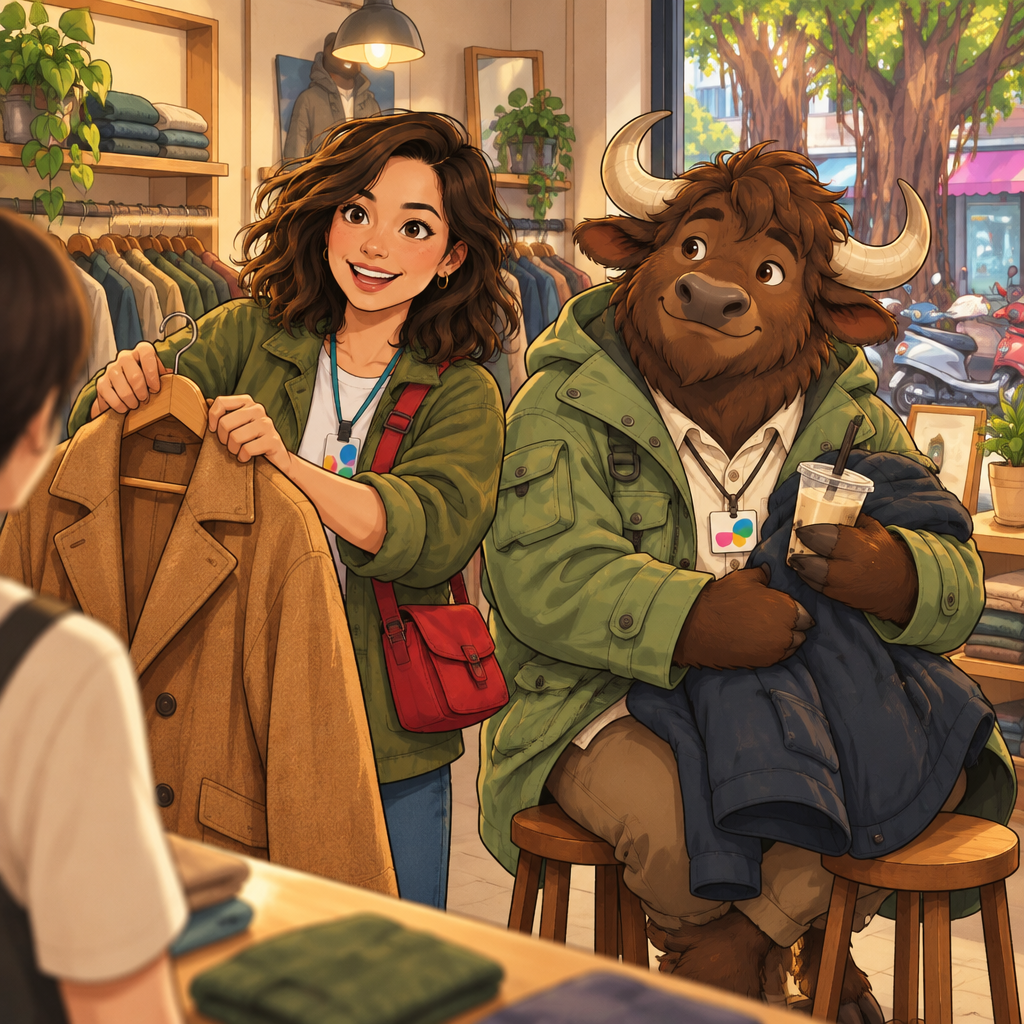
這件我要了
I'll take this one.
When to use it: Use this when you have decided to buy the item.
了 marks your decision as made here.
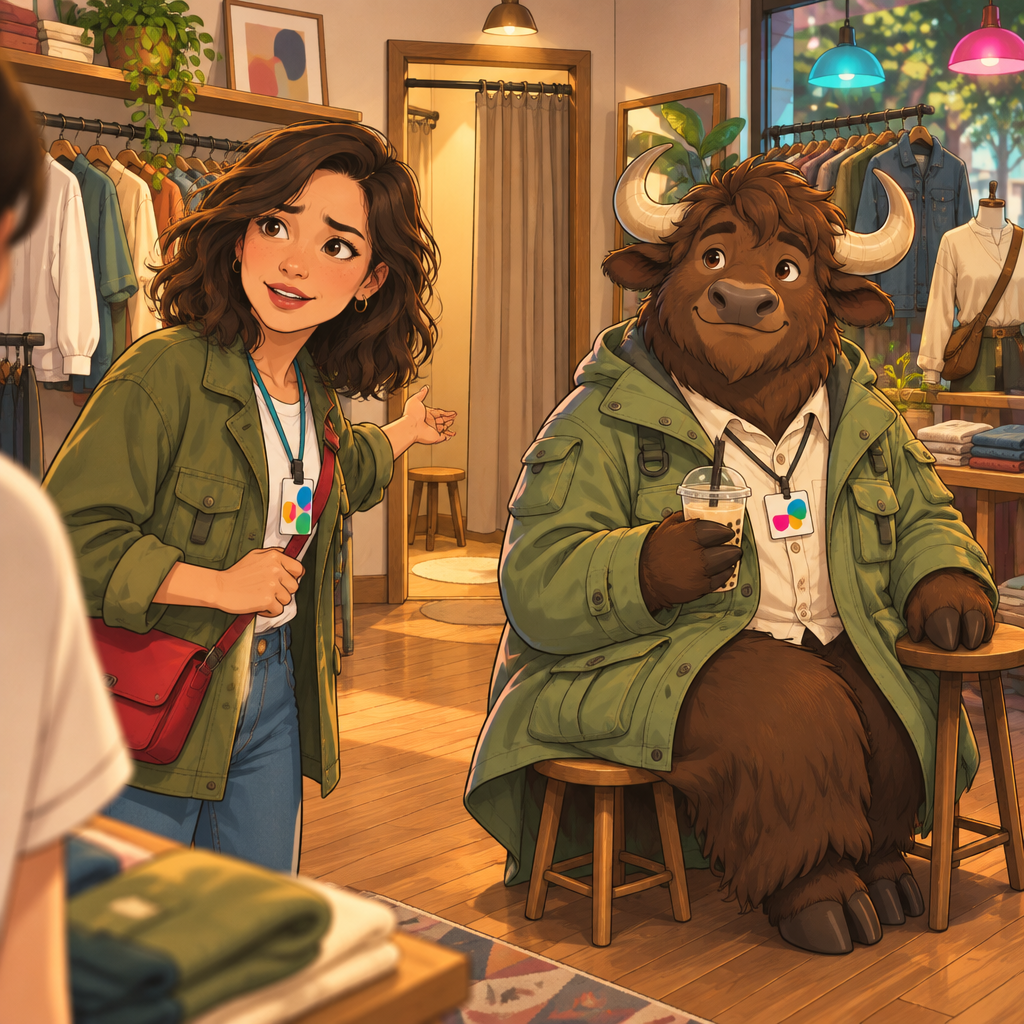
試衣間在哪裡?
Where's the fitting room?
When to use it: Ask where you can try on clothes in a shop.
哪裡 stays in place in a Chinese question; it means where.
Story — a coat for two
Maya and A-Li visit a Taipei clothing shop before the typhoon season. Maya checks the fitting room and asks about raincoat sizes and colours.
A-Li tries a coat meant for two, while Maya takes her time and chooses.
- Shop clerk你好,歡迎光臨。Hello, welcome in.
 Maya你好。Hello.
- Maya試衣間在哪裡?Where's the fitting room?
- Shop clerk在前面,美女。It's up front, miss.
- Maya這件可以試穿嗎?Can I try this on?
- Shop clerk可以啊。Sure, you can.
- While Maya tries on a raincoat, A-Li pulls on one that seems made for two.
 A-Li這件外套好大喔。This coat is so big.
- Maya有別的顏色嗎?Do you have any other colours?
- Shop clerk有紅色和藍色。Yes, there are red and blue ones.
- Maya有別的尺寸嗎?Do you have other sizes?
- Shop clerk有,還有大一點的。Yes, there is a bigger one too.
- Maya有大一點的嗎?Do you have a bigger one?
- Shop clerk可以,我拿給你。Sure, I'll get it for you.
- Maya我考慮一下。I'll think about it.
- Maya這件我要了。I'll take this one.
Practice — make a shopping decision
Try eight quick activities to ask about sizes, find the fitting room, and make a choice. One question will help you review a colour phrase.
Read each situation carefully, then say the line that fits.
0 of 8 done
What does it mean?
What does it mean?
這件可以試穿嗎?
What do you say?
What do you say?
Ask the clerk whether there are other sizes of the coat.
Build the line
Build the line
Do you have a bigger one?
?
Tap the words in order.
Fill the gap
Fill the gap
I'll think about it.
我____一下
Pick the reply
Shop clerk says:
Pick the reply
你要買這件嗎?
Do you want to buy this one?
And you reply with:
Swap the word
Swap the word
Ask where the fitting room is.
試衣間在____?
What did you hear?
What did you hear?
What do you say?
What do you say?
You enter a shop and greet the clerk.
Say it — choose your rain gear
You are Maya, shopping for rain gear before typhoon season. Listen to each cue and say your line to the clerk.
Ask where to try things on, check a size, and finish by making your choice.
- Maya arrives at the shop and looks for the fitting room.
- Maya (you)Ask where the fitting room is.
Ask where the fitting room is.
試衣間在哪裡?
Where's the fitting room?
0 of 4 said
Recap — what you can say now
| Traditional Chinese | English | Play |
|---|---|---|
| 這件可以試穿嗎? | Can I try this on? | |
| 有別的尺寸嗎? | Do you have other sizes? | |
| 有大一點的嗎? | Do you have a bigger one? | |
| 我考慮一下 | I'll think about it. | |
| 這件我要了 | I'll take this one. | |
| 試衣間在哪裡? | Where's the fitting room? |
Save your progress — it’s free
Keep your place in the course and see which lines you’ve learned.
Want the next lesson in your inbox?
Get the next lesson by email, one a day.
Join the newsletterDaily lesson emails are coming soon. Newsletter subscribers get them first.
Keep practicing with Yak Cards
Review these shopping lines and more in Yak Cards.
Practise asking about sizes and trying things on before your next shopping trip.
Open Yak Cards