Traditional Chinese - Travel Stories

Lesson 64 of 152

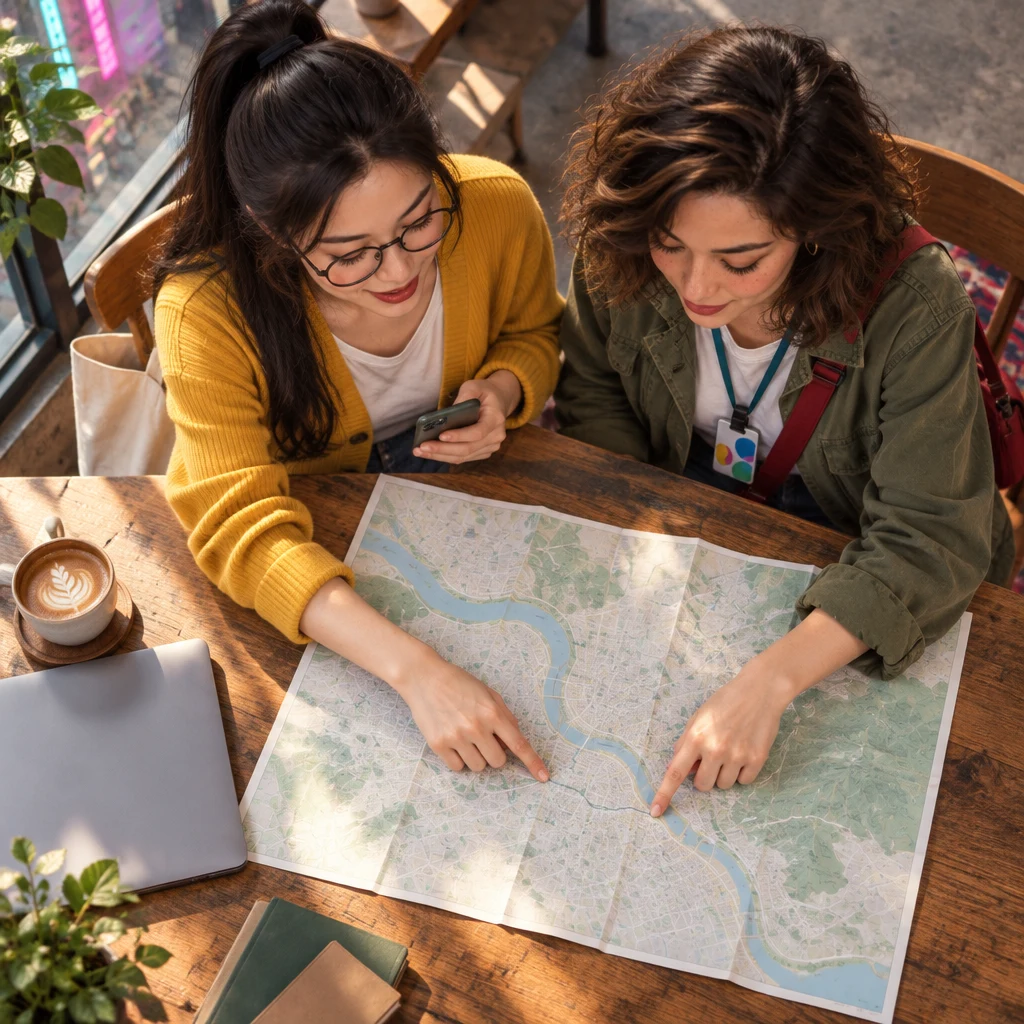
A traveler holds a map and phone at a sunny train station, ready to share a travel experience in Traditional Chinese. The scene highlights Taiwan Mandarin phrases for trips, surprises, and recommendations.

Goal: Talk about where you went, what you loved, and whether you’d go back.

Free traditional Chinese lessons with Taiwan Mandarin audio and speaking practice.

Lesson 64 is ready for takeoff. Today your Mandarin gets a tiny suitcase, a few travel memories, and maybe a snack recommendation or two.

Level B1: In this lesson, you’ll practice telling a short travel story with phrases for where you went, how long you stayed, what surprised you, what went wrong, and what you recommend. You’ll also learn how to ask someone about their trip and respond with a natural overall opinion. By the end, you’ll sound less like a phrasebook and more like a real person swapping travel stories.

After this lesson you'll be able to:

  • Say where you went last year with 我去年去了___ (Wǒ qùnián qù le ___).
  • Ask about someone’s travel experience with 你去過___嗎? (Nǐ qùguò ___ ma?)
  • Describe the best part of a trip with 最棒的是___ (Zuì bàng de shì ___).
  • Explain a small travel problem with 我們在___這方面遇到一點問題 (Wǒmen zài ___ zhè fāngmiàn yùdào yìdiǎn wèntí).
  • Give a friendly recommendation with 如果你去那裡,一定要試試___ (Rúguǒ nǐ qù nàlǐ, yídìng yào shìshi ___).
Two friends sit at a café with luggage nearby, chatting about last year’s trip in Taiwan Mandarin. Traditional Chinese travel phrases appear on postcards around the table.

Ready? Let's go!

When you tap play on phrases, we track your progress through this lesson.

1. Reading + Listening Practice

Hear core phrases, repeat aloud.

我去年去了___。

Wǒ qùnián qù le ___.

I went to ___ last year.

Meaning: 我去年去了___ (Wǒ qùnián qù le ___) means “I went to ___ last year.”

When to use: Use it to introduce a place you visited in the past, especially when starting a travel story.

我去年去了日本。

Wǒ qùnián qù le Rìběn.

I went to Japan last year.
我去年去了台南。

Wǒ qùnián qù le Táinán.

I went to Tainan last year.

你去過___嗎?

Nǐ qùguò ___ ma?

Have you ever been to ___?

Meaning: 你去過___嗎? (Nǐ qùguò ___ ma?) means “Have you ever been to ___?”

When to use: Use it to ask about someone’s travel experience.

Tip: 去過 (qùguò) asks about experience; 去了 (qù le) points to a specific past trip.

你去過花蓮嗎

Nǐ qùguò Huālián ma?

Have you ever been to Hualien?
你去過泰國嗎

Nǐ qùguò Tàiguó ma?

Have you ever been to Thailand?

那是我去過最棒的旅行之一。

Nà shì wǒ qùguò zuì bàng de lǚxíng zhī yī.

It was one of the best trips I've ever taken.

Meaning: 那是我去過最棒的旅行之一 (Nà shì wǒ qùguò zuì bàng de lǚxíng zhī yī) means “It was one of the best trips I’ve ever taken.”

When to use: Use it to give a strong positive opinion about a trip.

京都真的很美,那是我去過最棒的旅行之一。

Jīngdū zhēnde hěn měi, nà shì wǒ qùguò zuì bàng de lǚxíng zhī yī.

Kyoto was really beautiful; it was one of the best trips I’ve ever taken.
那次去越南很難忘,那是我去過最棒的旅行之一。

Nà cì qù Yuènán hěn nánwàng, nà shì wǒ qùguò zuì bàng de lǚxíng zhī yī.

That trip to Vietnam was unforgettable; it was one of the best trips I’ve ever taken.

最棒的是___。

Zuì bàng de shì ___.

The best part was ___ .

Meaning: 最棒的是___ (Zuì bàng de shì ___) means “The best part was ___.”

When to use: Use it to name the highlight of a trip.

最棒的是海邊的夕陽。

Zuì bàng de shì hǎibiān de xīyáng.

The best part was the sunset by the beach.
最棒的是當地的小吃。

Zuì bàng de shì dāngdì de xiǎochī.

The best part was the local snacks.

___讓我很驚訝。

___ ràng wǒ hěn jīngyà.

I was surprised by ___ .

Meaning: ___讓我很驚訝 (___ ràng wǒ hěn jīngyà) means “I was surprised by ___.”

When to use: Use it when something unexpected stood out during a trip.

當地人的熱情讓我很驚訝。

Dāngdì rén de rèqíng ràng wǒ hěn jīngyà.

I was surprised by how friendly the local people were.
食物的價格讓我很驚訝。

Shíwù de jiàgé ràng wǒ hěn jīngyà.

I was surprised by the price of the food.

我們在___這方面遇到一點問題。

Wǒmen zài ___ zhè fāngmiàn yùdào yìdiǎn wèntí.

We had a problem with ___ .

Meaning: 我們在___這方面遇到一點問題 (Wǒmen zài ___ zhè fāngmiàn yùdào yìdiǎn wèntí) means “We had a problem with ___.”

When to use: Use it for travel issues like transportation, lodging, luggage, or communication.

Tip: Use 在___這方面 (zài ___ zhè fāngmiàn) for the area of the problem, like 交通 (jiāotōng) or 住宿 (zhùsù).

我們在交通這方面遇到一點問題。

Wǒmen zài jiāotōng zhè fāngmiàn yùdào yìdiǎn wèntí.

We had a problem with transportation.
我們在住宿這方面遇到一點問題。

Wǒmen zài zhùsù zhè fāngmiàn yùdào yìdiǎn wèntí.

We had a problem with lodging.

最後一切都沒事了。

Zuìhòu yíqiè dōu méi shì le.

In the end, everything was okay.

Meaning: 最後一切都沒事了 (Zuìhòu yíqiè dōu méi shì le) means “In the end, everything was okay.”

When to use: Use it after describing a problem that got solved or turned out fine.

我們差點錯過火車,不過最後一切都沒事了。

Wǒmen chàdiǎn cuòguò huǒchē, búguò zuìhòu yíqiè dōu méi shì le.

We almost missed the train, but in the end, everything was okay.
飯店一開始找不到我們的訂房,最後一切都沒事了。

Fàndiàn yì kāishǐ zhǎo bù dào wǒmen de dìngfáng, zuìhòu yíqiè dōu méi shì le.

At first the hotel couldn’t find our reservation, but in the end, everything was okay.

我一定會再去

Wǒ yídìng huì zài qù.

I would definitely go back.

Meaning: 我一定會再去 (Wǒ yídìng huì zài qù) means “I would definitely go back.”

When to use: Use it when you liked a place enough to visit again.

花蓮太漂亮了,我一定會再去。

Huālián tài piàoliang le, wǒ yídìng huì zài qù.

Hualien was so beautiful; I would definitely go back.
那裡的食物很好吃,我一定會再去。

Nàlǐ de shíwù hěn hǎochī, wǒ yídìng huì zài qù.

The food there was delicious; I would definitely go back.

你這趟旅行最棒的是什麼?

Nǐ zhè tàng lǚxíng zuì bàng de shì shénme?

What was the best part of your trip?

Meaning: 你這趟旅行最棒的是什麼? (Nǐ zhè tàng lǚxíng zuì bàng de shì shénme?) means “What was the best part of your trip?”

When to use: Use it to ask someone for the highlight of their trip.

你這趟旅行最棒的是什麼?

Nǐ zhè tàng lǚxíng zuì bàng de shì shénme?

What was the best part of your trip?
聽起來很好玩!你這趟旅行最棒的是什麼?

Tīng qǐlái hěn hǎowán! Nǐ zhè tàng lǚxíng zuì bàng de shì shénme?

That sounds fun! What was the best part of your trip?

如果你去那裡,一定要試試___。

Rúguǒ nǐ qù nàlǐ, yídìng yào shìshi ___.

You should try ___ if you go there.

Meaning: 如果你去那裡,一定要試試___ (Rúguǒ nǐ qù nàlǐ, yídìng yào shìshi ___) means “You should try ___ if you go there.”

When to use: Use it to recommend food, activities, or experiences.

如果你去那裡,一定要試試牛肉湯。

Rúguǒ nǐ qù nàlǐ, yídìng yào shìshi niúròu tāng.

You should try beef soup if you go there.
如果你去那裡,一定要試試浮潛。

Rúguǒ nǐ qù nàlǐ, yídìng yào shìshi fúqián.

You should try snorkeling if you go there.

我大部分時間都在___。

Wǒ dà bùfen shíjiān dōu zài ___.

I spent most of my time ___ .

Meaning: 我大部分時間都在___ (Wǒ dà bùfen shíjiān dōu zài ___) means “I spent most of my time ___.”

When to use: Use it with an activity or place to describe what you mostly did during a trip.

我大部分時間都在逛夜市。

Wǒ dà bùfen shíjiān dōu zài guàng yèshì.

I spent most of my time walking around night markets.
我大部分時間都在海邊。

Wǒ dà bùfen shíjiān dōu zài hǎibiān.

I spent most of my time at the beach.

我們在___待了___天。

Wǒmen zài ___ dāi le ___ tiān.

We stayed in ___ for ___ days.

Meaning: 我們在___待了___天 (Wǒmen zài ___ dāi le ___ tiān) means “We stayed in ___ for ___ days.”

When to use: Use it to say where you stayed and for how many days.

Tip: Put the place first, then the number of days: 我們在京都待了三天 (Wǒmen zài Jīngdū dāi le sān tiān).

我們在京都待了三天。

Wǒmen zài Jīngdū dāi le sān tiān.

We stayed in Kyoto for three days.
我們在台南待了兩天。

Wǒmen zài Táinán dāi le liǎng tiān.

We stayed in Tainan for two days.

我真的很喜歡___。

Wǒ zhēnde hěn xǐhuān ___.

I really enjoyed ___ .

Meaning: 我真的很喜歡___ (Wǒ zhēnde hěn xǐhuān ___) means “I really enjoyed ___.”

When to use: Use it for a place, activity, food, or experience you liked a lot.

我真的很喜歡台南的小吃。

Wǒ zhēnde hěn xǐhuān Táinán de xiǎochī.

I really enjoyed Tainan’s snacks.
我真的很喜歡坐火車旅行。

Wǒ zhēnde hěn xǐhuān zuò huǒchē lǚxíng.

I really enjoyed traveling by train.

2. Conversational Listening Practice

Hear phrases in a real mini-conversation.

Anna and David are looking at photos from David’s recent trip.

Anna and David look at travel photos together while discussing the best part of a trip in Traditional Chinese. The Taiwan Mandarin scene feels casual, warm, and story-like.

Does David want to go back to Tainan?

Portrait of Anna in a Traditional Chinese lesson dialogue

Anna

你去年去哪裡旅行?

Nǐ qùnián qù nǎlǐ lǚxíng?

Where did you travel last year?

Portrait of David in a Traditional Chinese lesson dialogue

David

我去年去了台南。我們在台南待了三天。

Wǒ qùnián qù le Táinán. Wǒmen zài Táinán dāi le sān tiān.

I went to Tainan last year. We stayed in Tainan for three days.

Portrait of Anna in a Traditional Chinese lesson dialogue

Anna

你這趟旅行最棒的是什麼?

Nǐ zhè tàng lǚxíng zuì bàng de shì shénme?

What was the best part of your trip?

Portrait of David in a Traditional Chinese lesson dialogue

David

最棒的是當地的小吃。我真的很喜歡牛肉湯。

Zuì bàng de shì dāngdì de xiǎochī. Wǒ zhēnde hěn xǐhuān niúròu tāng.

The best part was the local snacks. I really enjoyed the beef soup.

Portrait of Anna in a Traditional Chinese lesson dialogue

Anna

聽起來很棒!有遇到什麼問題嗎?

Tīng qǐlái hěn bàng! Yǒu yùdào shénme wèntí ma?

That sounds great! Did you run into any problems?

Portrait of David in a Traditional Chinese lesson dialogue

David

我們在交通這方面遇到一點問題,不過最後一切都沒事了。我一定會再去。

Wǒmen zài jiāotōng zhè fāngmiàn yùdào yìdiǎn wèntí, búguò zuìhòu yíqiè dōu méi shì le. Wǒ yídìng huì zài qù.

We had a small problem with transportation, but in the end, everything was okay. I would definitely go back.

3. Guided Practice

Quizzes and matching to lock in meaning.

How do you say: “Have you ever been to Hualien?”

Which phrase says: “The best part was the food”?

You want to say: “We had a problem with transportation.” Choose the best sentence.

Which phrase means: “In the end, everything was okay”?

You should try beef soup if you go there.

如果你去那裡,一定要試試___。

I spent most of my time walking around night markets.

台灣的小吃很多,晚上也很熱鬧;我大部分時間都在___。

We stayed in Kyoto for three days.

我們去日本旅行,看了很多寺廟;我們在___待了三天。

Match the core phrases

Match the extra phrases

4. Speaking Practice

Say phrases yourself (mic/recording).

Recording stays on your device only. Check speech uses your browser's speech tools when available.

Say this phrase out loud:

我去年去了___。

Wǒ qùnián qù le ___.

I went to ___ last year.

Say this phrase out loud:

你去過___嗎?

Nǐ qùguò ___ ma?

Have you ever been to ___?

Say this phrase out loud:

那是我去過最棒的旅行之一。

Nà shì wǒ qùguò zuì bàng de lǚxíng zhī yī.

It was one of the best trips I’ve ever taken.

Say this phrase out loud:

最棒的是___。

Zuì bàng de shì ___.

The best part was ___.

Say this phrase out loud:

___讓我很驚訝。

___ ràng wǒ hěn jīngyà.

I was surprised by ___.

Say this phrase out loud:

我們在___這方面遇到一點問題。

Wǒmen zài ___ zhè fāngmiàn yùdào yìdiǎn wèntí.

We had a problem with ___.

Say this phrase out loud:

最後一切都沒事了。

Zuìhòu yíqiè dōu méi shì le.

In the end, everything was okay.

Say this phrase out loud:

我一定會再去

Wǒ yídìng huì zài qù.

I would definitely go back.

Say this phrase out loud:

你這趟旅行最棒的是什麼?

Nǐ zhè tàng lǚxíng zuì bàng de shì shénme?

What was the best part of your trip?

Say this phrase out loud:

如果你去那裡,一定要試試___。

Rúguǒ nǐ qù nàlǐ, yídìng yào shìshi ___.

You should try ___ if you go there.

Say this phrase out loud:

我大部分時間都在___。

Wǒ dà bùfen shíjiān dōu zài ___.

I spent most of my time ___.

Say this phrase out loud:

我們在___待了___天。

Wǒmen zài ___ dāi le ___ tiān.

We stayed in ___ for ___ days.

Say this phrase out loud:

我真的很喜歡___。

Wǒ zhēnde hěn xǐhuān ___.

I really enjoyed ___.