
New here? This is lesson 170 of a free 240-lesson Traditional Chinese course.
A trip that went wrong in Traditional Chinese
Yi-Jun drops into Banyan Breakfast looking worn out. She rode a scooter, missed a train, and the day did not go as planned. A-Li listens from two stools, soy milk still unfinished.
Learn six lines for saying a trip went wrong, what happened on the way, and what you will do next time.
Then tell a short travel mishap of your own, without solving any shop mystery.
By the end of this lesson
Tell what went wrong on a trip and how you got through.
- 這趟旅行沒有照原本計畫走This trip didn't go to plan.
- 去的路上發生了一件事Something happened on the way.
- 我迷路了,但後來找到路了I got lost but found my way later.
- 比我想像中還累It was more tiring than I thought.
- 我永遠忘不了那一刻I'll never forget that moment.
- 下次我會先查好Next time I'll look it up first.
Scene — a scooter and a missed train
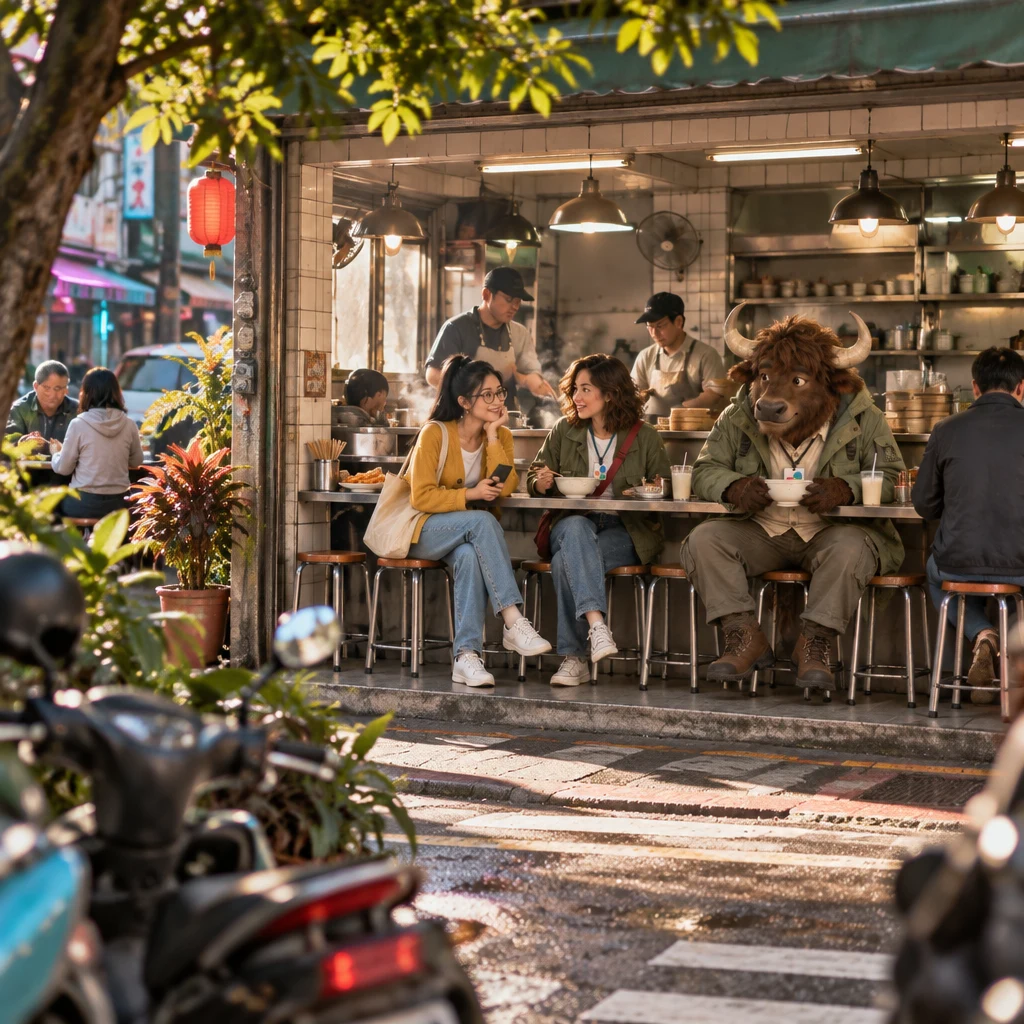
Saturday light falls across Banyan Breakfast. Yi-Jun sits down tired from a scooter ride and a missed train.
Maya listens, and A-Li stays on two stools with his soy milk still unfinished.
The story is ordinary bad luck on the road. Nobody reads the slip in the till, and A-Li is not solving anything today.
Learn — when a trip goes off plan
Here are six lines for telling a travel story that went off plan. Listen, then say each one out loud.
Notice how 了 marks a finished event, and how 比…還 compares what you felt with what you expected.

這趟旅行沒有照原本計畫走
This trip didn't go to plan.
When to use it: Use this when a trip did not follow your original plan.
照 plus a plan means you follow that plan.

去的路上發生了一件事
Something happened on the way.
When to use it: Use this to start the problem that came up while traveling.
一件事 uses the measure word 件 for an event.
Say it: 一 changes tone before the fourth-tone syllable in 件.

我迷路了,但後來找到路了
I got lost but found my way later.
When to use it: Use this when you were lost and then found the road again.
Each 了 marks a finished event: getting lost, then finding the way.

比我想像中還累
It was more tiring than I thought.
When to use it: Use this when a trip tired you more than you expected.
比…還 compares the real feeling with what you imagined.

我永遠忘不了那一刻
I'll never forget that moment.
When to use it: Use this for a moment that stayed with you.
忘不了 means you cannot forget, even if you try.

下次我會先查好
Next time I'll look it up first.
When to use it: Use this when you will check the facts before the next trip.
好 after 查 marks the checking as done in advance.
Story — Yi-Jun missed the train
Listen to Yi-Jun tell Maya why her trip went wrong. She rode a scooter and missed a train.
A-Li stays at the back table. His soy milk is still unfinished.
- Saturday at Banyan Breakfast, Yi-Jun sits down looking worn out.
 Yi-Jun這趟旅行沒有照原本計畫走。This trip didn't go to plan.
 Maya發生什麼事了?What happened?
- Yi-Jun去的路上發生了一件事。Something happened on the way.
 A-Li後來呢?And then?
- Yi-Jun我騎機車去趕火車。I rode a scooter to catch the train.
- Yi-Jun我迷路了,但後來找到路了。I got lost but found my way later.
- Maya那你有趕上嗎?So did you make it?
- Yi-Jun沒有,我到的時候車已經走了。No, the train had already left when I got there.
- Yi-Jun比我想像中還累。It was more tiring than I thought.
- A-Li豆漿還沒喝完。The soy milk still isn't finished.
- Yi-Jun我永遠忘不了那一刻。I'll never forget that moment.
- Maya聽起來真的很累。That sounds really tiring.
- Yi-Jun對啊,下次不能這樣。Yeah, I can't do it like that next time.
- Maya下次我會先查好。Next time I'll look it up first.
- Yi-Jun你也要去旅行喔?You're going on a trip too?
- Maya對啊,我還在想。Yeah, I'm still thinking it through.
Practice — tell what went wrong
Work through ten short exercises. Pick the line that fits each mishap, then check why the other choices fail.
Say the winning line again after you check the note.
0 of 10 done
What does it mean?
What does it mean?
這趟旅行沒有照原本計畫走
What do you say?
What do you say?
Say that something happened while you were on the way, rather than summarizing whether the trip followed the plan.
Build the line
Build the line
Next time I'll look it up first.
Tap the words in order.
Fill the gap
Fill the gap
It was more tiring than I thought.
比我____中還累
What did you hear?
What did you hear?
Pick the reply
Yi-Jun says:
Pick the reply
後來呢?
And then?
And you reply with:
Swap the word
Swap the word
You are saying something took place on the way, not that you ran into someone.
去的路上____了一件事
Match the pairs
Traditional Chinese
這趟旅行沒有照原本計畫走Drop the English here去的路上發生了一件事Drop the English here比我想像中還累Drop the English here我永遠忘不了那一刻Drop the English hereEnglish
What do you say?
What do you say?
Yi-Jun sits down looking exhausted and has not started her story yet. Ask what happened.
Pick the reply
Yi-Jun says:
Pick the reply
我騎機車去趕火車。
I rode a scooter to catch the train.
And you reply with:
Say it — your travel mishap
You play Maya and tell Yi-Jun about a trip that went off plan. Listen to each cue, then say the line out loud.
Tap the microphone to speak. You can replay the other person's line before your turn.
- You sit with Yi-Jun at Banyan Breakfast and tell her about a messy day out.
- Maya (you)Tell her this trip didn't go to plan.
Tell her this trip didn't go to plan.
這趟旅行沒有照原本計畫走
This trip didn't go to plan.
0 of 6 said
Recap — what you can say now
| Traditional Chinese | English | Play |
|---|---|---|
| 這趟旅行沒有照原本計畫走 | This trip didn't go to plan. | |
| 去的路上發生了一件事 | Something happened on the way. | |
| 我迷路了,但後來找到路了 | I got lost but found my way later. | |
| 比我想像中還累 | It was more tiring than I thought. | |
| 我永遠忘不了那一刻 | I'll never forget that moment. | |
| 下次我會先查好 | Next time I'll look it up first. |
Save your progress — it’s free
Keep your place in the course and see which lines you’ve learned.
Want the next lesson in your inbox?
Get the next lesson by email, one a day.
Join the newsletterDaily lesson emails are coming soon. Newsletter subscribers get them first.
Keep practicing with Yak Cards
Today's travel-mishap lines are in Yak Cards with more ways to tell what went wrong.
Review a few cards each day so the story comes out in order.
Open Yak Cards