Traditional Chinese - Asking Permission

Lesson 19 of 152

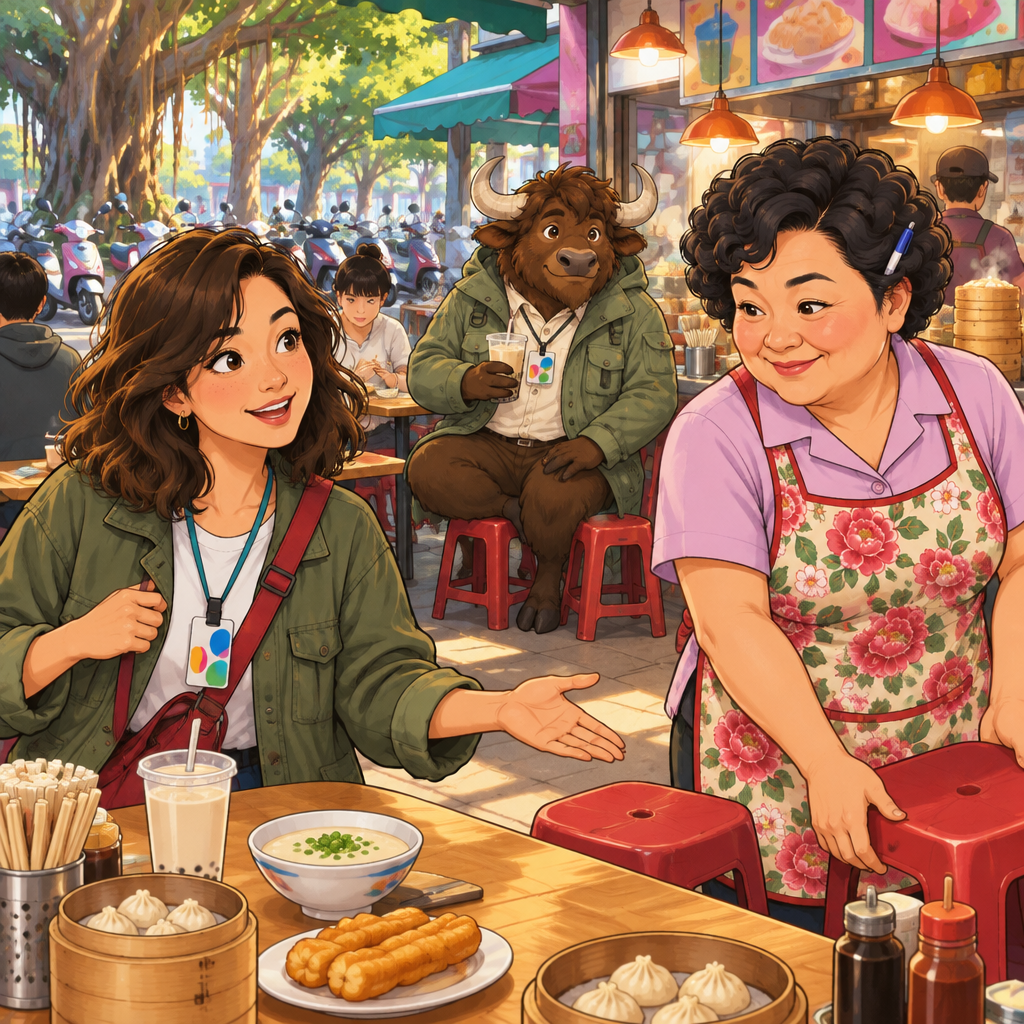
A friendly Taiwan café scene with Traditional Chinese signs, showing a learner asking permission in Taiwan Mandarin. The lesson topic is asking if something is allowed.

Goal: Ask nicely, get a clear yes—or a gentle no.

Free traditional Chinese lessons with Taiwan Mandarin audio and speaking practice.

Today we’re practicing the tiny phrases that save you from awkward guessing. Need to use something, take something, or check if something is okay? You’ll be ready.

Level A1: this lesson helps you ask for permission with phrases like 我可以___嗎? (Wǒ kěyǐ ___ ma?) and 請問我可以___嗎? (Qǐngwèn wǒ kěyǐ ___ ma?). You’ll also practice friendly yes answers like 可以啊,沒問題。 (Kěyǐ a, méi wèntí.) and a polite no: 不好意思,不行。 (Bùhǎoyìsi, bù xíng.) Permission: granted… maybe. Let’s ask first!

After this lesson you'll be able to:

  • Ask “Can I…?” using 我可以___嗎? (Wǒ kěyǐ ___ ma?) in simple A1 conversations.
  • Ask for a group with 我們可以___嗎? (Wǒmen kěyǐ ___ ma?).
  • Sound more polite with 請問我可以___嗎? (Qǐngwèn wǒ kěyǐ ___ ma?).
  • Give simple permission with 可以。 (Kěyǐ.) and refuse politely with 不好意思,不行。 (Bùhǎoyìsi, bù xíng.).
A close-up of a phone charger, water cup, and café counter in Taiwan, with Traditional Chinese text for Taiwan Mandarin permission phrases. The scene highlights asking to use or take something politely.

Ready? Let's go!

When you tap play on phrases, we track your progress through this lesson.

1. Reading + Listening Practice

Hear core phrases, repeat aloud.

我可以___嗎?

Wǒ kěyǐ ___ ma?

Can I ___?

Meaning: 我可以___嗎? (Wǒ kěyǐ ___ ma?) means “Can I ___?”

When to use: Use this for the most basic, natural way to ask permission. Examples: 我可以坐這裡嗎? (Wǒ kěyǐ zuò zhèlǐ ma?) “Can I sit here?” / 我可以拍照嗎? (Wǒ kěyǐ pāi zhàopiàn ma?) “Can I take photos?”

Tip: Don’t forget 嗎 (ma) at the end when you are asking a yes/no question.

我可以坐這裡嗎?

Wǒ kěyǐ zuò zhèlǐ ma?

Can I sit here?
我可以拍照嗎

Wǒ kěyǐ pāi zhàopiàn ma?

Can I take photos?

我們可以___嗎?

Wǒmen kěyǐ ___ ma?

Can we ___?

Meaning: 我們可以___嗎? (Wǒmen kěyǐ ___ ma?) means “Can we ___?”

When to use: Use this when you are asking permission for yourself and one or more other people. Examples: 我們可以進去嗎? (Wǒmen kěyǐ jìnqù ma?) “Can we go in?” / 我們可以坐這裡嗎? (Wǒmen kěyǐ zuò zhèlǐ ma?) “Can we sit here?”

我們可以進去嗎?

Wǒmen kěyǐ jìnqù ma?

Can we go in?
我們可以坐這裡嗎?

Wǒmen kěyǐ zuò zhèlǐ ma?

Can we sit here?

請問我可以___嗎?

Qǐngwèn wǒ kěyǐ ___ ma?

May I ___?

Meaning: 請問我可以___嗎? (Qǐngwèn wǒ kěyǐ ___ ma?) means “May I ___?”

When to use: Use this polite version with staff, strangers, or in work situations. Examples: 請問我可以用廁所嗎? (Qǐngwèn wǒ kěyǐ yòng cèsuǒ ma?) “May I use the restroom?” / 請問我可以看一下嗎? (Qǐngwèn wǒ kěyǐ kàn yíxià ma?) “May I take a look?”

Tip: 請問 (qǐngwèn) is a polite attention-getter, not exactly “please.” Use it before asking a question.

請問我可以用廁所嗎?

Qǐngwèn wǒ kěyǐ yòng cèsuǒ ma?

May I use the restroom?
請問我可以看一下嗎?

Qǐngwèn wǒ kěyǐ kàn yíxià ma?

May I take a look?

我___,可以嗎?

Wǒ ___, kěyǐ ma?

Is it okay if I ___?

Meaning: 我___,可以嗎? (Wǒ ___, kěyǐ ma?) means “Is it okay if I ___?”

When to use: Use this to check if an action is allowed; it sounds very natural in conversation. Examples: 我坐這裡,可以嗎? (Wǒ zuò zhèlǐ, kěyǐ ma?) “Is it okay if I sit here?” / 我開窗戶,可以嗎? (Wǒ kāi chuānghù, kěyǐ ma?) “Is it okay if I open the window?”

我坐這裡,可以嗎?

Wǒ zuò zhèlǐ, kěyǐ ma?

Is it okay if I sit here?
我開窗戶,可以嗎?

Wǒ kāi chuānghù, kěyǐ ma?

Is it okay if I open the window?

我可以用___嗎?

Wǒ kěyǐ yòng ___ ma?

Can I use ___?

Meaning: 我可以用___嗎? (Wǒ kěyǐ yòng ___ ma?) means “Can I use ___?”

When to use: Use this when asking to use something, such as a restroom, phone, or charger. Examples: 我可以用你的充電器嗎? (Wǒ kěyǐ yòng nǐ de chōngdiànqì ma?) “Can I use your charger?” / 我可以用電話嗎? (Wǒ kěyǐ yòng diànhuà ma?) “Can I use the phone?”

Tip: Use 用 (yòng) for “use.” Don’t use 拿 (ná) unless you mean “take” or “pick up.”

我可以用你的充電器嗎?

Wǒ kěyǐ yòng nǐ de chōngdiànqì ma?

Can I use your charger?
我可以用電話嗎?

Wǒ kěyǐ yòng diànhuà ma?

Can I use the phone?

我可以拿___嗎?

Wǒ kěyǐ ná ___ ma?

Can I take ___?

Meaning: 我可以拿___嗎? (Wǒ kěyǐ ná ___ ma?) means “Can I take ___?”

When to use: Use this when you want to take or pick up something. Examples: 我可以拿一張菜單嗎? (Wǒ kěyǐ ná yì zhāng càidān ma?) “Can I take a menu?” / 我可以拿這個嗎? (Wǒ kěyǐ ná zhège ma?) “Can I take this?”

我可以拿一張菜單嗎?

Wǒ kěyǐ ná yì zhāng càidān ma?

Can I take a menu?
我可以拿這個嗎?

Wǒ kěyǐ ná zhège ma?

Can I take this?

可以

Kěyǐ.

Yes, you can.

Meaning: 可以。 (Kěyǐ.) means “Yes, you can.”

When to use: Use this as the shortest clear yes when giving permission. Examples: 可以。 (Kěyǐ.) “Yes, you can.” / 可以,請坐。 (Kěyǐ, qǐng zuò.) “Yes, please sit.”

可以

Kěyǐ.

Yes, you can.
可以,請坐

Kěyǐ, qǐng zuò.

Yes, please sit.

可以啊,沒問題。

Kěyǐ a, méi wèntí.

Sure, go ahead.

Meaning: 可以啊,沒問題。 (Kěyǐ a, méi wèntí.) means “Sure, go ahead.”

When to use: Use this friendly answer when the request is totally fine. Examples: 可以啊,沒問題。 (Kěyǐ a, méi wèntí.) “Sure, go ahead.” / 可以啊,沒問題,請用。 (Kěyǐ a, méi wèntí, qǐng yòng.) “Sure, no problem, please use it.”

可以啊,沒問題。

Kěyǐ a, méi wèntí.

Sure, go ahead.
可以啊,沒問題,請用。

Kěyǐ a, méi wèntí, qǐng yòng.

Sure, no problem, please use it.

可以,沒關係

Kěyǐ, méi guānxi.

That's okay.

Meaning: 可以,沒關係。 (Kěyǐ, méi guānxi.) means “That’s okay.”

When to use: Use this when something is acceptable or not a problem. Examples: 可以,沒關係。 (Kěyǐ, méi guānxi.) “That’s okay.” / 可以,沒關係,你先用。 (Kěyǐ, méi guānxi, nǐ xiān yòng.) “That’s okay, you use it first.”

可以,沒關係

Kěyǐ, méi guānxi.

That’s okay.
可以,沒關係,你先用。

Kěyǐ, méi guānxi, nǐ xiān yòng.

That’s okay, you use it first.

不好意思,不行。

Bùhǎoyìsi, bù xíng.

No, sorry.

Meaning: 不好意思,不行。 (Bùhǎoyìsi, bù xíng.) means “No, sorry.”

When to use: Use this to refuse permission politely. Examples: 不好意思,不行。 (Bùhǎoyìsi, bù xíng.) “No, sorry.” / 不好意思,這裡不行。 (Bùhǎoyìsi, zhèlǐ bù xíng.) “Sorry, not here.”

Tip: 不行 (bù xíng) can sound direct by itself. Adding 不好意思 (bùhǎoyìsi) makes the refusal softer.

不好意思,不行。

Bùhǎoyìsi, bù xíng.

No, sorry.
不好意思,這裡不行。

Bùhǎoyìsi, zhèlǐ bù xíng.

Sorry, not here.

___可以嗎

___ kěyǐ ma?

Is ___ allowed?

Meaning: ___可以嗎? (___ kěyǐ ma?) means “Is ___ allowed?”

When to use: Use this broad pattern to ask if an action or thing is permitted. Examples: 拍照可以嗎? (Pāi zhàopiàn kěyǐ ma?) “Is taking photos allowed?” / 外帶可以嗎? (Wàidài kěyǐ ma?) “Is takeout okay?”

拍照可以嗎

Pāi zhàopiàn kěyǐ ma?

Is taking photos allowed?
外帶可以嗎

Wàidài kěyǐ ma?

Is takeout okay?

___可以嗎

___ kěyǐ ma?

Are ___ allowed?

Meaning: ___可以嗎? (___ kěyǐ ma?) means “Are ___ allowed?”

When to use: Use this concise pattern to ask if certain people or things are allowed. Examples: 小孩可以嗎? (Xiǎohái kěyǐ ma?) “Are kids allowed?” / 狗可以嗎? (Gǒu kěyǐ ma?) “Are dogs allowed?”

小孩可以嗎

Xiǎohái kěyǐ ma?

Are kids allowed?
狗可以嗎

Gǒu kěyǐ ma?

Are dogs allowed?

這裡可以這樣嗎?

Zhèlǐ kěyǐ zhèyàng ma?

Is it allowed here?

Meaning: 這裡可以這樣嗎? (Zhèlǐ kěyǐ zhèyàng ma?) means “Is it allowed here?”

When to use: Use this when you are doing or about to do something and want to check if it is okay in this place. Examples: 這裡可以這樣嗎? (Zhèlǐ kěyǐ zhèyàng ma?) “Is it allowed here?” / 這裡可以這樣嗎?我不確定。 (Zhèlǐ kěyǐ zhèyàng ma? Wǒ bù quèdìng.) “Is it allowed here? I’m not sure.”

這裡可以這樣嗎?

Zhèlǐ kěyǐ zhèyàng ma?

Is it allowed here?
這裡可以這樣嗎?我不確定。

Zhèlǐ kěyǐ zhèyàng ma? Wǒ bù quèdìng.

Is it allowed here? I’m not sure.

2. Conversational Listening Practice

Hear phrases in a real mini-conversation.

Anna and David are at a small café in Taiwan and want to study for a while.

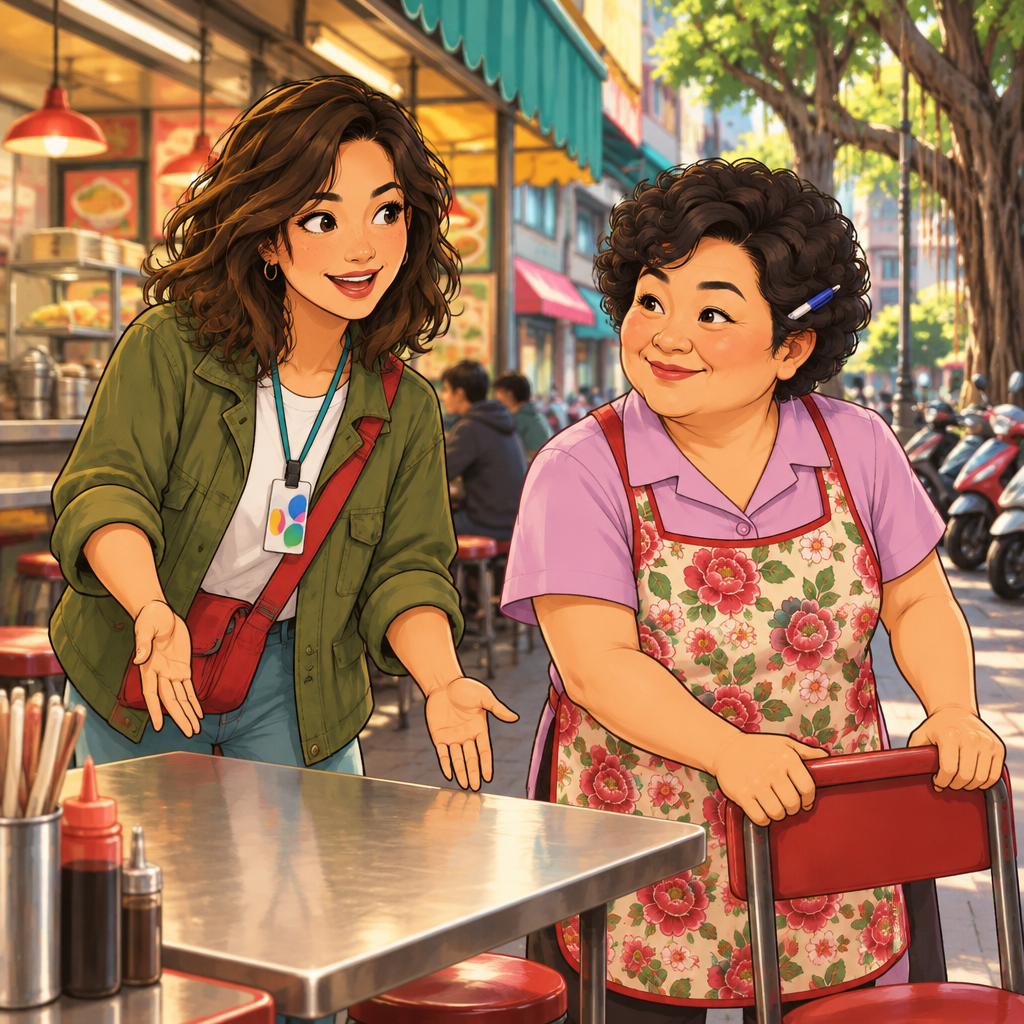
Anna and David speak with a café staff member in Taiwan, practicing Traditional Chinese permission phrases in natural Taiwan Mandarin. The moment shows asking, getting a yes, and hearing a polite no.

What are Anna and David trying to get permission to do?

Portrait of Anna in a Traditional Chinese lesson dialogue

Anna

請問我可以用這個插座嗎?

Qǐngwèn wǒ kěyǐ yòng zhège chāzuò ma?

May I use this outlet?

Portrait of David in a Traditional Chinese lesson dialogue

David

我可以拿一張菜單嗎?

Wǒ kěyǐ ná yì zhāng càidān ma?

Can I take a menu?

Portrait of Anna in a Traditional Chinese lesson dialogue

Anna

我們可以坐這裡嗎?

Wǒmen kěyǐ zuò zhèlǐ ma?

Can we sit here?

Portrait of David in a Traditional Chinese lesson dialogue

David

拍照可以嗎

Pāi zhàopiàn kěyǐ ma?

Is taking photos allowed?

Portrait of Anna in a Traditional Chinese lesson dialogue

Anna

可以啊,沒問題。

Kěyǐ a, méi wèntí.

Sure, go ahead.

Portrait of David in a Traditional Chinese lesson dialogue

David

那我開窗戶,可以嗎?

Nà wǒ kāi chuānghù, kěyǐ ma?

Then is it okay if I open the window?

Portrait of Anna in a Traditional Chinese lesson dialogue

Anna

不好意思,不行。外面很吵。

Bùhǎoyìsi, bù xíng. Wàimiàn hěn chǎo.

No, sorry. It’s noisy outside.

3. Guided Practice

Quizzes and matching to lock in meaning.

Which phrase is the most polite way to ask “May I use the restroom?”

Your group wants to enter a room. What should you ask?

Which answer gives friendly permission?

Which phrase means “No, sorry” in a polite way?

Can I use your charger?

我的手機沒電了,___用你的充電器嗎?

Can we sit here?

不好意思,我們有兩個人,___坐這裡嗎?

No, sorry.

A:我們可以坐這裡嗎?B:___,不行。

Match the core phrases

Match the extra phrases

4. Speaking Practice

Say phrases yourself (mic/recording).

Recording stays on your device only. Check speech uses your browser's speech tools when available.

Say this phrase out loud:

我可以___嗎?

Wǒ kěyǐ ___ ma?

Can I ___?

Say this phrase out loud:

我們可以___嗎?

Wǒmen kěyǐ ___ ma?

Can we ___?

Say this phrase out loud:

請問我可以___嗎?

Qǐngwèn wǒ kěyǐ ___ ma?

May I ___?

Say this phrase out loud:

我___,可以嗎?

Wǒ ___, kěyǐ ma?

Is it okay if I ___?

Say this phrase out loud:

我可以用___嗎?

Wǒ kěyǐ yòng ___ ma?

Can I use ___?

Say this phrase out loud:

我可以拿___嗎?

Wǒ kěyǐ ná ___ ma?

Can I take ___?

Say this phrase out loud:

可以

Kěyǐ.

Yes, you can.

Say this phrase out loud:

可以啊,沒問題。

Kěyǐ a, méi wèntí.

Sure, go ahead.

Say this phrase out loud:

可以,沒關係

Kěyǐ, méi guānxi.

That's okay.

Say this phrase out loud:

不好意思,不行。

Bùhǎoyìsi, bù xíng.

No, sorry.

Say this phrase out loud:

___可以嗎

___ kěyǐ ma?

Are ___ allowed?

Say this phrase out loud:

___可以嗎

___ kěyǐ ma?

Are ___ allowed?

Say this phrase out loud:

這裡可以這樣嗎?

Zhèlǐ kěyǐ zhèyàng ma?

Is it allowed here?