
New here? This is lesson 30 of a free 240-lesson Traditional Chinese course.
What's allowed in Traditional Chinese
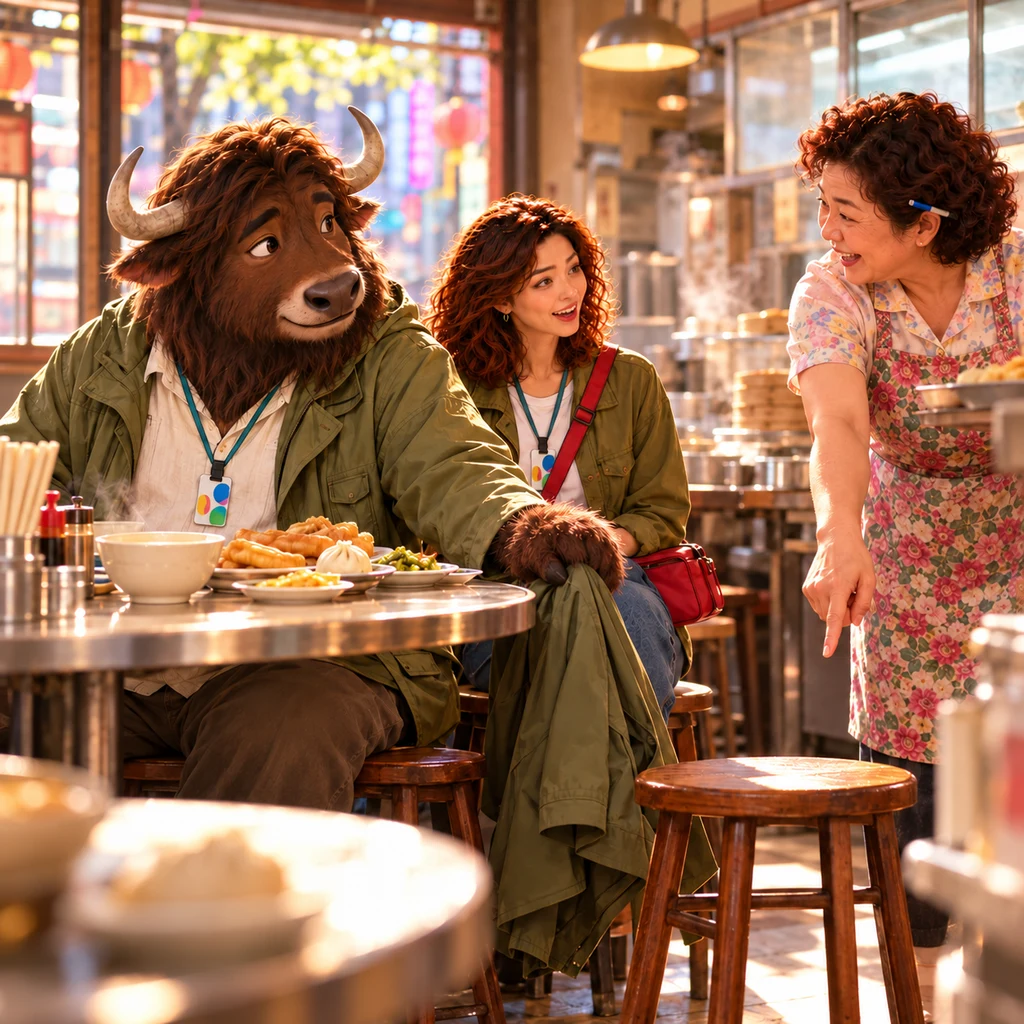
A-Li arrives at Banyan Breakfast with his raincoat and takes his usual two stools. A sign says coats cannot go on the stools, so Auntie Lin helps him find another place for it.
Learn to say what someone can and cannot do here, make a polite request, and decide whether an arrangement works. You will also ask permission and thank someone.
By the end of this lesson
Say what someone can or cannot do in a place and respond to an arrangement.
- 這裡不能___You can't ___ here.
- 你可以在這裡___You can ___ here.
- 請不要___Please don't ___.
- 可以,當然可以Yes, of course.
- 這樣可以This is fine.
- 這樣不行This won't do.
Scene — A coat and two stools
At Banyan Breakfast, A-Li has his usual two stools and an unfinished soy milk. He reaches for a stool with his raincoat, but a sign says coats do not go there.
Auntie Lin points to a clear spot on the floor instead. Maya watches as A-Li finds a place for his coat.
Learn — What you can do here
These six lines help you explain what is allowed in a particular place. For the lines with a blank, add the action you mean.
Listen to the short replies, too: one accepts an arrangement, while another rejects it.
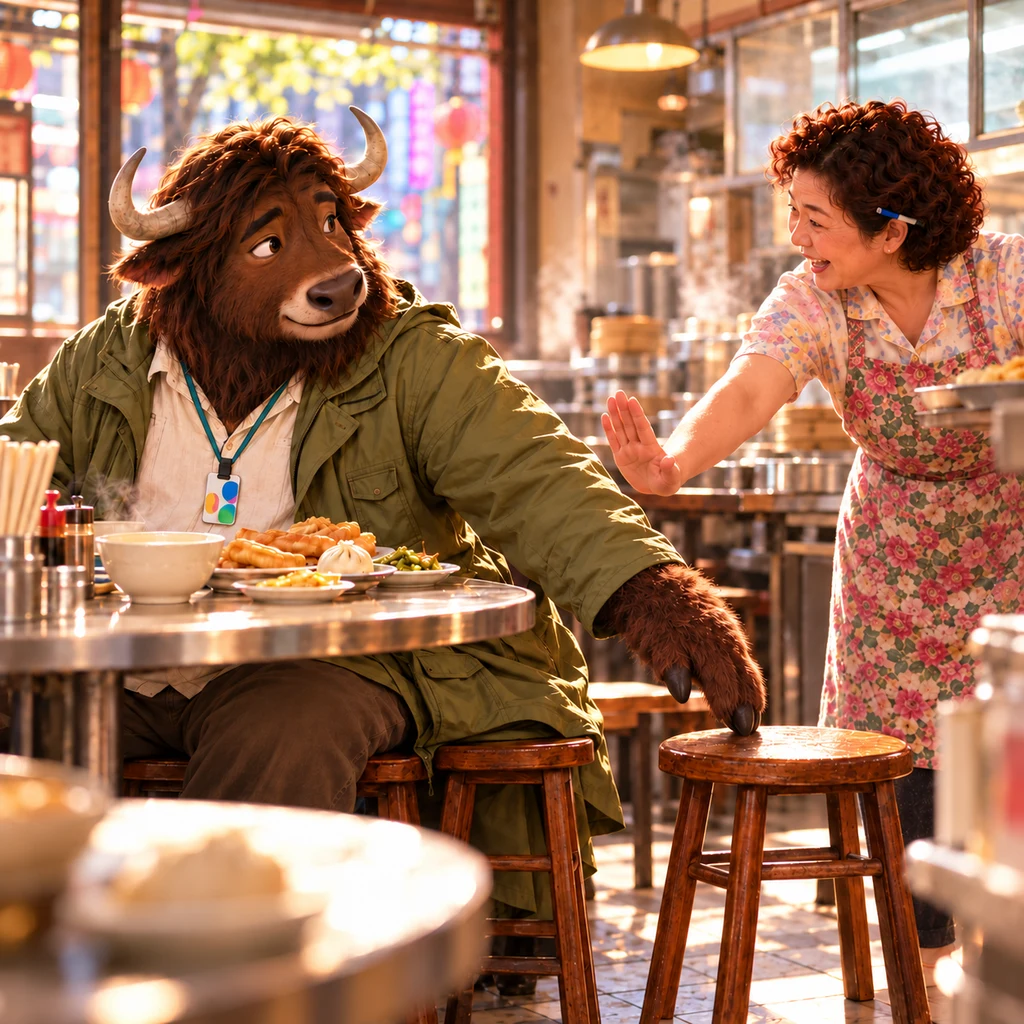
這裡不能___
You can't ___ here.
When to use it: Use this to tell someone an action is not allowed here.
Learn it as one piece and add the action at the end.
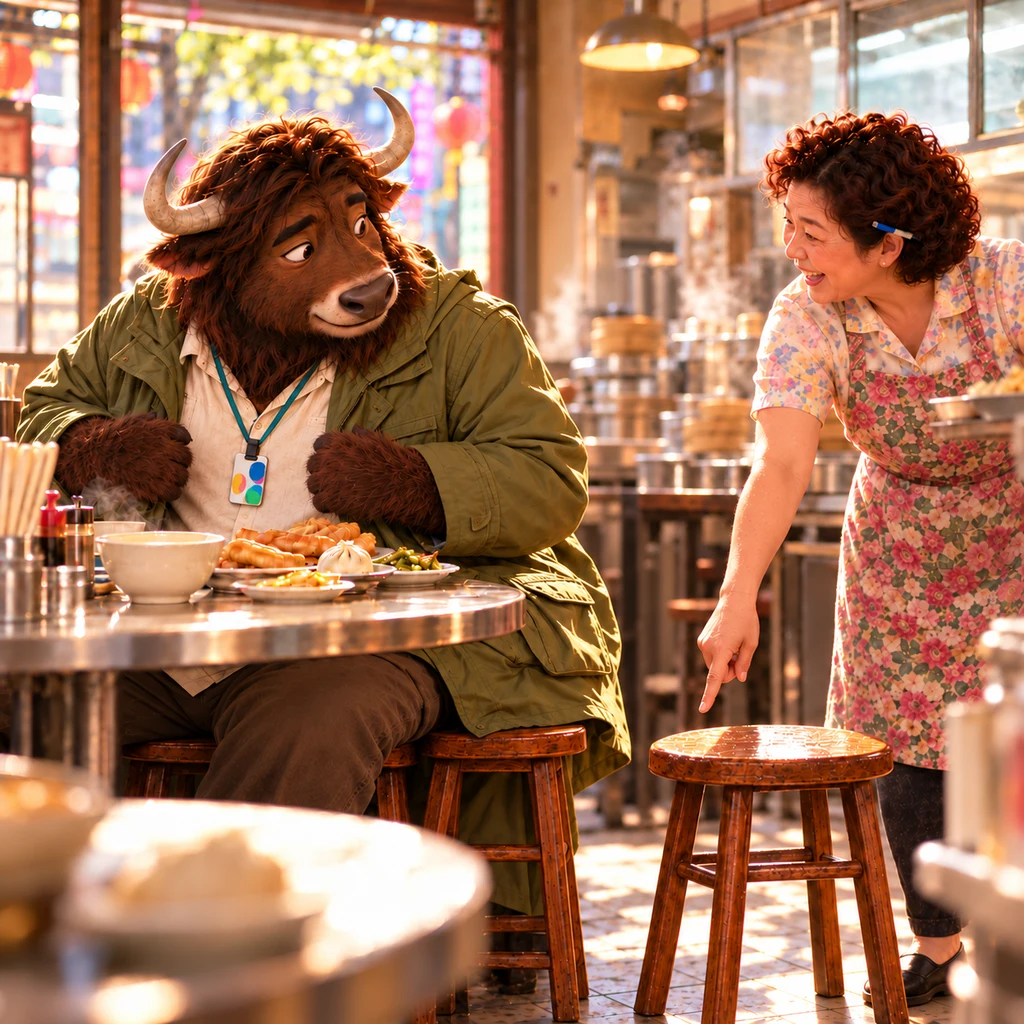
你可以在這裡___
You can ___ here.
When to use it: Use this to show someone where an action is allowed.
Learn it as one piece and add the action at the end.
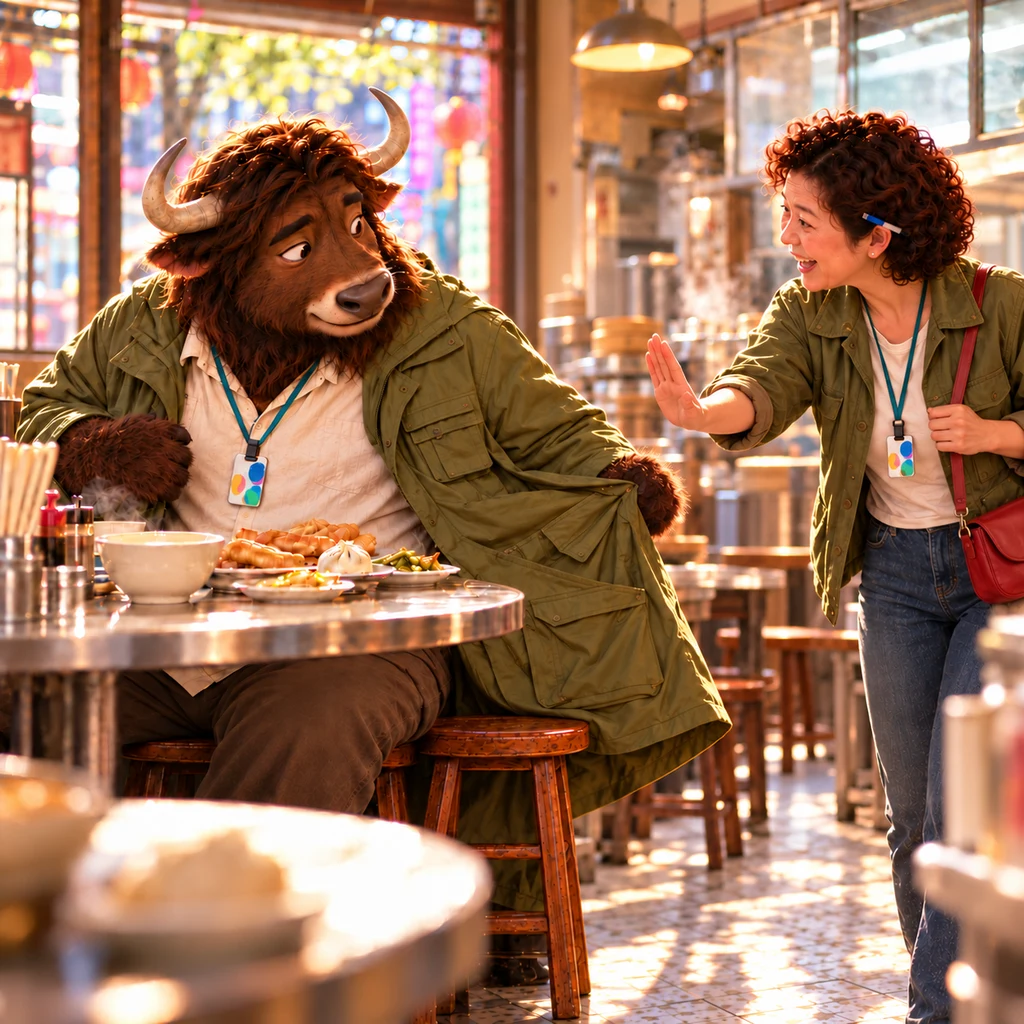
請不要___
Please don't ___.
When to use it: Use this to politely ask someone not to do something.
Learn it as one piece and add the action at the end.
Say it: The first syllable of 不要 rises before the falling tone.
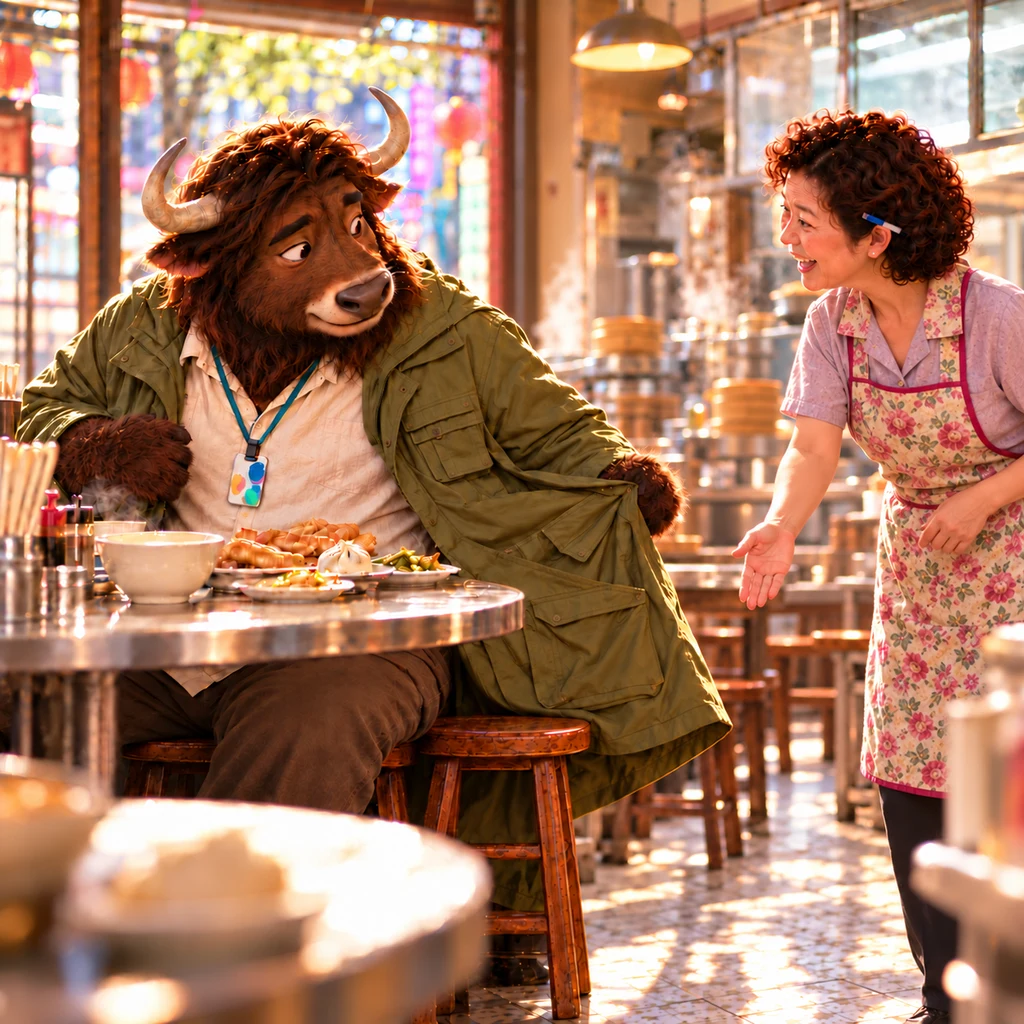
可以,當然可以
Yes, of course.
When to use it: Use this to give someone an enthusiastic yes.
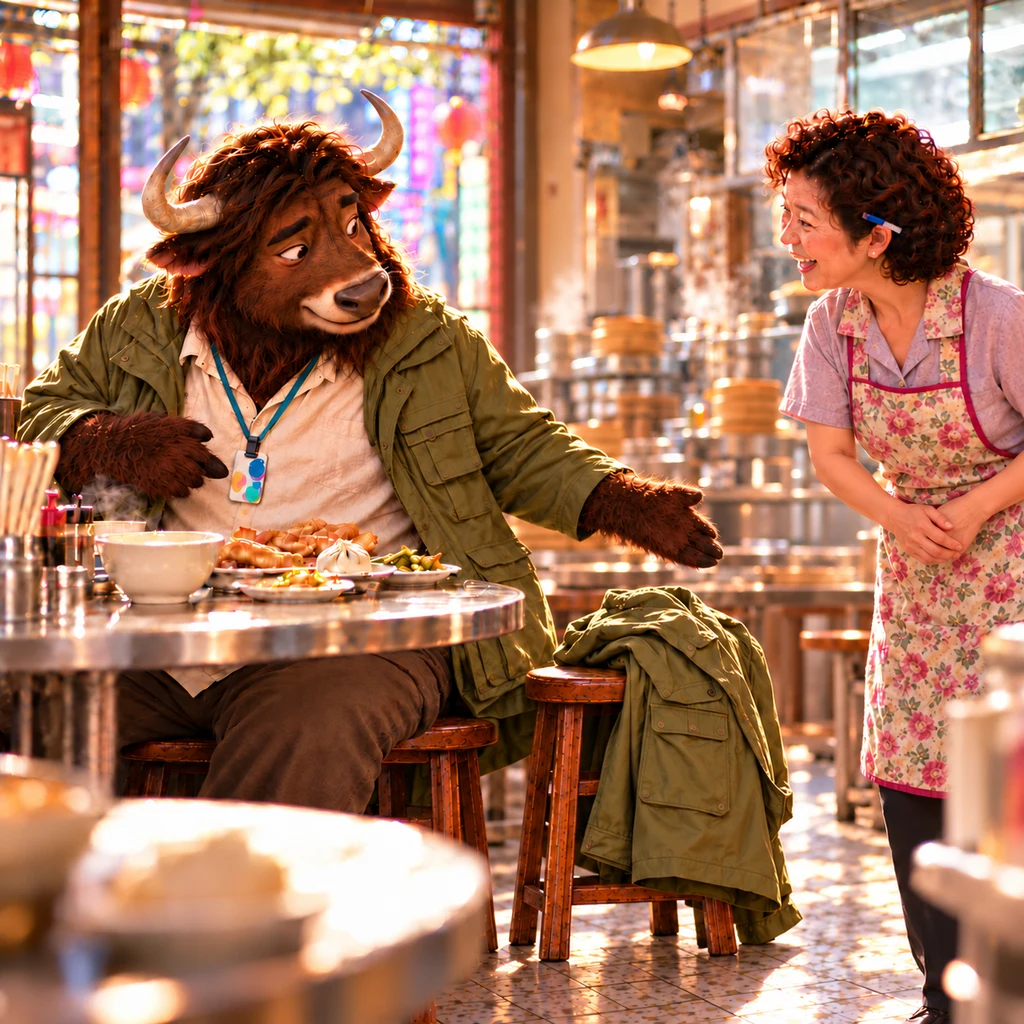
這樣可以
This is fine.
When to use it: Use this when an arrangement works.
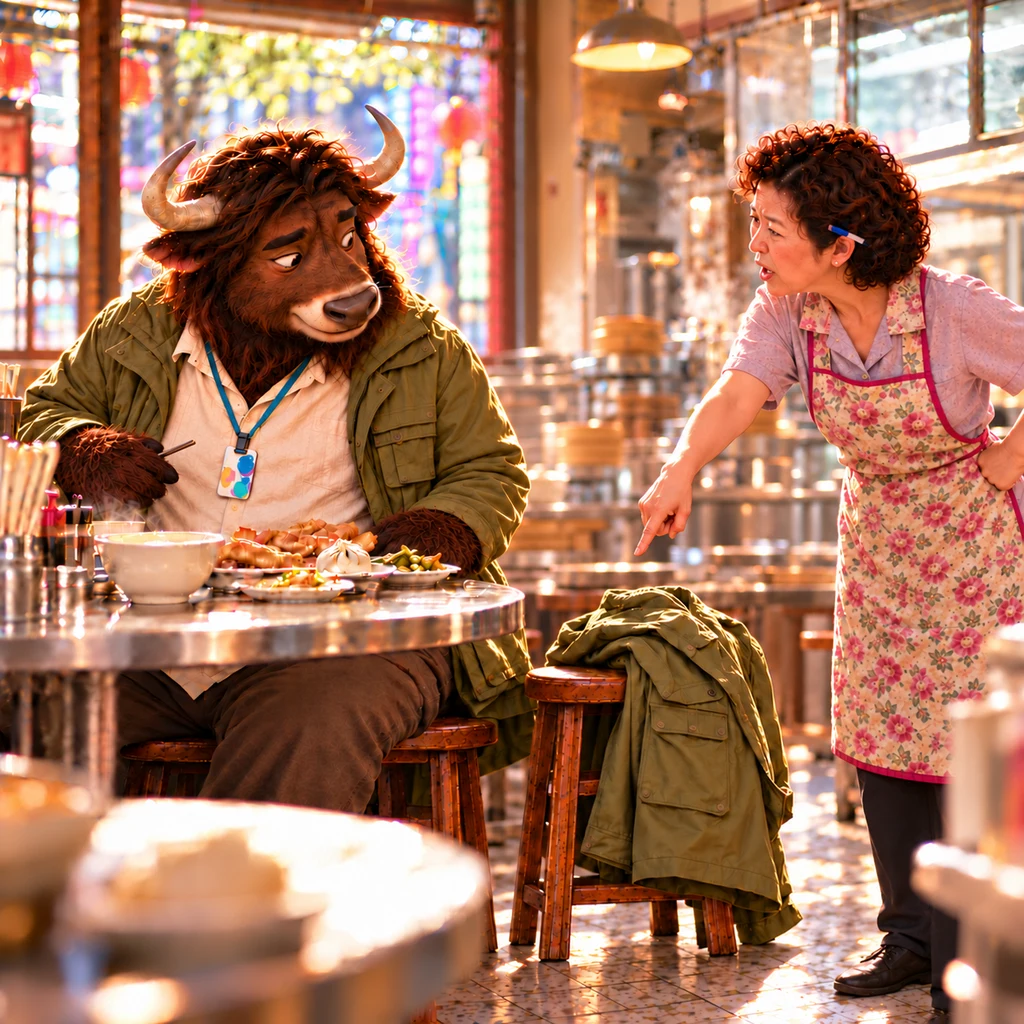
這樣不行
This won't do.
When to use it: Use this when an arrangement does not work.
Story — A place for the raincoat
Listen as Auntie Lin stops A-Li from putting his raincoat on a stool. He tries another spot before finding a place on the floor.
Maya then asks whether she can take the open seat.
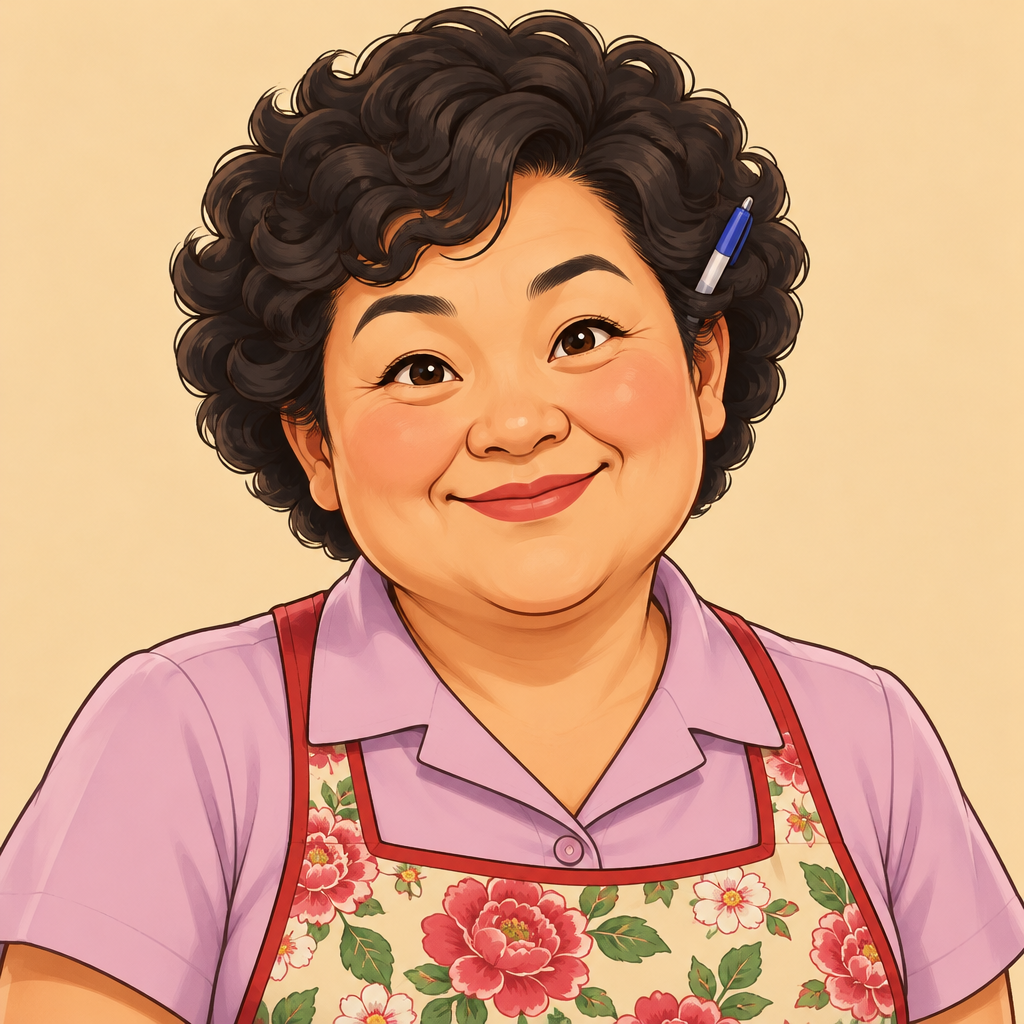 Auntie Lin阿犛,請不要放椅子上。A-Li, please don't put it on the stool.
 A-Li我可以放這裡嗎?Can I put it here?
- Auntie Lin這裡不能放外套。You can't put coats here.
- A-Li這樣不行。That won't do.
- Auntie Lin你可以在這裡放外套。You can put your coat here.
- A-Li這樣可以。This works.
 Maya我可以坐這裡嗎?Can I sit here?
- Auntie Lin可以,當然可以。Yes, of course.
- Maya謝謝。Thank you.
Practice — Allowed or not?
Use the shop situation to choose between permission, a restriction, and a polite request. Some exercises focus on a single word; others ask you to recognize a whole line.
Check each answer before moving on.
0 of 9 done
What does it mean?
What does it mean?
這裡不能___
Build the line
Build the line
Yes, of course.
,
Tap the words in order.
Fill the gap
Fill the gap
This is fine.
這樣____
What did you hear?
What did you hear?
Swap the word
Swap the word
A-Li has put his raincoat on a stool despite the sign. Say this arrangement won't do.
這樣____
What do you say?
What do you say?
Politely ask A-Li not to put his raincoat on a stool.
What do you say?
What do you say?
Ask Auntie Lin whether you may sit in an open seat.
Pick the reply
Auntie Lin says:
Pick the reply
可以,當然可以。
Yes, of course.
And you reply with:
Fill the gap
Fill the gap
Please don't ___.
請_______
Say it — Help A-Li find a place
Play Maya as A-Li looks for somewhere to put his raincoat. Auntie Lin has explained the shop's rule, and you help A-Li understand which spot works.
Listen to each person, then say your line aloud. Add the action described in the cue when a line has a blank.
- A-Li reaches toward a stool with his raincoat.
- Auntie Lin外套不要放椅子上喔。Don't put your coat on the stool.
- Maya (you)Politely ask A-Li not to put it on the stool.
Politely ask A-Li not to put it on the stool.
請不要___
Please don't ___.
0 of 5 said
Recap — what you can say now
| Traditional Chinese | English | Play |
|---|---|---|
| 這裡不能___ | You can't ___ here. | |
| 你可以在這裡___ | You can ___ here. | |
| 請不要___ | Please don't ___. | |
| 可以,當然可以 | Yes, of course. | |
| 這樣可以 | This is fine. | |
| 這樣不行 | This won't do. |
Save your progress — it’s free
Keep your place in the course and see which lines you’ve learned.
Want the next lesson in your inbox?
Get the next lesson by email, one a day.
Join the newsletterDaily lesson emails are coming soon. Newsletter subscribers get them first.
Keep practicing with Yak Cards
Review today's lines about what is allowed in Yak Cards.
Try the permission and restriction cards again before your next lesson.
Open Yak Cards