
New here? This is lesson 210 of a free 240-lesson Traditional Chinese course.
Borrow and return in Traditional Chinese
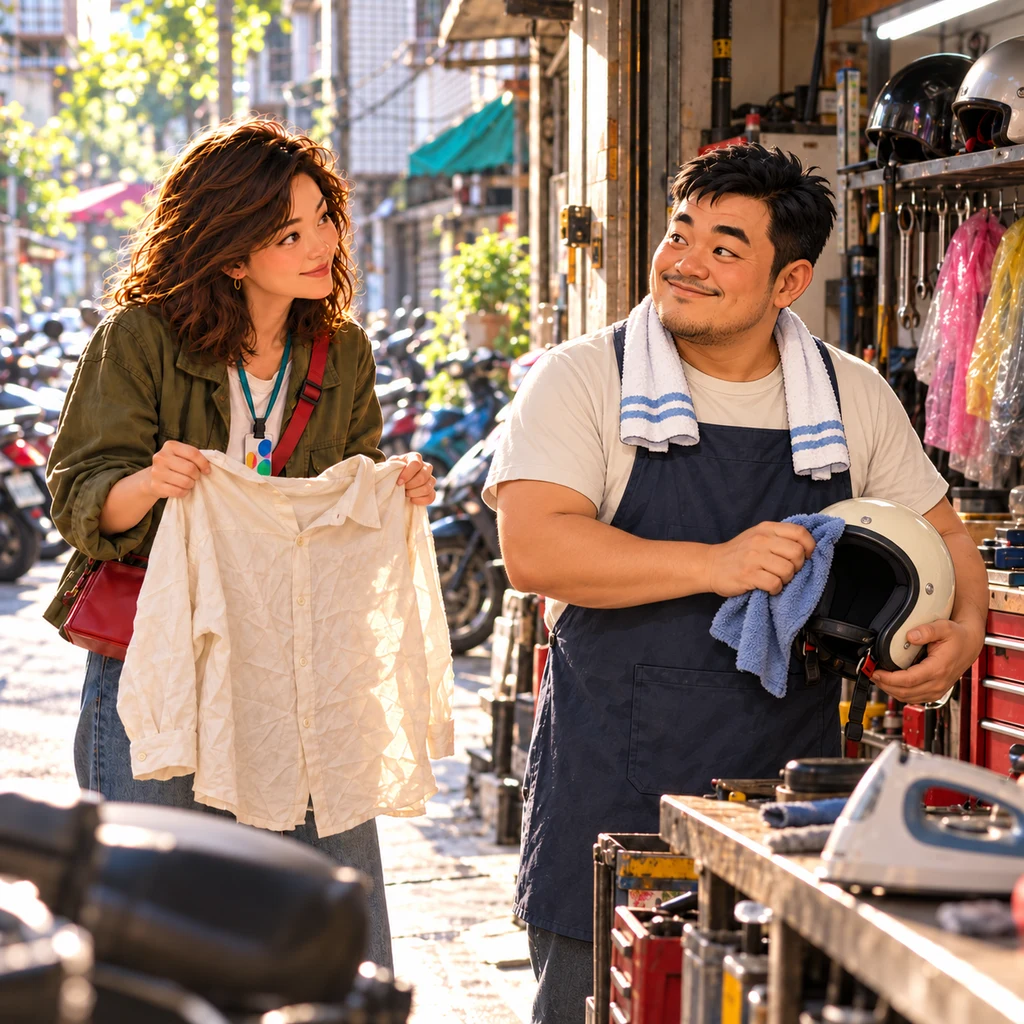
Maya's shirt is wrinkled, and the iron lives downstairs at the scooter shop. The staff wave her in like a neighbor, not a customer.
Learn how to borrow something for a short time, say when you will return it, and apologize if you forget. Taiwan neighbors often send you off with the thing first, then wait.
After you return it, a small bag of fruit or a later treat keeps the favor warm.
By the end of this lesson
Borrow something from a neighbor, say when you will return it, apologize if you forget, and offer a small treat.
- 可以跟你借一下嗎?Can I borrow it from you?
- 我用完就還你I'll give it back when I'm done.
- 我明天一定還I'll definitely return it tomorrow.
- 不好意思,我忘了還Sorry, I forgot to return it.
- 你先拿去用Take it and use it first.
- 下次我請你Next time it's on me.
Scene — an iron downstairs
The scooter shop under Maya's apartment smells of oil and rain covers. A staff member is wiping a helmet when Maya comes down with a wrinkled shirt.
She needs an iron, not a ride. The fortune slip stays in Auntie Lin's till, and nobody solves it here.
Learn — borrow and give back
Six lines for borrowing from a neighbor and promising to return it. Listen, then say each one out loud.
Notice 還 here means give back, not still. 一下 keeps the request light.

可以跟你借一下嗎?
Can I borrow it from you?
When to use it: Ask this when you want to borrow something for a short while.
一下 after the verb makes the request sound short and polite.

我用完就還你
I'll give it back when I'm done.
When to use it: Promise this when you will return it right after you finish.
用完 is the verb plus a result: you finish using it, then return it.
Say it: This 還 is the return reading, not the still one.

我明天一定還
I'll definitely return it tomorrow.
When to use it: Use this when you firmly promise to return it tomorrow.
一定 before the verb makes the promise sound firm, not just likely.

不好意思,我忘了還
Sorry, I forgot to return it.
When to use it: Say this when you forgot to give something back.
了 marks forgetting as a finished event, not a plan.

你先拿去用
Take it and use it first.
When to use it: Say this when you lend something and want them to start now.
先 tells them to take it now, before anything else.

下次我請你
Next time it's on me.
When to use it: Use this when you offer to treat them next time.
請 here means you will pay or treat, not just invite.
Story — tangerines with the iron
Maya goes downstairs to borrow an iron from the scooter shop. Listen for the promise and the late return.
Two days later she brings tangerines and tries to make it even.
- Maya heads down to the scooter shop under her apartment.
- Staff美女,找車嗎?Need a scooter, miss?
 Maya不是,熨斗可以跟你借一下嗎?No. Could I borrow the iron for a moment?
- Staff熨斗啊,你先拿去用。The iron? Take it and use it first.
- Maya謝謝。我用完就還你。Thanks. I'll give it back when I'm done.
- Staff好喔。Okay.
- Maya我明天一定還。I'll definitely return it tomorrow.
- Staff不急啦。No rush.
- Two days later, Maya comes back with the iron and a bag of tangerines. She finished using it the first evening, then forgot to return it on time.
- Maya不好意思,我忘了還。Sorry, I forgot to return it.
- Staff沒關係。It's okay.
- Maya這袋橘子給你,麻煩你了。This bag of tangerines is for you. Sorry to trouble you.
- Staff橘子就好啦。The tangerines are plenty.
- Maya下次我請你。Next time it's on me.
- Staff好啊。Sure.
Practice — ask and return
Work through ten short tasks on asking to borrow, promising a return, and making it right if you forget.
Each wrong choice has a reason. Read it, then say the right line again.
0 of 10 done
What does it mean?
What does it mean?
可以跟你借一下嗎?
What do you say?
What do you say?
A neighbor asks to borrow your iron. You are happy to lend it right away.
Fill the gap
Fill the gap
I'll give it back when I'm done.
我____就還你
What did you hear?
What did you hear?
What did you hear?
What did you hear?
Build the line
Build the line
Next time it's on me.
Tap the words in order.
Pick the reply
Staff says:
Pick the reply
你先拿去用
Take it and use it first.
And you reply with:
Match the pairs
Traditional Chinese
可以跟你借一下嗎?Drop the English here我用完就還你Drop the English here你先拿去用Drop the English here下次我請你Drop the English hereEnglish
What do you say?
What do you say?
Someone forgot to return your iron and just apologized. Tell them it is okay.
What does it mean?
What does it mean?
麻煩你了
Say it — your turn with the iron
You are Maya. Borrow the iron, say when you will return it, and make things right two days later.
Tap the microphone on your turns. You can replay the staff line first.
- Maya goes downstairs to borrow an iron.
- Maya (you)Ask to borrow it for a moment.
Ask to borrow it for a moment.
可以跟你借一下嗎?
Can I borrow it from you?
0 of 5 said
Recap — what you can say now
| Traditional Chinese | English | Play |
|---|---|---|
| 可以跟你借一下嗎? | Can I borrow it from you? | |
| 我用完就還你 | I'll give it back when I'm done. | |
| 我明天一定還 | I'll definitely return it tomorrow. | |
| 不好意思,我忘了還 | Sorry, I forgot to return it. | |
| 你先拿去用 | Take it and use it first. | |
| 下次我請你 | Next time it's on me. |
Save your progress — it’s free
Keep your place in the course and see which lines you’ve learned.
Want the next lesson in your inbox?
Get the next lesson by email, one a day.
Join the newsletterDaily lesson emails are coming soon. Newsletter subscribers get them first.
Keep practicing with Yak Cards
These borrow-and-return lines are in Yak Cards with more neighbor-favor phrases.
Review a few cards before you knock on a neighbor's door.
Open Yak Cards