
New here? This is lesson 149 of a free 240-lesson Traditional Chinese course.
Understood, found, finished in Traditional Chinese
Auntie Lin's special is in cursive on the menu. You read it, find the word, and finish the plate. A-Li still has soy milk beside him.
Learn how a second word after a verb shows a result: you understood, found, finished, or got it ready. Also say when you can follow speech, or cannot finish a meal.
These lines help at the counter and at the table. The fortune slip stays in the till; nobody reads it today.
By the end of this lesson
Show a result with 完, 好, 到, or 懂 after a verb, and say when you can or cannot finish.
- 我看懂了I understood it from reading.
- 我找到了I found it.
- 我寫完了I finished writing.
- 菜都準備好了Everything is prepared.
- 我聽得懂I can understand it by listening.
- 我吃不完I can't finish it.
Scene — a handwritten special
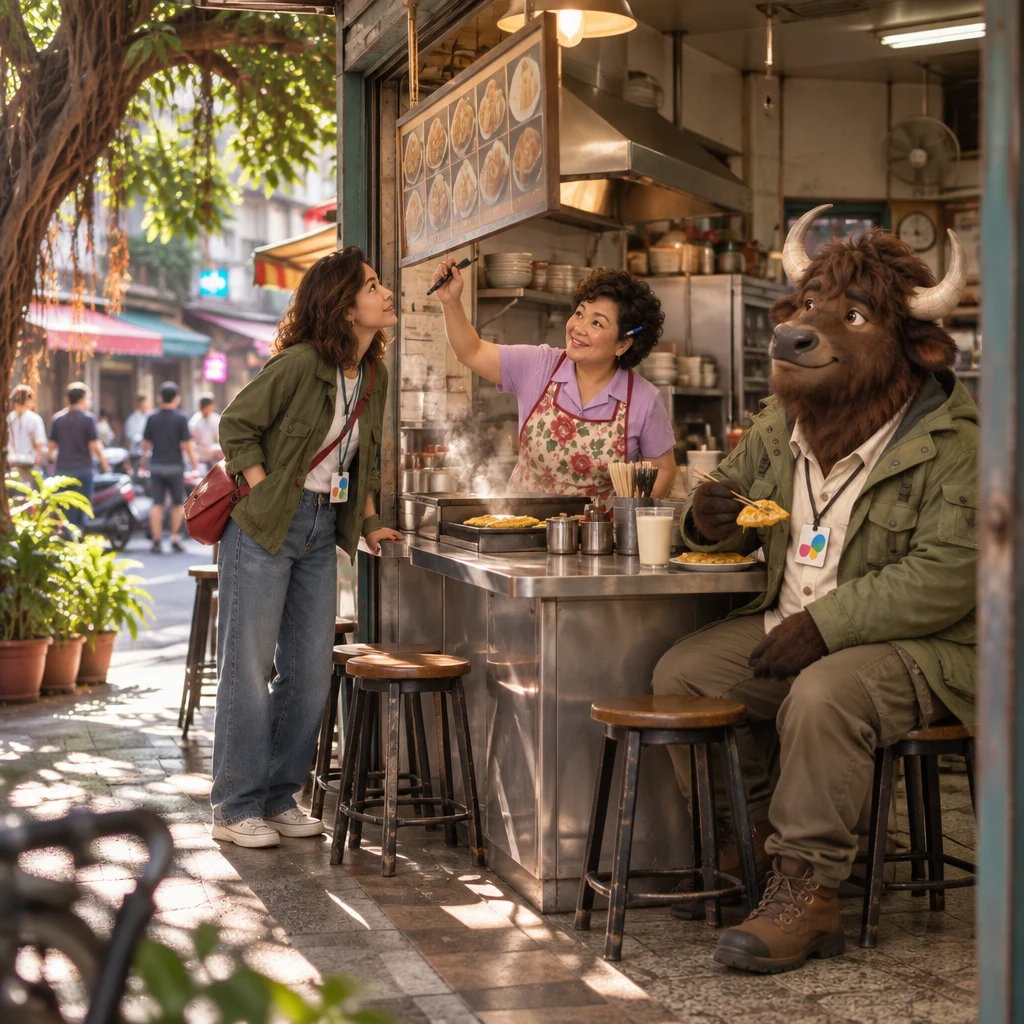
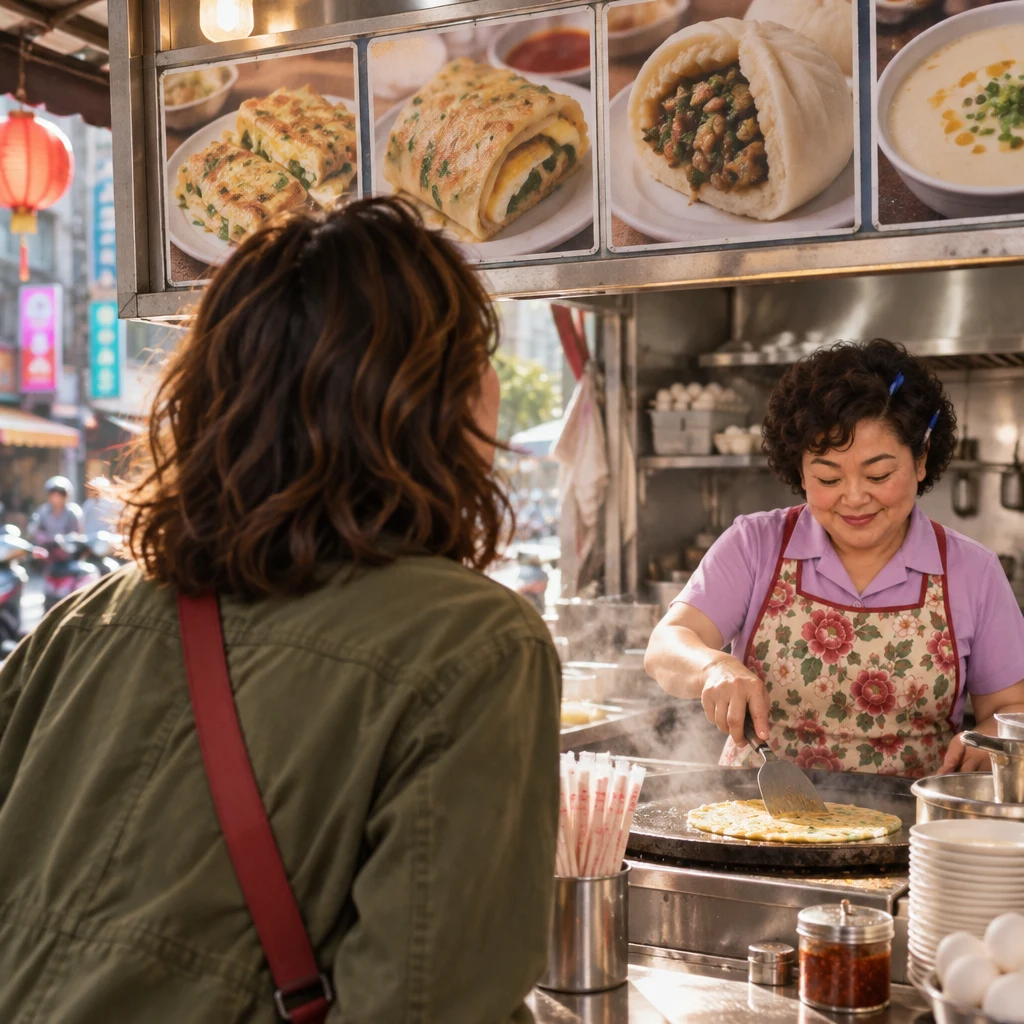
Late morning at Banyan Breakfast. Auntie Lin has written the special in loose handwriting on the menu. Maya leans in to read it.
A-Li sits on two stools with egg pancake and soy milk. He asks if the food is ready, but he will not finish his drink today.
Learn — results after a verb
Listen to six lines that add a result after a verb. One means the food is ready. Two say what you can or cannot finish.
Notice 了 at the end of a finished result, and 得 or 不 in the middle when you talk about ability.
我看懂了
I understood it from reading.
When to use it: Use this after you read something and the meaning is clear.
懂 after 看 shows the result: you got the meaning, not just that you looked.
Say it: The final 了 is a neutral tone.

我找到了
I found it.
When to use it: Use this when you have found something you were looking for.
到 after 找 shows the result: you found it, not only that you searched.
我寫完了
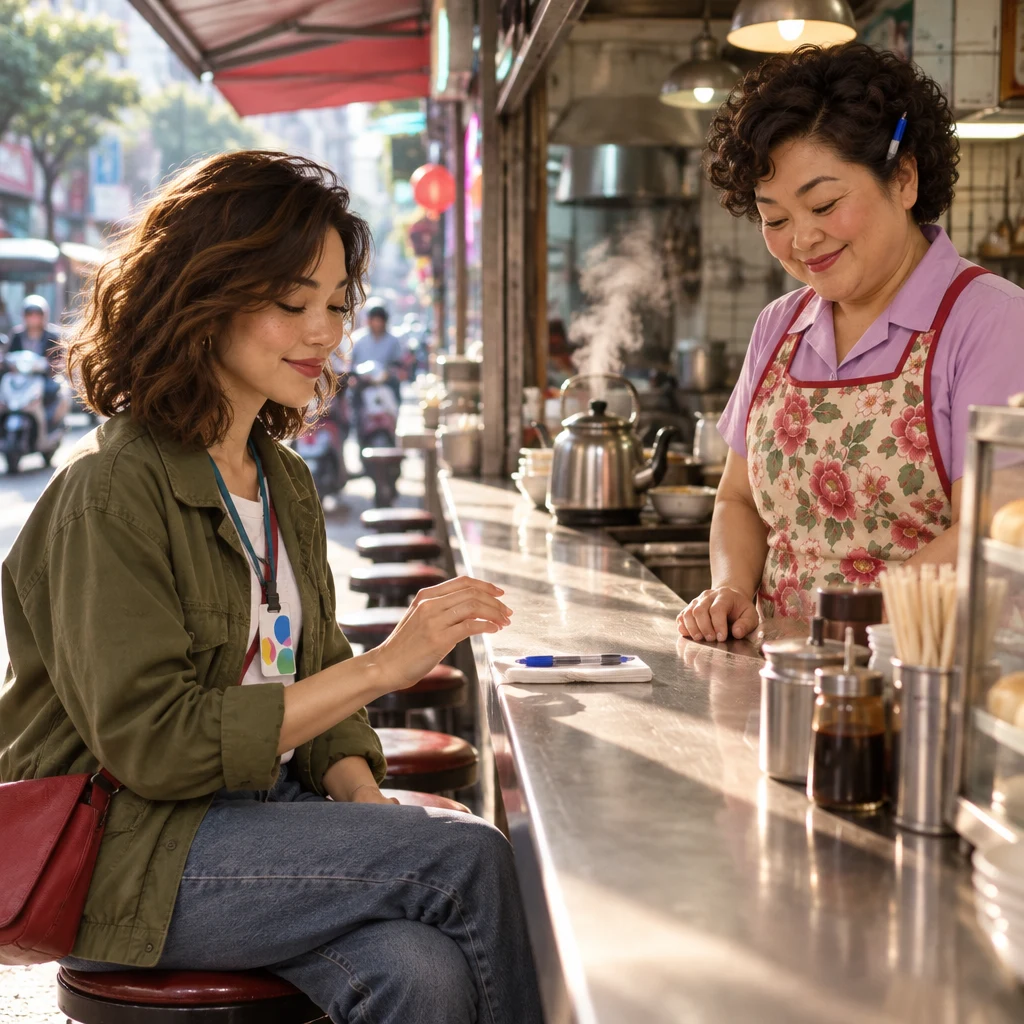
I finished writing.
When to use it: Use this when you have finished writing something.
完 after 寫 shows the writing is finished, not still going.
菜都準備好了
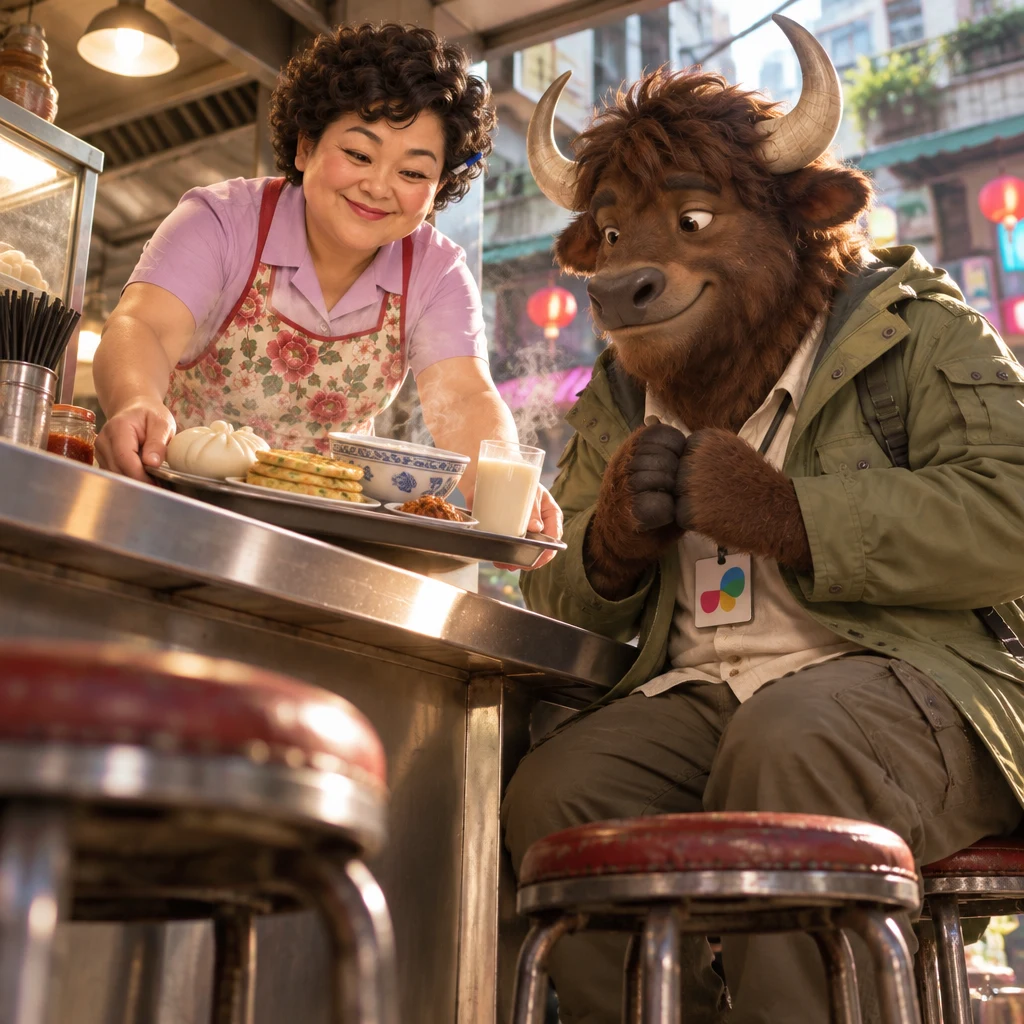
Everything is prepared.
When to use it: Use this when all the food is ready to serve.
好 after 準備 shows it is ready, not still being made.

我聽得懂
I can understand it by listening.
When to use it: Use this when you can follow what someone is saying.
得 between 聽 and 懂 means you are able to understand.
Say it: The 得 in the middle is a neutral tone.

我吃不完
I can't finish it.
When to use it: Use this when the portion is too much for you to finish.
不 between 吃 and 完 means you cannot finish eating it.
Story — the cursive menu
Listen as Maya reads the cursive special, finds the word, and writes it down. Auntie Lin says the food is ready.
Maya finishes her plate. A-Li cannot finish his, and the soy milk stays.
 Auntie Lin美女,今天招牌寫在菜單上。The special is written on the menu today.
 Maya招牌是什麼?What's the specialty?
- Auntie Lin你找一下,字是草寫的。Have a look; the writing is in cursive.
- Maya我找到了。I found it.
- Maya這個我看懂了。I understood this.
- Auntie Lin對啊,是今日特餐。份量很大,配料也很多。Right, it's today's special. It's a large portion, and there are lots of toppings.
- Maya我聽不懂。I don't understand what I hear.
- Auntie Lin我說慢一點。特餐很大份。I'll say it more slowly. The special is a large portion.
- Maya我聽得懂。I can understand it.
- Auntie Lin要不要寫下來?Want to write it down?
- Maya好喔。Okay.
- Maya copies the special onto a napkin.
- Auntie Lin寫好了嗎?Have you finished writing it?
- Maya我寫完了。I finished writing.
 A-Li快好了嗎?Almost ready?
- Auntie Lin菜都準備好了。Everything is prepared.
- Maya finishes the special. A-Li still has egg pancake, and his soy milk sits untouched.
- Auntie Lin阿犛,你呢?A-Li, what about you?
- A-Li我吃不完。I can't finish it.
- Auntie Lin豆漿還在喔。The soy milk is still there.
Practice — pick the result
Work through short tasks to pick the result that fits. Some items contrast reading, hearing, finding, and finishing.
After each answer, read why the other choice fails, then say the line out loud.
0 of 9 done
What does it mean?
What does it mean?
我看懂了
What do you say?
What do you say?
You were hunting for one cursive character on the menu, and you finally see where it is.
Build the line
Build the line
I finished writing.
Tap the words in order.
Fill the gap
Fill the gap
Everything is prepared.
菜都____
What did you hear?
What did you hear?
Swap the word
Swap the word
The special is huge, and you cannot finish the plate.
我吃____完
Match the pairs
Traditional Chinese
我看懂了Drop the English here我找到了Drop the English here我寫完了Drop the English here菜都準備好了Drop the English hereEnglish
What do you say?
What do you say?
You are at the counter and want to know what today's handwritten special is.
What do you say?
What do you say?
Auntie Lin listed the toppings too quickly, and you did not catch them.
Say it — your results
You play Maya at the counter. Listen to each cue, then say the result line out loud.
Tap the microphone to speak. You can replay the other person's line before your turn.
- Maya studies the handwritten special on the menu.
- Maya (you)Ask Auntie Lin what today's special is.
Ask Auntie Lin what today's special is.
招牌是什麼?
What's the specialty?
0 of 6 said
Recap — what you can say now
| Traditional Chinese | English | Play |
|---|---|---|
| 我看懂了 | I understood it from reading. | |
| 我找到了 | I found it. | |
| 我寫完了 | I finished writing. | |
| 菜都準備好了 | Everything is prepared. | |
| 我聽得懂 | I can understand it by listening. | |
| 我吃不完 | I can't finish it. |
Save your progress — it’s free
Keep your place in the course and see which lines you’ve learned.
Want the next lesson in your inbox?
Get the next lesson by email, one a day.
Join the newsletterDaily lesson emails are coming soon. Newsletter subscribers get them first.
Keep practicing with Yak Cards
Today's result lines are in Yak Cards with more verb-plus-result phrases for daily talk.
Review a few of these cards after meals so the results come quickly.
Open Yak Cards