
New here? This is lesson 124 of a free 240-lesson Traditional Chinese course.
Looking ahead in Traditional Chinese
A-Li asks what you will do next spring. You do not have a fixed plan, but a trip is coming up, and you are excited.
Learn to talk about looking forward to a trip, saving money, and something you probably will not buy. You can also ask about plans afterward.
Listen for 不會: 不 changes its tone before 會. The fortune slip stays folded away, and A-Li's soy milk is still unfinished.
By the end of this lesson
Say what you are looking forward to, explain that you are saving money, describe a likely choice, and discuss future plans.
- 我很期待這趟旅行I'm looking forward to this trip.
- 我在存錢I'm saving money.
- 我應該不會買I probably won't buy it.
- 你之後想做什麼?What do you want to do afterward?
- 我還得弄清楚一件事I still need to sort one thing out.
- 我沒有什麼固定計畫I have no fixed plans.
Scene — plans for next spring
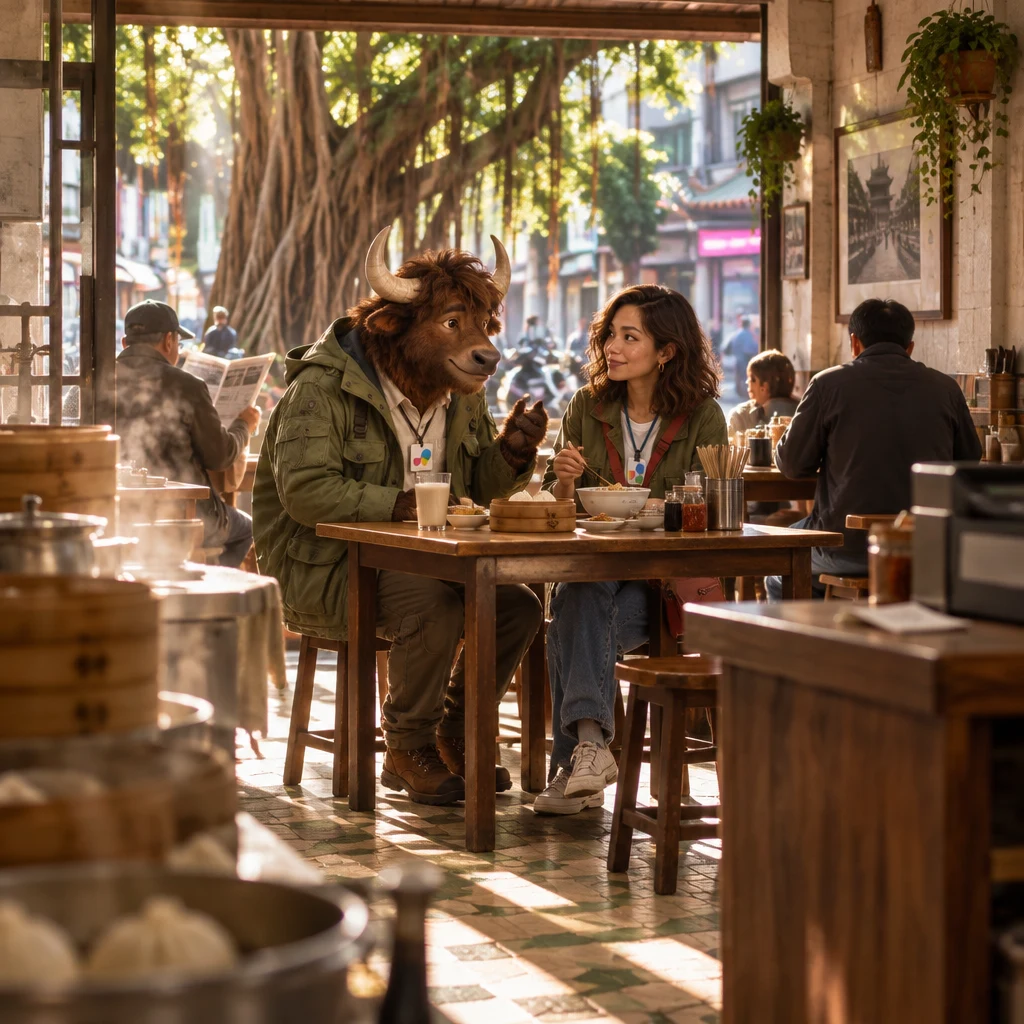
At Banyan Breakfast, A-Li asks Maya about next spring while his soy milk sits unfinished beside him. Maya has a trip in mind, though one detail still needs sorting out.
They talk about saving and shopping, then turn to what happens after the trip. The fortune slip stays folded in the till; nobody reads it.
Learn — talking about what comes next
These six lines help you talk about a trip, money, and plans you have not settled yet. Listen once, then repeat each phrase.
In 不會, 不 changes tone before the falling-tone 會. Use 應該 to make a prediction sound less certain.

我很期待這趟旅行
I'm looking forward to this trip.
When to use it: Say this when you feel excited about a trip that is coming up.
趟 is a measure word used for trips.

我在存錢
I'm saving money.
When to use it: Use this to say that you are putting money aside.
在 before an action shows that it is in progress.
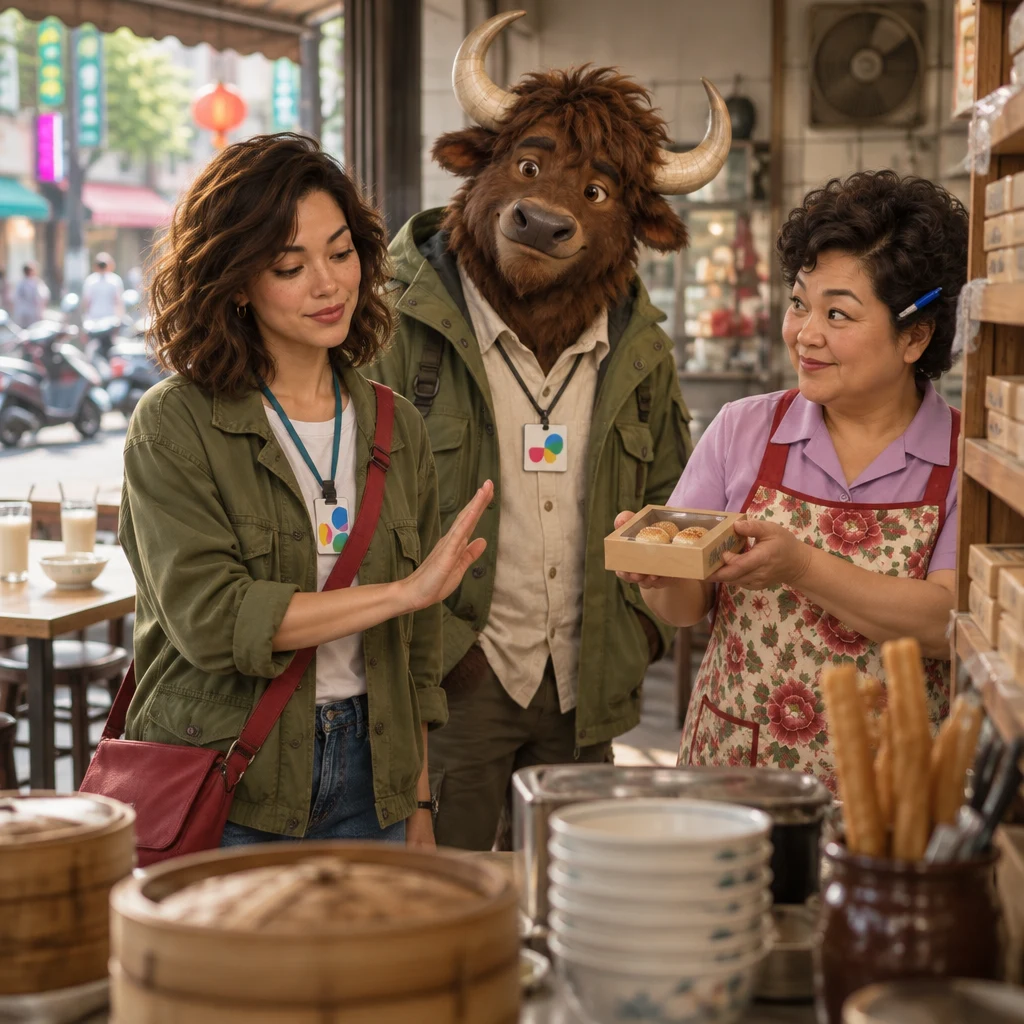
我應該不會買
I probably won't buy it.
When to use it: Use this to make a prediction about something you probably will not buy.
應該 softens the prediction, while 不會 says you will not do it.
Say it: 不 changes to a rising tone before the falling-tone 會.

你之後想做什麼?
What do you want to do afterward?
When to use it: Ask someone what they want to do after an event or activity.
什麼 stays in its usual place in this question.
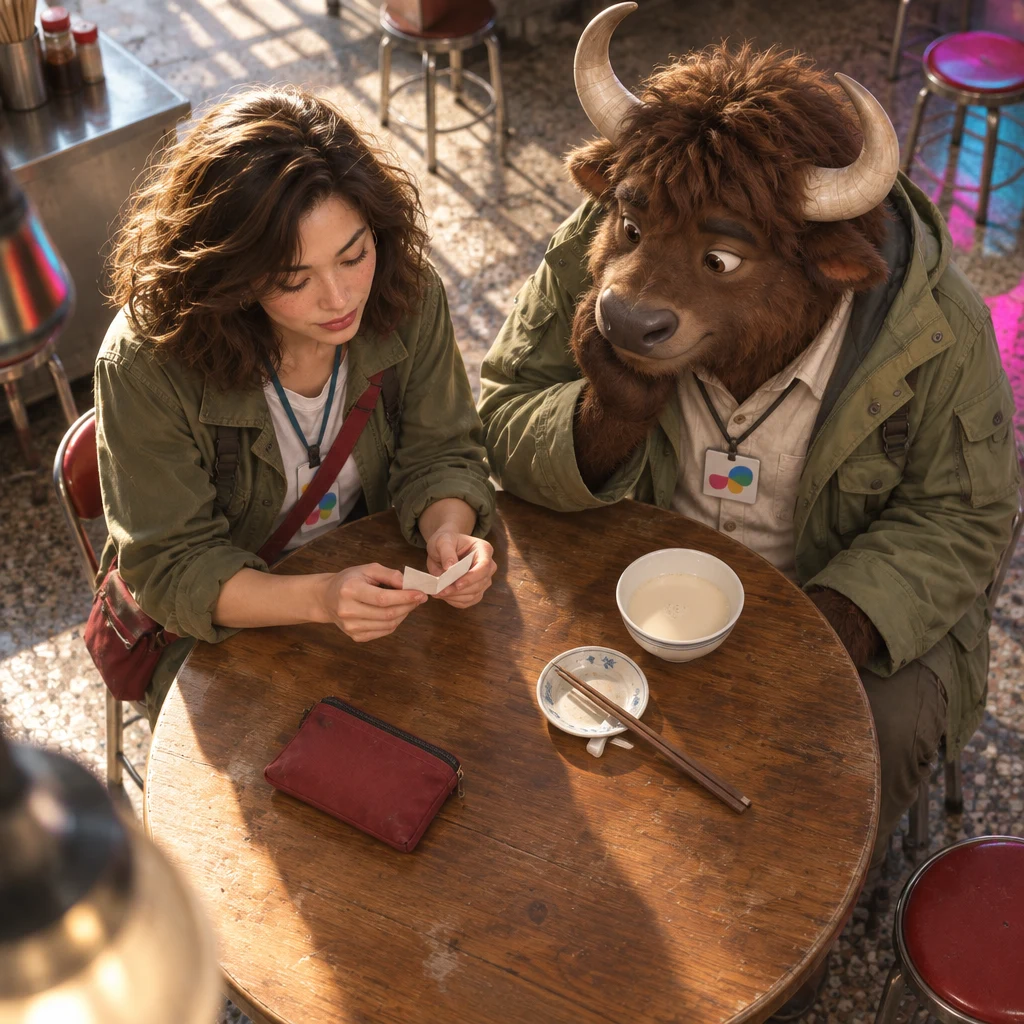
我還得弄清楚一件事
I still need to sort one thing out.
When to use it: Say this when one thing still needs to be understood or decided.
還得 means that you still need to do something.

我沒有什麼固定計畫
I have no fixed plans.
When to use it: Use this when you do not have a set plan.
沒有什麼固定計畫 means you have no particular plan set.
Story — a trip and a question
A-Li asks Maya what she will do next spring. She has a trip coming up, but not every detail is settled.
They talk about money and shopping, then Maya asks A-Li about his plans. His soy milk remains unfinished, and the fortune slip stays folded.
 A-Li明年春天,你想做什麼?What do you want to do next spring?
 Maya大概還是差不多吧。Probably much the same.
- A-Li你期待這趟旅行嗎?Are you looking forward to this trip?
- Maya我很期待這趟旅行,回來以後再想吧。I'm looking forward to this trip. I'll think about it after I get back.
- A-Li你之後想做什麼?What do you want to do afterward?
- Maya我沒有什麼固定計畫。你呢?I have no fixed plans. And you?
- A-Li我還沒想好。I haven't decided yet.
- A-Li你在存錢嗎?Are you saving money?
- Maya我在存錢。I'm saving money.
- A-Li那你會買紀念品嗎?Then will you buy souvenirs?
- Maya我應該不會買。I probably won't buy it.
- A-Li還有什麼事要先處理?Is there anything else you need to take care of first?
- Maya我還得弄清楚一件事。I still need to sort one thing out.
Practice — talk about your plans
Try nine short exercises about plans, saving, and what you might buy. Listen carefully, then choose or build the line that fits.
Some questions ask you to respond naturally or ask the other person in return. Check each explanation before moving on.
0 of 9 done
What does it mean?
What does it mean?
我很期待這趟旅行
What do you say?
What do you say?
After discussing the end of a trip, ask A-Li what he wants to do afterward.
Build the line
Build the line
I still need to sort one thing out.
Tap the words in order.
Fill the gap
Fill the gap
I'm saving money.
我在____
Swap the word
Swap the word
In the sentence, replace the word meaning “possibly” with the word meaning “should.” Keep every other word unchanged.
我____不會買
What did you hear?
What did you hear?
Pick the reply
A-Li says:
Pick the reply
你期待這趟旅行嗎?
Are you looking forward to this trip?
And you reply with:
Build the line
Build the line
And you?
?
Tap the words in order.
What do you say?
What do you say?
A-Li asks whether you mean this year or next year. Answer, “Next year.”
Say it — looking forward
Play Maya and talk with A-Li about the trip and what comes afterward. Listen to his question or reply, then say the matching line aloud.
Use a relaxed, conversational tone. You can replay each cue before speaking your turn.
- Maya asks A-Li what he wants to do after her trip.
- Maya (you)Ask A-Li what he wants to do afterward.
Ask A-Li what he wants to do afterward.
你之後想做什麼?
What do you want to do afterward?
0 of 4 said
Recap — what you can say now
| Traditional Chinese | English | Play |
|---|---|---|
| 我很期待這趟旅行 | I'm looking forward to this trip. | |
| 我在存錢 | I'm saving money. | |
| 我應該不會買 | I probably won't buy it. | |
| 你之後想做什麼? | What do you want to do afterward? | |
| 我還得弄清楚一件事 | I still need to sort one thing out. | |
| 我沒有什麼固定計畫 | I have no fixed plans. |
Save your progress — it’s free
Keep your place in the course and see which lines you’ve learned.
Want the next lesson in your inbox?
Get the next lesson by email, one a day.
Join the newsletterDaily lesson emails are coming soon. Newsletter subscribers get them first.
Keep practicing with Yak Cards
Review these future-planning phrases and more in Yak Cards.
A few quick reviews will help you talk about what comes next.
Open Yak Cards