
New here? This is lesson 219 of a free 240-lesson Traditional Chinese course.
Correct yourself in Traditional Chinese
A-Li starts one sentence at Banyan Breakfast, then takes it back three times before he finishes. Auntie Lin has heard this before; the soy milk is still on the table.
Learn how to stop yourself, name the mistake, and say what you actually meant. These lines let you restart a thought without abandoning the conversation.
You will hear A-Li pile three corrections into one breath. Maya tries the same when her order comes out wrong.
By the end of this lesson
Stop mid-sentence, admit a wording mistake, rephrase, and check whether the new wording works.
- 等一下,我是說___Wait, I mean ___.
- 比較像是___It's more like ___.
- 我換個說法Let me put it another way.
- 我剛剛講錯了I said that wrong.
- 我是想說___What I'm trying to say is ___.
- 可以這樣說嗎?Can I say it this way?
Scene — a sentence that keeps restarting
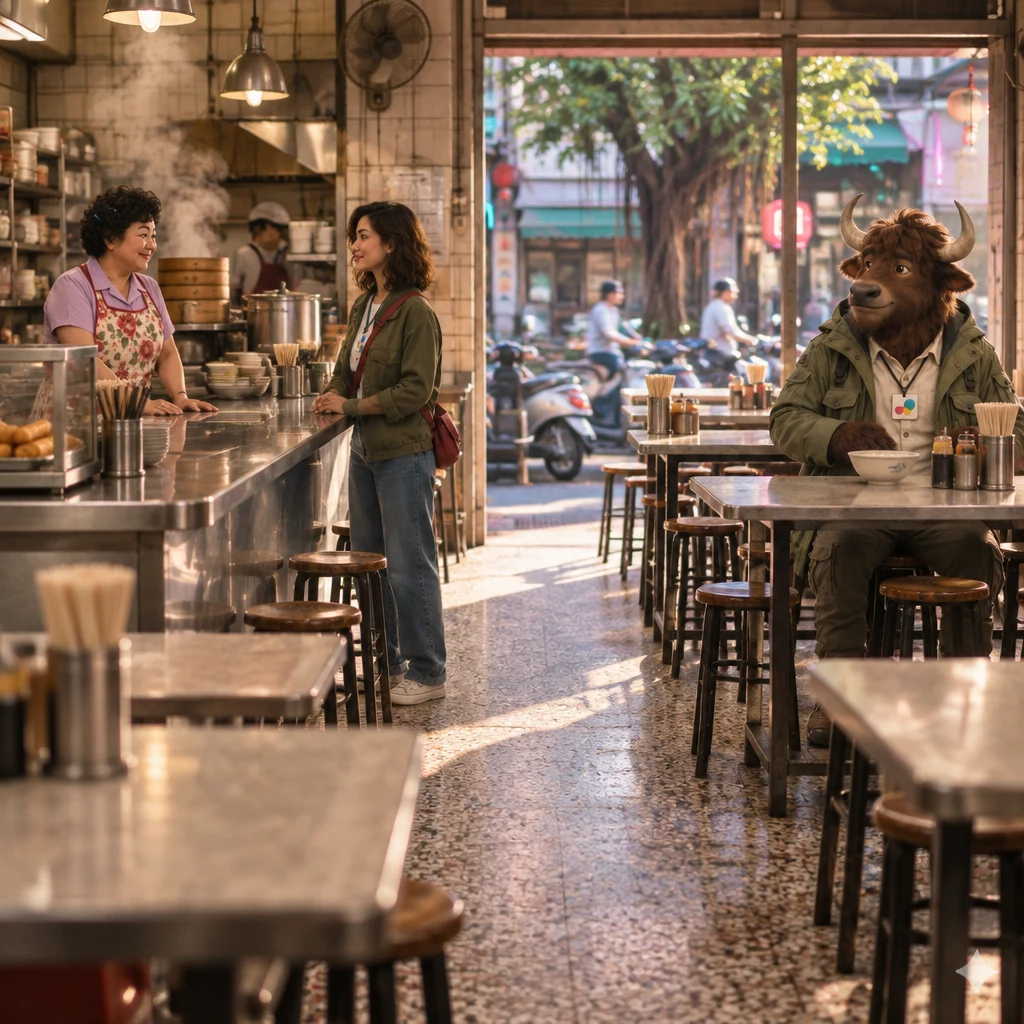
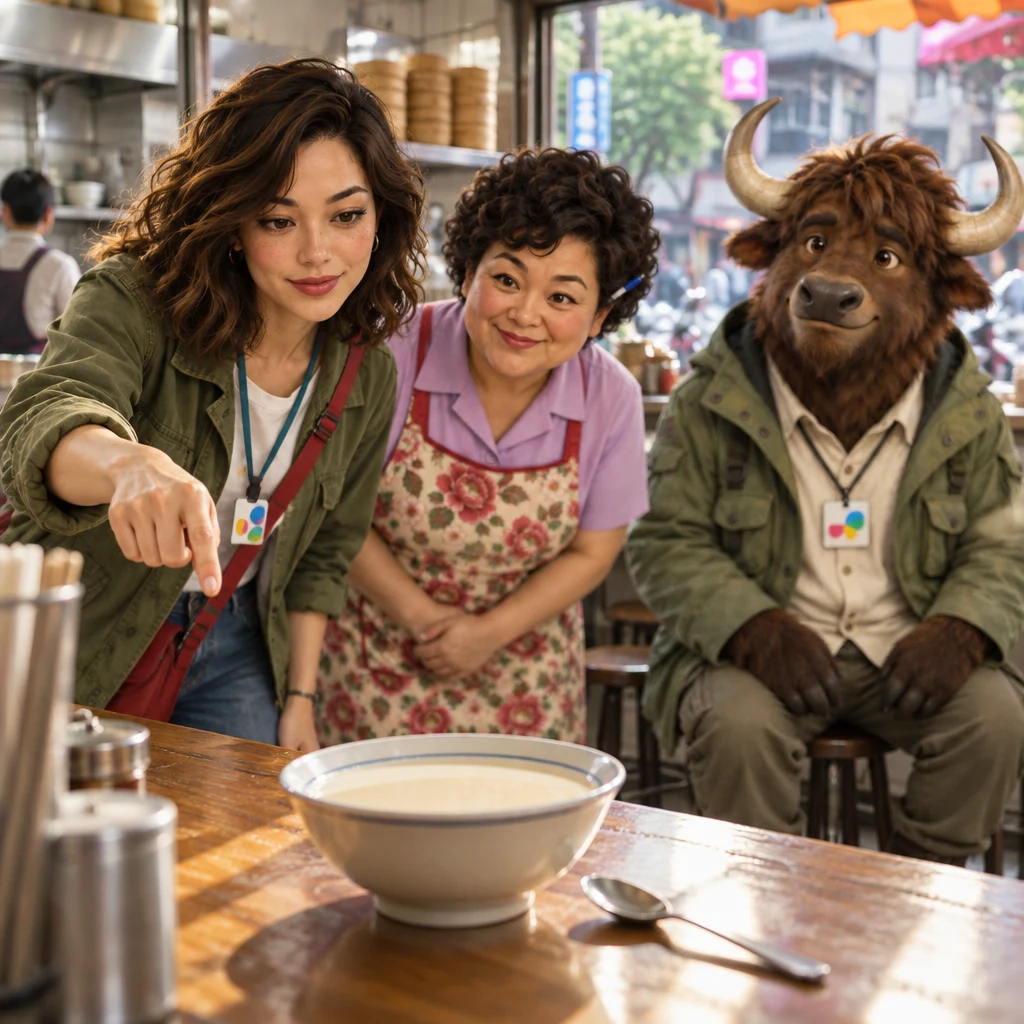
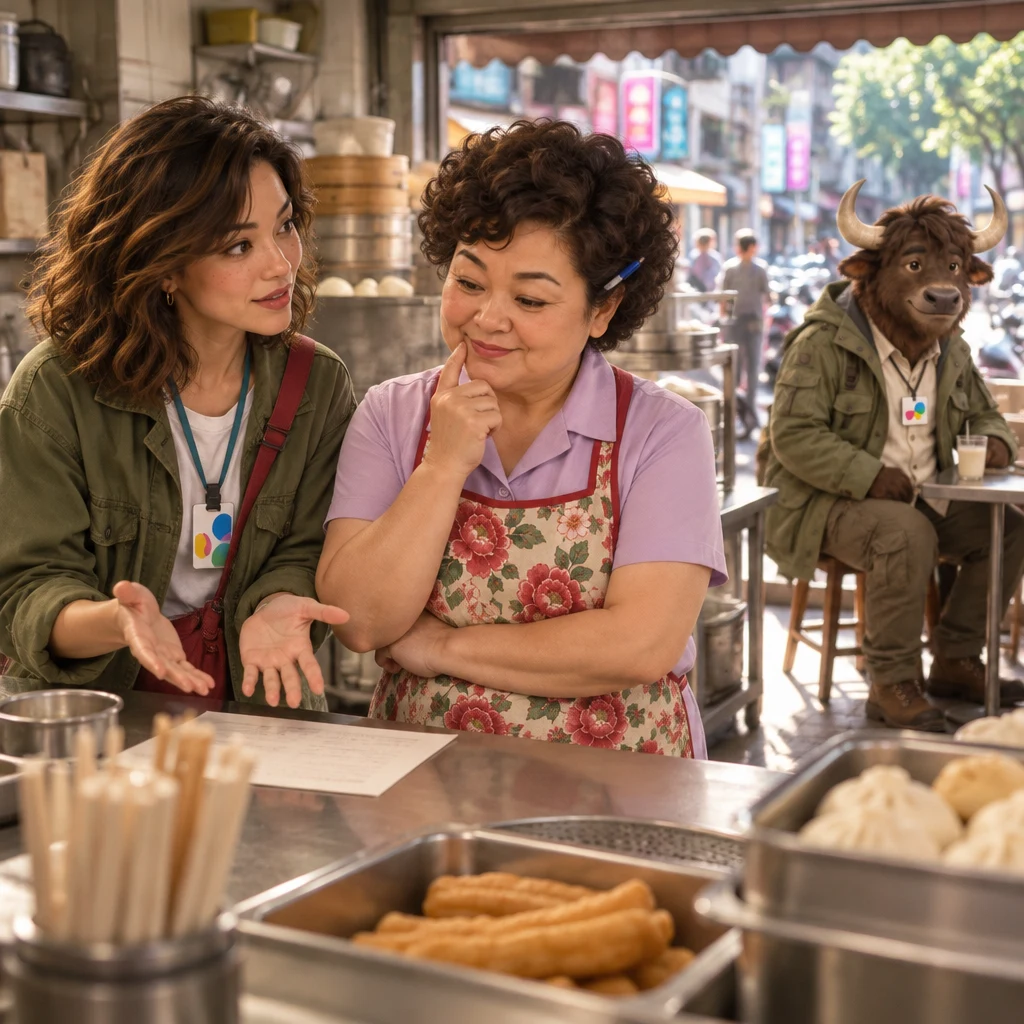
Morning at Banyan Breakfast. Maya is at the counter. A-Li sits on two stools at the back, soy milk untouched.
He starts to say what he ordered, then keeps replacing the words. Auntie Lin waits. Nobody treats the unfinished drink as a puzzle to solve.
Learn — stop and say what you meant
Here are six ways to correct yourself in the middle of a sentence. Listen to each line, then say it out loud.
Notice how 我是說 and 我是想說 both name what you meant after the first wording went wrong.
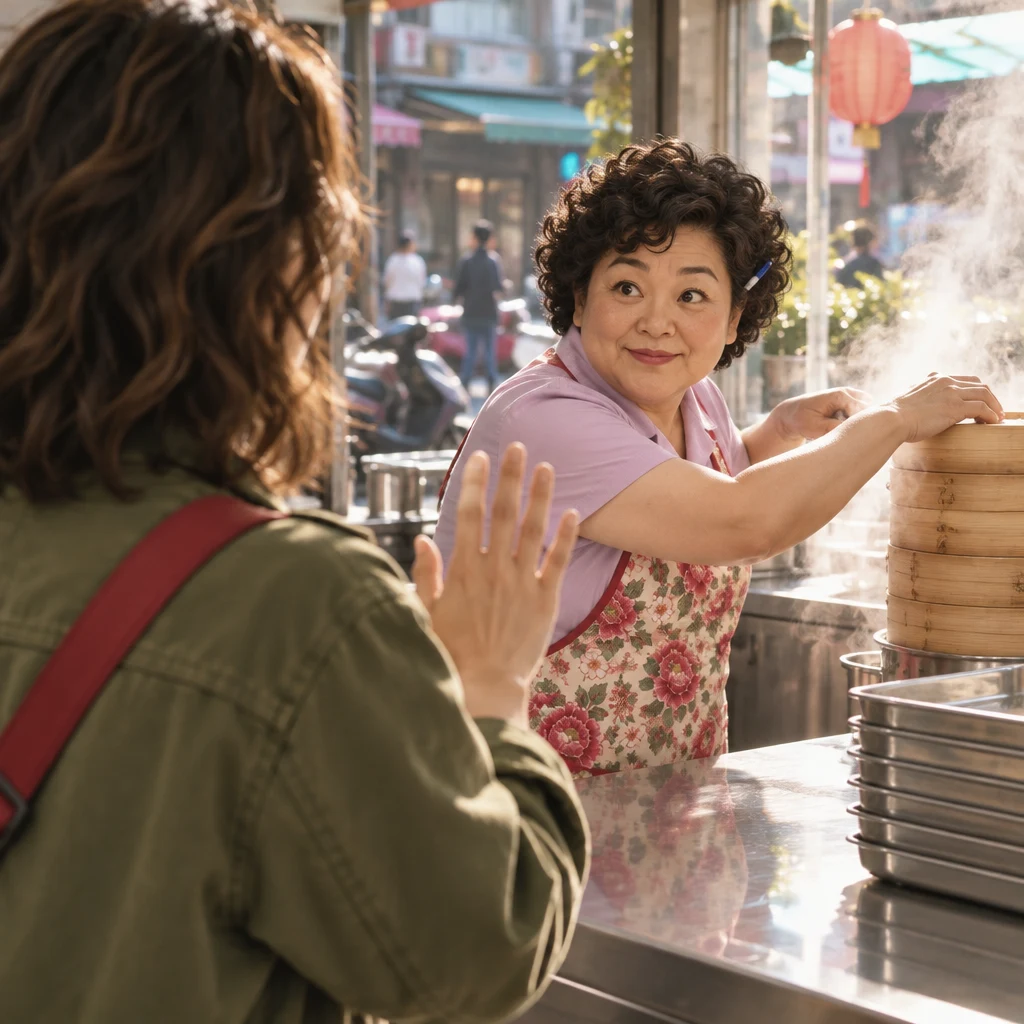
等一下,我是說___
Wait, I mean ___.
When to use it: Use this to stop yourself and replace the last words.
等一下 pauses the sentence; 我是說 then replaces the words you want to take back.

比較像是___
It's more like ___.
When to use it: Use this when the first wording was close but not quite right.
比較 here means more, so you offer a closer description rather than ranking two things.
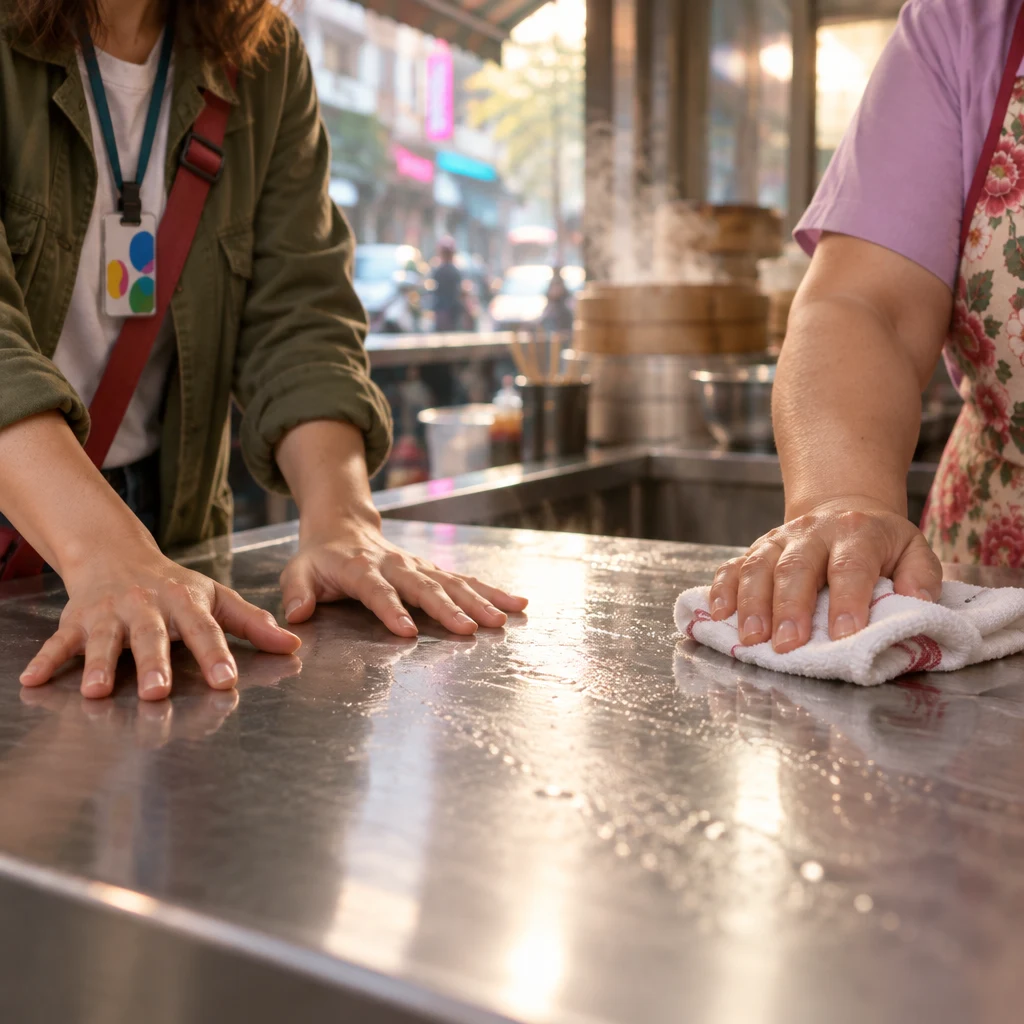
我換個說法
Let me put it another way.
When to use it: Use this when you will rephrase the whole idea, not one word.
個 is the measure word for 說法, so you are swapping one wording for another.
Say it: 個 is a light neutral tone between 換 and 說法.
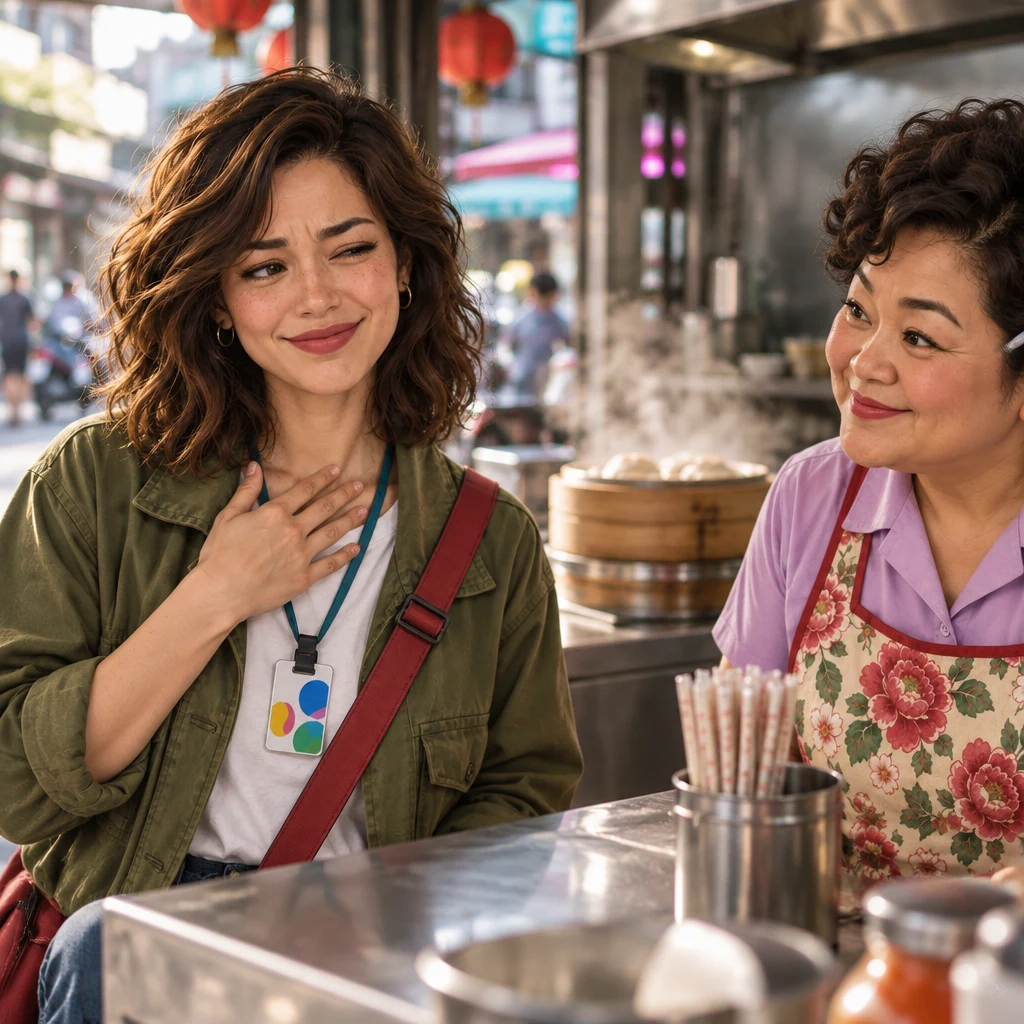
我剛剛講錯了
I said that wrong.
When to use it: Use this to admit the last thing you said was not what you meant.
了 marks the mistake as already finished; you said it, and now you take it back.
Say it: 了 is a light neutral tone after 錯.
我是想說___
What I'm trying to say is ___.
When to use it: Use this to give the wording you intended after a stumble.
是 flags the real intent, contrasting with what you just said.
可以這樣說嗎?
Can I say it this way?
When to use it: Ask this to check whether your new wording sounds natural.
嗎 turns this into a yes-no check on the wording you just offered.
Story — three corrections in one breath
Listen as A-Li tries to say what he ordered this morning, then corrects himself three times before the sentence ends.
Maya and Auntie Lin wait through the restarts. The soy milk stays unfinished.
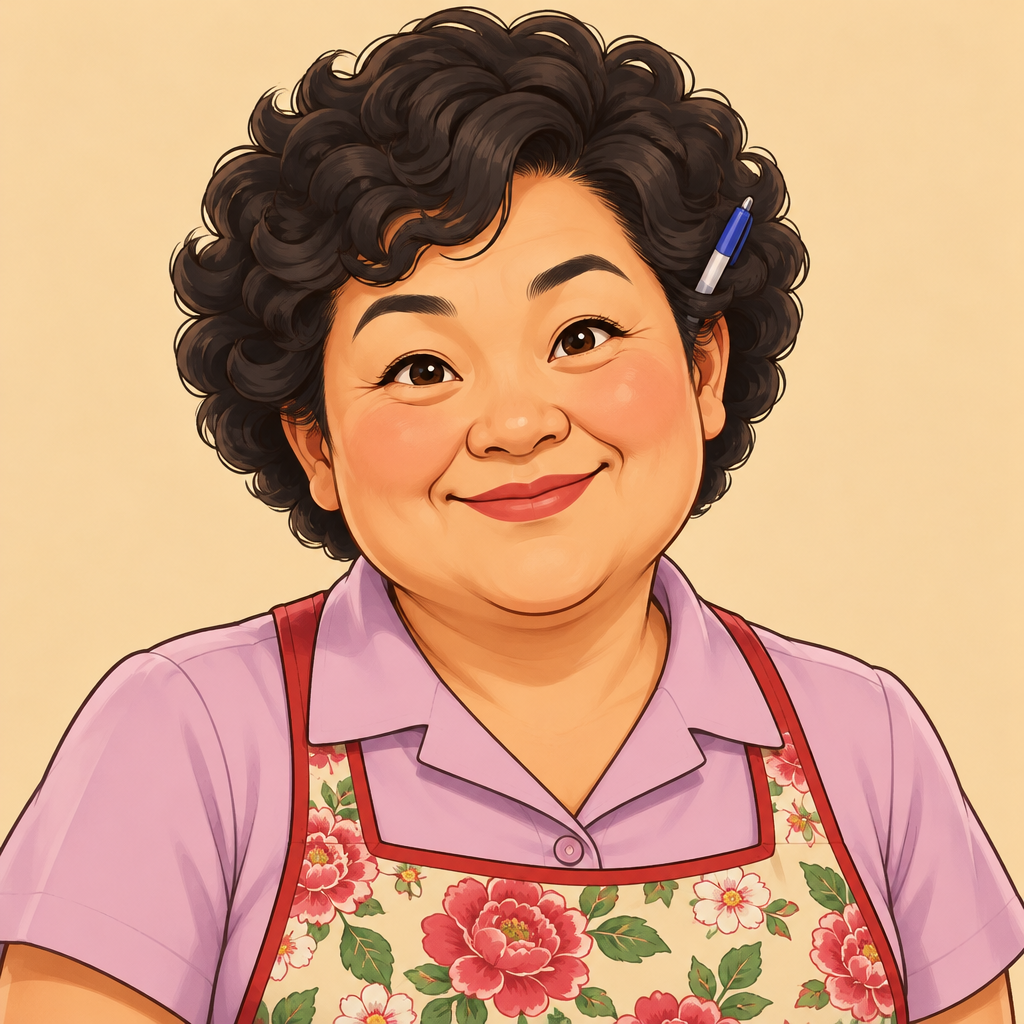 Auntie Lin美女,早啊。Morning, beautiful!
 Maya阿犛,你今天點了什麼?A-Li, what did you order today?
 A-Li我點了蛋餅。I ordered an egg pancake.
- Auntie Lin你不是要蘿蔔糕?Didn't you want radish cake?
- A-Li等一下,我是說蘿蔔糕,比較像是我也想吃蛋餅。我換個說法:兩個都要。Wait, I mean radish cake; it's more like I also want egg pancake. Let me put it another way: I want both.
- A-Li still has not touched the soy milk.
- Maya我聽不懂。I don't understand.
- A-Li我剛剛講錯了。I said that wrong.
- A-Li我是想說豆漿還沒喝完。What I'm trying to say is the soy milk still isn't finished.
- Auntie Lin豆漿還在桌上啦。The soy milk is still on the table.
- Maya所以重點是豆漿?So the point is the soy milk?
- A-Li對啊。Yeah.
- Auntie Lin你是說他又講不清楚?You mean he's unclear again?
- Maya我不是這個意思。That's not what I meant.
- Auntie Lin那你是說什麼?Then what do you mean?
- Maya我是說他還沒喝完。I mean he still hasn't finished it.
- Auntie Lin這樣喔。Oh, is that so?
- Maya可以這樣說嗎?Can I say it this way?
- Auntie Lin可以啊。Sure, you can.
Practice — fix the wording
Try ten quick exercises to stop a sentence and name what you meant. Pick the line that fits each small moment.
After each answer, read why the others do not work, then say the right line again.
0 of 10 done
What does it mean?
What does it mean?
等一下,我是說___
Fill the gap
Fill the gap
I said that wrong.
我____講錯了
What do you say?
What do you say?
Your first wording was close. Nudge it toward a better description, without throwing the sentence out.
Build the line
Build the line
Let me put it another way.
Tap the words in order.
What did you hear?
What did you hear?
Pick the reply
Auntie Lin says:
Pick the reply
所以你是說蛋餅?
So you mean the egg pancake?
And you reply with:
Swap the word
Swap the word
You just offered a wording and want to check whether that wording is all right.
可以____說嗎?
What do you say?
What do you say?
Someone restates your point in a way you reject. You are not saying you misspoke.
What does it mean?
What does it mean?
我是說___
What do you say?
What do you say?
You need the other person to rephrase. You are not offering a new wording yourself.
Say it — your restarts
You play Maya at Banyan Breakfast. Listen to each cue, then correct yourself out loud with the line you learned.
Tap the microphone to speak. You can replay the other person's line before your turn.
- You start to order an egg pancake, then catch that you want radish cake.
- Auntie Lin美女,你要什麼?What would you like?
- You already said egg pancake. That was close, but radish cake is what you meant.
- Maya (you)Admit the last words were wrong.
Admit the last words were wrong.
我剛剛講錯了
I said that wrong.
0 of 6 said
Recap — what you can say now
| Traditional Chinese | English | Play |
|---|---|---|
| 等一下,我是說___ | Wait, I mean ___. | |
| 比較像是___ | It's more like ___. | |
| 我換個說法 | Let me put it another way. | |
| 我剛剛講錯了 | I said that wrong. | |
| 我是想說___ | What I'm trying to say is ___. | |
| 可以這樣說嗎? | Can I say it this way? |
Save your progress — it’s free
Keep your place in the course and see which lines you’ve learned.
Want the next lesson in your inbox?
Get the next lesson by email, one a day.
Join the newsletterDaily lesson emails are coming soon. Newsletter subscribers get them first.
Keep practicing with Yak Cards
Today's corrections are in Yak Cards with more lines for restarting a sentence.
Review a few correction cards each day so the restart comes quickly.
Open Yak Cards