
New here? This is lesson 35 of a free 240-lesson Traditional Chinese course.
Sugar and ice in Traditional Chinese
At a Taipei drink shop, the clerk asks Maya and A-Li how sweet they want their bubble tea and how much ice they want. A-Li starts choosing, then changes his mind.
Learn six short choices for sweetness and ice, from barely sweet to no sugar and from less ice to regular ice.
Listen for A-Li’s final choice: no sugar and regular ice.
By the end of this lesson
Choose and order a drink’s sweetness and ice level.
- 少冰Less ice.
- 去冰No ice.
- 微糖Barely sweet.
- 半糖Half sugar.
- 無糖No sugar.
- 正常冰Regular ice.
Scene — a drink shop choice
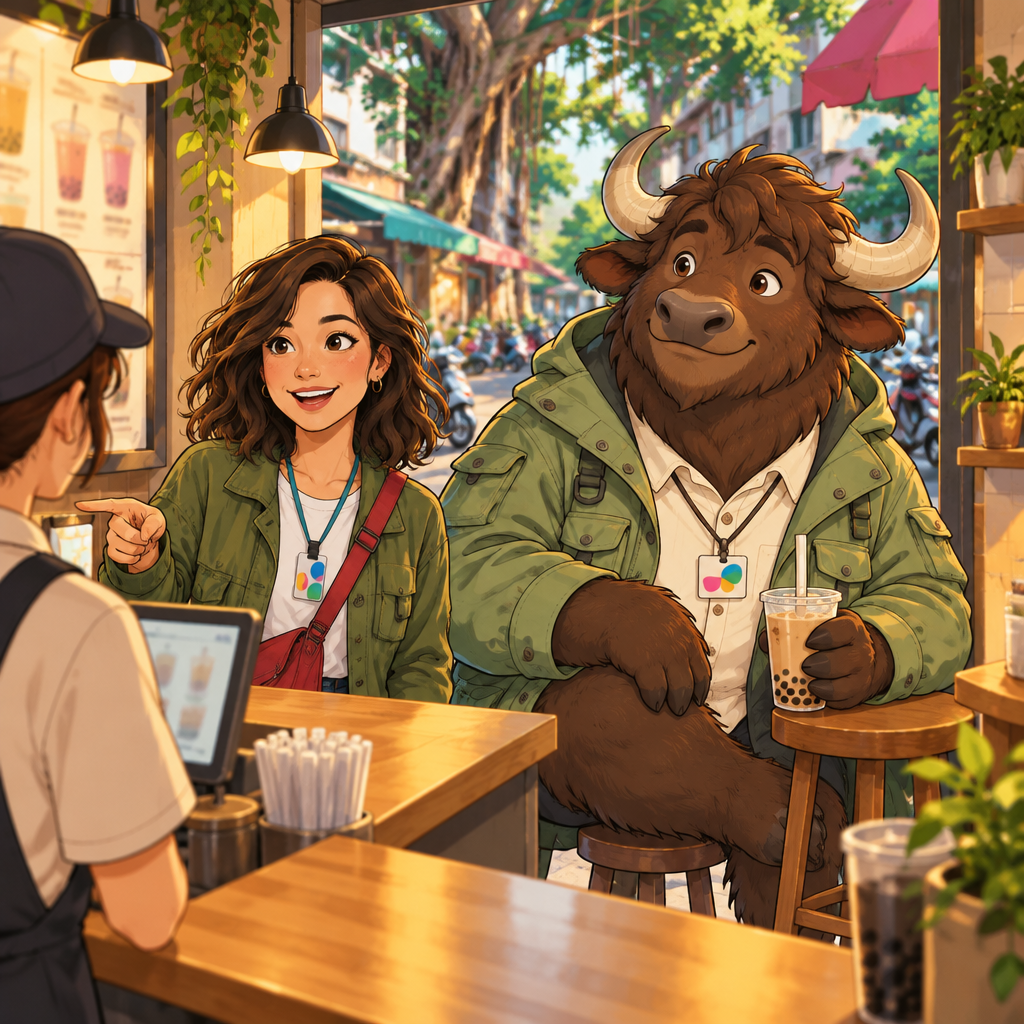
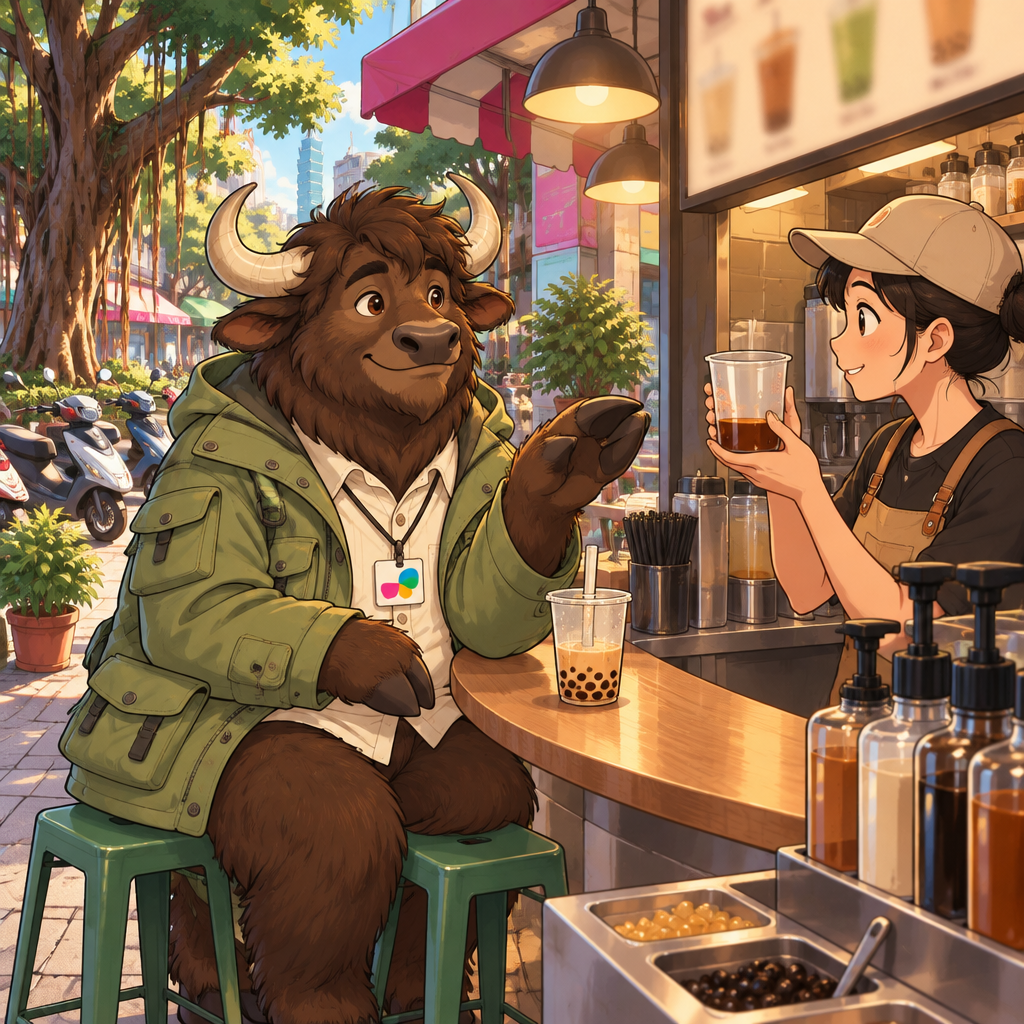
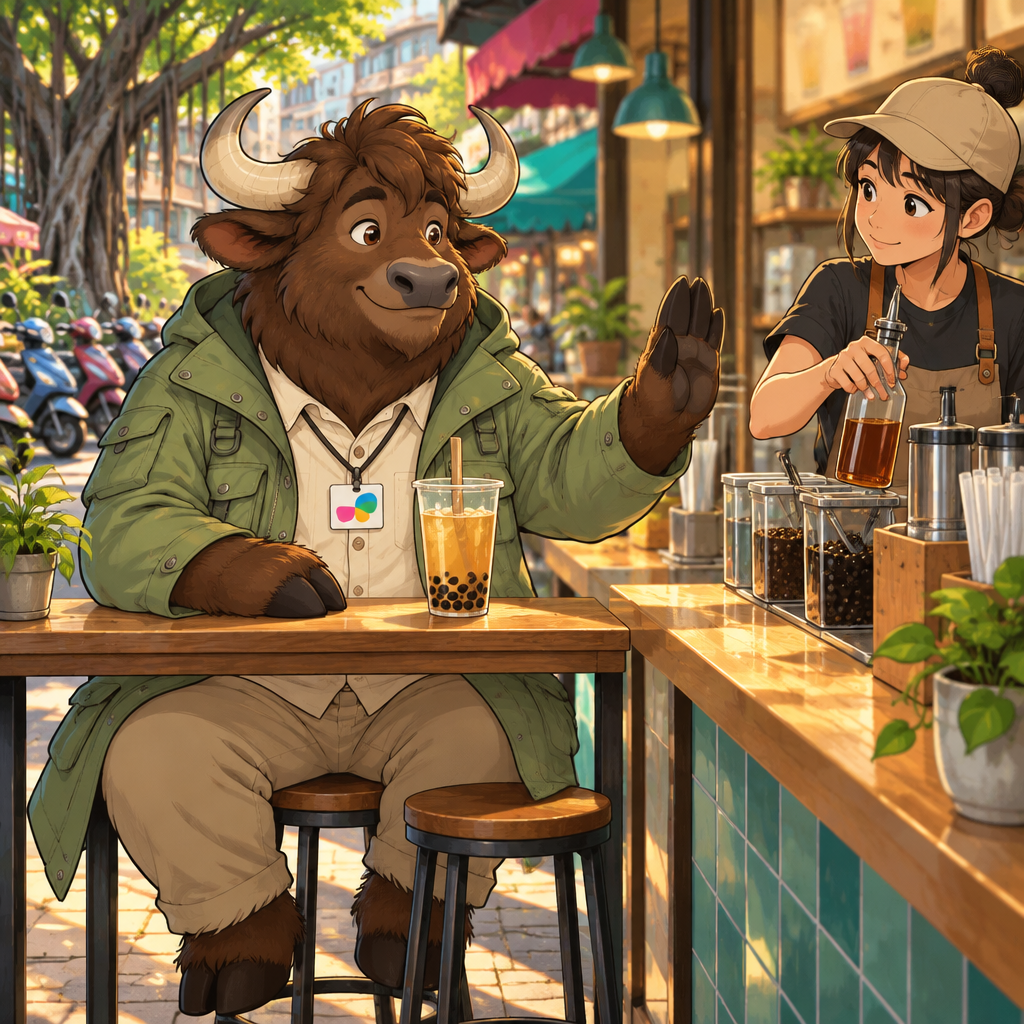
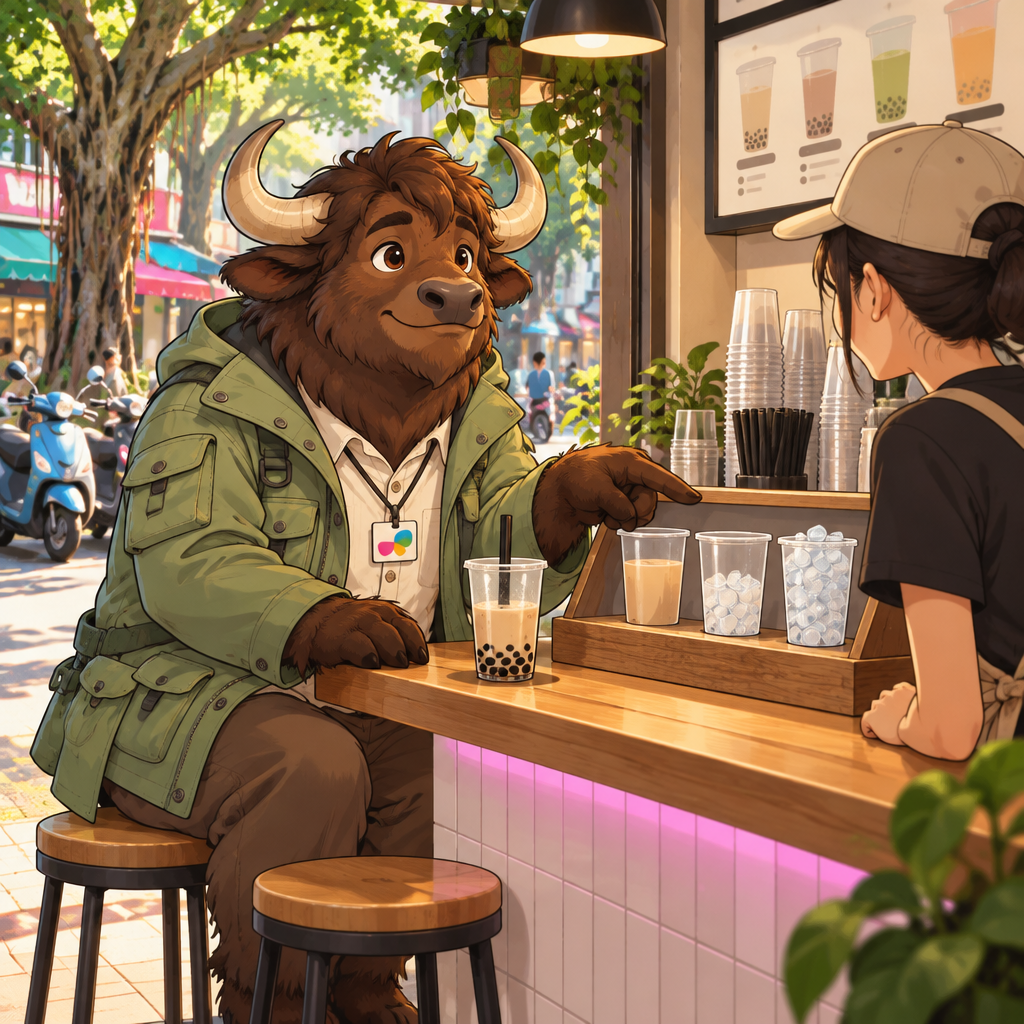
At a drink shop near Banyan Lane, Maya and A-Li order bubble tea. The clerk asks them to choose the sweetness and ice level.
Maya makes her choices quickly. A-Li changes his sweetness and ice choices, ending with no sugar and regular ice. His drink is still unfinished.
Learn — sweetness and ice
These short choices help you order sweetness and ice at a drink shop. Listen to each one, then say it aloud.
A-Li changes his order, but you can keep your own choice simple.
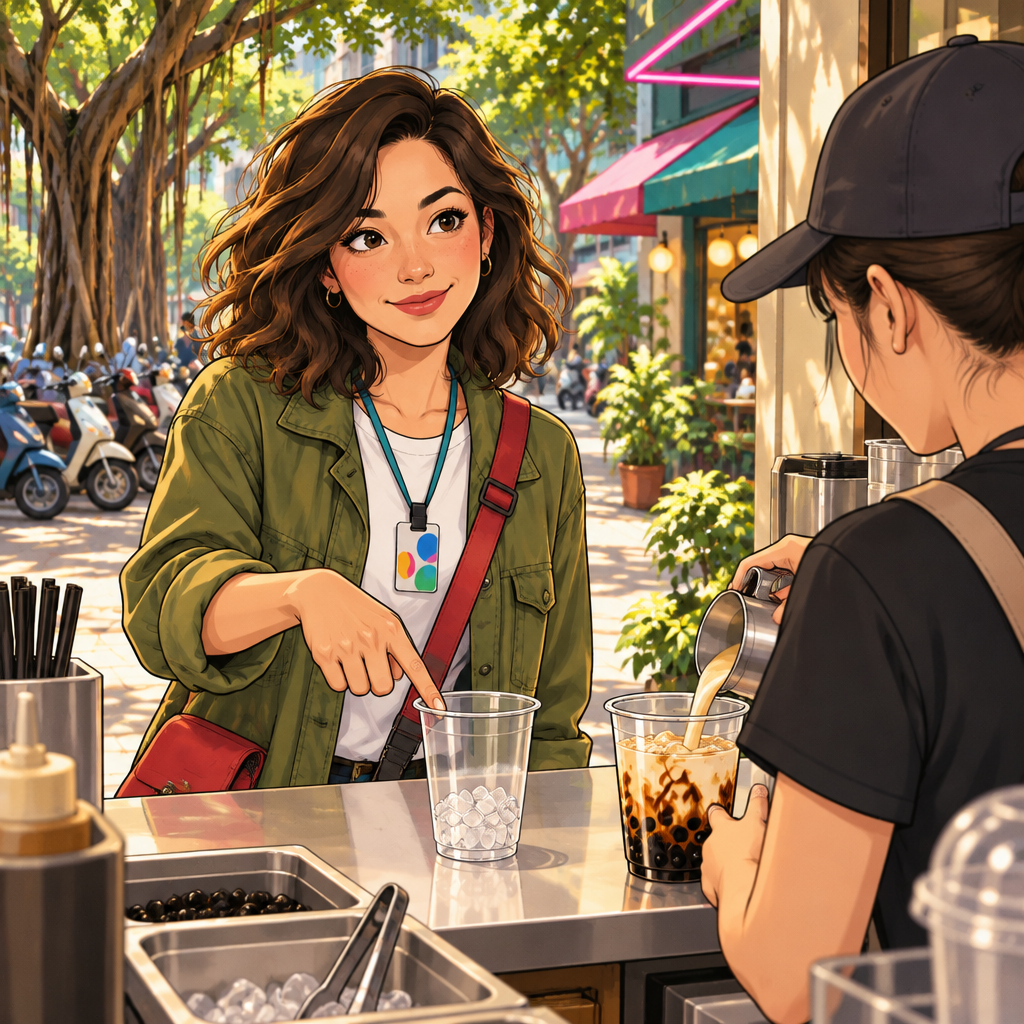
少冰
Less ice.
When to use it: Choose this when you want less ice in your drink.
Learn this ordering choice as one piece.
Say it: 少 has a third tone here.
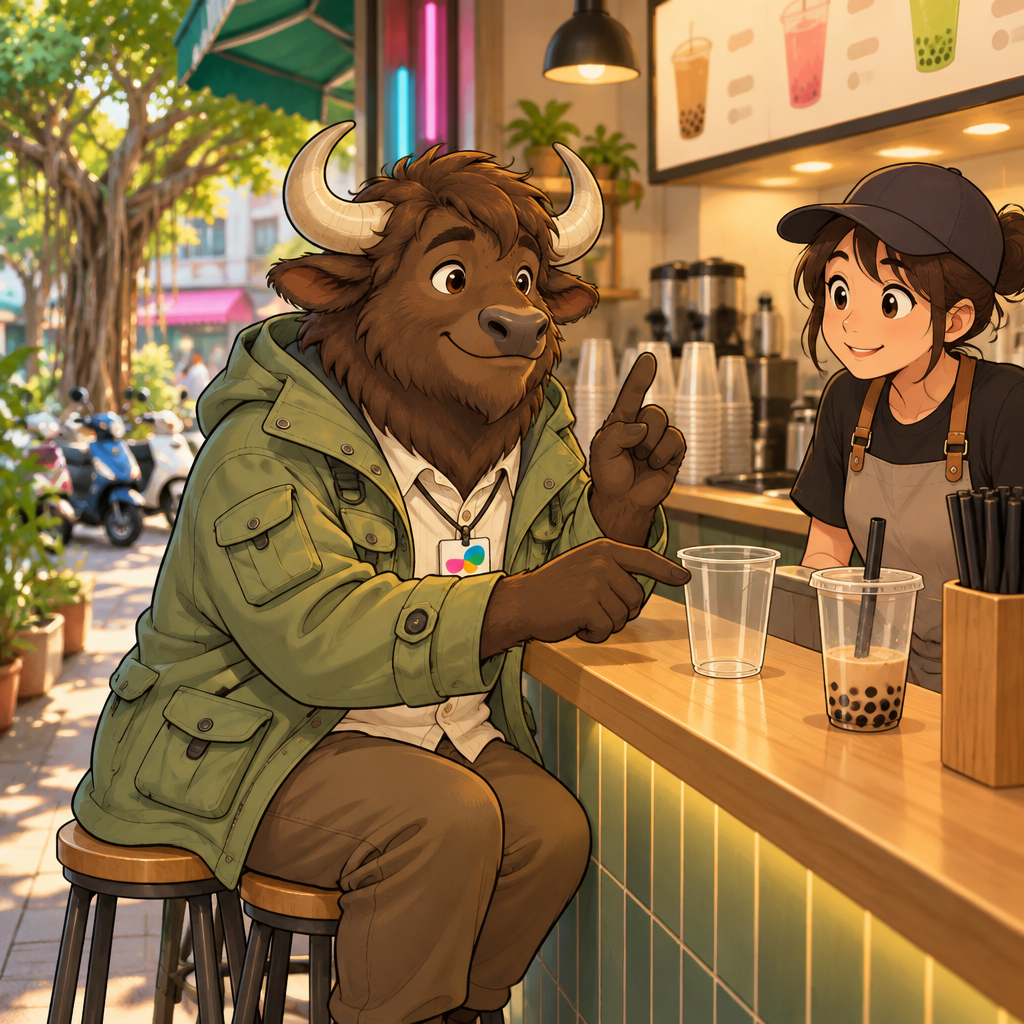
去冰
No ice.
When to use it: Choose this when you want your drink without ice.
Learn this ordering choice as one piece.
Say it: 去 has a falling tone.
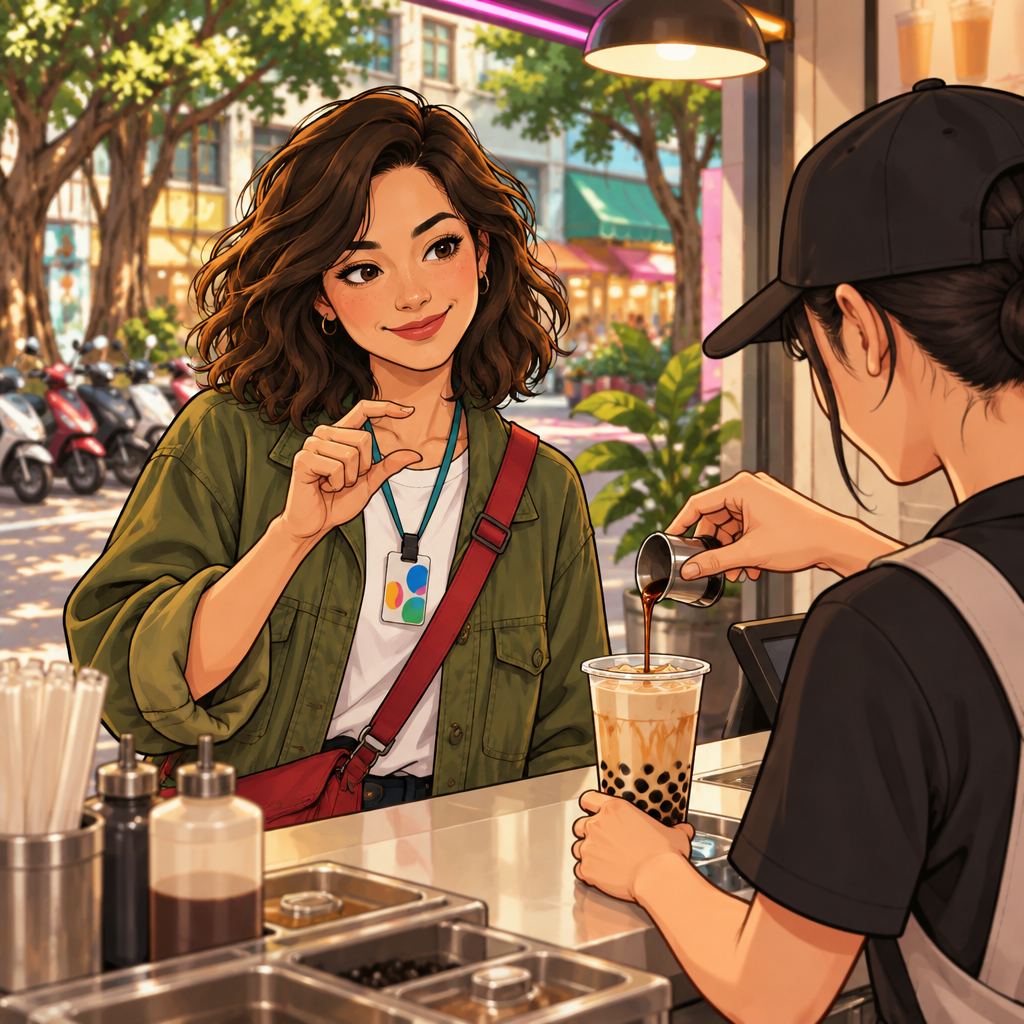
微糖
Barely sweet.
When to use it: Choose this when you want just a little sweetness.
Learn this ordering choice as one piece.
半糖
Half sugar.
When to use it: Choose this when you want half the usual sugar.
Learn this ordering choice as one piece.
Say it: 半 starts with a falling tone.
無糖
No sugar.
When to use it: Choose this when you do not want sugar.
Learn this ordering choice as one piece.
正常冰
Regular ice.
When to use it: Choose this when you want the usual amount of ice.
Learn this ordering choice as one piece.
Story — A-Li changes his order
Maya and A-Li stop at a drink shop near Banyan Lane. Maya chooses her drink, while A-Li changes his choices twice before the clerk prepares his order.
Listen for his final sweetness and ice choices.
- Clerk美女,您好!Hello, beautiful!
 Maya謝謝!Thank you!
- Clerk瑪雅,甜度呢?Maya, what sweetness level?
- Maya半糖。Half sugar.
- Clerk冰塊呢?And the ice?
- Maya少冰。Less ice.
- Clerk阿犛,你呢?What about you, A-Li?
 A-Li微糖,去冰。Barely sweet, no ice.
- A-Li甜度改成無糖。Change the sweetness to no sugar.
- A-Li冰量改成正常冰。Change the ice to regular ice.
Practice — choose your drink
Try nine quick exercises to choose sweetness and ice levels for a drink. Read the situation or listen to the prompt, then pick the line that fits.
Check each explanation before moving on.
0 of 10 done
What does it mean?
What does it mean?
少冰
What do you say?
What do you say?
The clerk asks about ice. You want your drink without any ice.
What do you say?
What do you say?
The clerk asks about sweetness. You want just a little sweetness.
Fill the gap
Fill the gap
Regular ice.
____冰
What do you say?
What do you say?
You do not want any sugar in your drink. Tell the clerk your choice.
What did you hear?
What did you hear?
Swap the word
Swap the word
Ask for less ice, the usual reduced amount, not a little ice and not none.
____冰
Build the line
Build the line
Half sugar.
Tap the words in order.
What do you say?
What do you say?
Greet the shopkeeper politely when you arrive.
What do you say?
What do you say?
The clerk hands you your drink. Thank them.
Say it — your drink order
You play Maya at a Taipei drink shop. Listen to each cue, then say your sweetness or ice choice aloud.
Take a moment to choose the answer that matches what you want in your drink.
- Clerk甜度呢?What sweetness level?
- Maya (you)Choose half sugar.
Choose half sugar.
半糖
Half sugar.
0 of 4 said
Recap — what you can say now
| Traditional Chinese | English | Play |
|---|---|---|
| 少冰 | Less ice. | |
| 去冰 | No ice. | |
| 微糖 | Barely sweet. | |
| 半糖 | Half sugar. | |
| 無糖 | No sugar. | |
| 正常冰 | Regular ice. |
Save your progress — it’s free
Keep your place in the course and see which lines you’ve learned.
Want the next lesson in your inbox?
Get the next lesson by email, one a day.
Join the newsletterDaily lesson emails are coming soon. Newsletter subscribers get them first.
Keep practicing with Yak Cards
Review today’s drink choices in Yak Cards.
Practice a few sweetness and ice choices until they feel familiar.
Open Yak Cards