
New here? This is lesson 97 of a free 240-lesson Traditional Chinese course.
Getting off in Traditional Chinese
On a Taipei bus, Maya misses her stop. She checks how to pay, asks where to get off, and realizes the bus has gone too far.
Learn how to name your stop, explain that you rode past it, and ask to get off politely. You'll also ask about tapping a card and buying a ticket on board.
Notice the completed-event marker in the line about going past your stop. A-Li presses the stop button very slowly, and his soy milk remains unfinished.
By the end of this lesson
Ask where the next stop is, say that you went past your stop, ask to get off, and check how to pay.
- 我要在這站下車I'm getting off at this stop.
- 下一站是哪裡?What is the next stop?
- 我坐過站了I went past my stop.
- 上下車都要刷卡嗎?Do I tap on and off?
- 請問可以在公車上買票嗎?Can I buy a ticket on the bus?
- 麻煩讓我下車Excuse me, let me off.
Scene — one stop too far
Maya rides a crowded Taipei city bus with A-Li, whose soy milk is still unfinished. She watches the stops carefully but is not sure when to press the button.
A-Li reaches for it and presses very slowly. The bus passes Maya's stop, so she needs help getting off at the next one.

Learn — stops and getting off
These six useful lines help you ask about stops, explain that you went too far, and ask to get off. Listen first, then say each line aloud.
Notice how a short question can help you check the route or how to pay.

我要在這站下車
I'm getting off at this stop.
When to use it: Say this to tell someone where you plan to get off.
在 introduces the place where you will get off.

下一站是哪裡?
What is the next stop?
When to use it: Ask this when you need to check the next stop.
哪裡 stays where the answer belongs; it does not move.

我坐過站了
I went past my stop.
When to use it: Say this when the bus or train has passed your stop.
了 marks going past your intended stop as a completed event.
Say it: The ending 了 is light and neutral in this sentence.
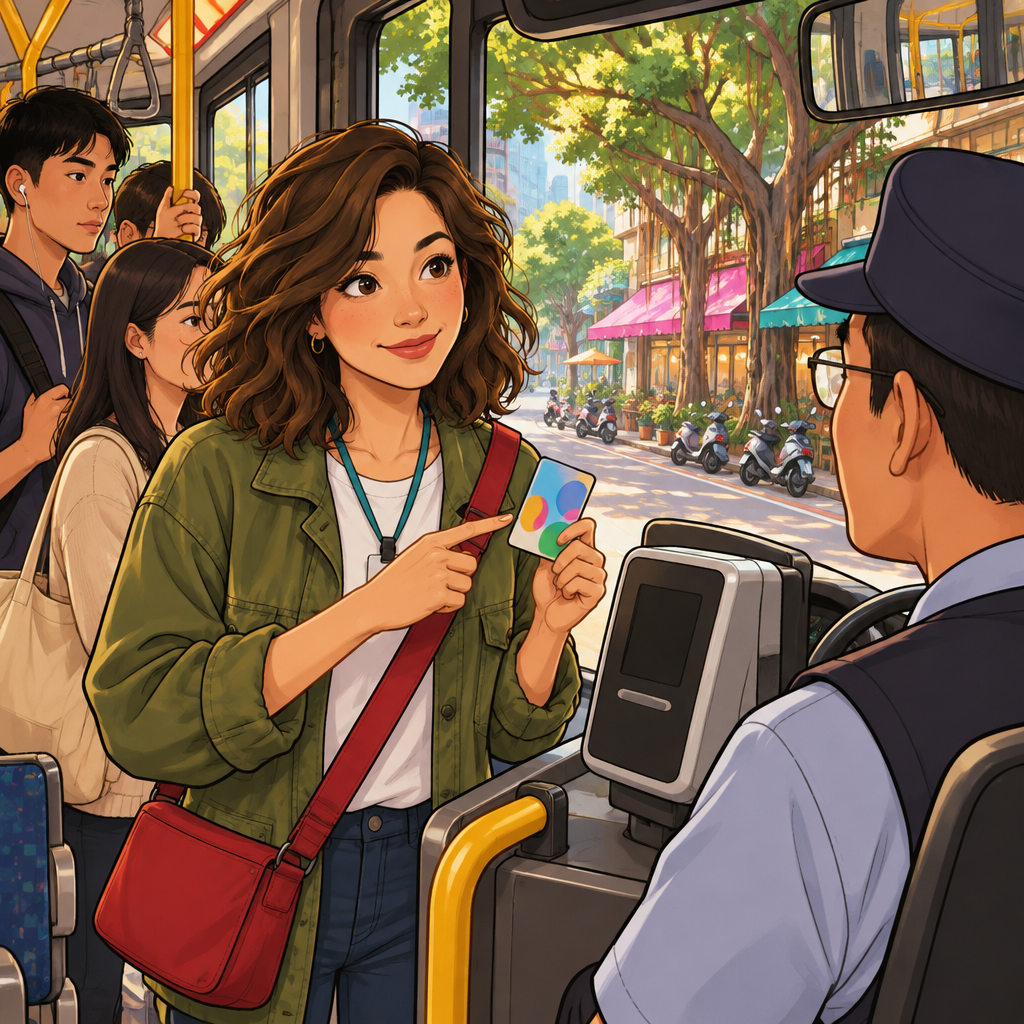
上下車都要刷卡嗎?
Do I tap on and off?
When to use it: Ask whether you need to tap your card both ways.
都 means both here, referring to boarding and getting off.
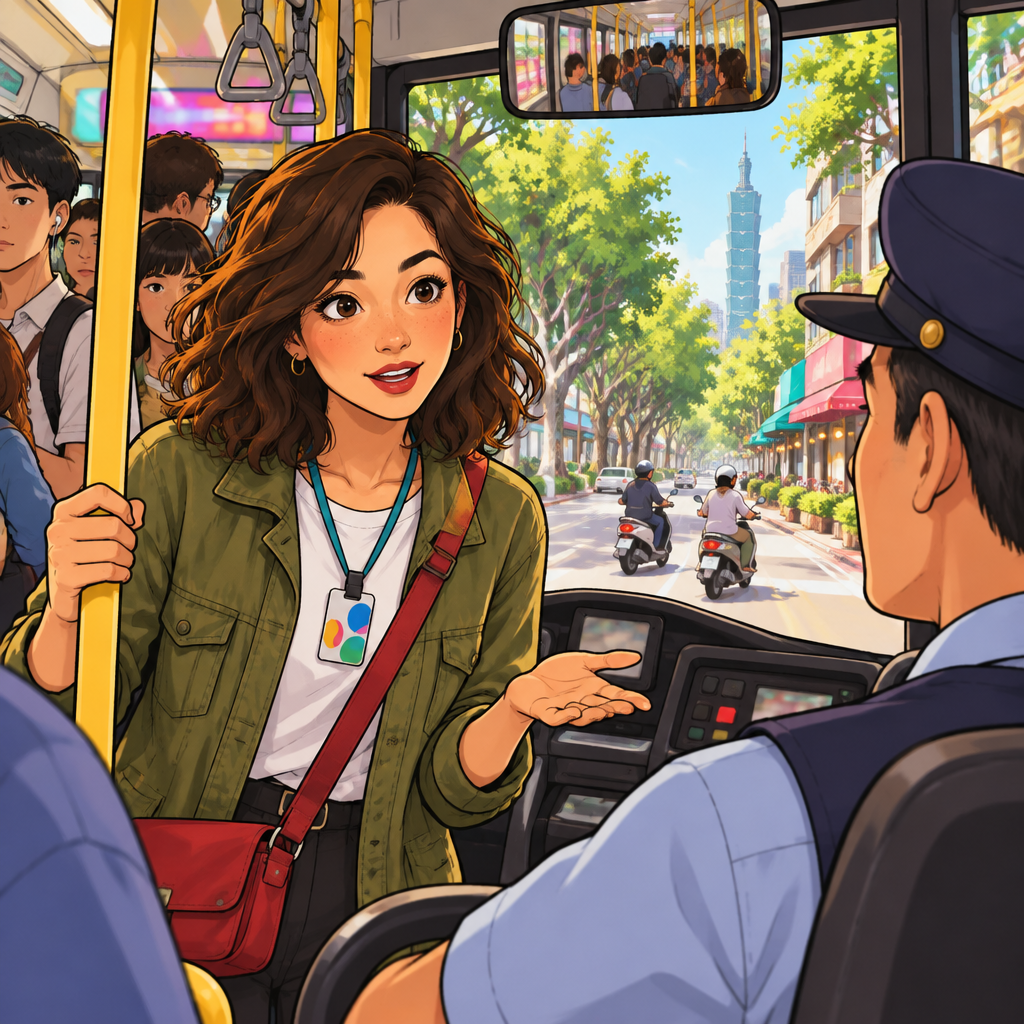
請問可以在公車上買票嗎?
Can I buy a ticket on the bus?
When to use it: Ask the driver whether tickets are sold on the bus.
嗎 turns this into a yes-or-no question.

麻煩讓我下車
Excuse me, let me off.
When to use it: Use this polite request when you need to get off.
麻煩 softens a request and makes it more polite.
Story — a slow stop button
Maya rides a bus across Da'an with A-Li. She checks the payment rules, then asks about the next stop.
A-Li presses the stop button slowly, and the bus goes one stop too far. Maya asks to get off at the next stop.
 Maya上下車都要刷卡嗎?Do I tap on and off?
- Driver對,上下車都要刷卡。Yes, tap on and off.
- Maya請問可以在公車上買票嗎?Can I buy a ticket on the bus?
- Driver車上不賣票,可以投現金。Tickets aren't sold on board; you can pay cash.
- Maya不好意思,下一站是哪裡?Excuse me, what is the next stop?
- Driver下一站是大安站。The next stop is Da'an Station.
- Maya我要在這站下車。I'm getting off at this stop.
- A-Li reaches for the stop button and presses it very slowly. The bus passes Da'an and stops one stop later.
- Maya我坐過站了。I went past my stop.
- Maya麻煩讓我下車。Excuse me, let me off.
- Driver好,請小心。Okay, take care.
- Maya麻煩你了。Thanks for your trouble.
Practice — find your stop
Try eleven quick exercises to identify stops, ask for help, and check bus payment. Choose or build the line that fits each moment.
Read each explanation, then say the correct line aloud before moving on.
0 of 11 done
What does it mean?
What does it mean?
上下車都要刷卡嗎?
What do you say?
What do you say?
Get the bus driver's attention politely before asking a question.
Build the line
Build the line
Do I tap on and off?
?
Tap the words in order.
Fill the gap
Fill the gap
I went past my stop.
我坐____站了
Match the pairs
Traditional Chinese
我要在這站下車Drop the English here下一站是哪裡?Drop the English here麻煩讓我下車Drop the English hereEnglish
What did you hear?
What did you hear?
Pick the reply
Driver says:
Pick the reply
要在哪一站下車?
Which stop do you want to get off at?
And you reply with:
What do you say?
What do you say?
Ask the bus driver whether you can buy a ticket on board.
Pick the reply
Driver says:
Pick the reply
車門快要關了。
The doors are about to close.
And you reply with:
What did you hear?
What did you hear?
What do you say?
What do you say?
A-Li pressed the stop button for you. Thank him for the trouble.
Say it — on the bus
You play Maya on a Taipei bus. Listen to each cue, then answer the driver or A-Li with a short, useful line.
Speak each response aloud. You can replay the other person's line before your turn, and try the conversation again afterward.
- Maya checks where she should get off.
- Driver要在哪一站下車?Which stop do you want to get off at?
- Maya (you)Tell the driver you plan to get off at this stop.
Tell the driver you plan to get off at this stop.
我要在這站下車
I'm getting off at this stop.
0 of 4 said
Recap — what you can say now
| Traditional Chinese | English | Play |
|---|---|---|
| 我要在這站下車 | I'm getting off at this stop. | |
| 下一站是哪裡? | What is the next stop? | |
| 我坐過站了 | I went past my stop. | |
| 上下車都要刷卡嗎? | Do I tap on and off? | |
| 請問可以在公車上買票嗎? | Can I buy a ticket on the bus? | |
| 麻煩讓我下車 | Excuse me, let me off. |
Save your progress — it’s free
Keep your place in the course and see which lines you’ve learned.
Want the next lesson in your inbox?
Get the next lesson by email, one a day.
Join the newsletterDaily lesson emails are coming soon. Newsletter subscribers get them first.
Keep practicing with Yak Cards
Review these bus lines with Yak Cards and practise asking for your stop.
A quick review before your next ride can make these useful requests easier to remember.
Open Yak Cards