
New here? This is lesson 233 of a free 240-lesson Traditional Chinese course.
Say thanks properly in Traditional Chinese
The year on Banyan Lane has given Maya plenty to thank people for. She sits at the shop with a card and a pen, trying to write a proper note for Auntie Lin and A-Li.
Learn six lines for formal thanks, looking back on a year, and a warm closing wish. You will hear how they sound in a note, not only at the counter.
Maya can thank them, but she still cannot choose the last line. A-Li's soy milk stays unfinished beside the card.
By the end of this lesson
Write a formal thank-you and a farewell note: thank someone for care and patience, look back on the year, and close with a wish to stay in touch.
- 感謝你這段時間的照顧Thank you for looking after me.
- 能認識大家是我的榮幸It's my honour to know everyone.
- 這一年我學到很多I've learned a lot this year.
- 謝謝你一直這麼有耐心Thank you for always being so patient.
- 希望以後常常聯絡I hope we'll keep in touch.
- 祝你一切順利Wishing you all the best.
Scene — a card on the table
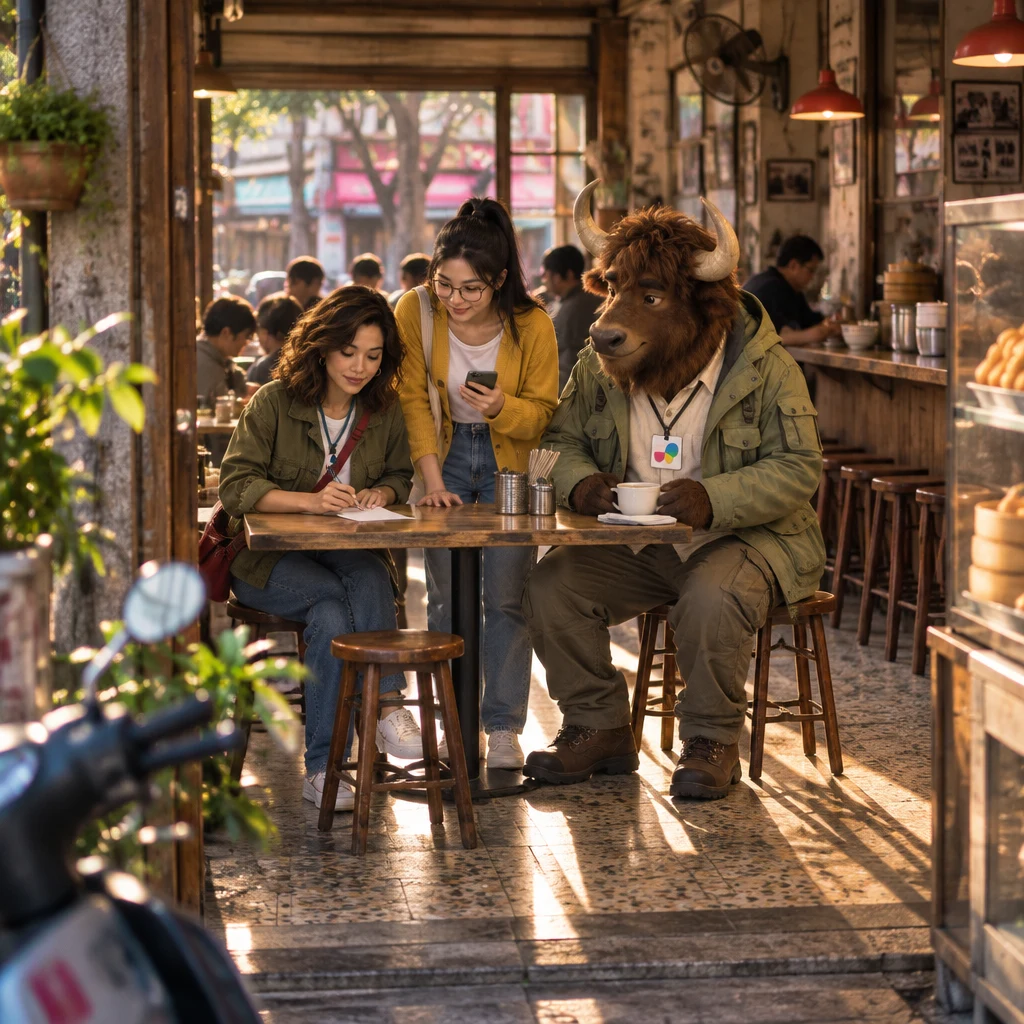
Late afternoon at Banyan Breakfast. Maya has a blank card on the table and keeps crossing out the last line. Yi-Jun leans in to help.
Auntie Lin wipes the counter. A-Li sits on two stools with his soy milk still unfinished. The fortune slip stays in the till.
Learn — formal thanks and a closing
These six lines belong on a card or in a careful goodbye. Listen, then say each one as if you mean it.
感謝 is more formal than everyday 謝謝. The last two lines close a note without slamming the door.

感謝你這段時間的照顧
Thank you for looking after me.
When to use it: Use this on a card or in a formal thanks after someone has cared for you for a while.
感謝 is more formal than everyday 謝謝.
Say it: 感 is third tone; before fourth-tone 謝, it is usually low and does not rise.

能認識大家是我的榮幸
It's my honour to know everyone.
When to use it: Use this when thanking a group, on a card or in a short speech.
能 plus 是我的榮幸 frames meeting people as an honour.

這一年我學到很多
I've learned a lot this year.
When to use it: Use this when looking back on a year of practice or daily life.
學到 marks what you gained; 學過 would only say you had studied it before.
Say it: 一 takes a falling tone before 年.

謝謝你一直這麼有耐心
Thank you for always being so patient.
When to use it: Use this to thank someone who stayed patient with you over a long stretch.
一直 marks the patience as ongoing, not a single kind moment.
Say it: The second syllable of 謝謝 is a light neutral tone.

希望以後常常聯絡
I hope we'll keep in touch.
When to use it: Close a note when you want future contact, not a final goodbye.
以後 looks ahead; this hope does not mean you are leaving for good.

祝你一切順利
Wishing you all the best.
When to use it: End a card with this general wish when you cannot pick a more specific line.
一切 widens the wish to everything, not one task.
Story — the last line stays blank
Maya drafts a thank-you card at Banyan Breakfast. Yi-Jun helps with the wording, while Auntie Lin and A-Li listen from nearby.
The last line stays blank. Nobody reads the fortune slip today.
 Auntie Lin美女,在寫什麼?What are you writing, beautiful?
 Maya我想寫一張卡片給你們。I want to write a card for you all.
 Yi-Jun要寫得正式一點嗎?Do you want it a bit more formal?
- Maya第一句我想寫,感謝你這段時間的照顧。For the first line I want to write, thank you for looking after me.
- Auntie Lin哪裡,我們才要謝謝你每天來。Not at all; we should thank you for coming every day.
- Yi-Jun還可以寫,能認識大家是我的榮幸。You can also write, it's my honour to know everyone.
- Maya這一年我學到很多。I've learned a lot this year.
 A-Li豆漿還沒喝完。The soy milk still isn't finished.
- Yi-Jun對阿姨再加一句,謝謝你一直這麼有耐心。Add one more line for Auntie: thank you for always being so patient.
- Auntie Lin耐心?你現在點餐已經很快了啦。Patience? You order plenty fast now.
- Maya希望以後常常聯絡。I hope we'll keep in touch.
- A-Li好啊,等一下。Sure, in a bit.
- Yi-Jun最後一句要寫什麼?What should the last line say?
- Maya我還沒決定。I haven't decided yet.
- Auntie Lin寫祝你一切順利就好。Just write wishing you all the best.
- Maya可是這樣好像在說再見。But that sounds like saying goodbye.
- Yi-Jun那就先空著,明天再想。Then leave it blank for now and think tomorrow.
- A-Li卡片可以慢慢寫。The card can be written slowly.
Practice — choose the right thanks
Work through ten short exercises on thanks, honour, and closing wishes. Pick the line that fits a card, not a casual thanks at the counter.
After each answer, read why the others do not fit, then say the line again.
0 of 10 done
What does it mean?
What does it mean?
感謝你這段時間的照顧
What do you say?
What do you say?
You are writing a line to the whole shop, not to one person. Say it has been an honour to know everyone.
Build the line
Build the line
I've learned a lot this year.
Tap the words in order.
Fill the gap
Fill the gap
Thank you for always being so patient.
謝謝你一直這麼有____
What did you hear?
What did you hear?
Swap the word
Swap the word
You are closing the card. Widen a short wish so it covers everything, not just one task.
祝你____
Pick the reply
Auntie Lin says:
Pick the reply
你剛來的時候點餐很慢,我都等你。
When you first came, you ordered slowly, and I always waited.
And you reply with:
Match the pairs
Traditional Chinese
感謝你這段時間的照顧Drop the English here能認識大家是我的榮幸Drop the English here這一年我學到很多Drop the English here祝你一切順利Drop the English hereEnglish
What do you say?
What do you say?
Auntie Lin hands you your egg pancake. Give her a short everyday thanks, not a line from the card.
What does it mean?
What does it mean?
祝你順利
Say it — read the card aloud
You play Maya and speak the lines of the card out loud. Listen to each English cue, then say the Chinese line.
Tap the microphone to speak. You can replay the other person's line before your turn.
- Maya starts the card at the breakfast shop.
- Maya (you)Thank Auntie Lin for looking after you this whole stretch.
Thank Auntie Lin for looking after you this whole stretch.
感謝你這段時間的照顧
Thank you for looking after me.
0 of 6 said
Recap — what you can say now
| Traditional Chinese | English | Play |
|---|---|---|
| 感謝你這段時間的照顧 | Thank you for looking after me. | |
| 能認識大家是我的榮幸 | It's my honour to know everyone. | |
| 這一年我學到很多 | I've learned a lot this year. | |
| 謝謝你一直這麼有耐心 | Thank you for always being so patient. | |
| 希望以後常常聯絡 | I hope we'll keep in touch. | |
| 祝你一切順利 | Wishing you all the best. |
Save your progress — it’s free
Keep your place in the course and see which lines you’ve learned.
Want the next lesson in your inbox?
Get the next lesson by email, one a day.
Join the newsletterDaily lesson emails are coming soon. Newsletter subscribers get them first.
Keep practicing with Yak Cards
Today's formal thanks are in Yak Cards with more lines for cards and careful goodbyes.
Review a few thank-you cards each day so a note is easier to start.
Open Yak Cards