
New here? This is lesson 28 of a free 240-lesson Traditional Chinese course.
Days of the Week in Traditional Chinese
At Banyan Breakfast, learn to ask what day it is and name a few days. Today, tomorrow, and yesterday help you make simple plans with neighbors.
Learn 星期一 for Monday and 禮拜五 for Friday. Taiwan speakers also use 週, while 星期 and 禮拜 are especially common in everyday speech.
On Monday, the shop is closed, but A-Li arrives anyway. His soy milk remains unfinished, and the folded slip stays a question for another day.
By the end of this lesson
Ask what day it is and name today, tomorrow, yesterday, Monday, and Friday.
- 今天星期幾?What day of the week is it today?
- 星期一Monday.
- 禮拜五Friday.
- 今天Today.
- 明天Tomorrow.
- 昨天Yesterday.
Scene — a Monday at the shop
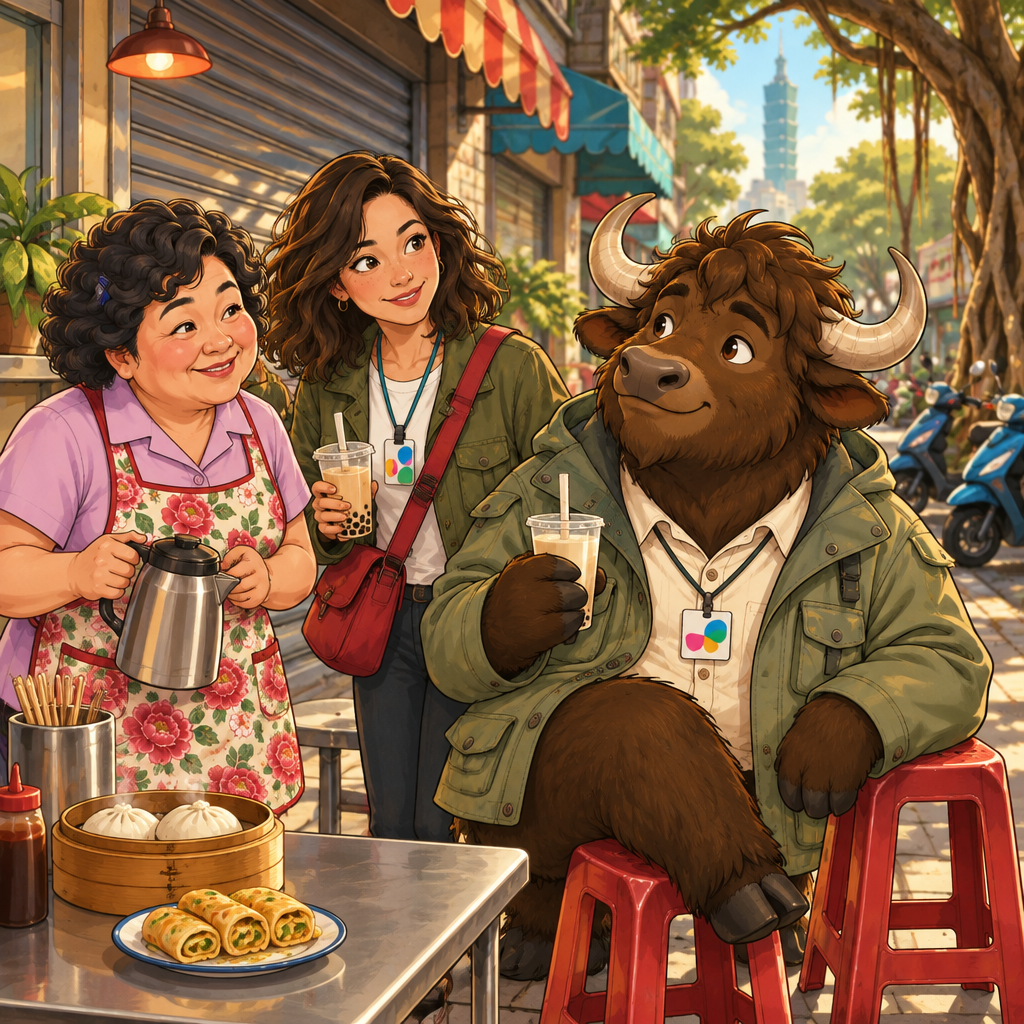
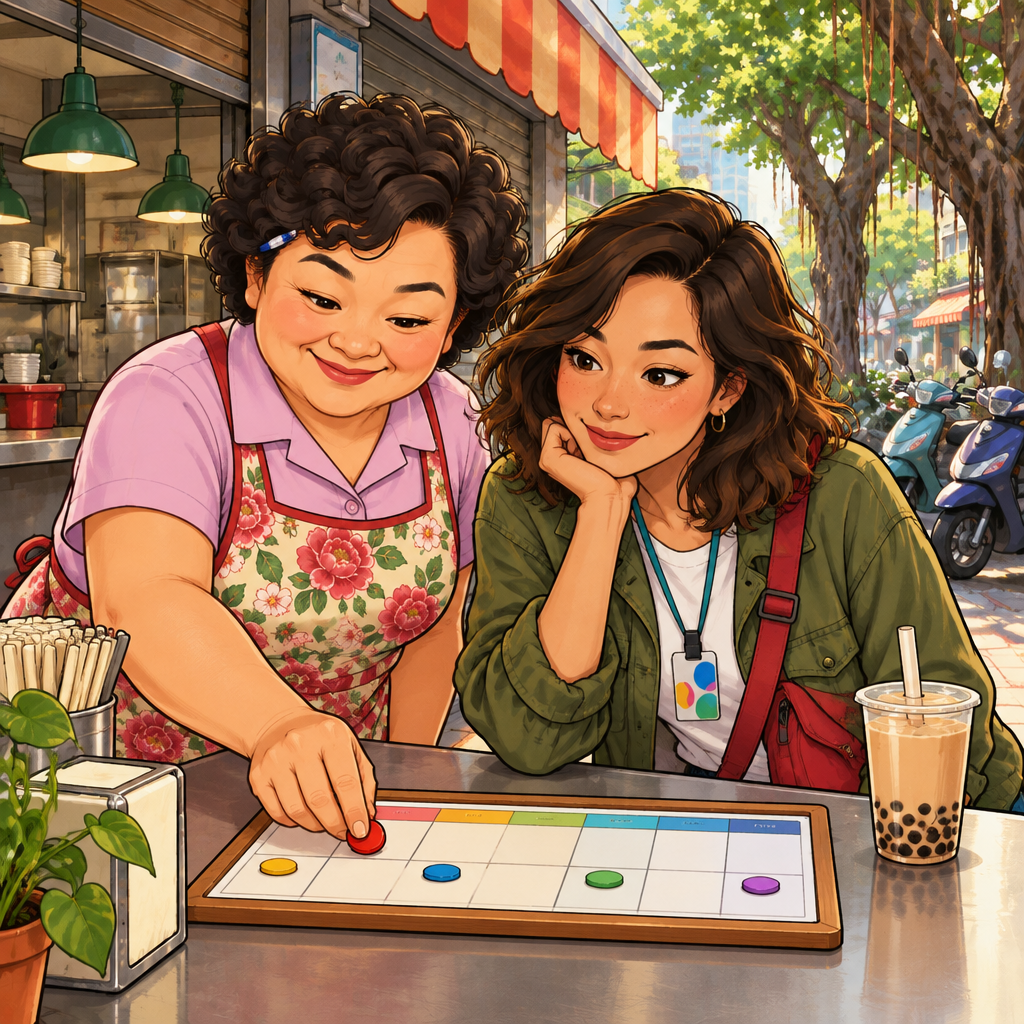
It is Monday morning outside Banyan Breakfast in Da'an. The shop is closed, but A-Li is waiting nearby with his soy milk still unfinished.
Maya asks what day it is, and Auntie Lin explains the shop's schedule. The old fortune slip stays folded in the till.
Learn — today and weekdays
Here are useful words for asking the day and talking about time. Listen to each line, then say it aloud.
You will hear 星期 and 禮拜 in weekday names. Both are natural ways to talk about the days of the week.
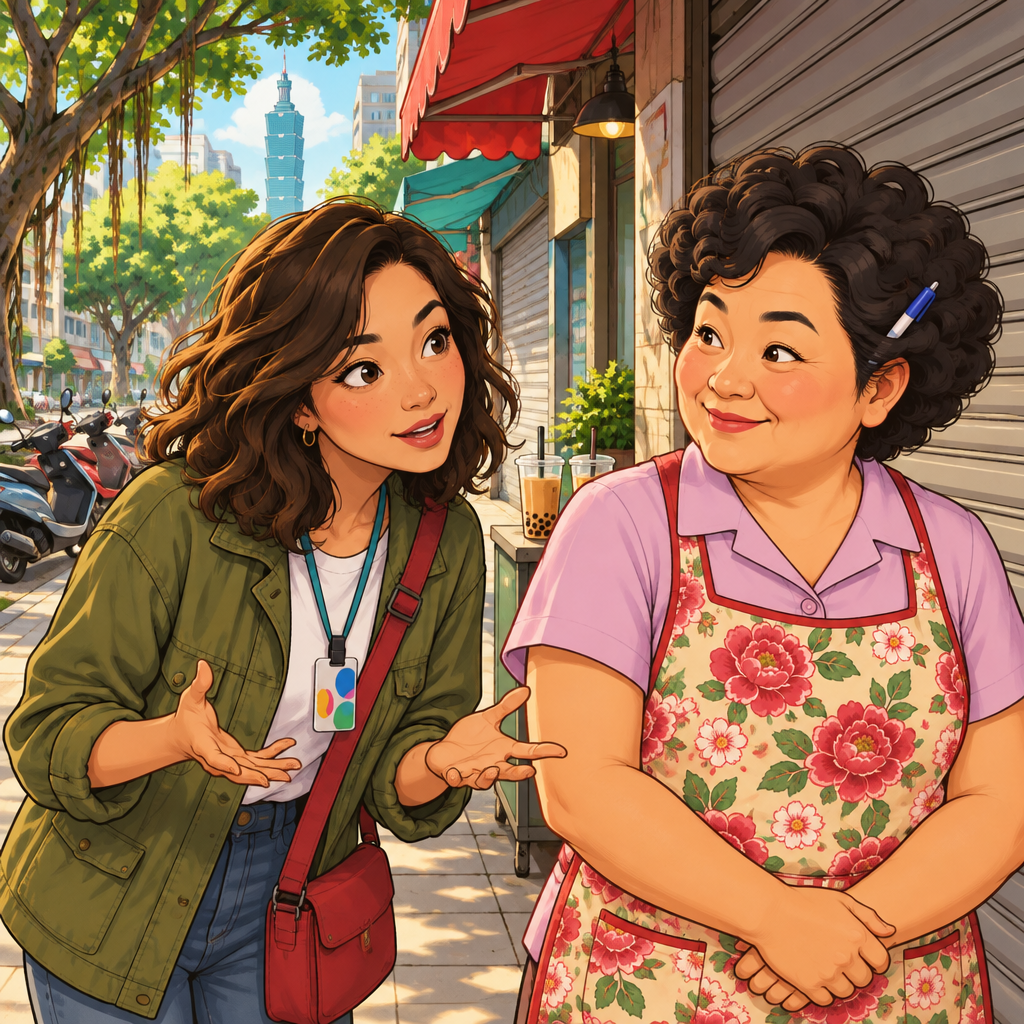
今天星期幾?
What day of the week is it today?
When to use it: Ask this when you want to know today's weekday.
Learn it as one piece.
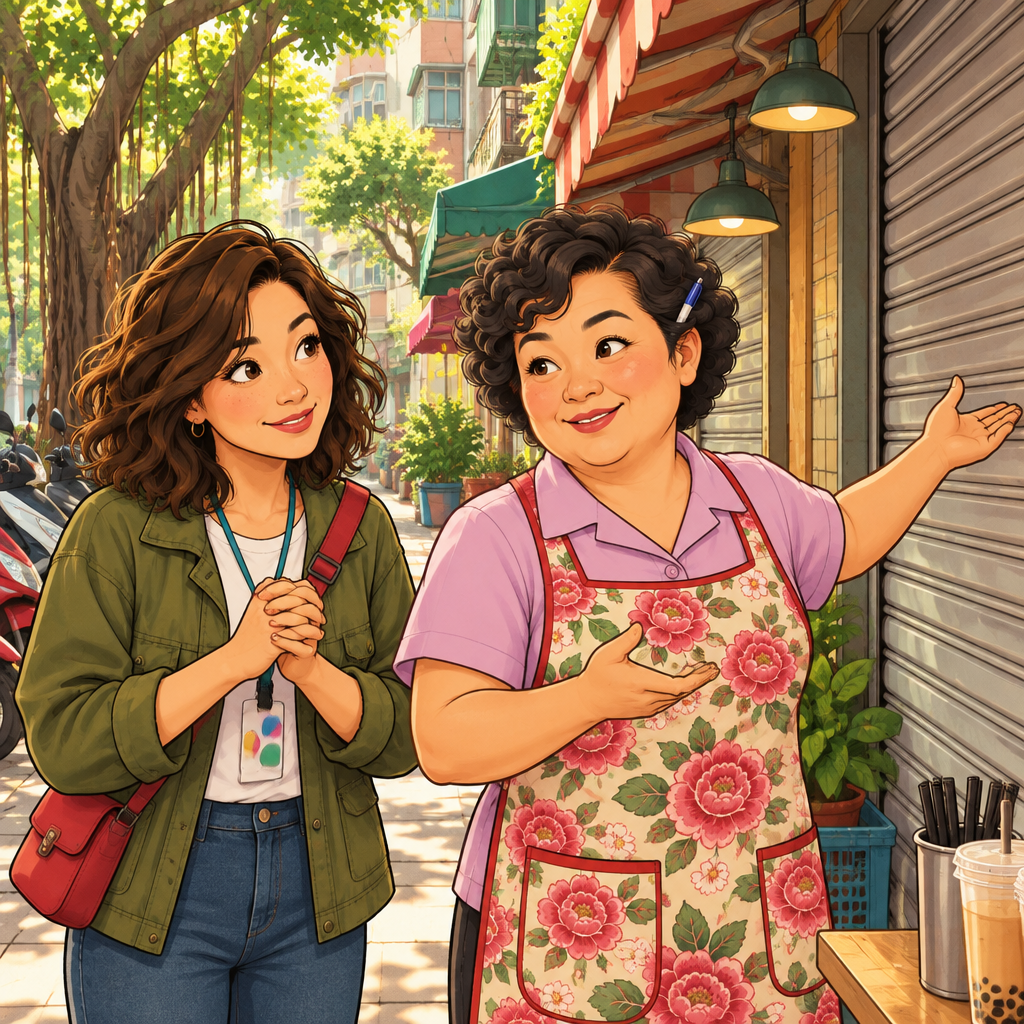
星期一
Monday.
When to use it: Use this to name Monday.
Learn it as one piece.
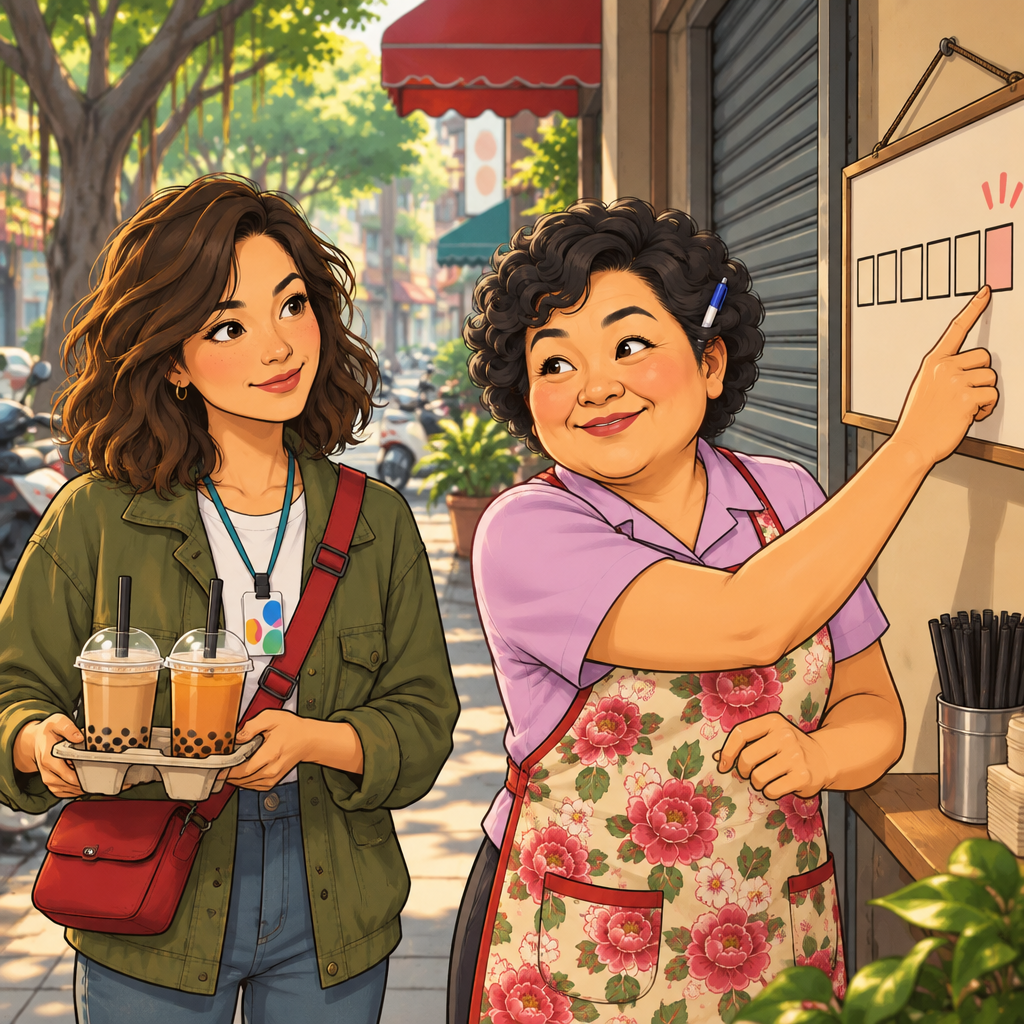
禮拜五
Friday.
When to use it: Use this to name Friday.
Learn it as one piece.
今天
Today.
When to use it: Use this to talk about the current day.
Learn it as one piece.

明天
Tomorrow.
When to use it: Use this to talk about the next day.
Learn it as one piece.

昨天
Yesterday.
When to use it: Use this to talk about the day before today.
Learn it as one piece.
Story — A-Li arrives on Monday
A-Li arrives at Banyan Breakfast on the day the shop closes. Maya asks the weekday, and Auntie Lin tells her when the shop is open.
The old fortune slip stays folded in the till, and A-Li's soy milk is not finished.
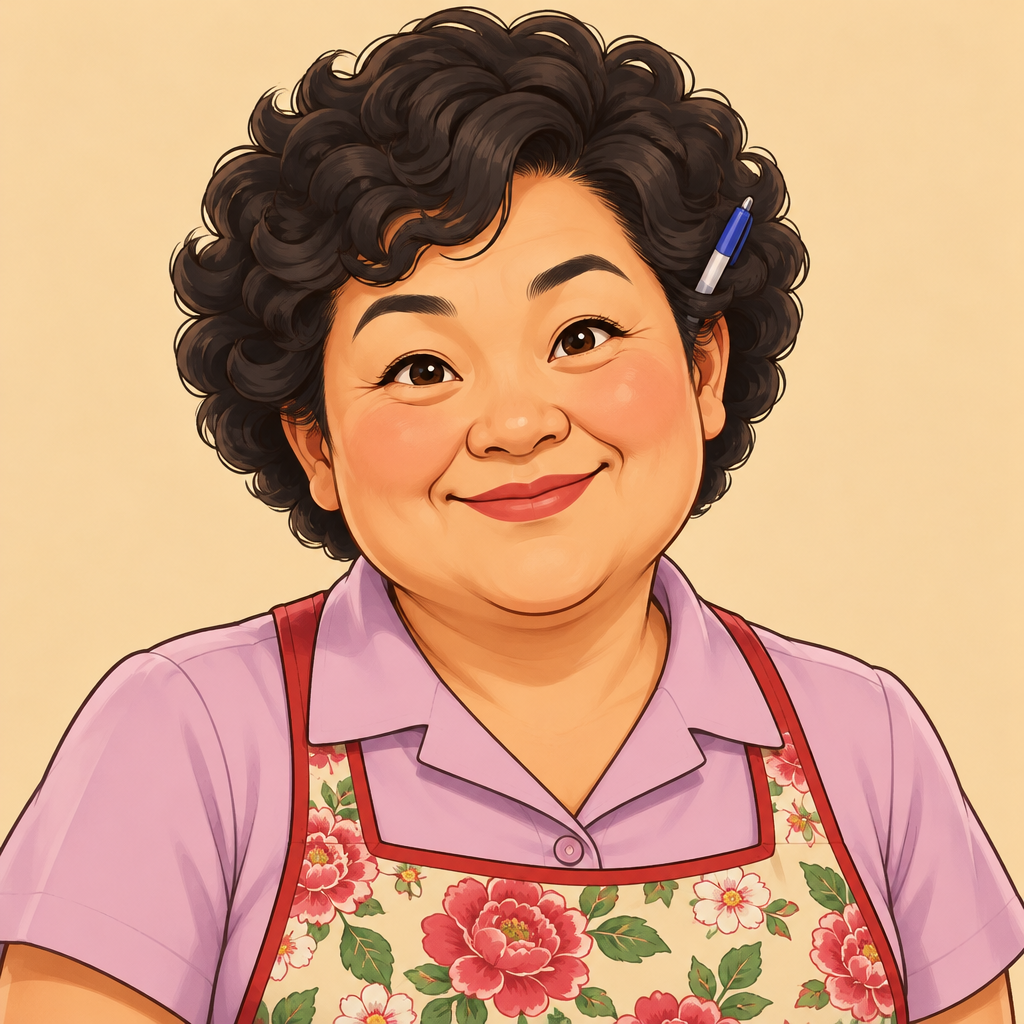 Auntie Lin早安,美女。Good morning, beautiful.
 Maya今天星期幾?What day of the week is it today?
- Auntie Lin星期一。Monday.
- Auntie Lin對啊,今天店休。Right, the shop is closed today.
 A-Li昨天也來了。I came yesterday too.
- A-Li明天我再來。I'll come again tomorrow.
- Auntie Lin禮拜五開喔。We're open on Friday.
- Maya禮拜五見?See you Friday?
- A-Li好,禮拜五見。Okay, see you Friday.
Practice — talk about days
Try eleven quick exercises about today, tomorrow, yesterday, and two weekdays. Listen, choose a reply, and build the question.
Check each explanation, then say the answer aloud before moving on.
0 of 11 done
What does it mean?
What does it mean?
今天星期幾?
What do you say?
What do you say?
Auntie Lin asks what day it is. Answer that it is Monday.
Match the pairs
Traditional Chinese
禮拜五Drop the English here今天Drop the English here明天Drop the English here昨天Drop the English hereEnglish
What did you hear?
What did you hear?
What do you say?
What do you say?
Auntie Lin asks which day you are coming. Say you will come today.
Fill the gap
Fill the gap
What day of the week is it today?
今天____?
Build the line
Build the line
What day of the week is it today?
?
Tap the words in order.
What do you say?
What do you say?
Say that the day before today was yesterday.
What did you hear?
What did you hear?
What does it mean?
What does it mean?
早安
What do you say?
What do you say?
You are leaving the shop and will see Auntie Lin tomorrow. Say goodbye.
Say it — your week
You play Maya outside Banyan Breakfast on Monday. Listen to the other person, then answer with the day or weekday that fits.
Speak each answer aloud. The shop is closed today, but you can still make plans for later in the week.
- Maya arrives outside the closed breakfast shop on Monday.
- Auntie Lin今天星期幾?What day of the week is it today?
- Maya (you)Answer that it is Monday.
Answer that it is Monday.
星期一
Monday.
0 of 4 said
Recap — what you can say now
| Traditional Chinese | English | Play |
|---|---|---|
| 今天星期幾? | What day of the week is it today? | |
| 星期一 | Monday. | |
| 禮拜五 | Friday. | |
| 今天 | Today. | |
| 明天 | Tomorrow. | |
| 昨天 | Yesterday. |
Save your progress — it’s free
Keep your place in the course and see which lines you’ve learned.
Want the next lesson in your inbox?
Get the next lesson by email, one a day.
Join the newsletterDaily lesson emails are coming soon. Newsletter subscribers get them first.
Keep practicing with Yak Cards
Today's weekdays and time words are in Yak Cards with more useful lines for everyday plans.
Review a few day words each day so you can make simple plans.
Open Yak Cards