
New here? This is lesson 118 of a free 240-lesson Traditional Chinese course.
This weekend in Traditional Chinese
Friday is almost here, and A-Jie wants to know how Maya will spend the weekend.
She plans to visit his night-market stall, while Yi-Jun suggests a bike ride if the weather stays nice.
Learn to ask about weekend plans, describe what you intend to do, and share usual activities. Then practise asking someone else what they normally do.
The conversation stays ordinary: A-Li is nearby with his soy milk, still unfinished, and the folded slip remains unexplained.
By the end of this lesson
Ask about someone's weekend plans, say what you plan to do, and describe usual weekend activities.
- 你這週末有安排嗎?Do you have plans this weekend?
- 我這週末要去夜市This weekend I'm going to the night market.
- 天氣不錯,所以我們去騎車The weather is good, so we're going riding.
- 你週末通常都做什麼?What do you usually do on weekends?
- 我在家看影片I'm watching videos at home.
- 我們在餐廳吃晚餐We're having dinner at a restaurant.
Scene — a Friday conversation
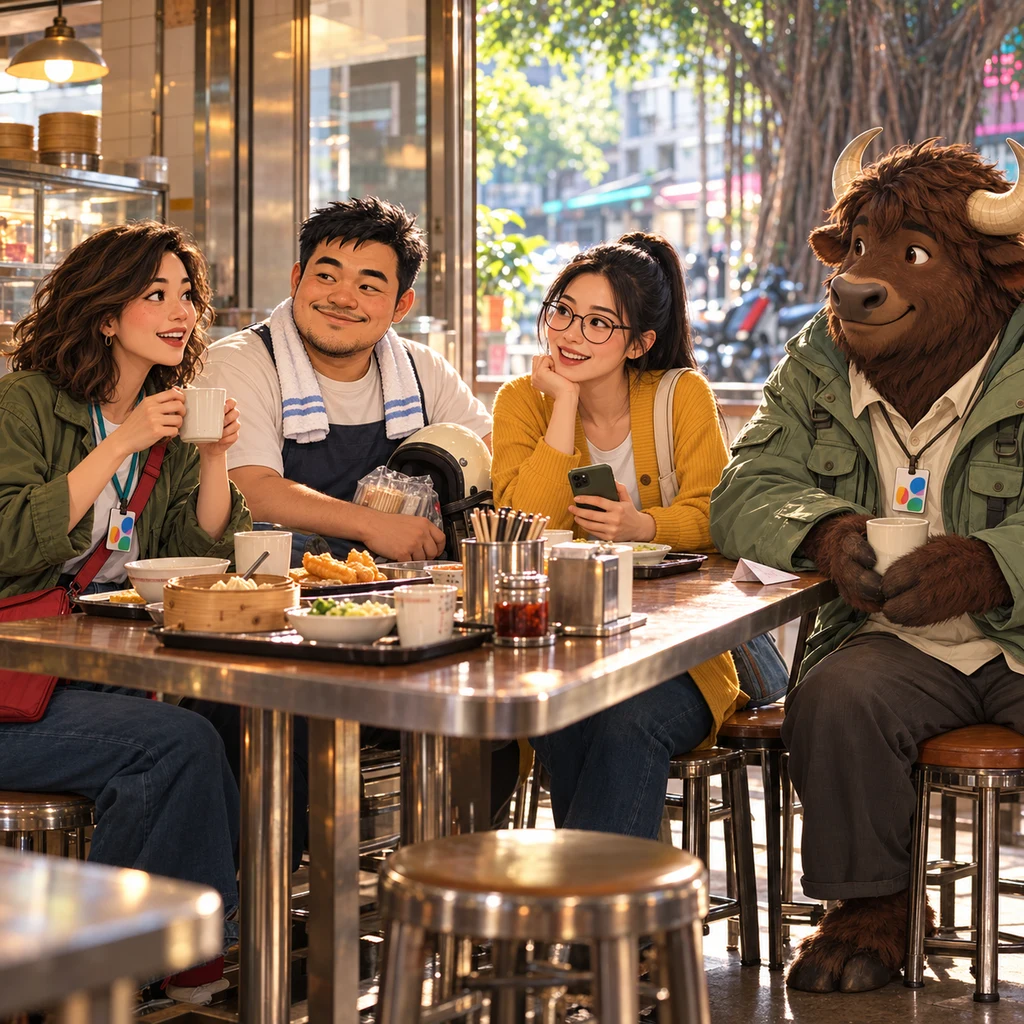
On Friday, Maya, A-Jie, and Yi-Jun chat at Banyan Breakfast in Da'an. A-Jie is getting ready for his Saturday-night stall at the night market.
They talk about plans and usual routines. A-Li sits nearby with his soy milk, which is still unfinished; the folded fortune slip stays a mystery.
Learn — weekend plans and routines
These six lines help you ask about weekend plans, describe what you intend to do, and talk about regular activities.
Notice how 在家 and 在餐廳 show where an activity happens.

你這週末有安排嗎?
Do you have plans this weekend?
When to use it: Ask someone whether they have plans for the coming weekend.
嗎 turns this statement into a yes-or-no question.

我這週末要去夜市
This weekend I'm going to the night market.
When to use it: Say this when sharing a plan for the coming weekend.
要 before an action can show a plan or intention.

天氣不錯,所以我們去騎車
The weather is good, so we're going riding.
When to use it: Use this to give the weather as a reason for going riding.
所以 introduces what follows as the result of the earlier reason.
Say it: 不 changes to a rising tone before the fourth-tone word 錯.

你週末通常都做什麼?
What do you usually do on weekends?
When to use it: Ask about someone's usual weekend routine.
通常 means usually and points to a regular habit.

我在家看影片
I'm watching videos at home.
When to use it: Say this to describe watching videos at home.
在家 comes before the activity to show where it happens.

我們在餐廳吃晚餐
We're having dinner at a restaurant.
When to use it: Say this when describing a dinner plan at a restaurant.
在餐廳 tells where the group is having dinner.
Story — plans around the night market
On Friday, A-Jie asks Maya about her weekend at Banyan Breakfast. Yi-Jun has an idea for Sunday, too.
They also talk about ordinary routines and dinner plans. A-Li is nearby, and his soy milk is still unfinished.
 A-Jie你這週末有安排嗎?Do you have plans this weekend?
 Maya我這週末要去夜市This weekend I'm going to the night market.
- A-Jie週六晚上來我的攤位吧。Come by my stall on Saturday night.
- Maya好喔,我會去找你。Sure, I'll come find you.
 Yi-Jun星期天一起去騎車吧?Want to go riding together on Sunday?
- Maya天氣不錯,所以我們去騎車The weather is good, so we're going riding.
- A-Jie你週末通常都做什麼?What do you usually do on weekends?
- Maya我在家看影片I'm watching videos at home.
- Yi-Jun那今天晚上呢?What about tonight?
- Maya我們在餐廳吃晚餐We're having dinner at a restaurant.
 A-Li我的豆漿還沒喝完。I still haven't finished my soy milk.
Practice — talk about your weekend
Try ten exercises using plans, routines, and weekend activities. Listen carefully, choose a fitting response, and build a few lines from word tiles.
A couple of earlier greetings return for a quick review.
0 of 11 done
What does it mean?
What does it mean?
你這週末有安排嗎?
What do you say?
What do you say?
A-Jie asks whether you have plans this weekend. Tell him you are going to the night market.
Build the line
Build the line
The weather is good, so we're going riding.
,
Tap the words in order.
Fill the gap
Fill the gap
This weekend I'm going to the night market.
我這週末要去____
What did you hear?
What did you hear?
Match the pairs
Traditional Chinese
我在家看影片Drop the English here我們在餐廳吃晚餐Drop the English here我這週末要去夜市Drop the English hereEnglish
Pick the reply
A-Jie says:
Pick the reply
你週末通常都做什麼?
What do you usually do on weekends?
And you reply with:
Swap the word
Swap the word
Complete the line to say that you and a friend are having dinner at a restaurant.
我們在餐廳____晚餐
What do you say?
What do you say?
You greet Auntie Lin when you arrive at the breakfast shop in the morning.
Pick the reply
Auntie Lin says:
Pick the reply
你好嗎?
How are you?
And you reply with:
What do you say?
What do you say?
Auntie Lin asked how you are. You said you are good and thanked her. Now ask how she is, too.
Say it — make your own plans
You play Maya and talk with A-Jie and Yi-Jun about the weekend. Listen to each cue, then answer aloud with a plan or a usual activity.
Tap the microphone for your turns. A quick greeting and question for Auntie Lin give you a chance to review earlier lines, too.
 Auntie Lin早安!Good morning!
- Maya (you)Return Auntie Lin's morning greeting.
Return Auntie Lin's morning greeting.
早安
Good morning.
0 of 7 said
Recap — what you can say now
| Traditional Chinese | English | Play |
|---|---|---|
| 你這週末有安排嗎? | Do you have plans this weekend? | |
| 我這週末要去夜市 | This weekend I'm going to the night market. | |
| 天氣不錯,所以我們去騎車 | The weather is good, so we're going riding. | |
| 你週末通常都做什麼? | What do you usually do on weekends? | |
| 我在家看影片 | I'm watching videos at home. | |
| 我們在餐廳吃晚餐 | We're having dinner at a restaurant. |
Save your progress — it’s free
Keep your place in the course and see which lines you’ve learned.
Want the next lesson in your inbox?
Get the next lesson by email, one a day.
Join the newsletterDaily lesson emails are coming soon. Newsletter subscribers get them first.
Keep practicing with Yak Cards
Review these weekend plans and routines in Yak Cards.
Practise asking about plans and describing a usual weekend until the lines feel familiar.
Open Yak Cards