
New here? This is lesson 235 of a free 238-lesson Spanish course.
Free Spanish CourseLesson 235 of 238
I'm sure about this much in Spanish
Justin sorts the strange evidence at Café Laurel: some details were right in front of him, while others reached him through several people.
This lesson helps you sound precise instead of overconfident. You'll say what you're sure of, what you'd need to verify, and what you wouldn't swear to.
Yako and Michael have heard enough versions of the story to test every level of certainty.
By the end of this lesson
Express different levels of certainty about what you saw, heard, or inferred.
- De eso sí estoy seguroThat, I'm sure of.
- Hasta donde sé, ___As far as I know, ___.
- No lo juraríaI wouldn't swear to it.
- Habría que verloWe'd have to see it.
- Lo digo en serioI mean that.
- Puede que me equivoqueI might be wrong.
Scene — what Justin knows
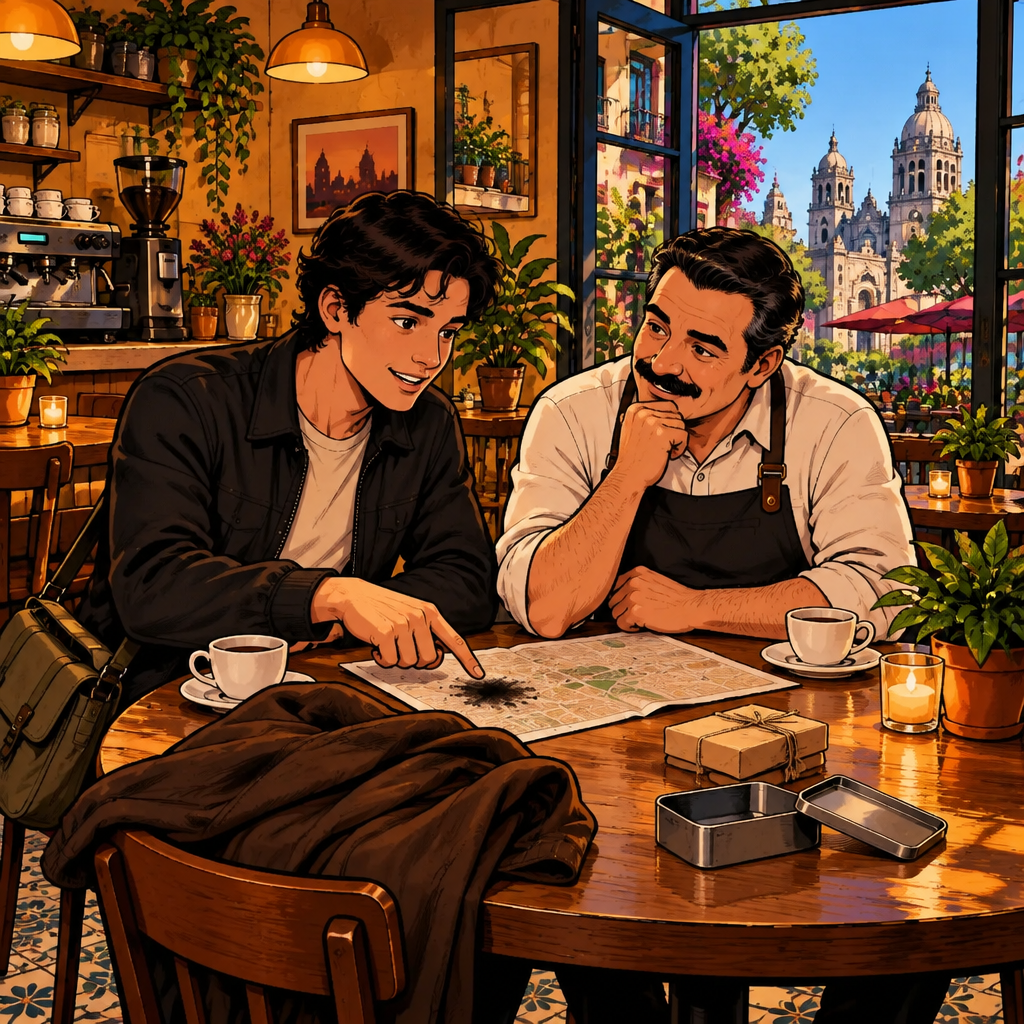
Late afternoon at Café Laurel, after Justin has compared notes with Michael and Yako. A coat, an empty tin, and a dark smudge are still on the table.
The three are separating what someone directly observed from what was repeated by other people. Yako is keeping one wrapped object safe on his two chairs.
Learn — certainty and doubt
These six chunks let you separate firm observation from secondhand information without sounding evasive.
You'll also practice a serious emphasis and a polite way to admit that you could be mistaken.

De eso sí estoy seguro
That, I'm sure of.
When to use it: Use this to mark one detail as certain, especially after comparing it with less reliable information.
Sí adds firm emphasis here; the phrase sounds more deliberate than a bare estoy seguro.
Say it: Stress sí and seguro: SEE eh-soh see es-TOY seh-GOO-roh.
Hasta donde sé, ___
As far as I know, ___.
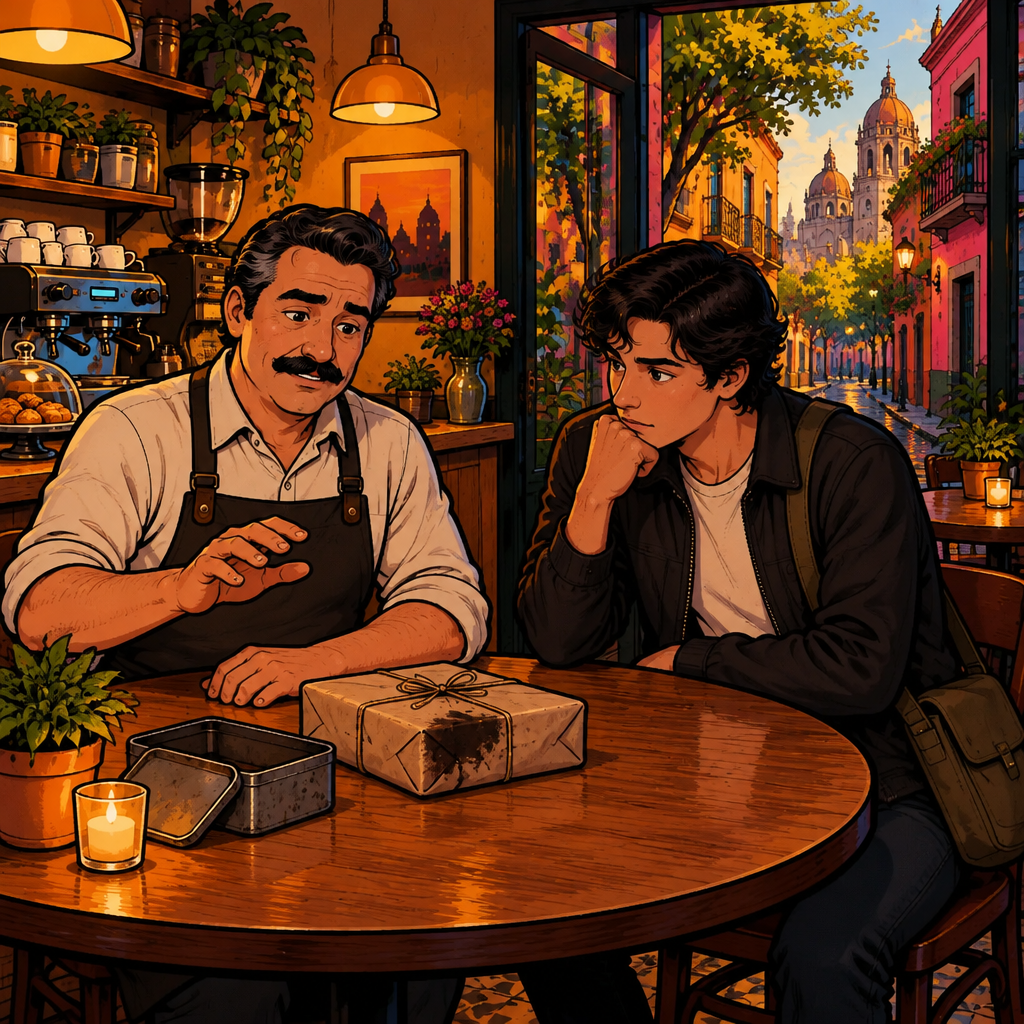
When to use it: Use this to limit a statement to the information currently available to you.
It signals a responsible limit, not necessarily uncertainty about every word that follows.
Say it: Keep sé clear and stressed: AH-stah DON-deh SEH.

No lo juraría
I wouldn't swear to it.
When to use it: Say this when a claim may be true but you don't want to guarantee it.
Mexican Spanish uses this naturally for secondhand information or a memory you cannot verify.
Say it: The stress falls on rí-a: no lo hoo-rah-REE-ah.
Habría que verlo
We'd have to see it.
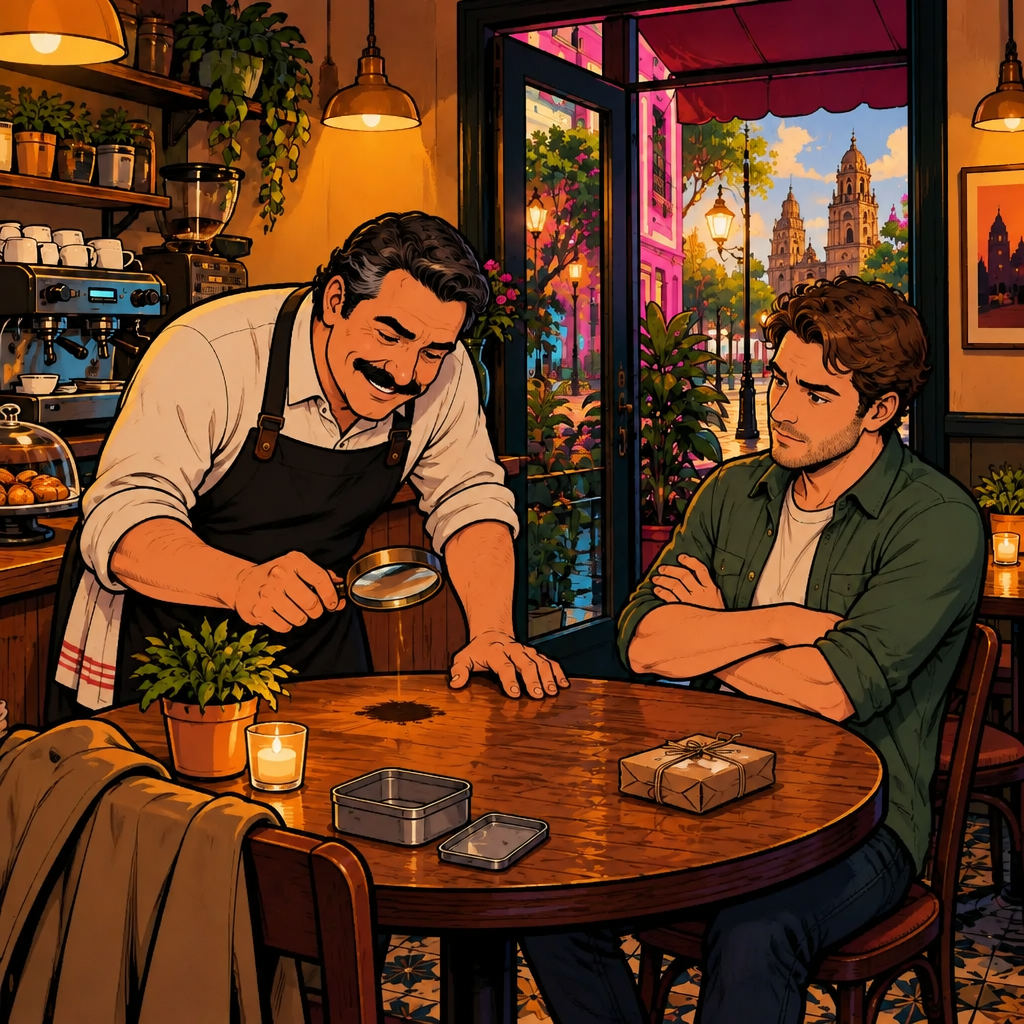
When to use it: Use this when evidence or a real test would be needed before reaching a conclusion.
It is a measured alternative to saying yes or no when the result remains open.
Say it: Habría has stress on í-a: ah-bree-AH keh BEHR-loh.

Lo digo en serio
I mean that.
When to use it: Say this to underline that your statement is sincere rather than a joke or exaggeration.
It can sound emphatic, so use it when the seriousness actually matters.
Say it: Link lo digo smoothly: loh DEE-goh en SEH-ryoh.
Puede que me equivoque
I might be wrong.
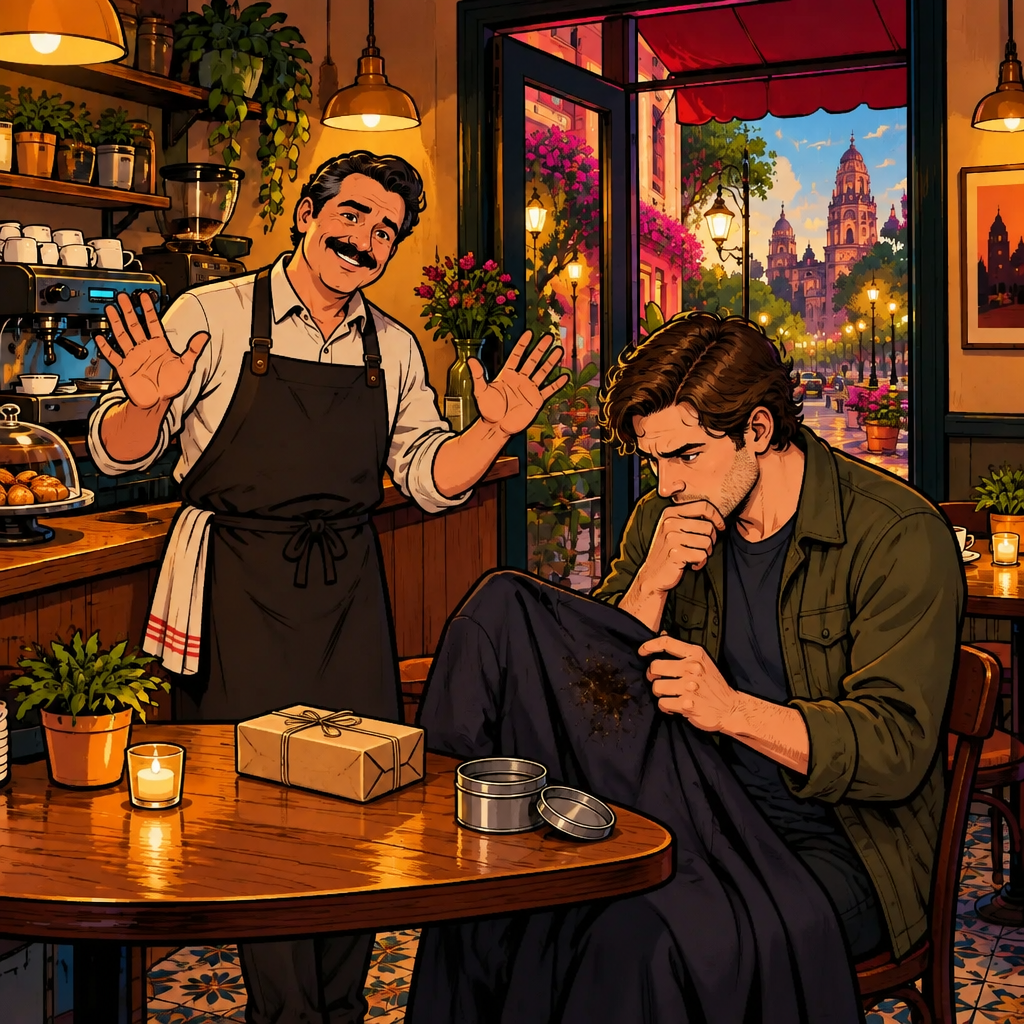
When to use it: Use this to acknowledge a genuine possibility that your interpretation is mistaken.
Puede que normally introduces a possibility and takes the subjunctive, equivoque.
Say it: Equivoque ends like EH-kee-VOH-keh, with no English kw sound.
Story — what was seen and heard
Listen for how Justin separates direct evidence from reports passed between other people.
The highlighted lines show certainty, caution, and seriousness. The object Yako is protecting remains unexplained for now.
- Justin points first to the coat, the empty tin, and the smudge on the table.
 Michael¿Qué cosas viste tú?What things did you see yourself?
 JustinDe eso sí estoy seguro: el abrigo estaba aquí.That, I'm sure of: the coat was here.
- Michael¿Y el tin vacío?And the empty tin?
- JustinHasta donde sé, Michael lo cerró vacío.As far as I know, Michael locked it empty.
- MichaelEso sí: lo cerré yo, y no tenía nada.That part is true: I locked it, and it had nothing inside.
 Yako¿Y la mancha?And the smudge?
- JustinLa vi en la mesa. De eso sí estoy seguro.I saw it on the table. That, I'm sure of.
- YakoMe enteré de que había una profecía por otra persona. No lo juraría.I heard from someone else that there was a prophecy. I wouldn't swear to it.
- JustinNo estoy seguro de si es cierto; pasó por demasiadas personas.I'm not sure it's true; it passed through too many people.
- MichaelEntonces, ¿la confesión también es un rumor?So is the confession also a rumor?
- JustinPuede que me equivoque, pero no lo juraría.I might be wrong, but I wouldn't swear to it.
- Yako¿La confesión ocurrió de verdad?Did the confession really happen?
- JustinHabría que verlo; yo solo escuché la versión de alguien más.We'd have to see it; I only heard someone else's version.
- Michael¿Estás hablando en serio?Are you serious?
- JustinLo digo en serio: separo lo que vi de lo que oí.I mean that: I'm separating what I saw from what I heard.
Practice — weigh the evidence
The exercises mix listening, context, missing words, and evidence checks.
Choose the line that matches the strength of the claim, not merely one that sounds familiar.
0 of 11 done
What did you hear?
What did you hear?
Match the pairs
Spanish
De eso sí estoy seguroDrop the English hereHasta donde sé, ___Drop the English herePuede que me equivoqueDrop the English hereEnglish
What do you say?
What do you say?
You personally saw the smudge on the table, so you can state that detail firmly.
Fill the gap
Fill the gap
As far as I know, ___.
Hasta donde ____, ___
What does it mean?
What does it mean?
Me enteré de que ___
Pick the reply
Michael says:
Pick the reply
¿La confesión ocurrió de verdad?
Did the confession really happen?
And you reply with:
True or false?
True or false?
This line says you are completely certain that the report is true.
What do you say?
What do you say?
Someone thinks you're joking, but you want to stress that your distinction between seeing and hearing is sincere.
Build the line
Build the line
I might be wrong.
Tap the words in order.
Which one doesn’t belong?
Which one doesn’t belong?
What did you hear?
What did you hear?
Say it — state your limits
Now take Justin's part as Michael and Yako ask about the evidence. Use the microphone for each learner turn.
Tap ▶ to hear the model line first if you need it; your recording stays on your device.
- Michael¿Qué viste tú directamente?What did you see directly?
- Justin (you)State firmly what you are sure of.
State firmly what you are sure of.
De eso sí estoy seguro
That, I'm sure of.
0 of 5 said
Recap — what you can say now
| Spanish | English | Play |
|---|---|---|
| De eso sí estoy seguro | That, I'm sure of. | |
| Hasta donde sé, ___ | As far as I know, ___. | |
| No lo juraría | I wouldn't swear to it. | |
| Habría que verlo | We'd have to see it. | |
| Lo digo en serio | I mean that. | |
| Puede que me equivoque | I might be wrong. |
Save your progress — it’s free
Keep your place in the course and see which lines you’ve learned.
Want the next lesson in your inbox?
Get the next lesson by email, one a day.
Join the newsletterDaily lesson emails are coming soon. Newsletter subscribers get them first.
Keep practicing with Yak Cards
Want to keep these certainty chunks handy? Grab the Yak Cards for this lesson and review them anywhere.
Review the cards by sorting direct observations from reports you would not swear to.
Open Yak Cards