
New here? This is lesson 26 of a free 238-lesson Spanish course.
Free Spanish CourseLesson 26 of 238
Take the first turn in Spanish
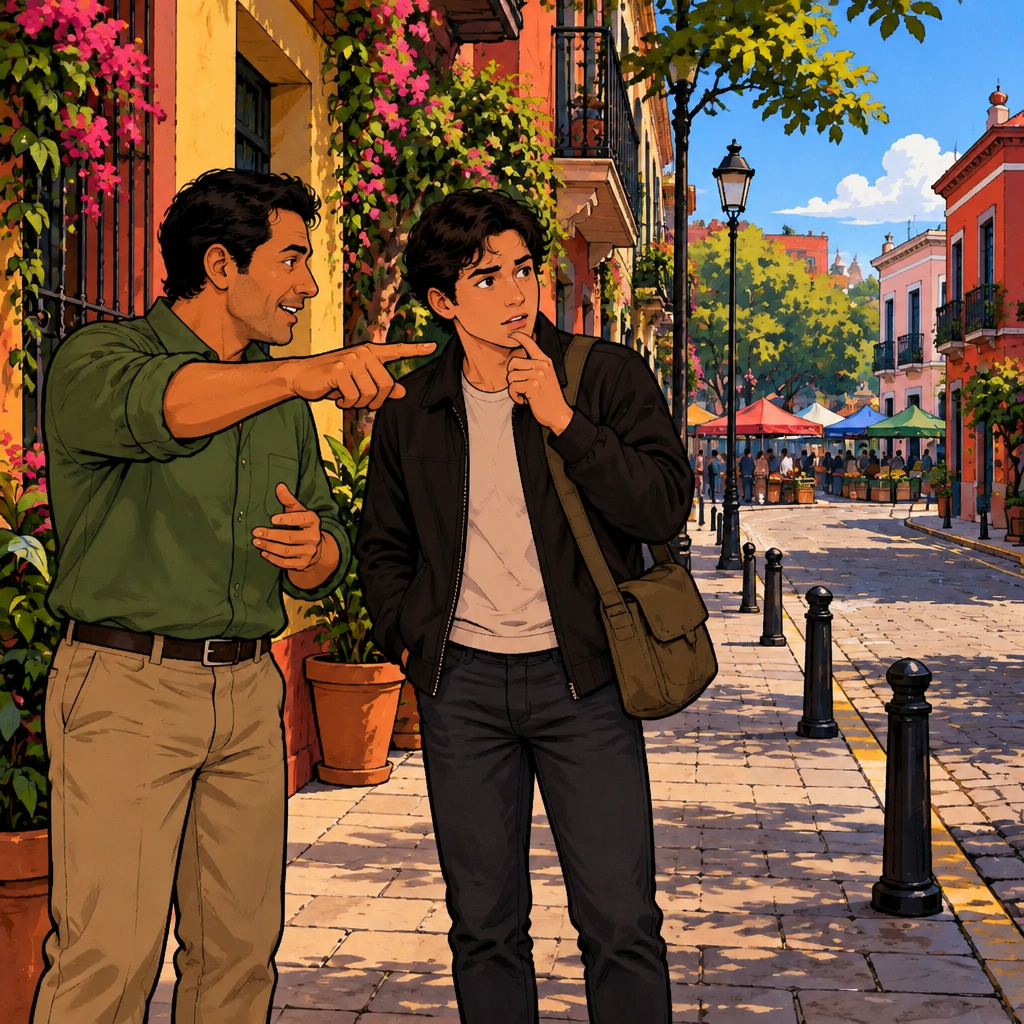
Justin is still talking to the stranger on the sidewalk. The first part of the route made sense, but there's another turn coming.
You'll learn to follow directions that include crossing a street, passing a landmark, and taking the first turn.
You'll also check where to turn. That's useful when someone's pointing confidently and two corners look exactly alike.
By the end of this lesson
Follow a longer route using landmarks and check where to turn.
- Ve hasta ___Go as far as ___
- Cruza ___Cross ___
- Pasa ___ de largoGo past ___
- Toma la primera ___Take the first ___
- ¿Doy vuelta en ___?Do I turn at ___?
- Está delante de ___It's in front of ___
Scene — One more corner
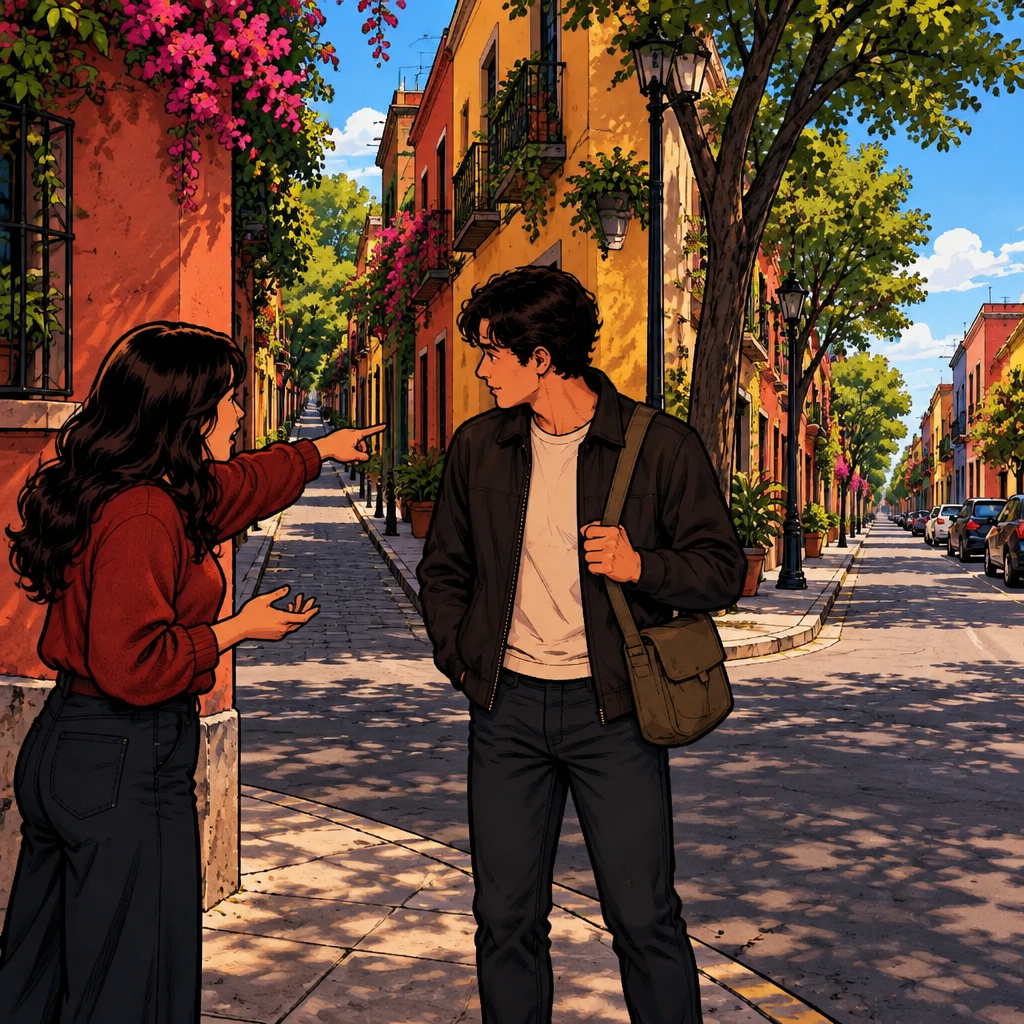
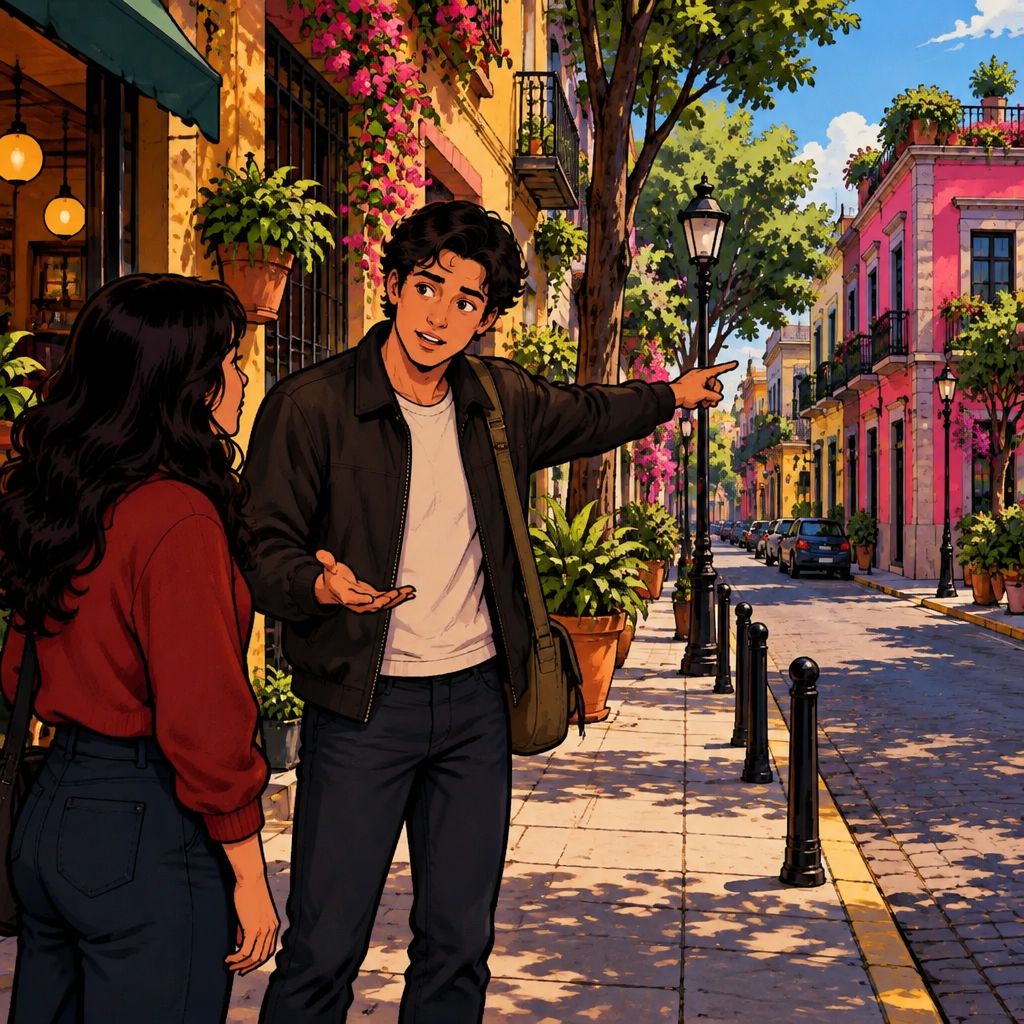
It's afternoon on a sidewalk in El Laurel. The same stranger is explaining the rest of Justin's route to the market.
Justin follows the pointing finger, then notices another corner that looks suspiciously similar.
Learn — Follow the landmarks
There are six lines to learn. Tap ▶ and say each one out loud.
Fill the blanks with landmarks; you don't need a whole map to practice.
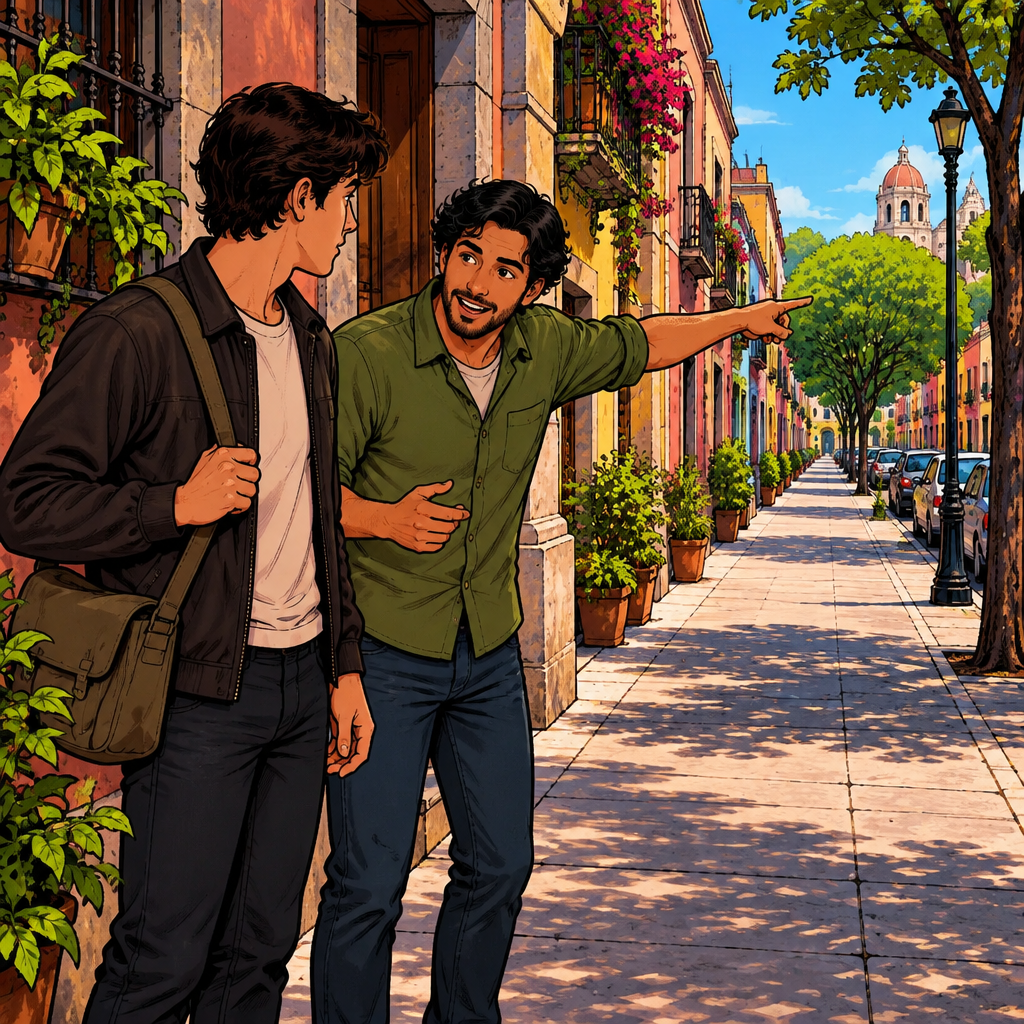
Ve hasta ___
Go as far as ___
When to use it: Tell someone which landmark to reach before the next step.
Fill the blank with a place, like la esquina.
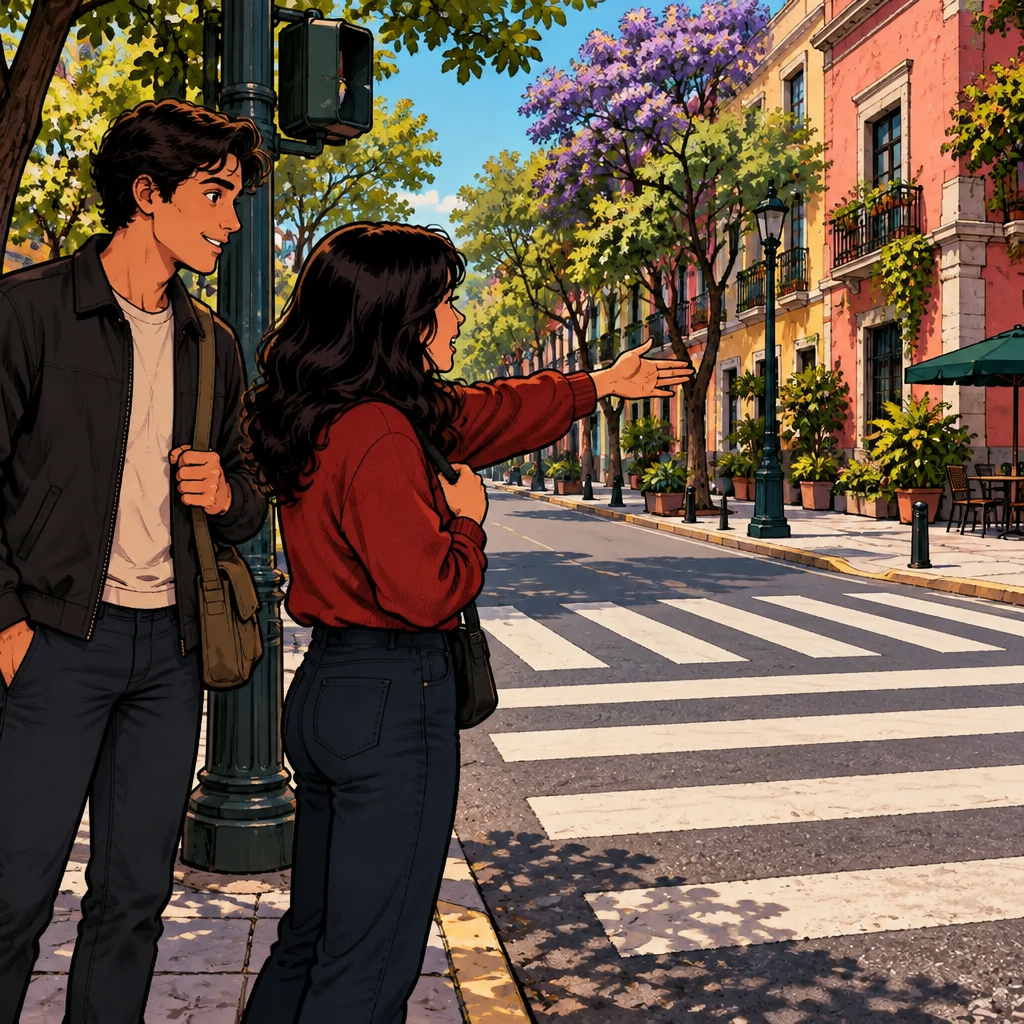
Cruza ___
Cross ___
When to use it: Tell someone to go across a street or another crossing.
Cruza la calle means cross the street.
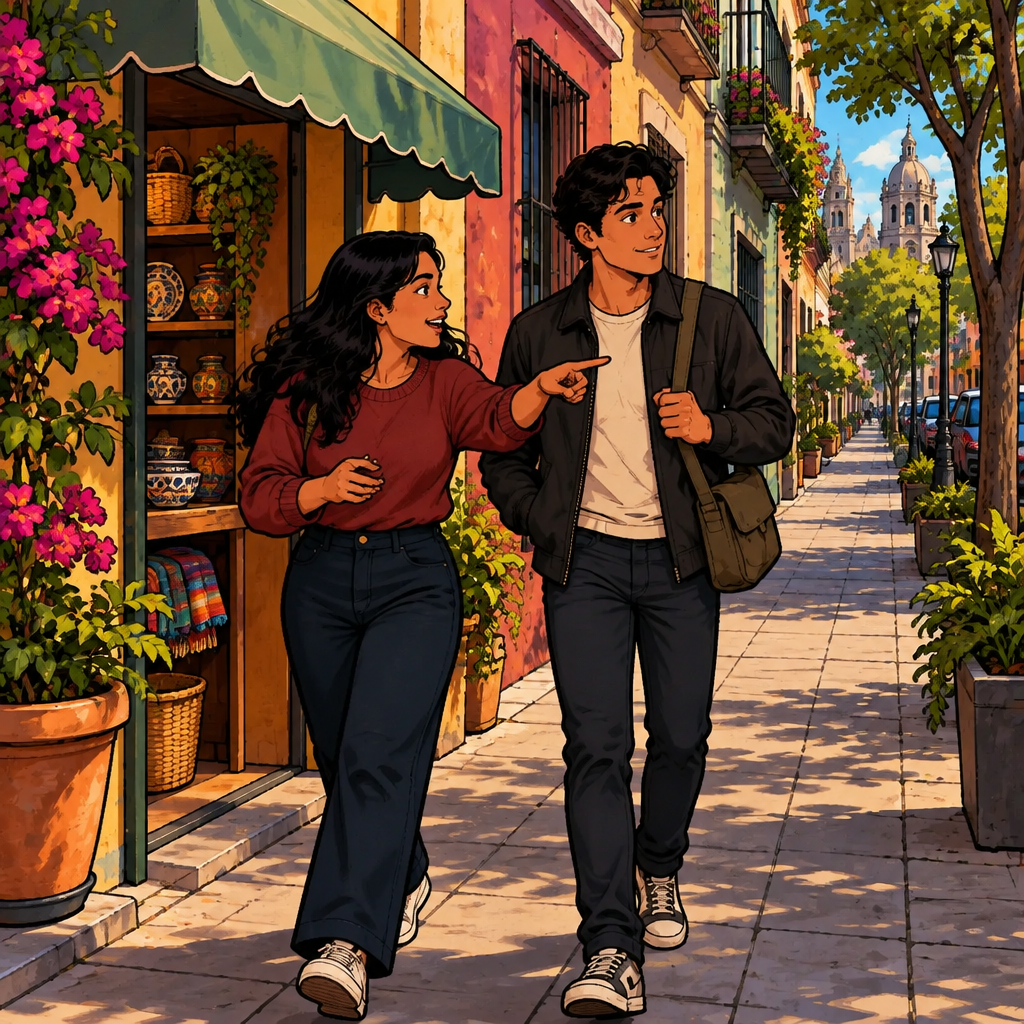
Pasa ___ de largo
Go past ___
When to use it: Tell someone to continue past a landmark without stopping there.
Put the landmark between pasa and de largo.
Toma la primera ___
Take the first ___
When to use it: Tell someone to take the first street or turn along the route.
Toma la primera calle means take the first street.
¿Doy vuelta en ___?
Do I turn at ___?
When to use it: Check the landmark where you should turn.
Fill the blank with a place, like esta esquina.

Está delante de ___
It's in front of ___
When to use it: Locate something in front of a landmark.
Delante de means in front of, not across the street from.
Story — Which turn?
Watch Justin repeat the turn instruction and then check the corner. The stranger also uses three location lines you've met before.
Follow the highlights, and use Show English if you need help.
- StrangerVe hasta Reforma.Go as far as Reforma.
- StrangerCruza la calle.Cross the street.
- StrangerPasa la farmacia de largo.Go past the pharmacy.
- The stranger points toward the first street on the right.
- StrangerToma la primera calle.Take the first street.
 JustinToma la primera calle.Take the first street.
- Justin points at the wrong corner. The stranger gently redirects his finger.
- Justin¿Doy vuelta en esta esquina?Do I turn at this corner?
- The stranger identifies the correct corner by the shop in front of it.
- StrangerEstá delante de la tienda.It's in front of the shop.
- Justin¿Y el mercado?And the market?
- StrangerEl mercado está enfrente de la farmacia.The market is across from the pharmacy.
Practice — Keep the route straight
Nine exercises help you separate crossing, passing, and turning. You'll also bring back three familiar location lines.
Keep trying, read the explanation, or use the skip button.
0 of 9 done
What did you hear?
What did you hear?
Match the pairs
Spanish
___ está enfrente de ___Drop the English here___ está detrás de ___Drop the English here___ está entre ___ y ___Drop the English hereEnglish
What do you say?
What do you say?
Tell someone to reach the park before following your next instruction.
Fill the gap
Fill the gap
Go past ___
Pasa ___ de ____
What does it mean?
What does it mean?
Está delante de ___
What do you say?
What do you say?
Someone must take the first street, not continue past it. Give that instruction.
True or false?
True or false?
This line asks whether you turn at a particular place.
Match the pairs
Spanish
Ve hasta ___Drop the English herePasa ___ de largoDrop the English hereToma la primera ___Drop the English hereEnglish
Pick the reply
Stranger says:
Pick the reply
Toma la primera calle.
Take the first street.
And you reply with:
Say it — Check before turning
Play Justin. The stranger speaks first; repeat the three route steps, then check the turn.
Tap the microphone to answer or ▶ for the model. Your recording stays on your device.
- StrangerVe hasta Reforma.Go as far as Reforma.
- Justin (you)Repeat the instruction to reach Reforma.
Repeat the instruction to reach Reforma.
Ve hasta ___
Go as far as ___
0 of 4 said
Recap — what you can say now
| Spanish | English | Play |
|---|---|---|
| Ve hasta ___ | Go as far as ___ | |
| Cruza ___ | Cross ___ | |
| Pasa ___ de largo | Go past ___ | |
| Toma la primera ___ | Take the first ___ | |
| ¿Doy vuelta en ___? | Do I turn at ___? | |
| Está delante de ___ | It's in front of ___ |
Save your progress — it’s free
Keep your place in the course and see which lines you’ve learned.
Want the next lesson in your inbox?
Get the next lesson by email, one a day.
Join the newsletterDaily lesson emails are coming soon. Newsletter subscribers get them first.
Keep practicing with Yak Cards
Keep the route instructions handy with Yak Cards. Practice one landmark at a time.
Picture a familiar street and say the steps out loud before your next walk.
Open Yak Cards