
New here? This is lesson 177 of a free 238-lesson Spanish course.
Free Spanish CourseLesson 177 of 238
Then it went sideways in Spanish
Yesterday Justin and Yako took a bus to Coyoacán, and things went sideways: a breakdown, sudden rain, and a street nobody recognized.
This lesson gives you the chunks that carry the middle of a story: all of a sudden, we didn't know what to do, good thing, we had to, in the end, but anyway.
You'll use them to tell how a plan fell apart and still finished fine.
By the end of this lesson
Tell the middle of a story when something unexpected happens and then it's okay.
- De repente, ___All of a sudden, ___
- No sabíamos qué hacerWe didn't know what to do
- Menos mal que ___Good thing ___
- Al final, ___In the end, ___
- Nos tuvimos que ___We had to ___
- Pero buenoBut anyway
Scene — rain outside the window
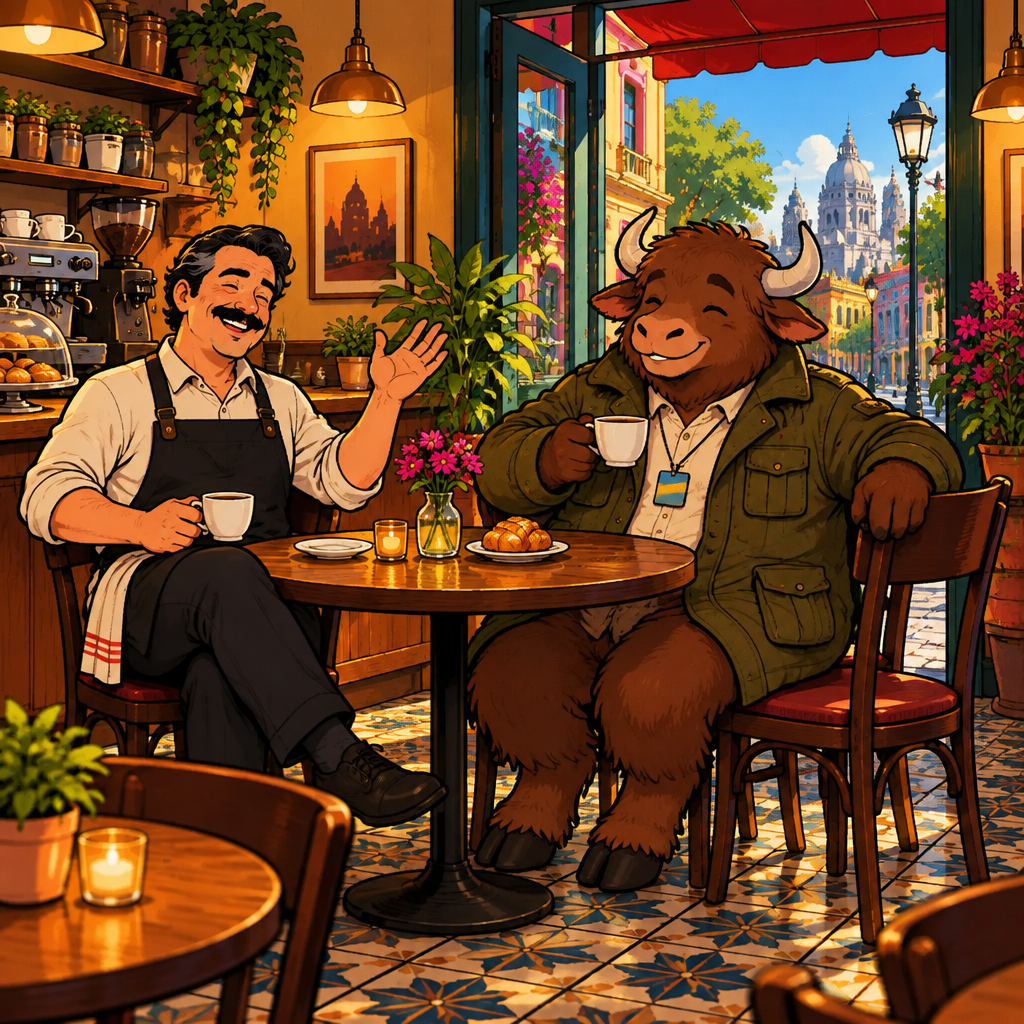
Café Laurel the next morning. Rain taps on the window, which suits the story perfectly.
Amanda has just sat down with her coffee and wants to hear everything about yesterday's trip to Coyoacán. Yako is already comfortable on his two chairs.

Learn — the middle of a story
Six chunks, all about the middle of a story. Four of them are frames, so you'll fill the blank with whatever happened to you.
Notice the imperfect in No sabíamos: it sets the scene before things got resolved.
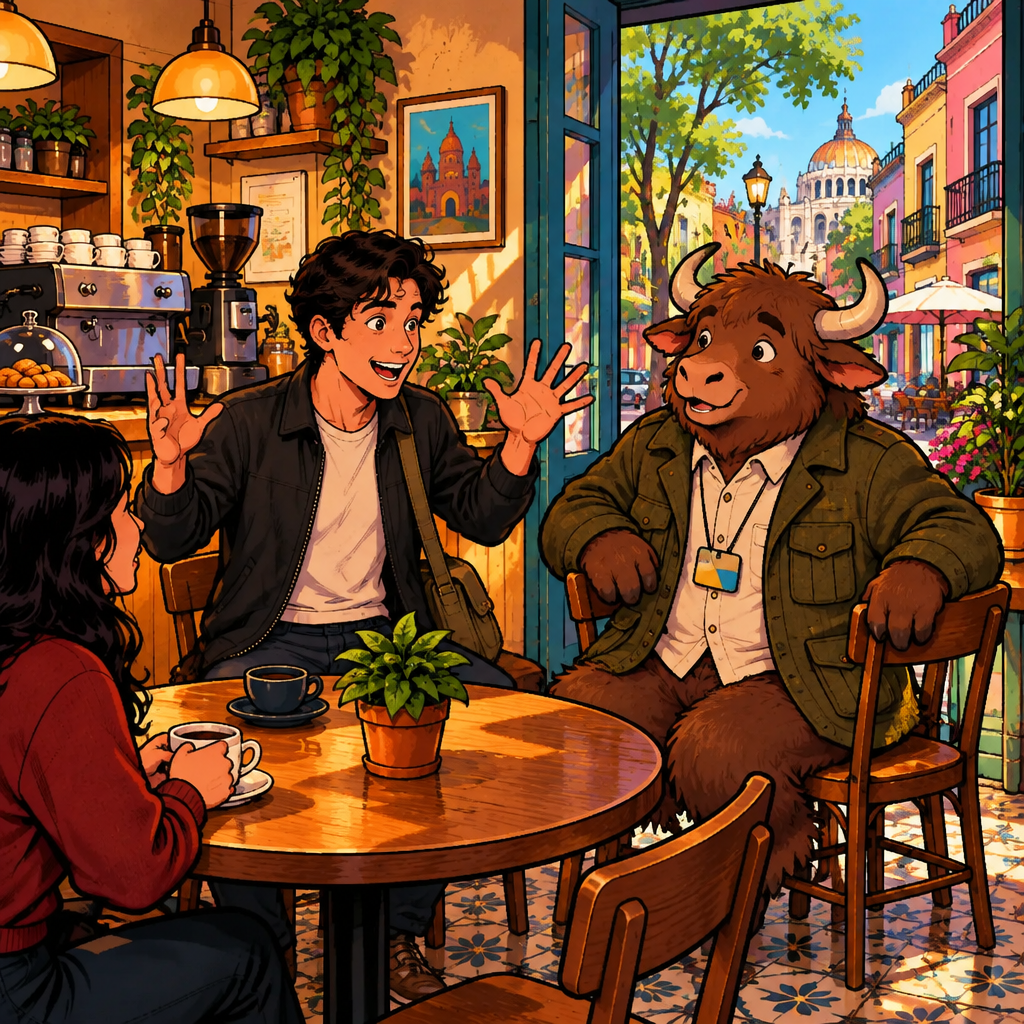
De repente, ___
All of a sudden, ___
When to use it: Say this to jump into the moment something unexpected happened.
De repente always pushes the story forward into a surprise.
Say it: The d in repente is soft, almost tapped.
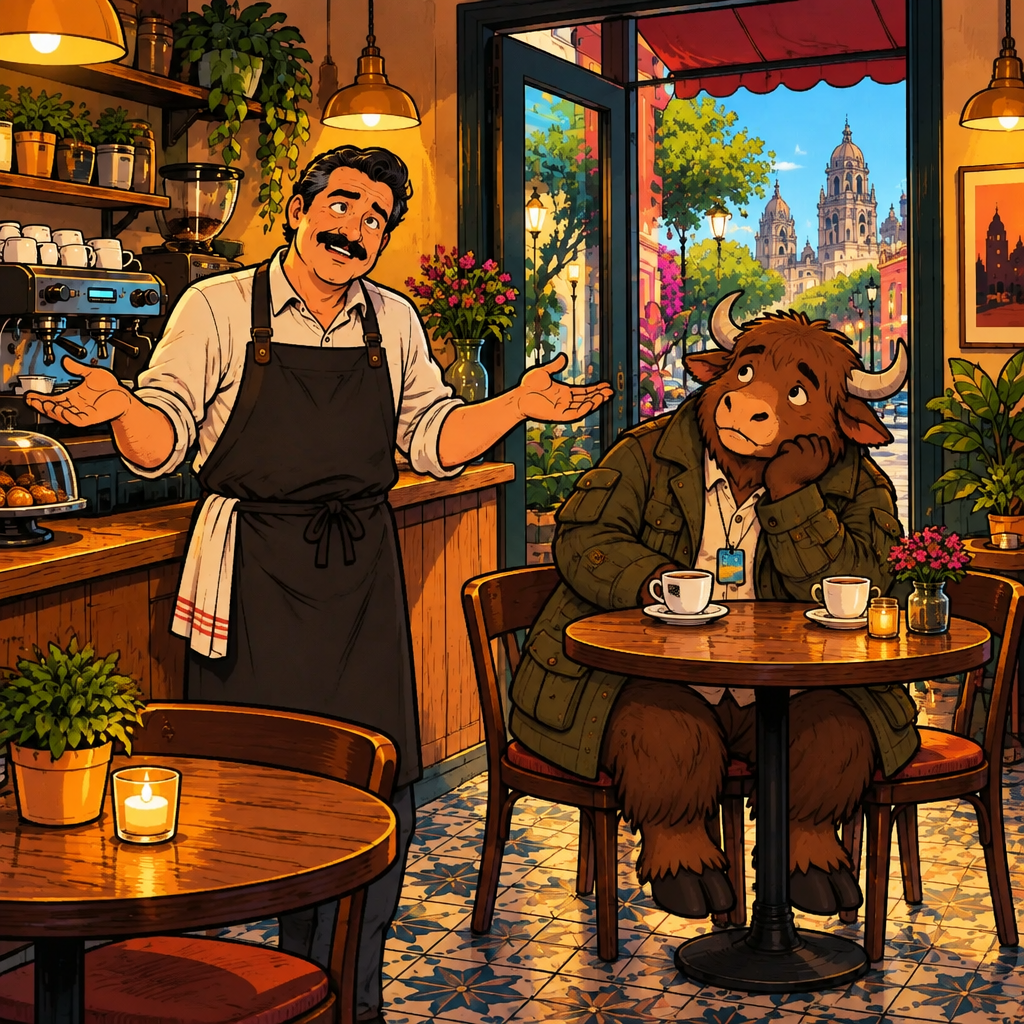
No sabíamos qué hacer
We didn't know what to do
When to use it: Say this at the low point, when you and your group were stuck.
Sabíamos is imperfect, the tense for background situations.
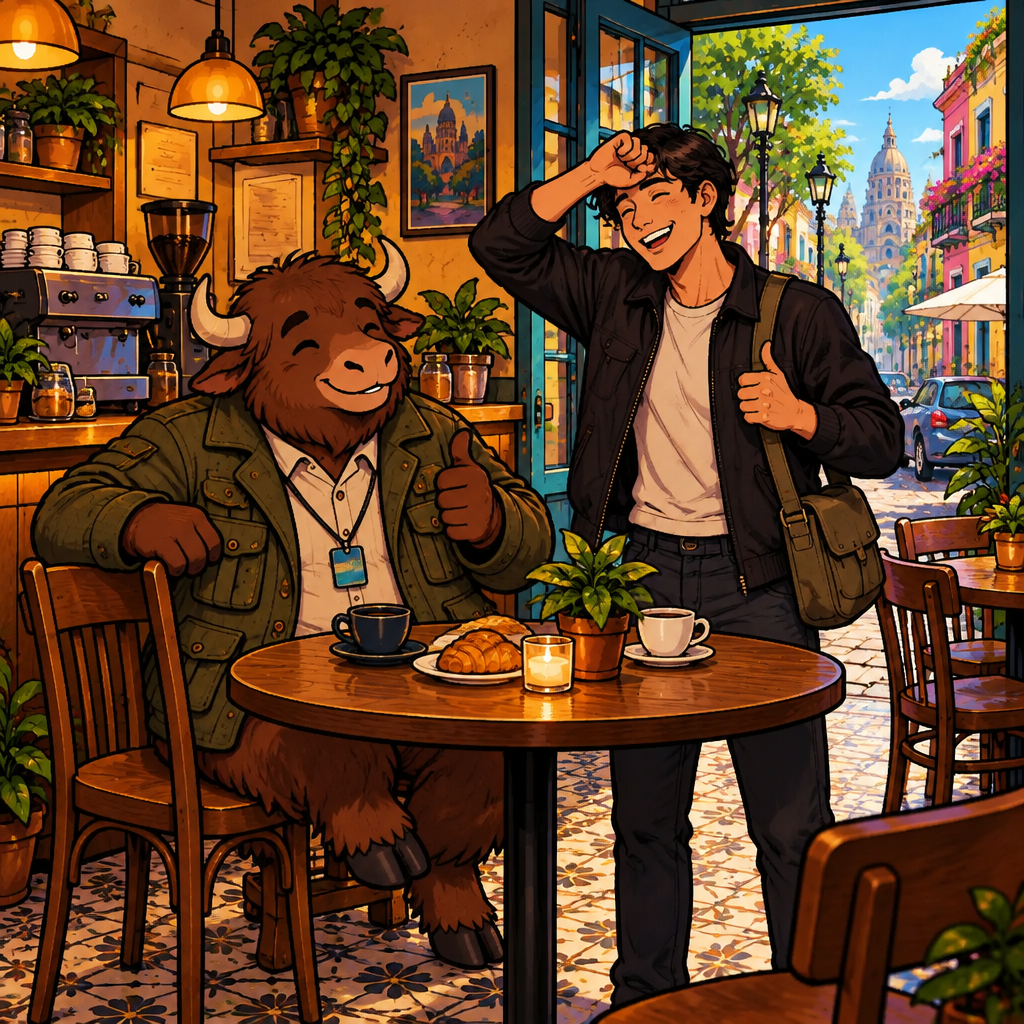
Menos mal que ___
Good thing ___
When to use it: Say this right after the rescue, the lucky break that saved you.
Menos mal que is one piece; it always introduces the good news.
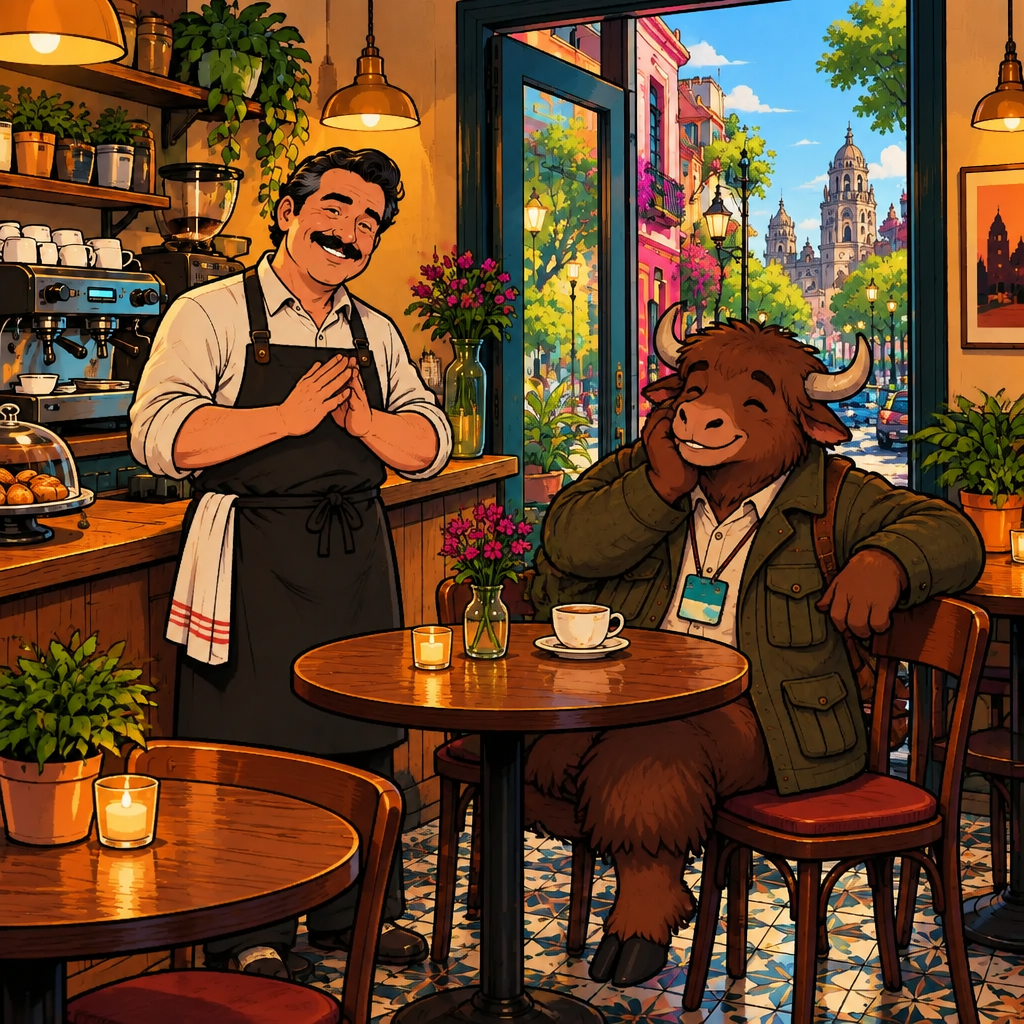
Al final, ___
In the end, ___
When to use it: Say this to land the ending and say how it all turned out.
Al final means after everything, not a physical end like final de la calle.

Nos tuvimos que ___
We had to ___
When to use it: Say this for something you had no choice about, like getting off a bus.
The que hooks the verb: tuvimos que esperar, tuvimos que bajar.
Pero bueno
But anyway
When to use it: Say this to shrug off the mess and move on to what matters.
Pero bueno accepts what happened without drama, like English anyway.
Story — the bus, the rain, the wrong stop
Amanda asks about yesterday, and Justin tells the middle of the story: the bus, the rain, and a street with no name.
The highlighted chunks are the ones you just learned. Turn on Show English if you need it.
- Morning at Café Laurel. Rain taps on the window, which suits the story.
 Amanda¿Qué pasó ayer? Salieron a Coyoacán, ¿no?What happened yesterday? You went to Coyoacán, right?
 JustinSí, y el viaje no salió como lo habíamos planeado.Yes, and the trip didn't go as we'd planned.
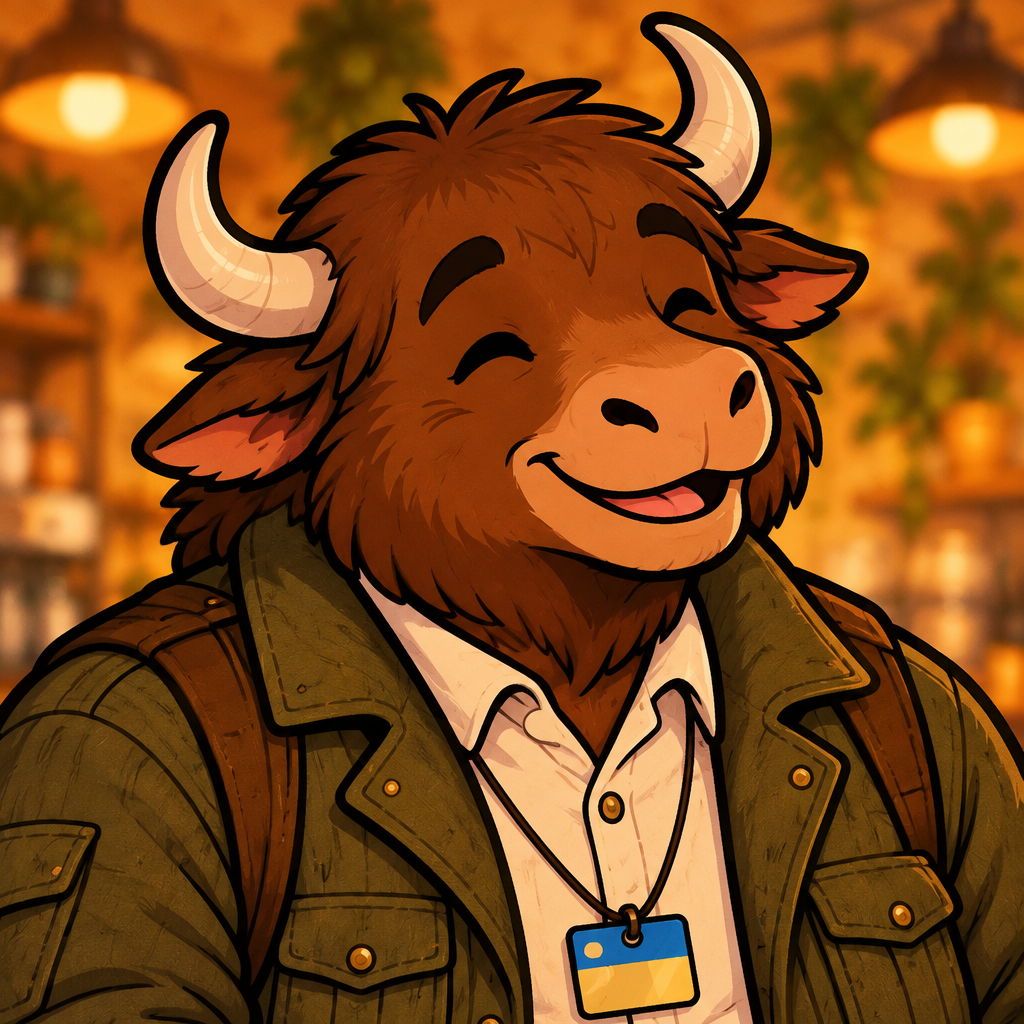 YakoTodo iba bien al principio.Everything was going fine at first.
- JustinDe repente, el camión se descompuso en plena calle.All of a sudden, the bus broke down in the middle of the street.
- Amanda¿Y luego?And then?
- JustinDe repente, empezó a llover también. Sin paraguas.All of a sudden, it started raining too. No umbrellas.
- YakoNos tuvimos que bajar todos, justo en una calle sin nombre.We all had to get off, right on a street with no name.
- JustinNo sabíamos qué hacer. Estábamos empapados.We didn't know what to do. We were soaked.
- Amanda¿Y cómo terminaron?And how did you end up?
- JustinMenos mal que pasó un taxi. El chofer sabía el camino.Good thing a taxi came by. The driver knew the way.
- YakoAl final, llegamos a Coyoacán, pero ya muy mojados.In the end, we got to Coyoacán, but already very wet.
- JustinPero bueno, el museo todavía estaba abierto.But anyway, the museum was still open.
- Amanda¡Qué aventura! Y ¿valió la pena?What an adventure! And was it worth it?
- YakoEl museo, sí. El café de allá, no tanto.The museum, yes. The coffee there, not so much.
Practice — tell it yourself
Eleven exercises: you'll listen, match, fill gaps, put the story in order, and swap one word for a new situation.
The story chunks are short, so this round moves fast.
0 of 11 done
What did you hear?
What did you hear?
Match the pairs
Spanish
De repente, ___Drop the English hereNo sabíamos qué hacerDrop the English hereMenos mal que ___Drop the English herePero buenoDrop the English here¿Qué pasó?Drop the English hereEnglish
What do you say?
What do you say?
You're telling Amanda about the trip. You want to say the rain started out of nowhere.
What do you say?
What do you say?
You're at the worst part of the story, but a taxi came by and saved you.
Fill the gap
Fill the gap
We didn't know what to do
No sabíamos qué ____
Put the chat in order
- JustinWhat comes first?
- Yako…
- Justin…
- Yako…
Swap the word
Swap the word
This time you and Yako didn't know what to do, not what to say.
No sabíamos qué ____
Find the mistake
Find the mistake
Pick the reply
Amanda says:
Pick the reply
¿Y todos se quedaron dentro del camión?
And did everyone stay inside the bus?
And you reply with:
What does it mean?
What does it mean?
El viaje no salió como lo habíamos planeado
Build the line
Build the line
But anyway
Tap the words in order.
Say it — your turn to tell it
Now the story is yours to tell. Amanda asks, and you answer as Justin with the chunks you learned.
Tap the microphone when it's your turn, and tap ▶ first if you want to hear the model line. Your recording stays on your device.
- AmandaCuéntame, ¿qué pasó con el camión?Tell me, what happened with the bus?
- Justin (you)Say that all of a sudden, it broke down in the street.
Say that all of a sudden, it broke down in the street.
De repente, ___
All of a sudden, ___
0 of 5 said
Recap — what you can say now
| Spanish | English | Play |
|---|---|---|
| De repente, ___ | All of a sudden, ___ | |
| No sabíamos qué hacer | We didn't know what to do | |
| Menos mal que ___ | Good thing ___ | |
| Al final, ___ | In the end, ___ | |
| Nos tuvimos que ___ | We had to ___ | |
| Pero bueno | But anyway |
Save your progress — it’s free
Keep your place in the course and see which lines you’ve learned.
Want the next lesson in your inbox?
Get the next lesson by email, one a day.
Join the newsletterDaily lesson emails are coming soon. Newsletter subscribers get them first.
Keep practicing with Yak Cards
Want these story chunks in your pocket? Grab the Yak Cards for this lesson and review them anywhere.
A quick round with the Yak Cards each day keeps your story chunks ready for the next time a trip goes sideways.
Open Yak Cards