
New here? This is lesson 67 of a free 238-lesson Spanish course.
Free Spanish CourseLesson 67 of 238
I like it in Spanish
At Café Laurel, Michael wants to know which pastry Justin wants. This time, Justin can explain his tastes instead of only pointing.
You'll learn how to say you like something, love it, don't like it, or prefer one choice.
You'll also ask someone else what they like and compare two pastries. By the end, you can make a clear choice at the counter.
By the end of this lesson
Say what you like, love, dislike, and prefer, and ask another person about their preferences.
- Me gusta ___I like ___
- Me encanta ___I love ___
- No me gusta ___I don't like ___
- Prefiero ___I prefer ___
- ¿Te gusta ___?Do you like ___?
- ¿Qué prefieres, ___ o ___?What do you prefer, ___ or ___?
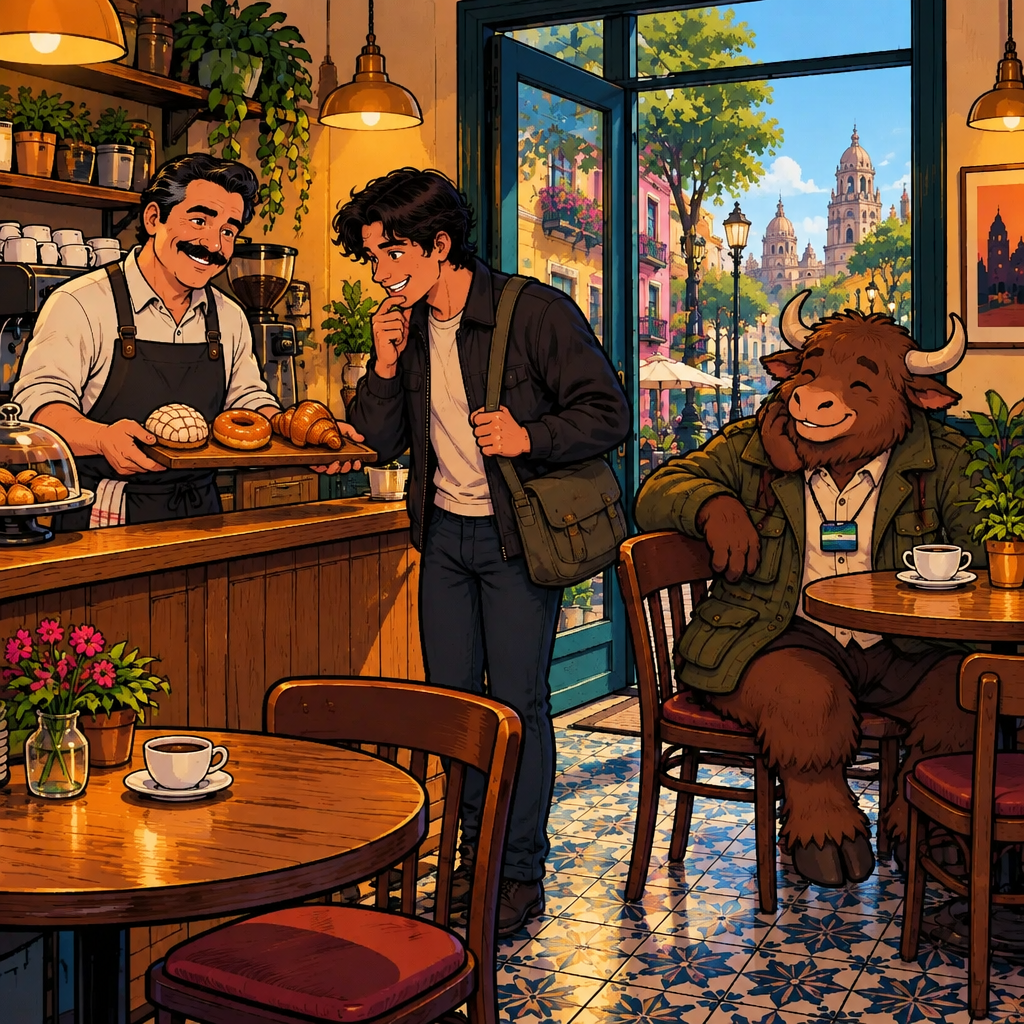
Scene — pastries at the café
It is late morning at Café Laurel. Michael is serving a tray of pastries, and Justin is choosing something sweet for his table.
There is one concha, one dona, and one cuernito left. Michael wants a quick answer before another customer arrives.
Learn — like, love, and prefer
These six chunks help you talk about preferences in ordinary café conversations.
Notice the difference between liking one thing, loving it, disliking it, and choosing one option over another.
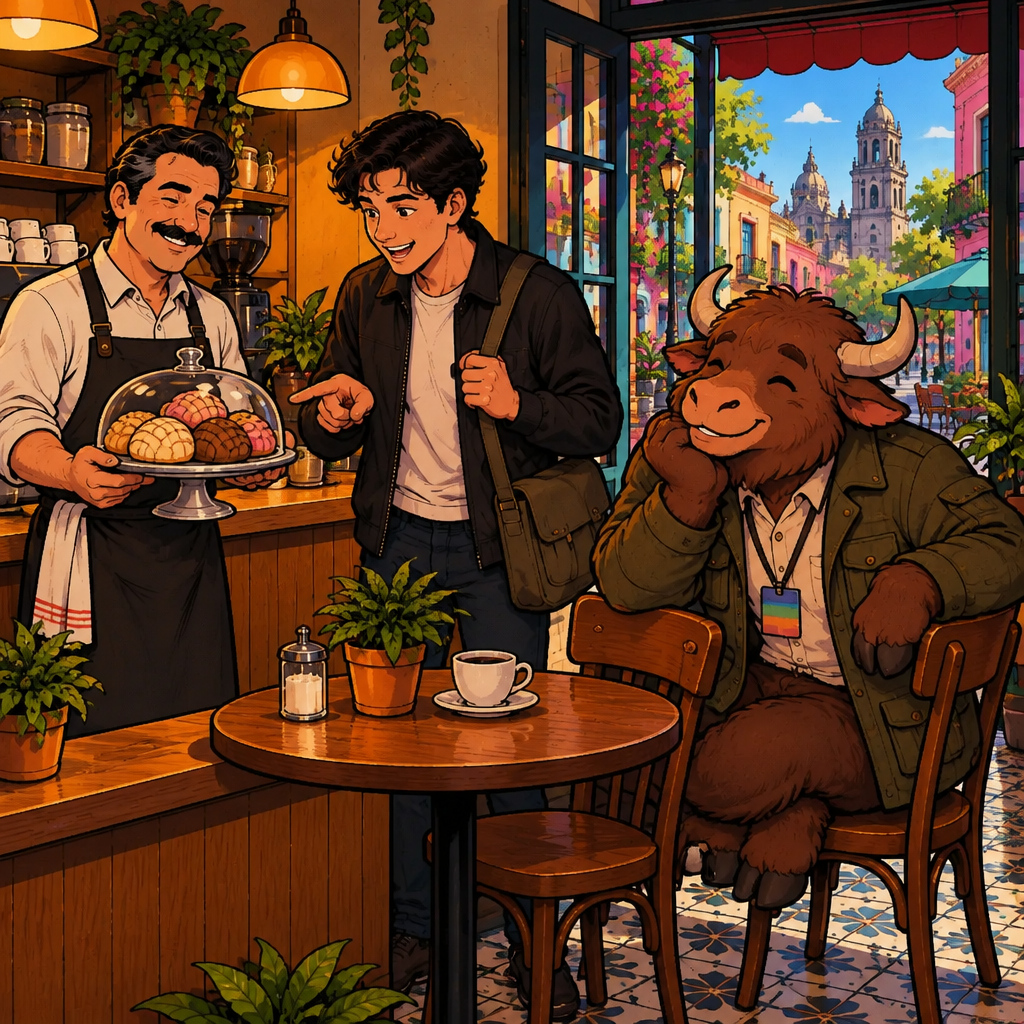
Me gusta ___
I like ___
When to use it: Say this when you want to tell someone that you like a thing.
Me gusta means I like it; add the thing after it.
Say it: Say it like meh GOOS-tah.
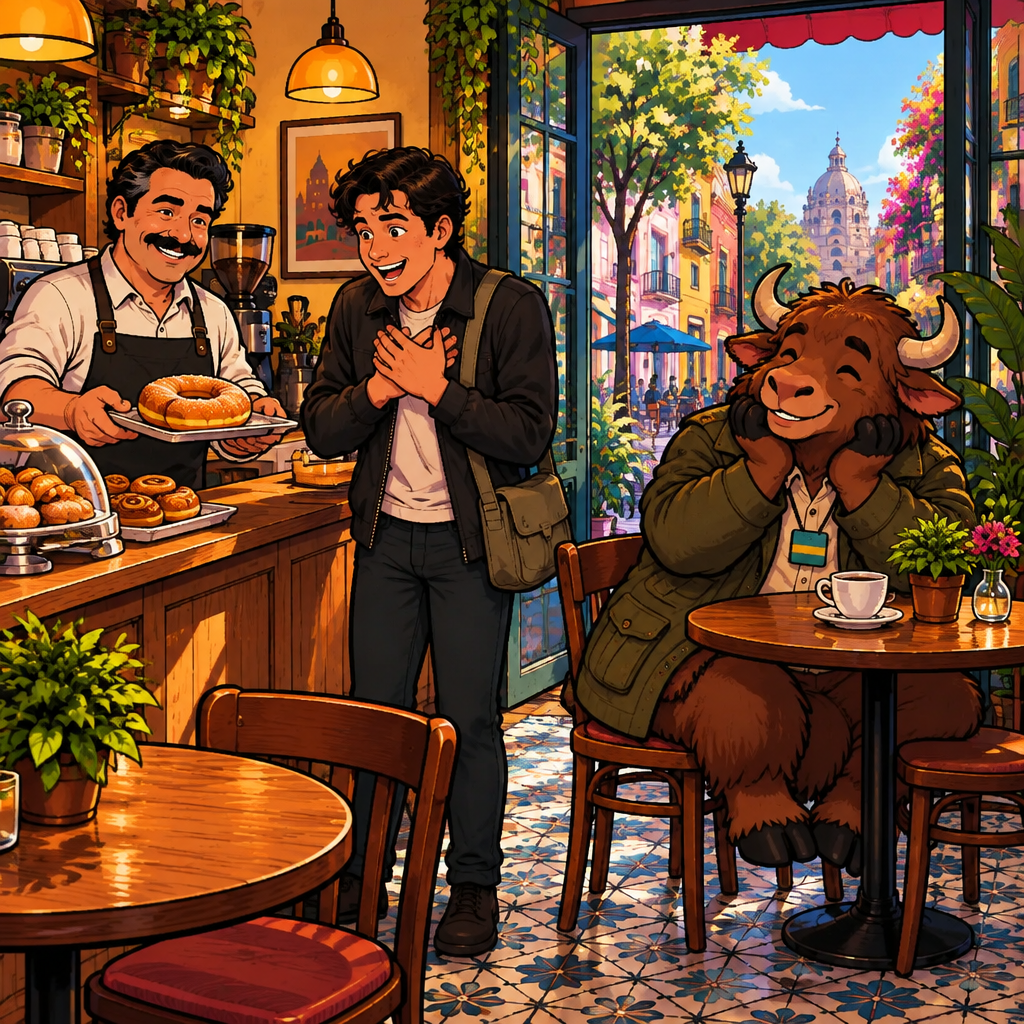
Me encanta ___
I love ___
When to use it: Say this when you like something very much.
Me encanta is stronger than me gusta, so use it for something you love.
Say it: Say it like meh en-KAHN-tah.
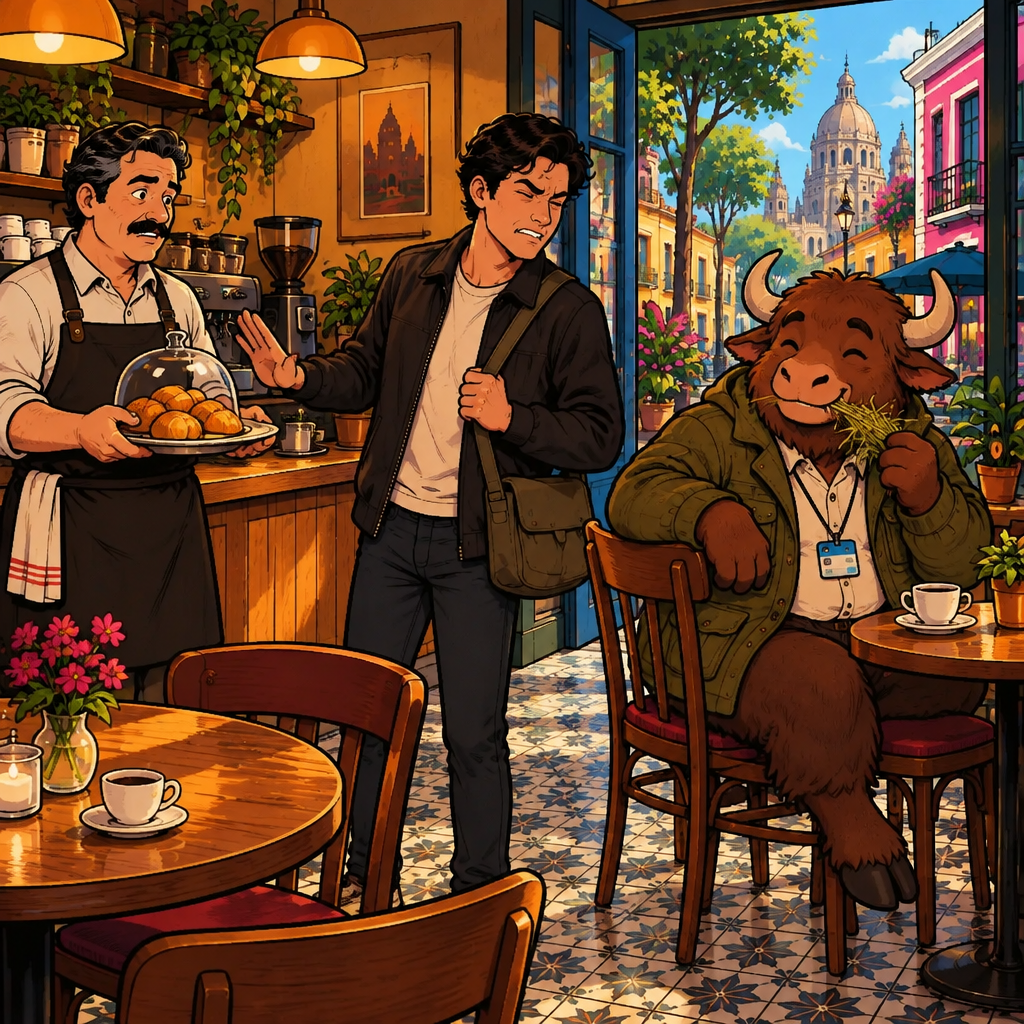
No me gusta ___
I don't like ___
When to use it: Say this when you want to say that you dislike a thing.
Put no before me gusta to make the meaning negative.
Say it: Say it like noh meh GOOS-tah.
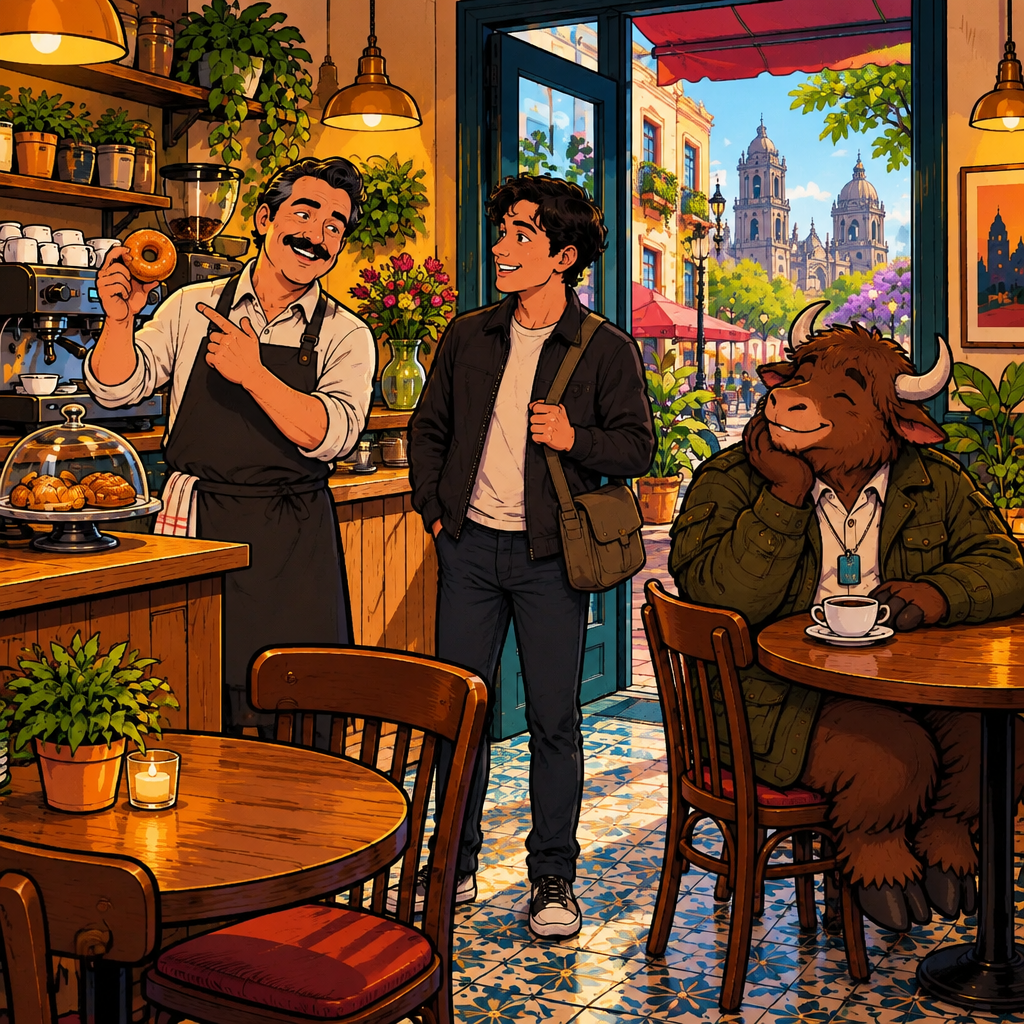
Prefiero ___
I prefer ___
When to use it: Say this when you choose one thing instead of another.
Prefiero names your choice; the other option can come before or after.
Say it: Say it like preh-FYEH-roh.
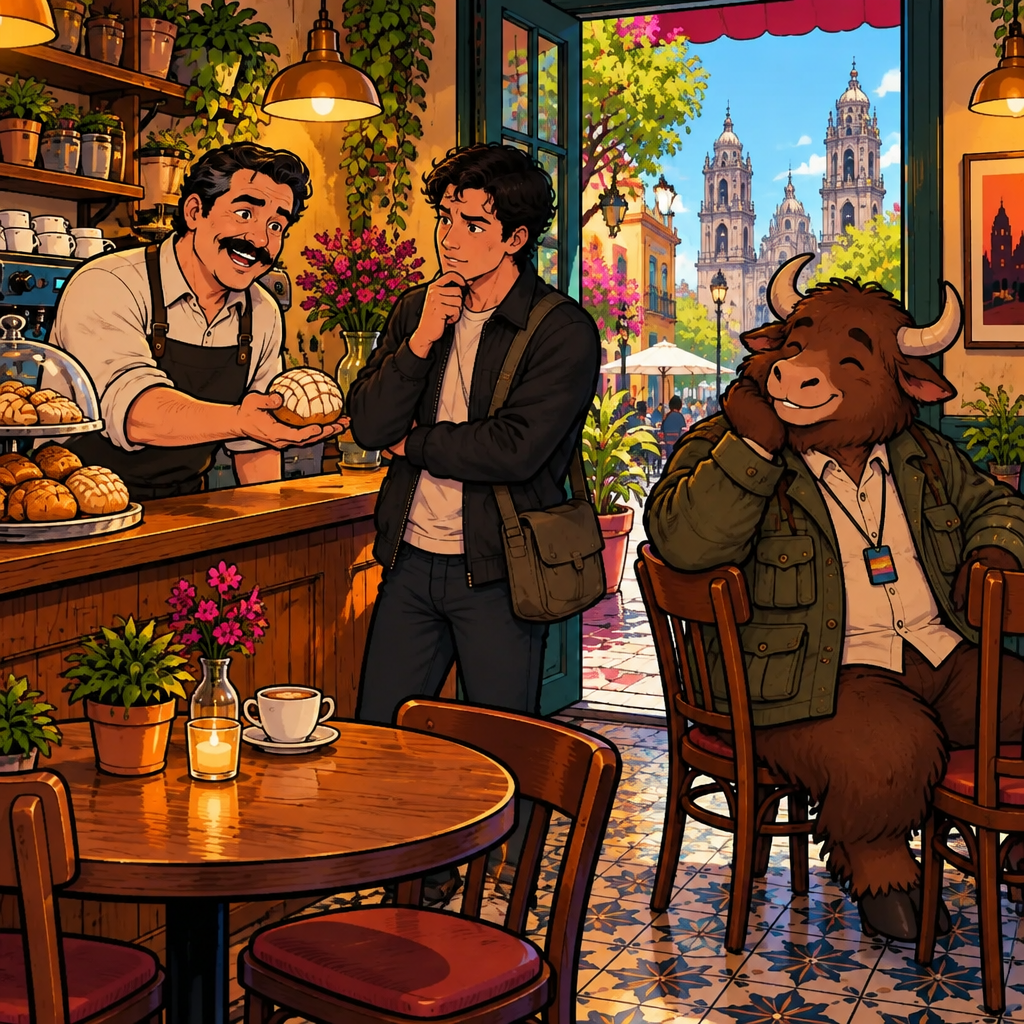
¿Te gusta ___?
Do you like ___?
When to use it: Ask one person whether they like a particular thing.
Te gusta asks about the other person's taste, not your own.
Say it: Say it like teh GOOS-tah.
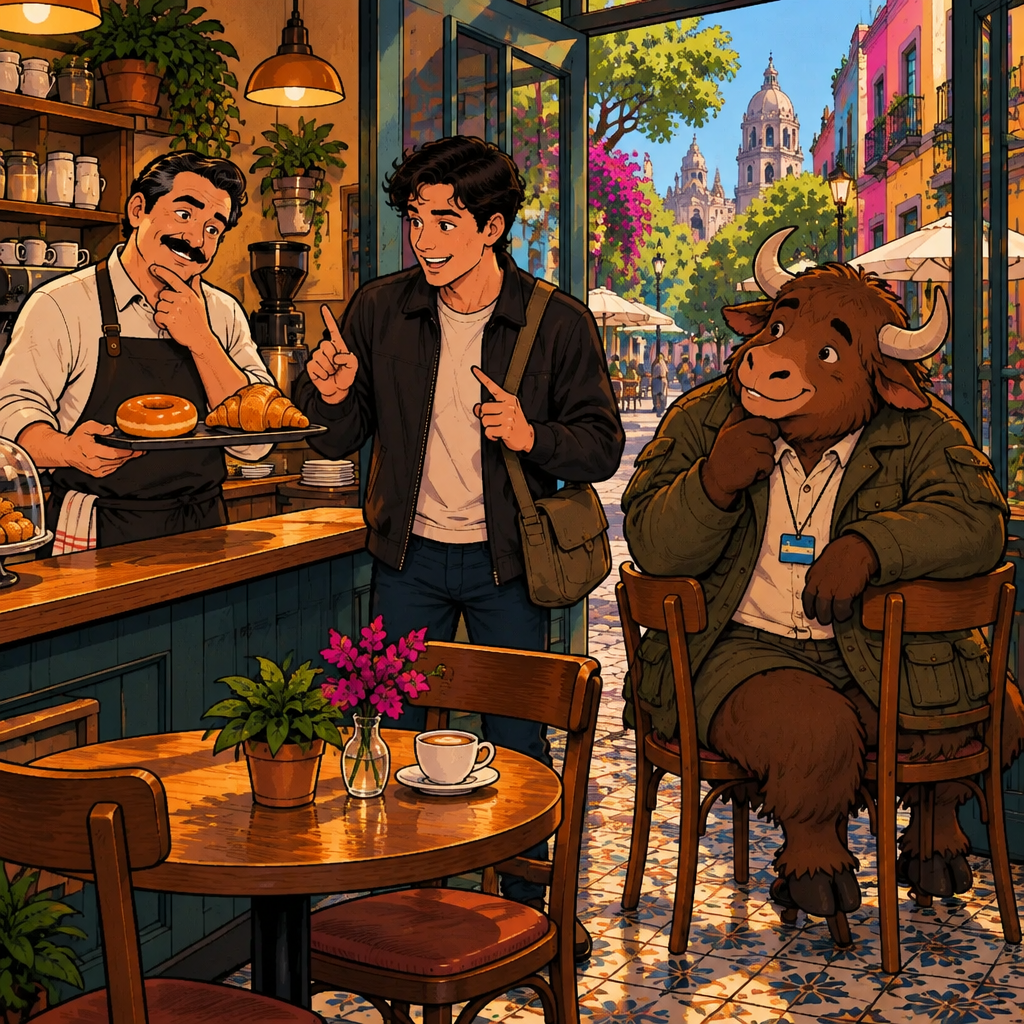
¿Qué prefieres, ___ o ___?
What do you prefer, ___ or ___?
When to use it: Ask someone to choose between two named options.
Qué prefieres asks for a preference; name both options after the comma.
Say it: Say it like keh preh-FYEH-rehs.
Story — Justin chooses a pastry
Michael has three pastries left and needs Justin's choice. Listen for the highlighted preference chunks in their short café conversation.
Justin also asks about Michael's taste, so watch who is asking and who answers. Turn on Show English if needed.
- Late morning at Café Laurel. Michael sets three pastries on the counter.
 MichaelHola, Justin. ¿Cuál?Hi, Justin. Which one?
 Justin¿Qué prefieres, la concha o la dona?What do you prefer, the concha or the doughnut?
- MichaelYo prefiero la concha.I prefer the concha.
- JustinMe gusta la dona, pero me encanta el cuernito.I like the doughnut, but I love the croissant.
- Michael¿Te gusta la concha?Do you like the concha?
- JustinNo me gusta la concha. Este, por favor.I don't like the concha. This one, please.
- Michael¿La dona o el cuernito?The doughnut or the croissant?
- JustinPrefiero el cuernito. Quisiera pedir uno, por favor.I prefer the croissant. I would like to order one, please.
- MichaelPerfecto, te doy el cuernito.Perfect, I'll give you the croissant.
Practice — choose your favorite
You'll hear the chunks, match meanings, fill small gaps, and choose replies for a pastry order.
The final exercises make you build and compare complete choices.
0 of 11 done
What did you hear?
What did you hear?
Match the pairs
Spanish
Me gusta ___Drop the English hereNo me gusta ___Drop the English herePrefiero ___Drop the English here¿Te gusta ___?Drop the English hereEnglish
What do you say?
What do you say?
Michael asks which pastry you prefer. You choose the croissant instead of the doughnut.
Fill the gap
Fill the gap
I like ___
Me ____ ___
Swap the word
Swap the word
You point to the pastry you want and politely choose this one.
____, por favor
Put the chat in order
- MichaelWhat comes first?
- Justin…
- Michael…
- Justin…
What does it mean?
What does it mean?
Quisiera pedir ___
Build the line
Build the line
This one, please
,
Tap the words in order.
Pick the reply
Michael says:
Pick the reply
¿Te gusta el cuernito?
Do you like the croissant?
And you reply with:
What does it mean?
What does it mean?
¿Cuál?
Pick the reply
Michael says:
Pick the reply
¿Cuál?
Which one?
And you reply with:
Say it — order your likes
Now you're Justin at the pastry counter. Michael asks about your tastes, and you answer with the chunk that fits.
Tap ▶ to hear each model line, then tap the microphone on your turns. Your recording stays on the device.
- MichaelHola, Justin. ¿Te gusta la dona?Hi, Justin. Do you like the doughnut?
- Justin (you)Say that you like the doughnut.
Say that you like the doughnut.
Me gusta ___
I like ___
0 of 5 said
Recap — what you can say now
| Spanish | English | Play |
|---|---|---|
| Me gusta ___ | I like ___ | |
| Me encanta ___ | I love ___ | |
| No me gusta ___ | I don't like ___ | |
| Prefiero ___ | I prefer ___ | |
| ¿Te gusta ___? | Do you like ___? | |
| ¿Qué prefieres, ___ o ___? | What do you prefer, ___ or ___? |
Save your progress — it’s free
Keep your place in the course and see which lines you’ve learned.
Want the next lesson in your inbox?
Get the next lesson by email, one a day.
Join the newsletterDaily lesson emails are coming soon. Newsletter subscribers get them first.
Keep practicing with Yak Cards
Want to keep these preference chunks handy? Grab the Yak Cards for this lesson and review them anywhere.
Review one favorite, one dislike, and one choice with the Yak Cards each day.
Open Yak Cards