
New here? This is lesson 218 of a free 238-lesson Spanish course.
Free Spanish CourseLesson 218 of 238
I read that in Spanish
A water cut on the block gives Justin a concrete topic for a careful opinion. He has read a local piece, but the situation isn't as simple as one headline.
You'll learn to report what you read, set up one side, name the deeper issue, and add a concession before giving your own view.
Yako has the card somewhere safe, while Michael has locked an empty tin. Nobody is solving that mystery today.
By the end of this lesson
Give an opinion on something you read or heard, with one reason and one concession.
- Leí que ___I read that ___
- Por un lado, ___On one hand, ___
- El problema de fondo es ___The real issue is ___
- No es tan simpleIt isn't that simple
- Yo lo vería asíThe way I'd see it
- ¿Tú qué leíste?What did you read?
Scene — a local water cut
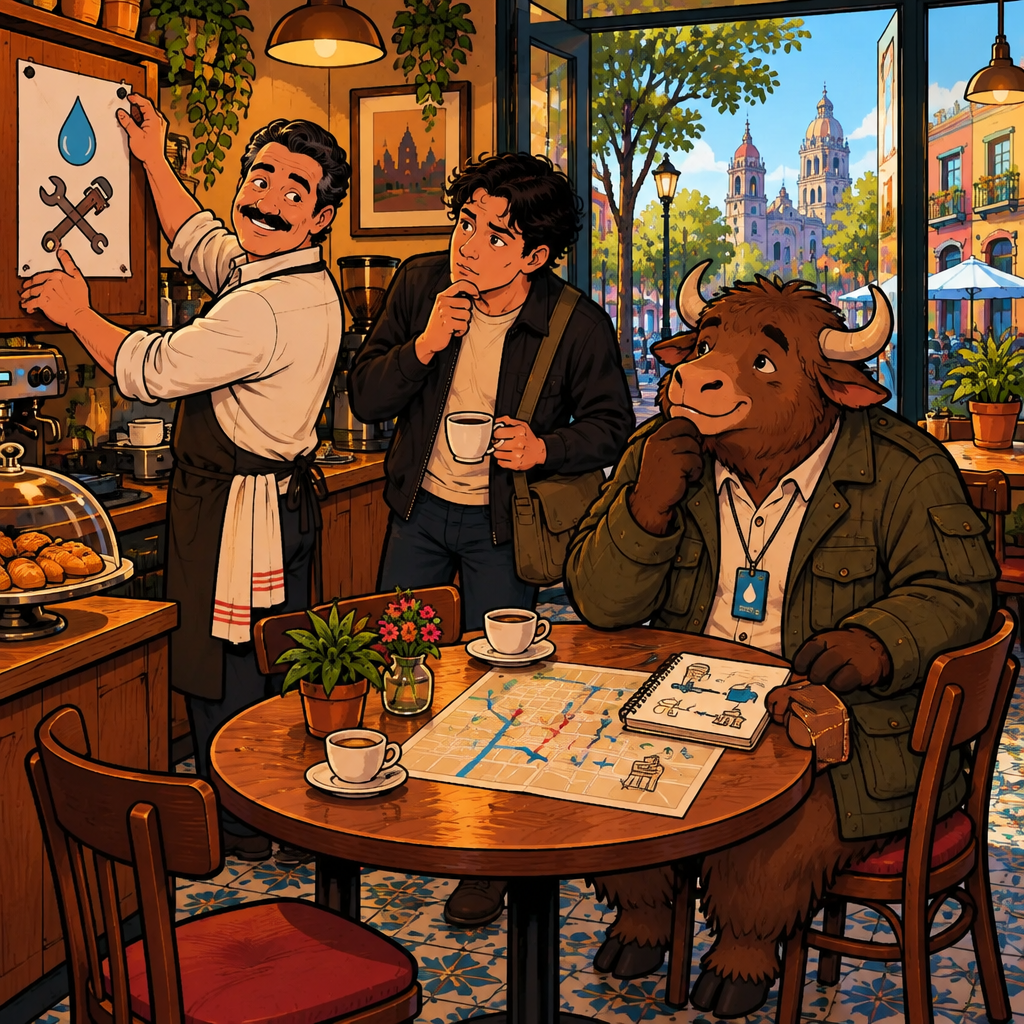
Late afternoon at Café Laurel, with a printed neighborhood notice beside Justin's coffee. A water cut has affected several homes on the block.
Yako took the mysterious card to keep it safe, and Michael locked an empty tin behind the counter. The local notice is the only mystery discussed today.
Learn — read, weigh, explain
These six chunks help you discuss information without turning a neighborhood problem into a debate club.
Notice how each frame takes a specific detail, such as a water cut, a pipe, or a notice.
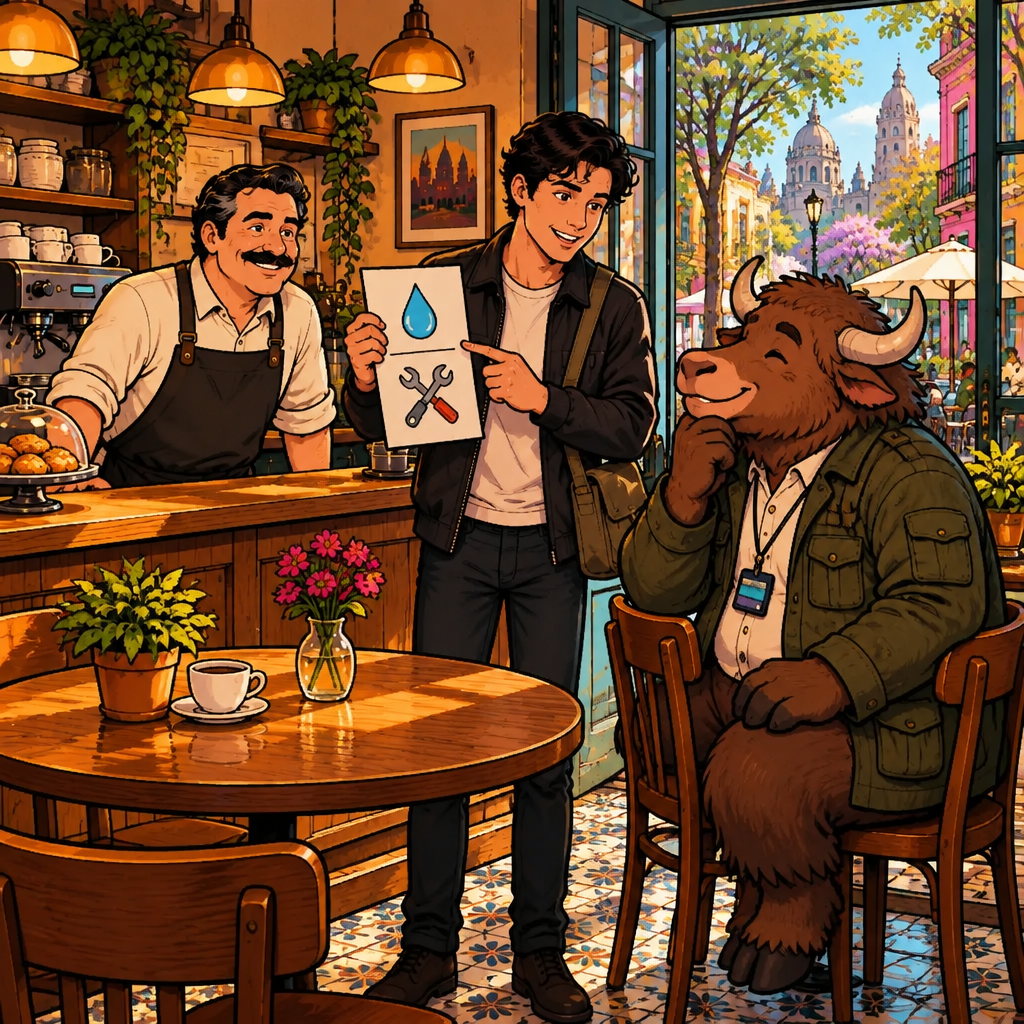
Leí que ___
I read that ___
When to use it: Use this to report information you read, followed by the specific fact.
Leí is the preterite of leer for I; learn the whole chunk before adding the fact.
Say it: Leí has two syllables: leh-EE.
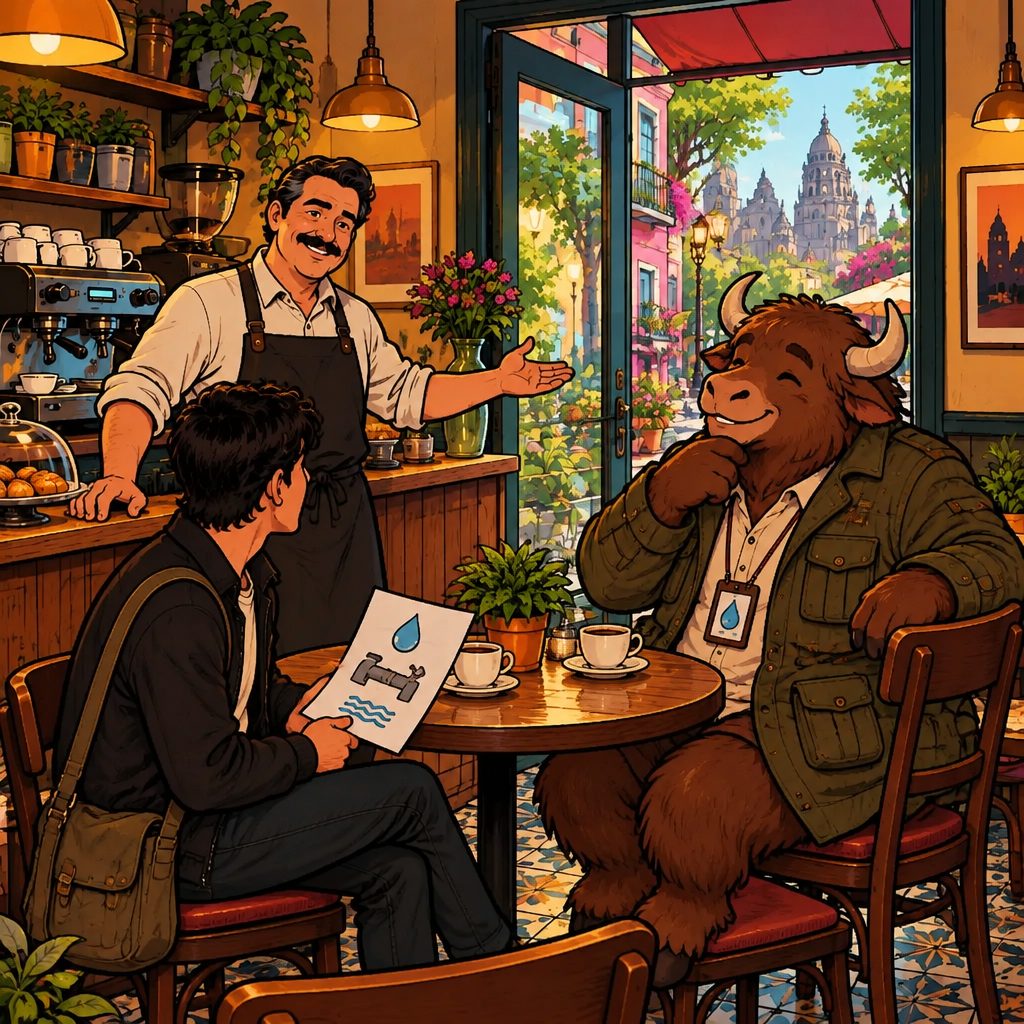
Por un lado, ___
On one hand, ___
When to use it: Use this to introduce one relevant side of an issue before adding another consideration.
This chunk organizes your reasoning; it normally points toward a later contrast, even when the topic stays practical.
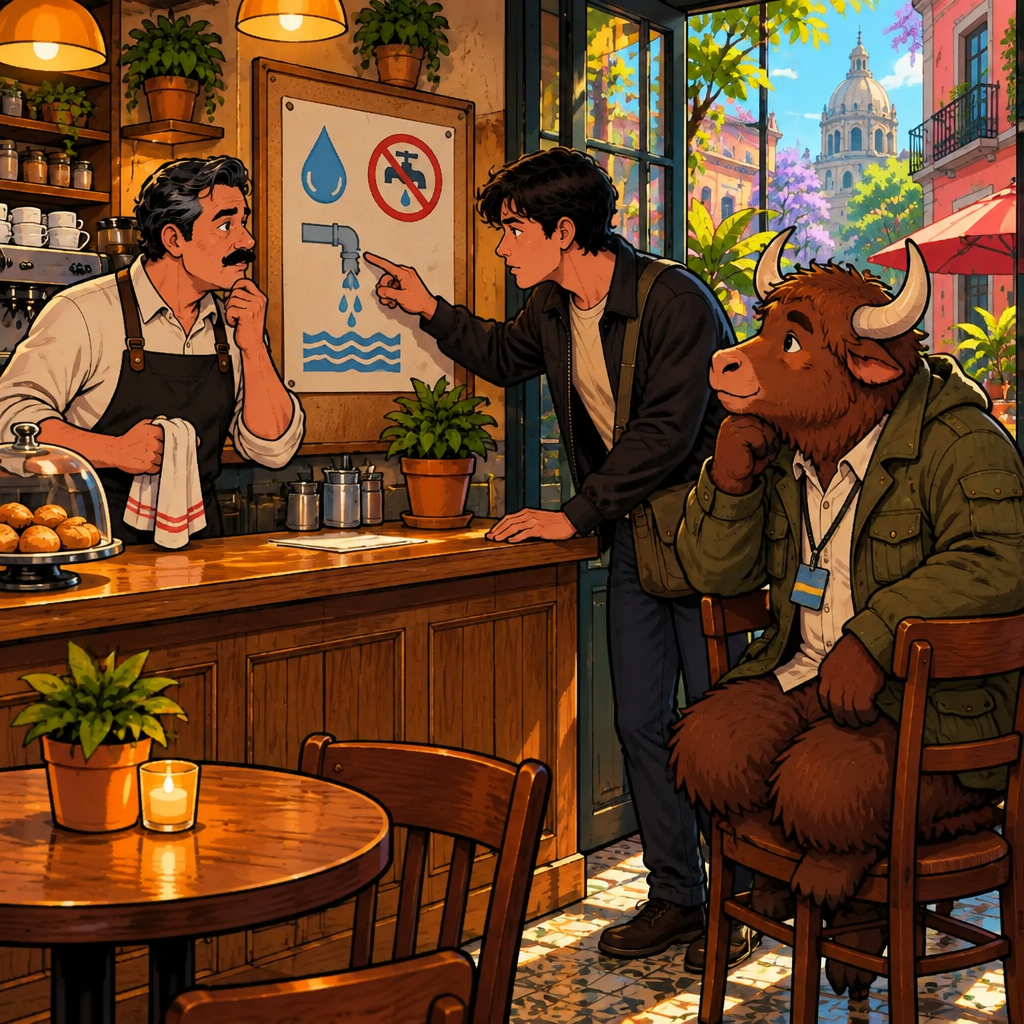
El problema de fondo es ___
The real issue is ___
When to use it: Use this to move from a visible problem to the underlying issue you think matters.
De fondo means underlying or fundamental, not literally at the back; it sounds analytical but remains conversational.
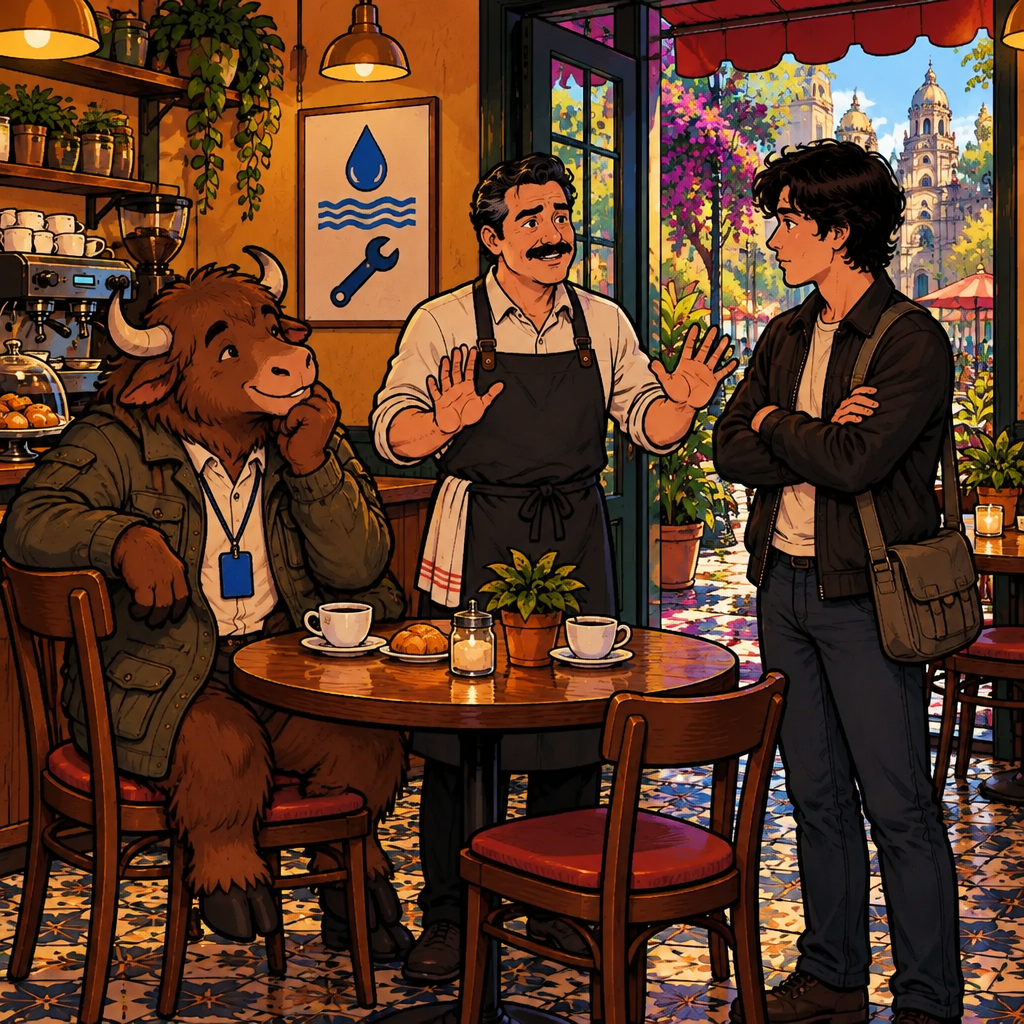
No es tan simple
It isn't that simple
When to use it: Use this when a quick explanation leaves out important context or competing facts.
Tan simple softens a correction: you challenge the explanation without claiming the opposite is completely true.
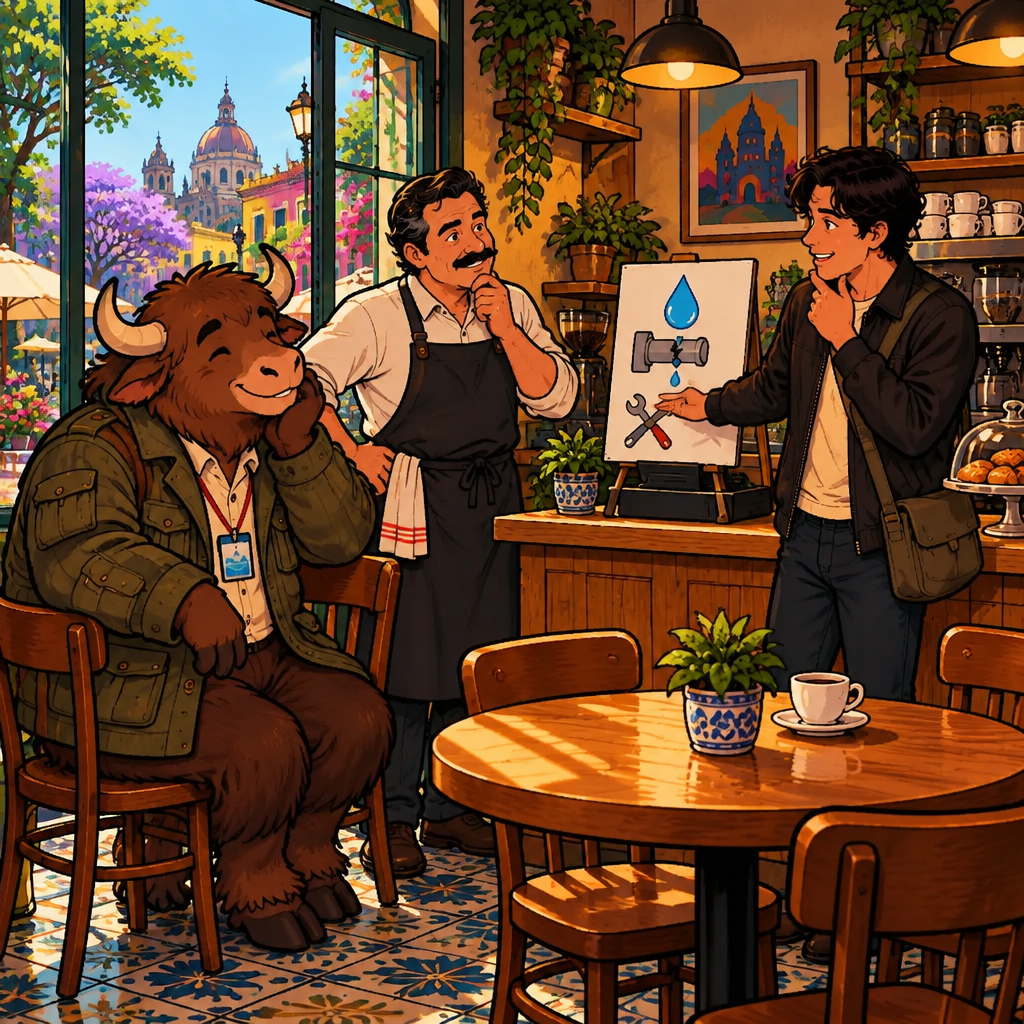
Yo lo vería así
The way I'd see it
When to use it: Use this to introduce your own considered interpretation rather than present it as absolute fact.
Vería is conditional, so the phrase sounds measured and leaves room for another reasonable interpretation.
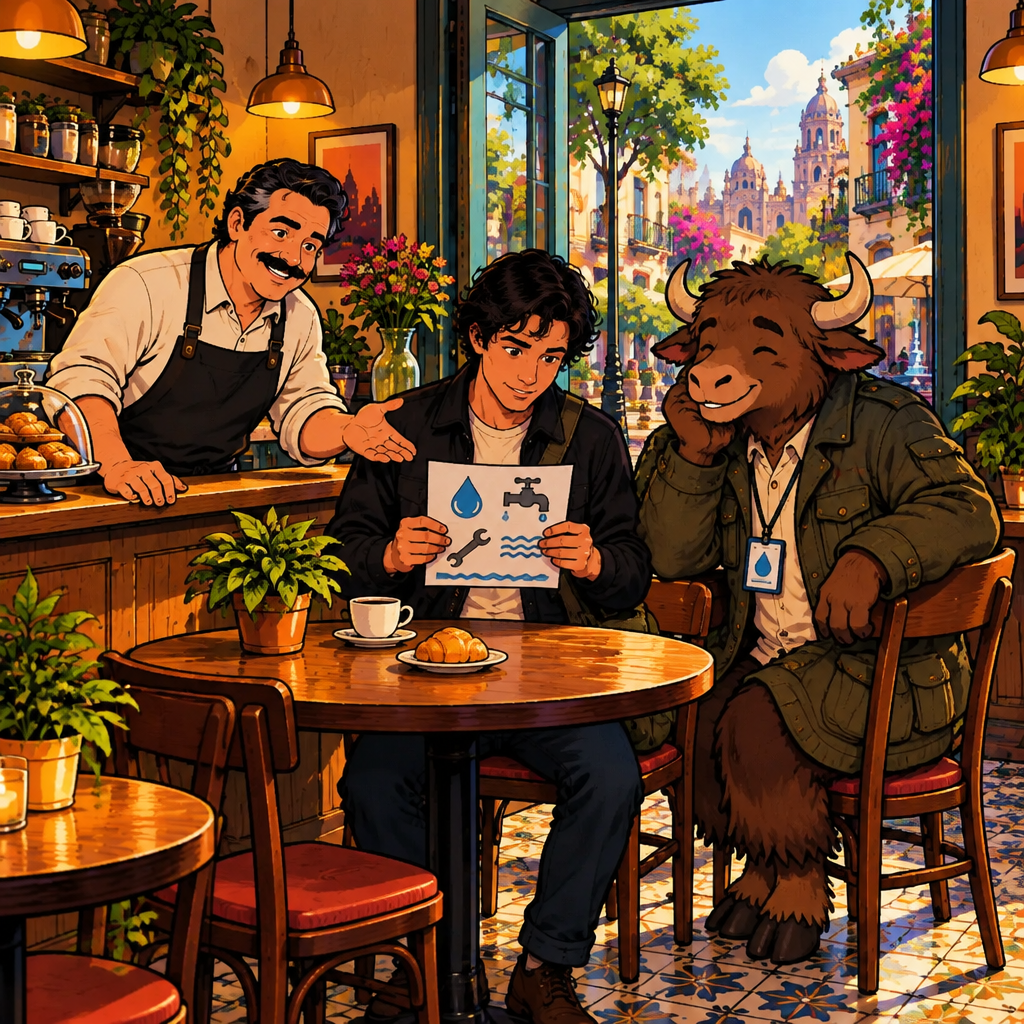
¿Tú qué leíste?
What did you read?
When to use it: Ask this when you want someone to report the information they found in a text.
Leíste addresses tú and asks about reading, not about the person's general opinion.
Story — one block without water
Watch Justin turn one local notice into a balanced opinion. He reports what he read, names the deeper issue, and admits the situation has another side.
The highlighted chunks are today's lines. Show English can help if the neighborhood details move quickly.
- Late afternoon light falls across the café table. A printed notice about the block's water cut sits beside Justin's coffee.
 Michael¿Ya viste el aviso de la colonia?Have you seen the neighborhood notice?
 JustinSí. Leí que van a cortar el agua esta noche.Yes. I read that they're going to cut off the water tonight.
 YakoPor un lado, avisaron con tiempo.On one hand, they gave notice in advance.
- MichaelSí, pero varias personas trabajan de noche.Yes, but several people work at night.
- JustinEl problema de fondo es que la tubería ya está muy vieja.The real issue is that the pipe is already very old.
- YakoYo lo vería así: el corte ayuda a reparar, pero afecta a quienes no pueden almacenar agua.The way I'd see it: the cut helps with repairs, but it affects people who can't store water.
- JustinNo es tan simple; también falta información sobre cuánto va a durar.It isn't that simple; there's also missing information about how long it will last.
- Michael¿Tú qué leíste?What did you read?
- JustinLeí que el servicio regresaría por la mañana, pero no dieron una hora exacta.I read that service would return in the morning, but they didn't give an exact time.
- YakoPor otro lado, comprar agua para todos tampoco es sencillo.On the other hand, buying water for everyone isn't easy either.
- MichaelEl tin está cerrado, aunque está vacío.The tin is locked, although it's empty.
- JustinMe enteré de que el aviso salió de la junta vecinal.I found out that the notice came from the neighborhood meeting.
- YakoPuede ser, no digo que no, pero hay que confirmar la duración.Could be, I'm not saying it isn't, but we need to confirm the duration.
Practice — give your take
You'll identify meanings, match ideas, fill precise gaps, and build a short response.
The final choices ask you to connect evidence, a concession, and your own view.
0 of 12 done
What did you hear?
What did you hear?
Match the pairs
Spanish
Por un lado, ___Drop the English hereNo es tan simpleDrop the English hereYo lo vería asíDrop the English hereEnglish
Fill the gap
Fill the gap
The real issue is ___
El problema de ____ es ___
What do you say?
What do you say?
You want to report that you read the water will be cut tonight.
True or false?
True or false?
This line says that a quick explanation leaves out important context.
What does it mean?
What does it mean?
¿Tú qué leíste?
Which one doesn’t belong?
Which one doesn’t belong?
Pick the reply
Michael says:
Pick the reply
¿Tú qué leíste?
What did you read?
And you reply with:
What do you say?
What do you say?
You want to introduce your measured interpretation of the water cut.
Build the line
Build the line
It isn't that simple
Tap the words in order.
What did you hear?
What did you hear?
What did you hear?
What did you hear?
Say it — respond with balance
Now you're Justin at the café, responding to Michael and Yako about the local notice. Build a view with evidence, a concession, and one underlying reason.
Tap ▶ to hear each model, then tap the microphone on your turns. Your recording stays on your device.
- Michael¿Qué parte te parece importante?Which part seems important to you?
- Justin (you)Introduce one side of the situation.
Introduce one side of the situation.
Por un lado, ___
On one hand, ___
0 of 5 said
Recap — what you can say now
| Spanish | English | Play |
|---|---|---|
| Leí que ___ | I read that ___ | |
| Por un lado, ___ | On one hand, ___ | |
| El problema de fondo es ___ | The real issue is ___ | |
| No es tan simple | It isn't that simple | |
| Yo lo vería así | The way I'd see it | |
| ¿Tú qué leíste? | What did you read? |
Save your progress — it’s free
Keep your place in the course and see which lines you’ve learned.
Want the next lesson in your inbox?
Get the next lesson by email, one a day.
Join the newsletterDaily lesson emails are coming soon. Newsletter subscribers get them first.
Keep practicing with Yak Cards
Want to keep these opinion chunks handy? Grab the Yak Cards for this lesson and review them anywhere.
Use the Yak Cards to practice reporting a fact, adding a concession, and giving your own measured view.
Open Yak Cards