
New here? This is lesson 43 of a free 238-lesson Spanish course.
Free Spanish CourseLesson 43 of 238
How much is it in Spanish
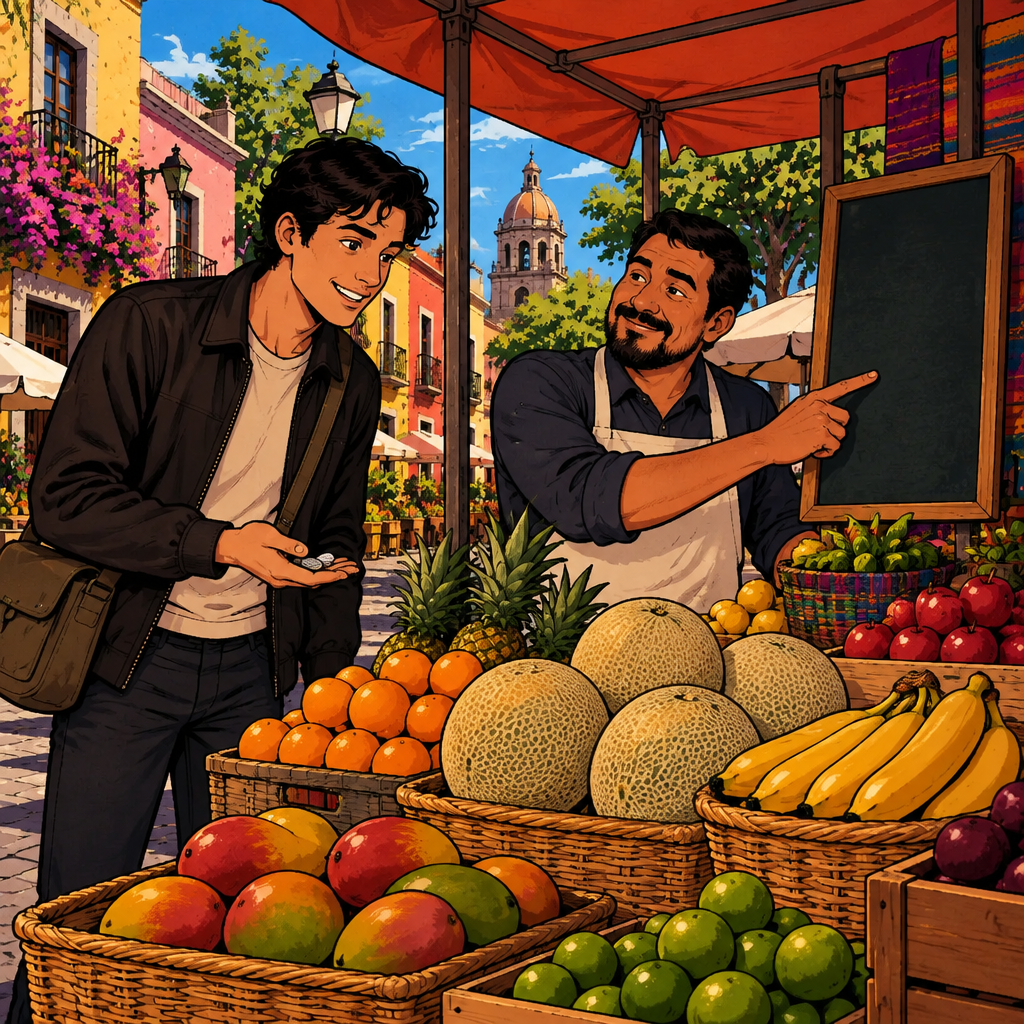
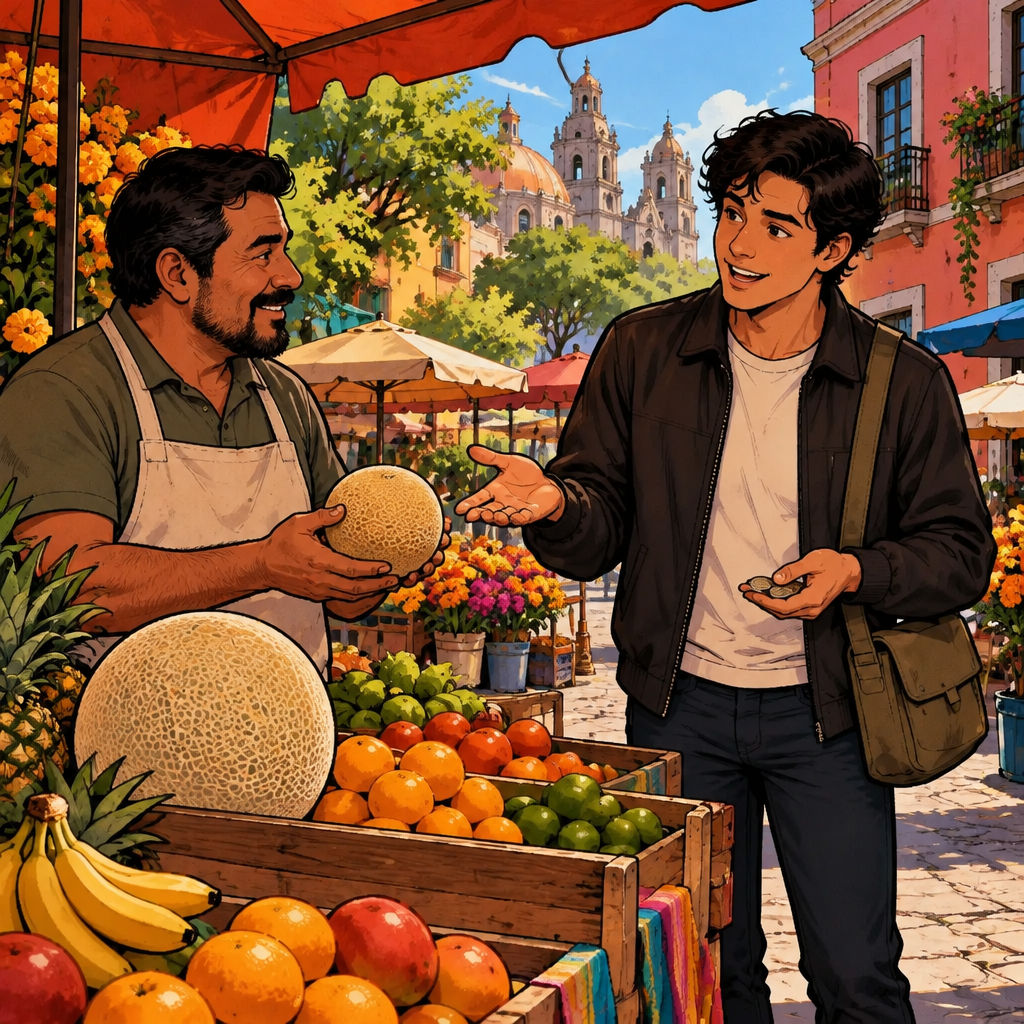
Justin is buying fruit at Ben's stall for the first time. Ben has a loud voice and a price sign he likes to point at.
You'll ask the price and the total, count things, and ask for a cheaper option.
These lines help you shop without surprises. Justin's coins, however, have a surprise ready.
By the end of this lesson
Ask an item's price and the total, and explain that something is too expensive or you don't have enough.
- ¿Cuánto cuesta ___?How much is ___?
- ¿Cuánto es en total?What's the total?
- ¿Cuántos son?How many?
- Está muy caroThat's too much
- ¿Tienes uno más barato?Do you have a cheaper one?
- No me alcanzaI don't have enough
Scene — At Ben's fruit stall
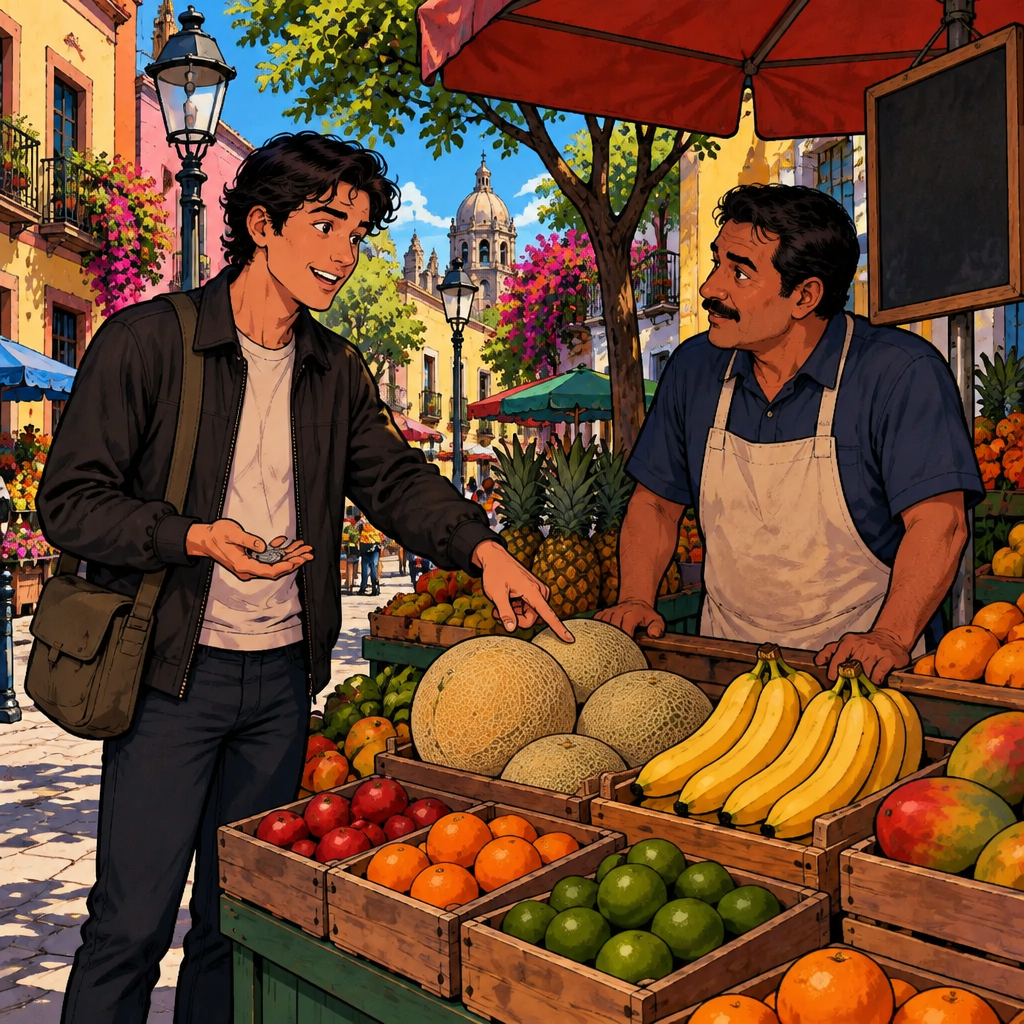
It's morning at Ben's fruit stall. Justin is looking at a large melon, with a few coins ready in his hand.
Ben stands behind the fruit and points proudly at his handwritten price sign.
Learn — Prices and totals
There are six lines to learn. Tap ▶ and say each one out loud.
Focus on the difference between one item's price and the whole total.
¿Cuánto cuesta ___?
How much is ___?
When to use it: Ask the price of one item before you buy it.
Fill the blank with the item, like el melón.

¿Cuánto es en total?
What's the total?
When to use it: Ask how much you need to pay for everything together.
¿Cuántos son?
How many?
When to use it: Ask how many there are when both people know what you're counting.
Use this line for masculine things, like pesos.
Está muy caro
That's too much
When to use it: Say that an item's price is too high for you.
Caro means expensive.
¿Tienes uno más barato?
Do you have a cheaper one?
When to use it: Ask the seller for another item with a lower price.
Más barato means cheaper.
No me alcanza
I don't have enough
When to use it: Say this when your money isn't enough to cover the price.
Learn it as one piece for shopping.
Story — The coins don't add up
Watch Justin check the price before choosing his melon. The highlighted lines help him ask for a cheaper option.
Use Show English if you get stuck.
 JustinBuenos días.Good morning.
- BenBuenos días.Good morning.
- Justin¿Cuánto cuesta el melón?How much is the melon?
- Ben points at the sign and announces the price loudly enough for the next stall to hear.
- BenCuarenta pesos.Forty pesos.
- JustinEstá muy caro. ¿Tienes uno más barato?That's too much. Do you have a cheaper one?
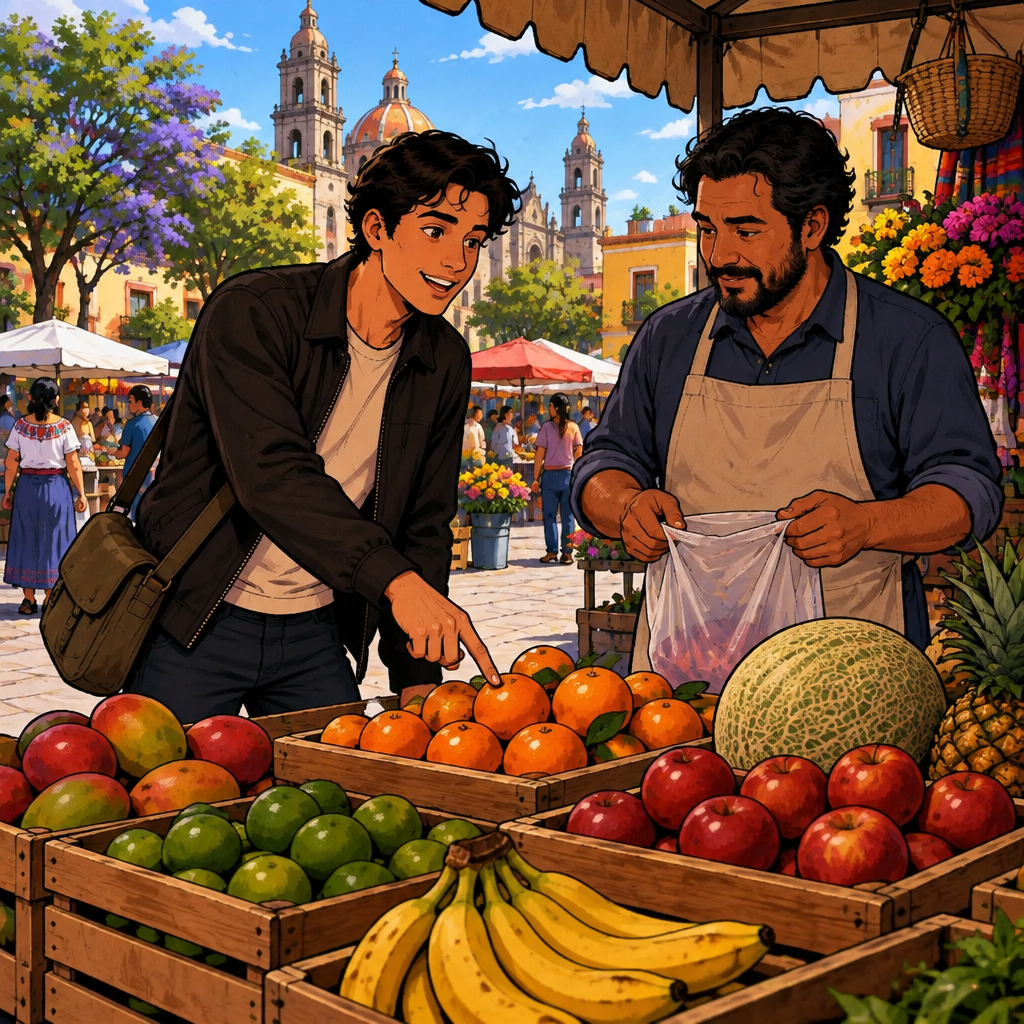
- Ben points to a smaller melon.
- BenEste.This one.
- JustinEste, por favor.This one, please.
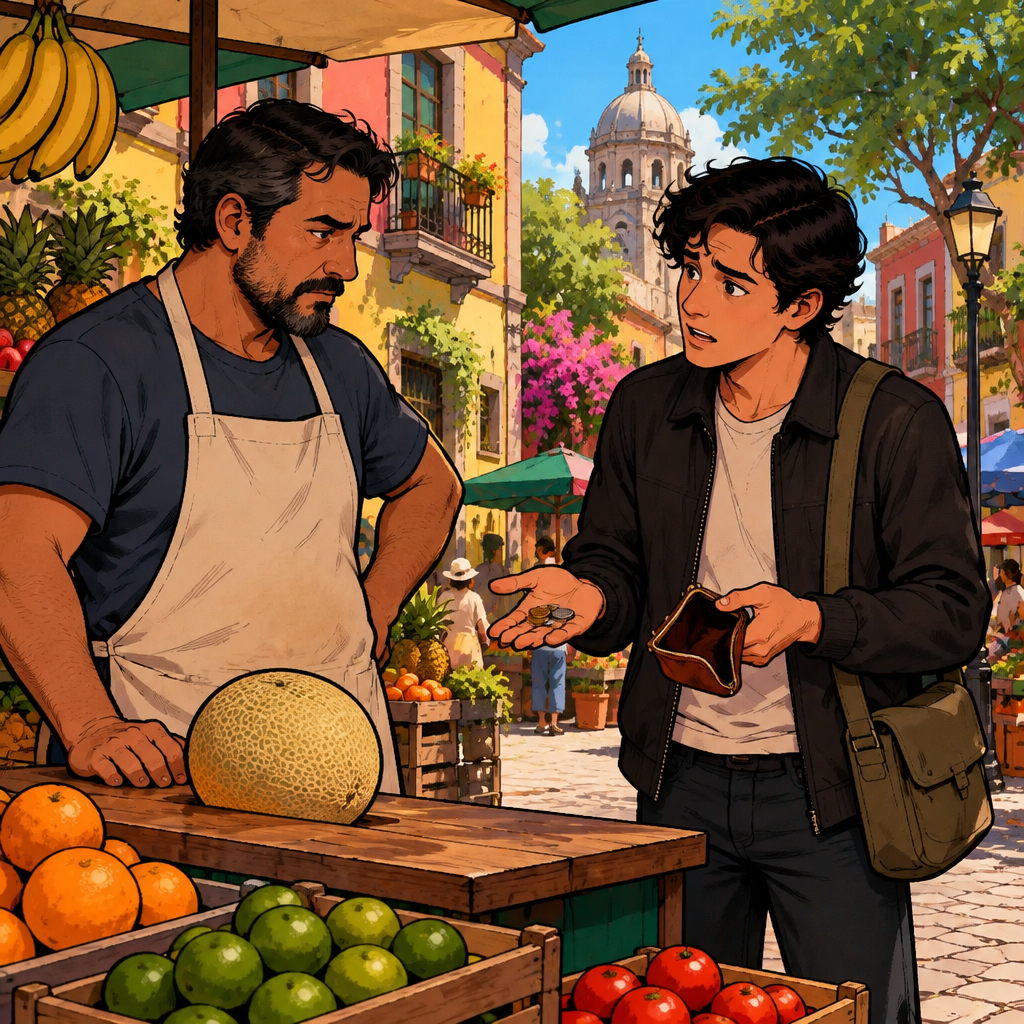
- Justin opens his hand. Ben points at the pesos he's holding.
- Ben¿Cuántos son?How many?
- JustinVeinte pesos.Twenty pesos.
- Justin¿Cuánto es en total?What's the total?
- BenTreinta pesos.Thirty pesos.
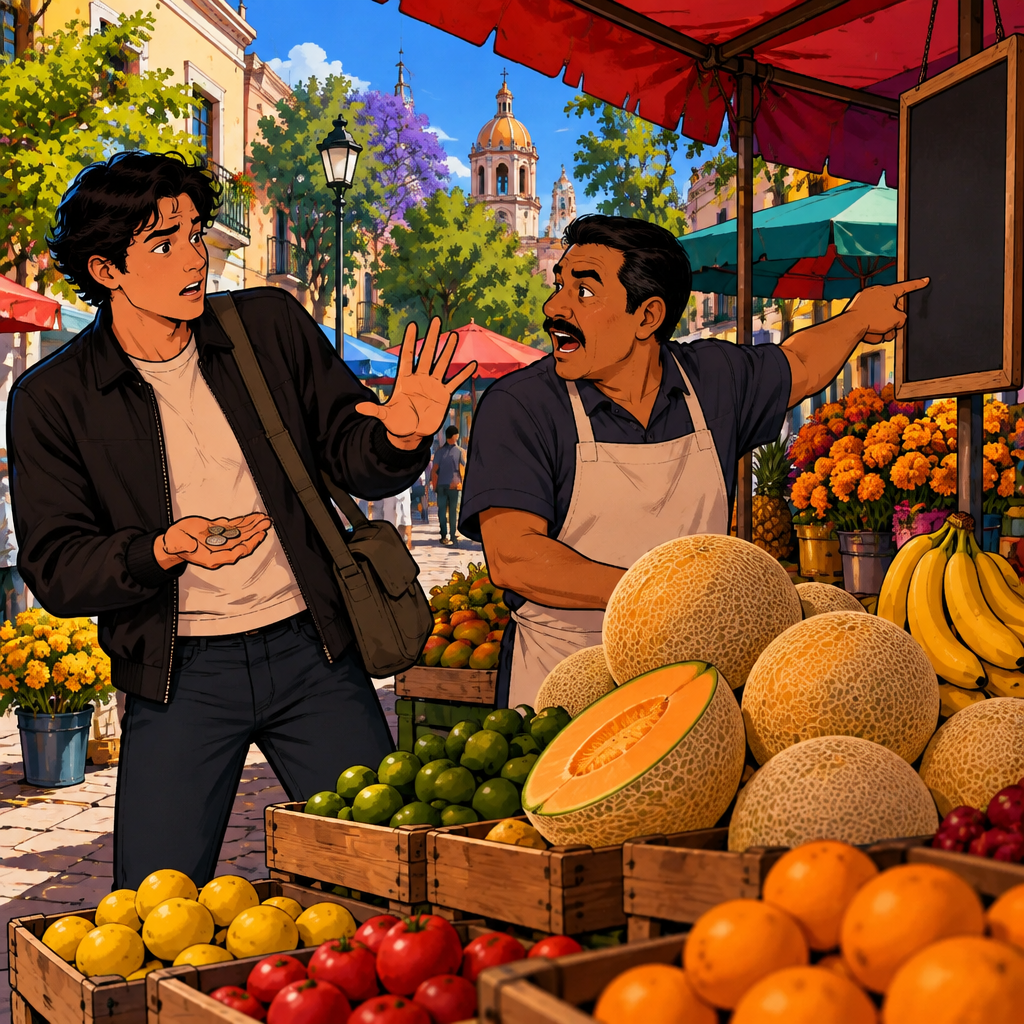
- Justin counts his coins again, but they stubbornly remain twenty pesos.
- JustinNo me alcanza.I don't have enough.
Practice — Check before you pay
Try nine short exercises with prices, quantities, and two familiar lines.
Keep trying or use the skip button. Each explanation helps you understand the answer.
0 of 9 done
What did you hear?
What did you hear?
Match the pairs
Spanish
¿Cuánto cuesta ___?Drop the English here¿Cuántos son?Drop the English hereEstá muy caroDrop the English hereEnglish
What do you say?
What do you say?
The melon costs more than you want to spend. Ask Ben for an option with a lower price.
What does it mean?
What does it mean?
Buenos días.
Fill the gap
Fill the gap
I don't have enough
No me ____
True or false?
True or false?
This line asks how many there are.
What do you say?
What do you say?
You've chosen the smaller melon. Point to it and tell Ben which one you want, politely.
Build the line
Build the line
What's the total?
¿ ?
Tap the words in order.
Build the line
Build the line
Do you have a cheaper one?
¿ ?
Tap the words in order.
Say it — Try a cheaper one
You play Justin and speak first. Ben will answer as you choose a melon and check the price.
Tap the microphone to answer, or tap ▶ for the model. Your recording stays on your device.
- You're pointing at the large melon on Ben's stall.
- Justin (you)Ask how much the melon costs.
Ask how much the melon costs.
¿Cuánto cuesta ___?
How much is ___?
0 of 6 said
Recap — what you can say now
| Spanish | English | Play |
|---|---|---|
| ¿Cuánto cuesta ___? | How much is ___? | |
| ¿Cuánto es en total? | What's the total? | |
| ¿Cuántos son? | How many? | |
| Está muy caro | That's too much | |
| ¿Tienes uno más barato? | Do you have a cheaper one? | |
| No me alcanza | I don't have enough |
Save your progress — it’s free
Keep your place in the course and see which lines you’ve learned.
Want the next lesson in your inbox?
Get the next lesson by email, one a day.
Join the newsletterDaily lesson emails are coming soon. Newsletter subscribers get them first.
Keep practicing with Yak Cards
Keep these shopping lines handy with Yak Cards. Practice asking the price before you check your coins.
Try a quick review tomorrow: one item's price, the total, and a cheaper option.
Open Yak Cards