
New here? This is lesson 204 of a free 238-lesson Spanish course.
Free Spanish CourseLesson 204 of 238
How people do it here in Spanish
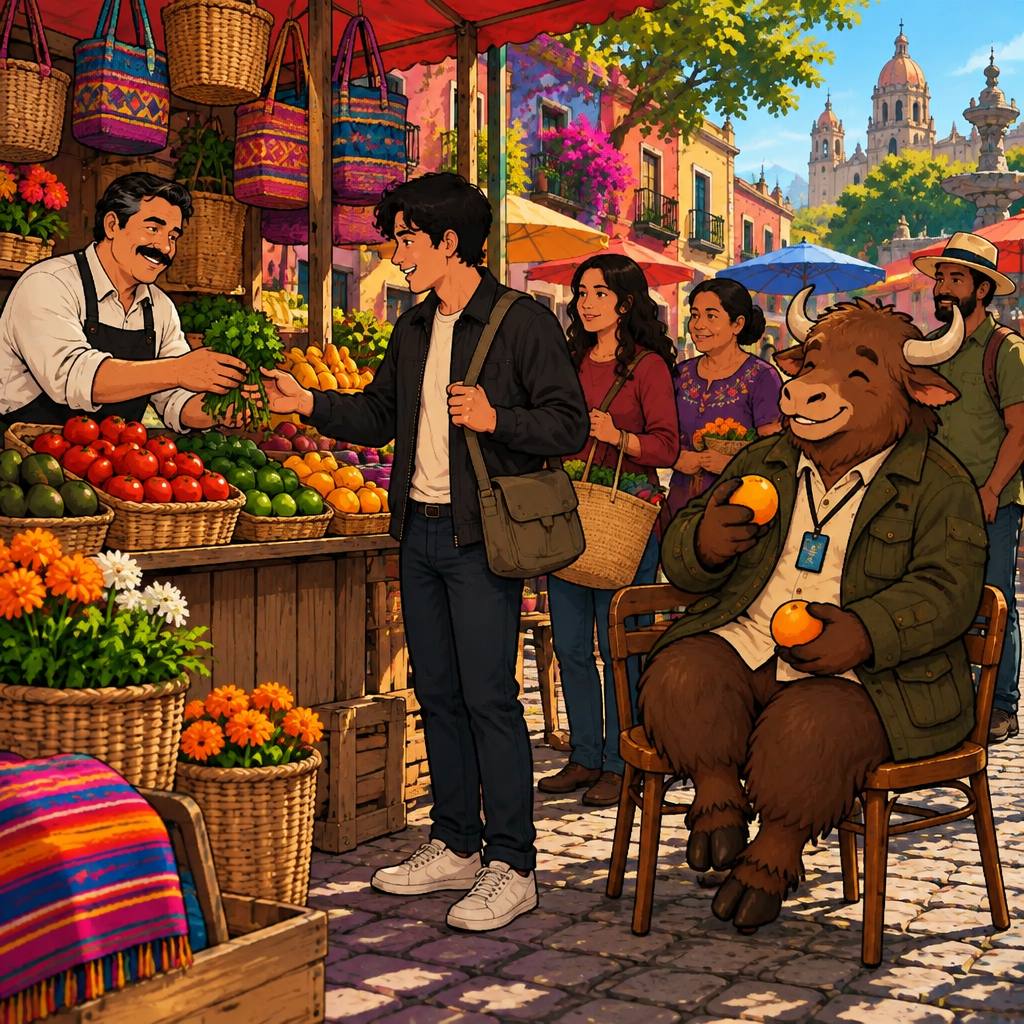
At Ben's stall, Justin notices that shopping starts with a greeting, not a price question. A local custom opens the conversation before anyone talks money.
You'll learn to describe what people usually do, ask how things work where someone is from, and react when a custom surprises you.
By the end, you'll be able to compare a local habit with one from home and say that you like it.
By the end of this lesson
Talk about a local custom and ask how it works where someone is from.
- Aquí se acostumbra ___Here people usually ___
- Se celebra ___People celebrate ___
- ¿Y en tu país?And where you're from?
- No lo sabíaI didn't know that
- Me lateI like that
- ¿Eso se hace en tu casa?Do you do that at home?
Scene — a custom at the stall
Ben's small market stall is busy in the afternoon, with woven bags hanging above the counter and shoppers waiting behind Justin.
Justin is about to ask the price, but Ben greets him first. The greeting turns into a conversation about customs in Mexico and Chicago.
Learn — customs and reactions
These chunks help you explain customs without making them sound like strict rules. They also give you natural ways to ask about someone else's home.
Notice how the same pattern can describe celebrations, greetings, and everyday habits.
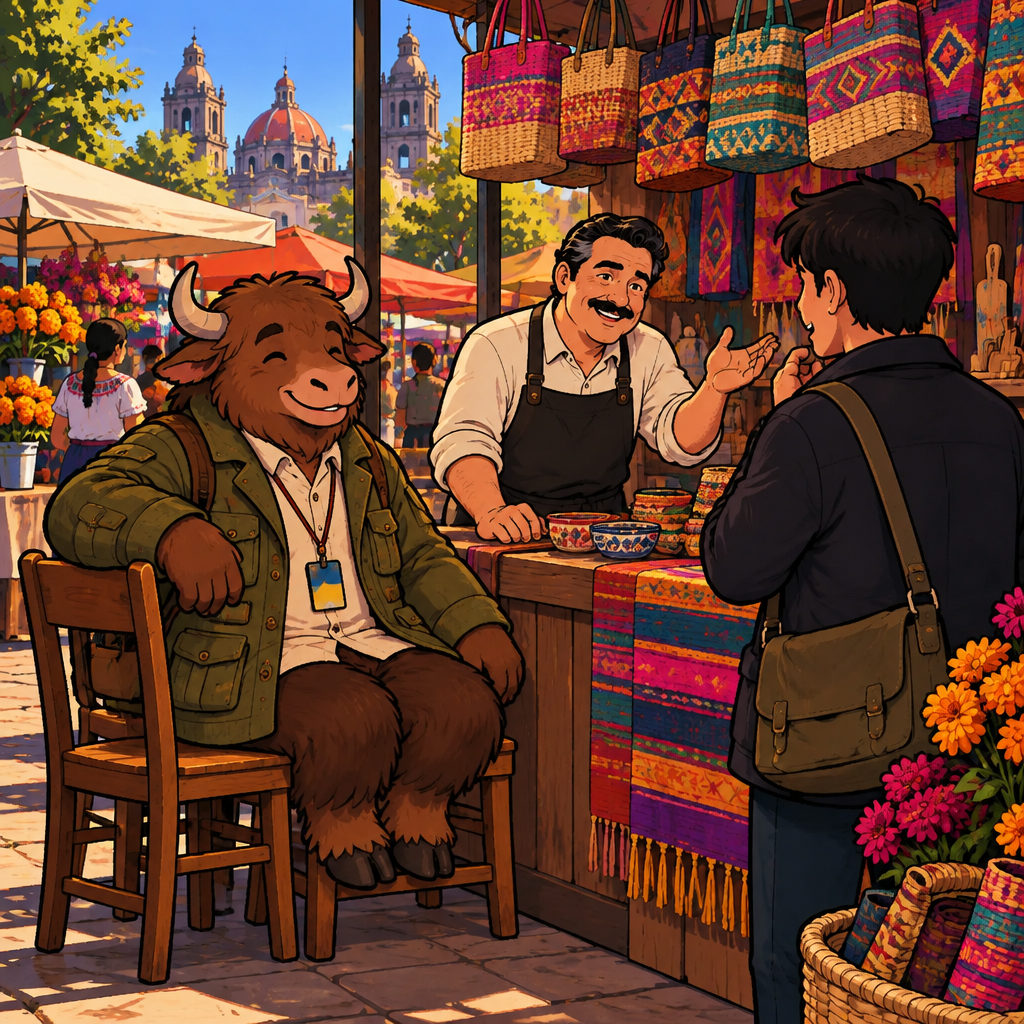
Aquí se acostumbra ___
Here people usually ___
When to use it: Use this to describe a local habit people generally follow.
Acostumbrar describes what is customary; the se keeps it about people in general, so learn aquí se acostumbra as one piece.
Say it: ah-KEE seh ah-kohs-TOOM-brah
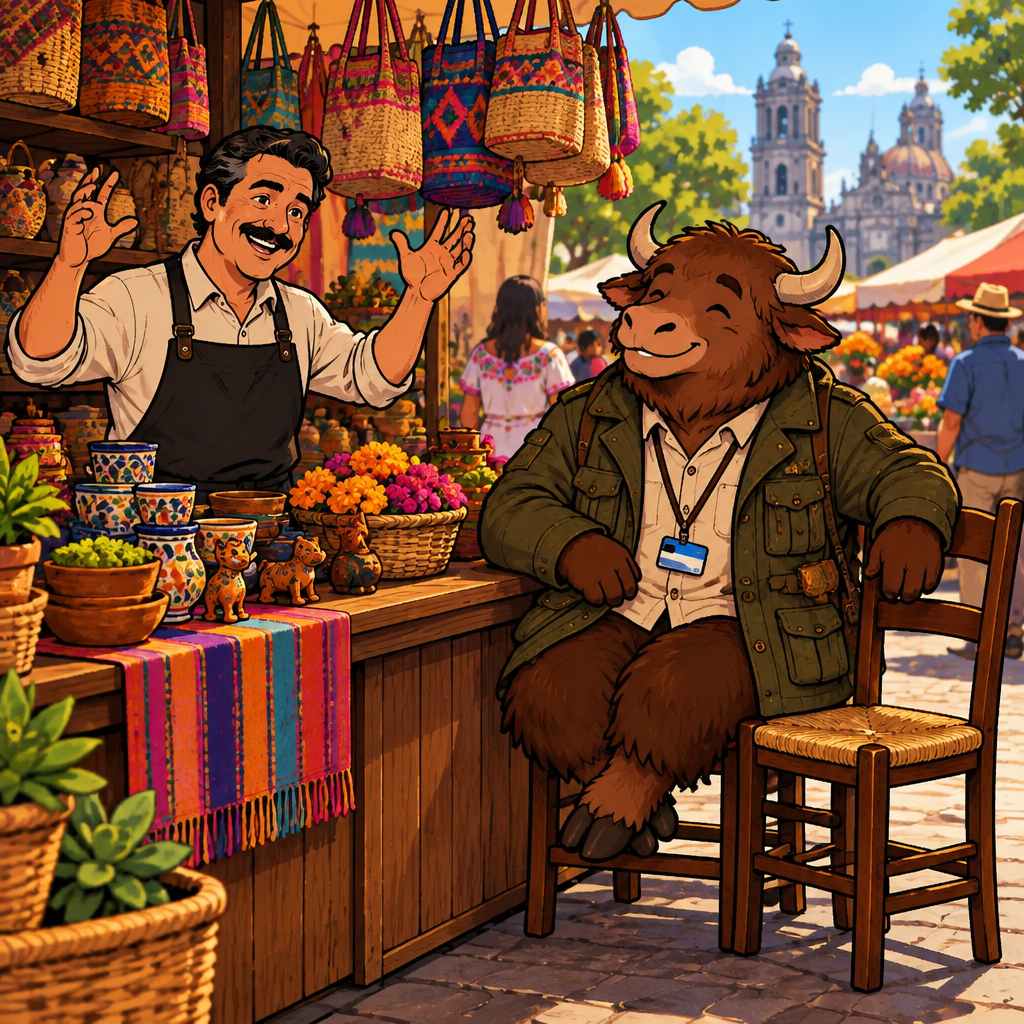
Se celebra ___
People celebrate ___
When to use it: Use this to explain what people celebrate in a place or community.
Se celebra uses an impersonal se, so the focus stays on the celebration rather than on a named person.
Say it: seh seh-LEH-brah
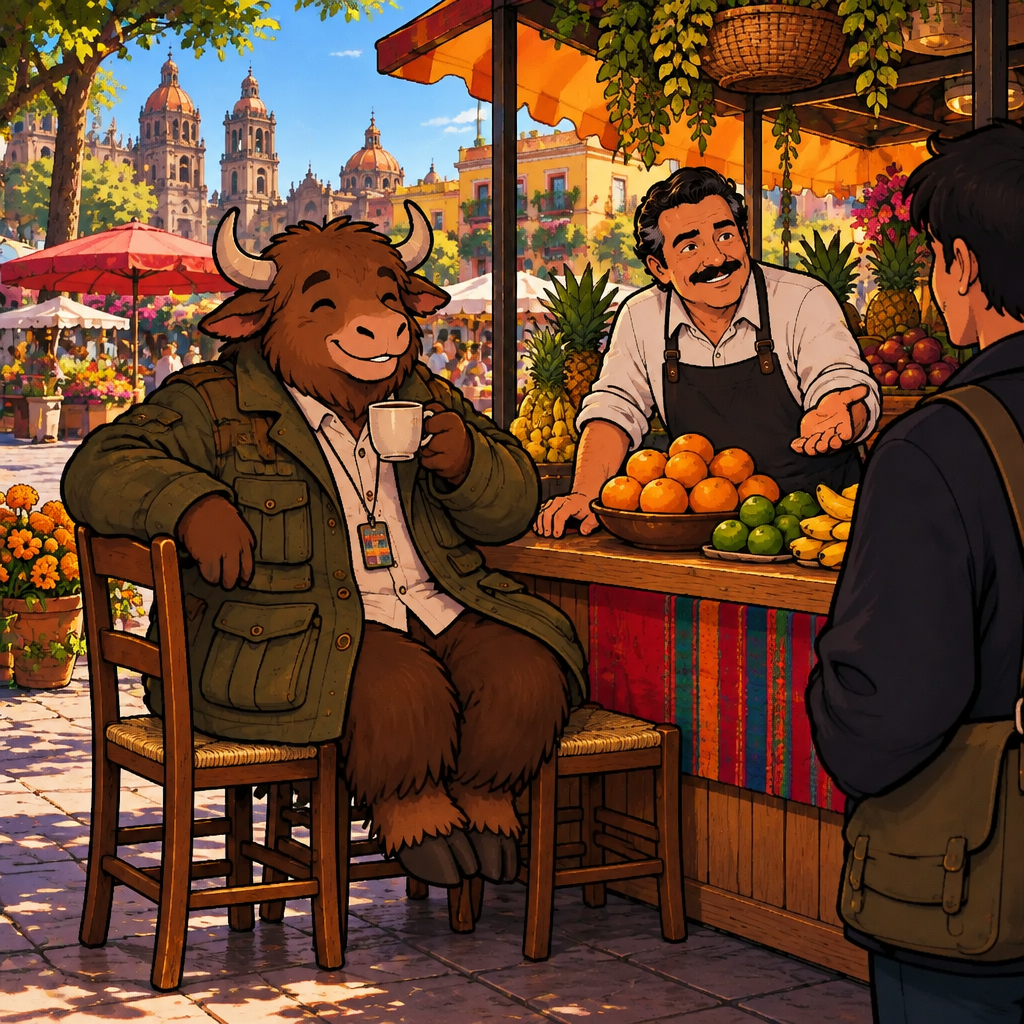
¿Y en tu país?
And where you're from?
When to use it: Ask this after hearing how a custom works in the other person's country.
Tu is informal here because this is a conversation between acquaintances, not a formal interview.
Say it: ee ehn too pah-EES
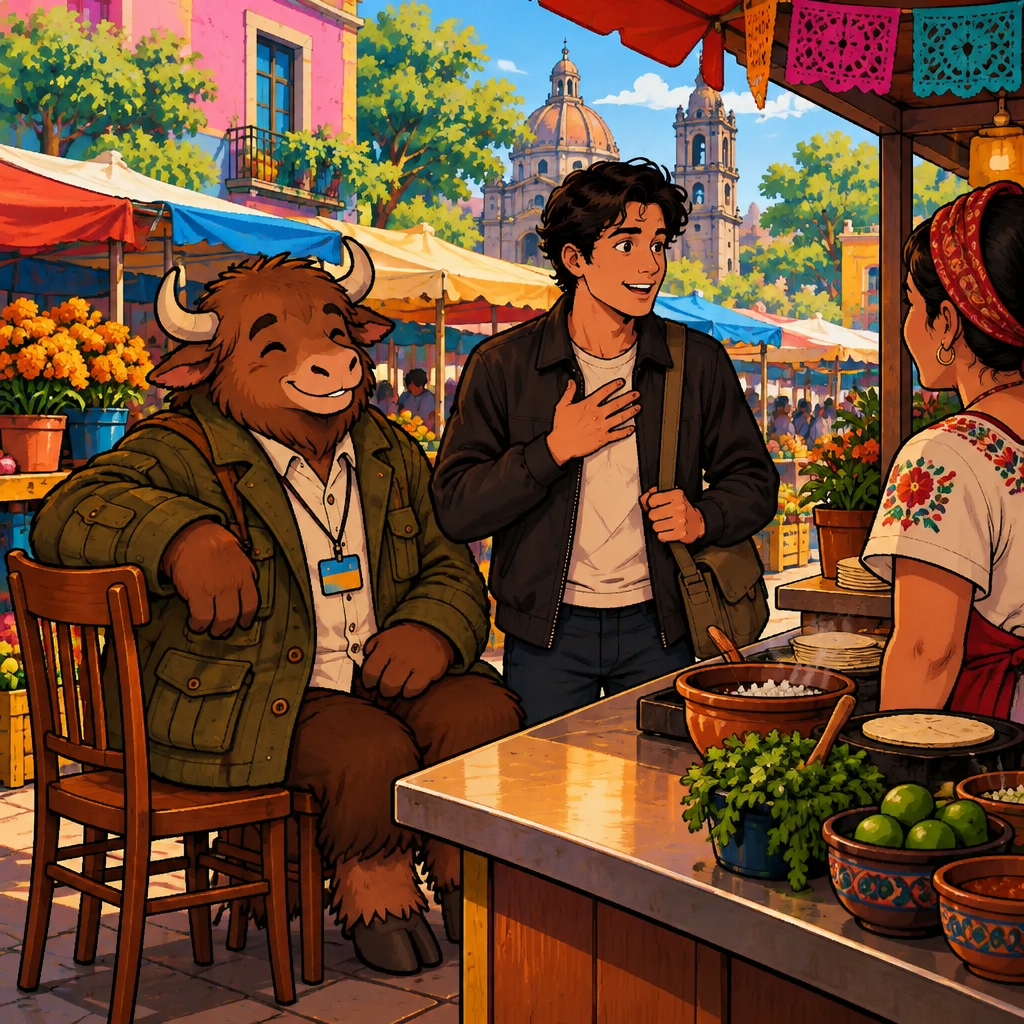
No lo sabía
I didn't know that
When to use it: Say this when new information about a custom surprises you.
Sabía is the imperfect of saber because the knowledge was already absent before this moment.
Say it: noh loh sah-BEE-ah

Me late
I like that
When to use it: Use this informal Mexico City phrase to show that an idea appeals to you.
Me late literally involves a heartbeat, but here it means something sounds good or appealing.
Say it: meh LAH-teh
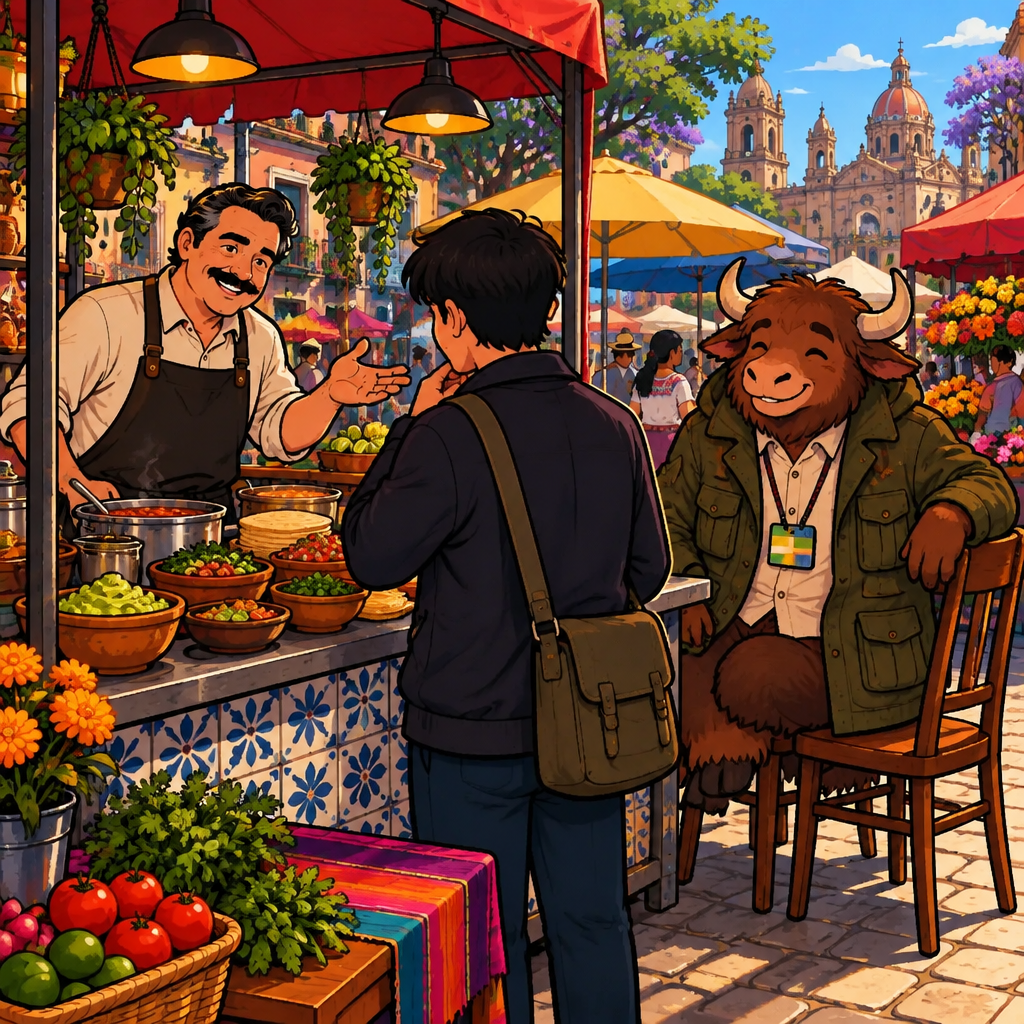
¿Eso se hace en tu casa?
Do you do that at home?
When to use it: Ask whether the custom also happens in the other person's household.
Se hace keeps the action general; it asks about the practice, not about one person's specific role.
Say it: EH-soh seh AH-seh ehn too KAH-sah
Story — greeting before shopping
At Ben's stall, Justin learns that a greeting comes before a price question. Listen for the custom, the comparison, and Justin's reaction.
The highlighted chunks are today's lines. Turn on Show English if you need help.
- BenHola. ¿Cómo estás?Hi. How are you?
 JustinBien, gracias. ¿Cuánto cuesta esta bolsa?I'm good, thanks. How much does this bag cost?
- BenSon cien pesos. Aquí se acostumbra saludar antes de preguntar el precio.It's one hundred pesos. Here people usually say hello before asking the price.
- Ben ties the bag and looks up, curious about the newcomer.
- Ben¿Y en tu país?And where you're from?
- JustinEn Chicago preguntamos el precio primero.In Chicago we ask the price first.
- BenInteresante. Y aquí se celebra el Día de Muertos con la familia.Interesting. And here people celebrate Day of the Dead with family.
- JustinNo lo sabía. Me late.I didn't know that. I like that.
- Ben¿Eso se hace en tu casa?Do you do that at home?
- JustinNo, en Chicago no.No, not in Chicago.
- BenPues ya sabes: primero el saludo, luego el precio. Gracias.Well, now you know: first the greeting, then the price. Thanks.
Practice — notice the custom
You'll listen for the meaning, match ideas, fill gaps, and put a short exchange in order. Review lines return inside the conversation.
Read the situation carefully before choosing; several customs can sound similar in English.
0 of 10 done
What did you hear?
What did you hear?
Match the pairs
Spanish
¿Cómo estás?Drop the English hereGraciasDrop the English hereMe lateDrop the English hereEnglish
What do you say?
What do you say?
Say the whole sentence: Here people usually say hello before asking the price.
Fill the gap
Fill the gap
People celebrate ___
Se ____ ___
What does it mean?
What does it mean?
Aquí se acostumbra ___
What does it mean?
What does it mean?
Hola.
True or false?
True or false?
This line asks whether the other person follows the practice at home.
Put the chat in order
- BenWhat comes first?
- Justin…
- Ben…
What do you say?
What do you say?
You had no idea that people here greet each other before asking prices. React to what Ben just told you.
Build the line
Build the line
I like that
Tap the words in order.
Say it — ask about home
Now you are Justin at Ben's stall. React to his custom, hear about one more, and say what you think of it.
Tap ▶ to hear the model line, then tap the microphone. Your recording stays on your device.
- BenAquí se acostumbra saludar antes de preguntar el precio.Here people usually say hello before asking the price.
- Justin (you)Ask whether he also does that at his own home.
Ask whether he also does that at his own home.
¿Eso se hace en tu casa?
Do you do that at home?
0 of 3 said
Recap — what you can say now
| Spanish | English | Play |
|---|---|---|
| Aquí se acostumbra ___ | Here people usually ___ | |
| Se celebra ___ | People celebrate ___ | |
| ¿Y en tu país? | And where you're from? | |
| No lo sabía | I didn't know that | |
| Me late | I like that | |
| ¿Eso se hace en tu casa? | Do you do that at home? |
Save your progress — it’s free
Keep your place in the course and see which lines you’ve learned.
Want the next lesson in your inbox?
Get the next lesson by email, one a day.
Join the newsletterDaily lesson emails are coming soon. Newsletter subscribers get them first.
Keep practicing with Yak Cards
Want to keep these custom phrases handy? Grab the Yak Cards for this lesson and review them anywhere.
Use the Yak Cards to compare one local habit with a custom from home.
Open Yak Cards