
New here? This is lesson 16 of a free 238-lesson Spanish course.
Free Spanish CourseLesson 16 of 238
Is this yours in Spanish
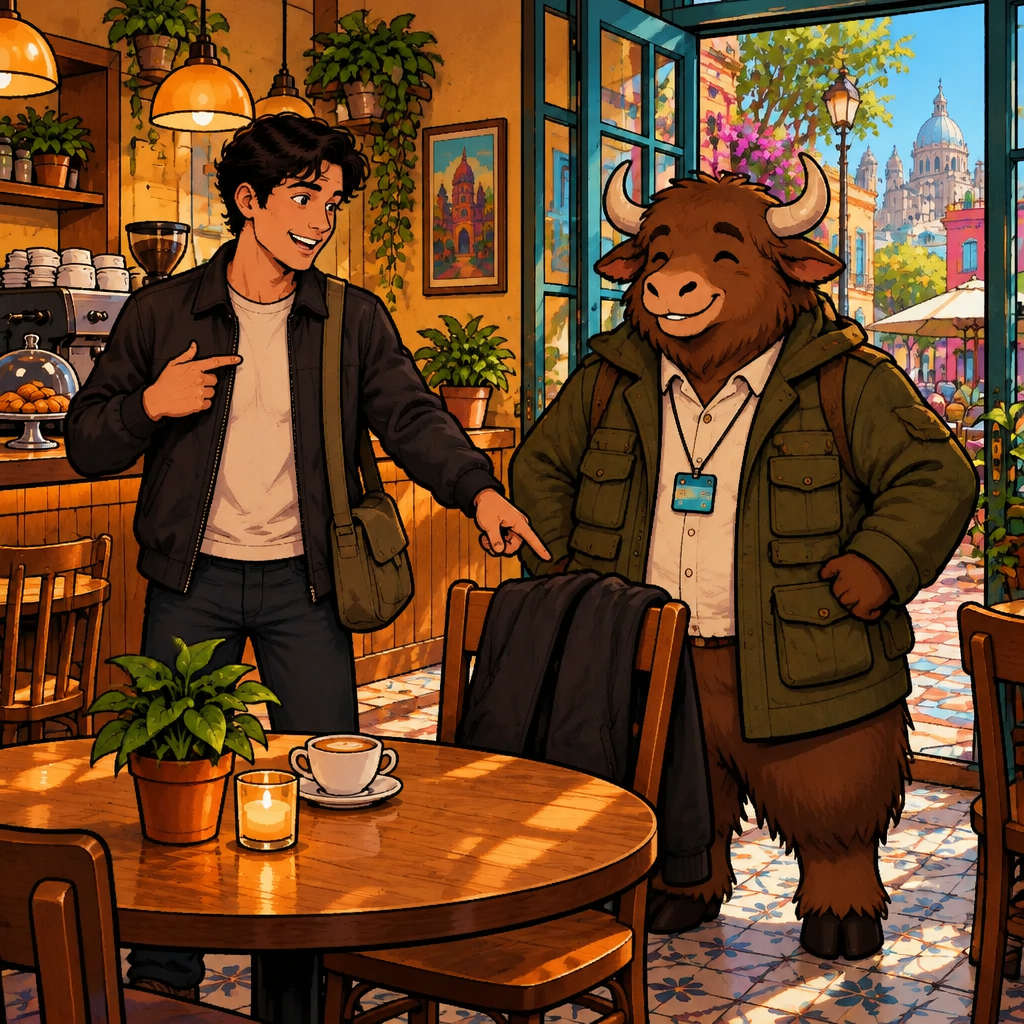
A second jacket is on the chair at Café Laurel. Justin's own jacket is already with him.
You'll ask if something is his, say it isn't yours, and say what you have between you.
Yako's coat already has too many pockets. The second jacket is his.
By the end of this lesson
Ask whose something is, say it isn't yours, and say what you have between you.
- ¿Es tuyo?Is it yours?
- Esto no es míoThis isn't mine
- Estos son míosThese are mine
- ¿Quién tiene ___?Who has ___?
- Tenemos ___We've got ___
- Solo tengo ___I've only got ___
Scene — the second jacket
It's early afternoon at the Café Laurel table. A second jacket is on the empty chair.
Justin has his phone and his own jacket. Yako's coat is already full of pockets.

Learn — yours and ours
Six lines for whose it is and what you have.
Tap ▶ to hear each one, then say it out loud before you move on.

¿Es tuyo?
Is it yours?
When to use it: Ask this when one thing might be his.
Tuyo is yours, for one thing.
Say it: ehs TOO-yoh

Esto no es mío
This isn't mine
When to use it: Say this to turn one thing away.
Esto is this thing, right here.
Say it: EHS-toh noh ehs MEE-oh

Estos son míos
These are mine
When to use it: Say this for more than one thing that is yours.
Son and míos are for more than one.
Say it: EHS-tohs sohn MEE-ohs

¿Quién tiene ___?
Who has ___?
When to use it: Ask this when you can't see who has it.
Say it: kyehn TYEH-neh
Tenemos ___
We've got ___
When to use it: Say this for something you and someone else have.
Tenemos is we have, you and another person.
Say it: teh-NEH-mohs

Solo tengo ___
I've only got ___
When to use it: Say this when that is all you have.
Solo limits it. Tengo is I have.
Say it: SOH-loh TEN-goh
Story — too many pockets
Watch who the jacket belongs to. The highlighted words are the new lines.
Tap Play the scene to hear it, and turn on Show English if you get stuck.
- Amanda holds up the second jacket and looks at Justin.
 Amanda¿Es tuyo?Is it yours?
 JustinEsto no es mío.This isn't mine.
- Amanda¿Quién tiene la chaqueta?Who has the jacket?
- She looks at Yako, whose coat is already full of pockets.
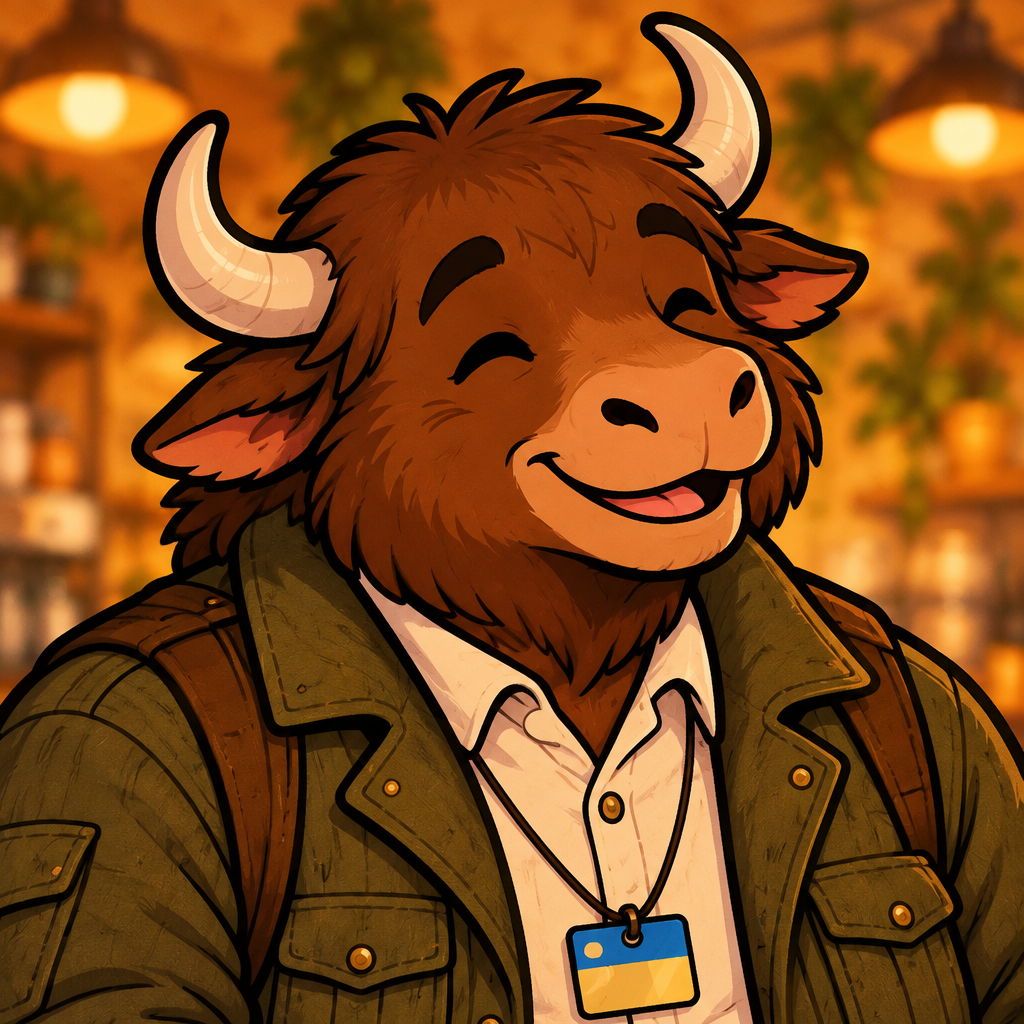 YakoEs mío.It's mine.
- Justin taps his phone and his own jacket.
- JustinEstos son míos.These are mine.
- JustinSolo tengo estos.I've only got these.
- He counts his jacket and Yako's.
- JustinTenemos dos.We've got two.
Practice — whose is it
Ten short exercises. You'll listen, match, and say whose it is.
If you miss one, try again or skip. The reason shows after the right answer.
0 of 10 done
What did you hear?
What did you hear?
Match the pairs
Spanish
¿Es tuyo?Drop the English hereEsto no es míoDrop the English hereEstos son míosDrop the English hereTenemos ___Drop the English hereEnglish
What do you say?
What do you say?
Amanda holds up the second jacket. It is not yours.
Fill the gap
Fill the gap
This isn't mine
Esto no es ____
What does it mean?
What does it mean?
Tenemos ___
What do you say?
What do you say?
Yako claims the second jacket. What does he say?
Swap the word
Swap the word
You have one thing, and that is all.
____ ___
Which one doesn’t belong?
Which one doesn’t belong?
Build the line
Build the line
This one, please
,
Tap the words in order.
What do you say?
What do you say?
Your phone is in your hand. Say you have it, not that it is the only thing.
Say it — ask whose it is
You are Justin. Amanda asks about the jacket, and you sort what is yours.
Tap the microphone when it's your turn. Tap ▶ to hear the line first. Your recording stays on your device.
- Amanda¿Es tuyo?Is it yours?
- Justin (you)Tell her this jacket isn't yours.
Tell her this jacket isn't yours.
Esto no es mío
This isn't mine
0 of 5 said
Recap — what you can say now
| Spanish | English | Play |
|---|---|---|
| ¿Es tuyo? | Is it yours? | |
| Esto no es mío | This isn't mine | |
| Estos son míos | These are mine | |
| ¿Quién tiene ___? | Who has ___? | |
| Tenemos ___ | We've got ___ | |
| Solo tengo ___ | I've only got ___ |
Save your progress — it’s free
Keep your place in the course and see which lines you’ve learned.
Want the next lesson in your inbox?
Get the next lesson by email, one a day.
Join the newsletterDaily lesson emails are coming soon. Newsletter subscribers get them first.
Keep practicing with Yak Cards
Want these lines handy? Grab the Yak Cards and flip them anywhere.
Yours, mine, and what we have come up every time a jacket lands on a chair.
Open Yak Cards