
New here? This is lesson 86 of a free 238-lesson Spanish course.
Free Spanish CourseLesson 86 of 238
The rent and the neighborhood in Spanish
Justin is still figuring out housing in Mexico City, and Amanda has useful details about the neighborhood.
You'll ask about rent, say what it costs each month, and describe a floor and your colonia.
You'll also ask how long someone has lived there and explain that you're looking for a new place. There is still no contract.
By the end of this lesson
Talk about rent, floors, neighborhoods, and looking for a new place.
- ¿Cuánto cuesta la renta?How much is the rent?
- La renta es de ___ al mesRent is ___ a month
- Está en el piso ___It's on the ___ floor
- Mi colonia es ___My neighborhood is ___
- ¿Cuánto tiempo llevas viviendo ahí?How long have you lived there?
- Estoy buscando un lugar nuevoI'm looking for a new place
Scene — a hallway housing chat
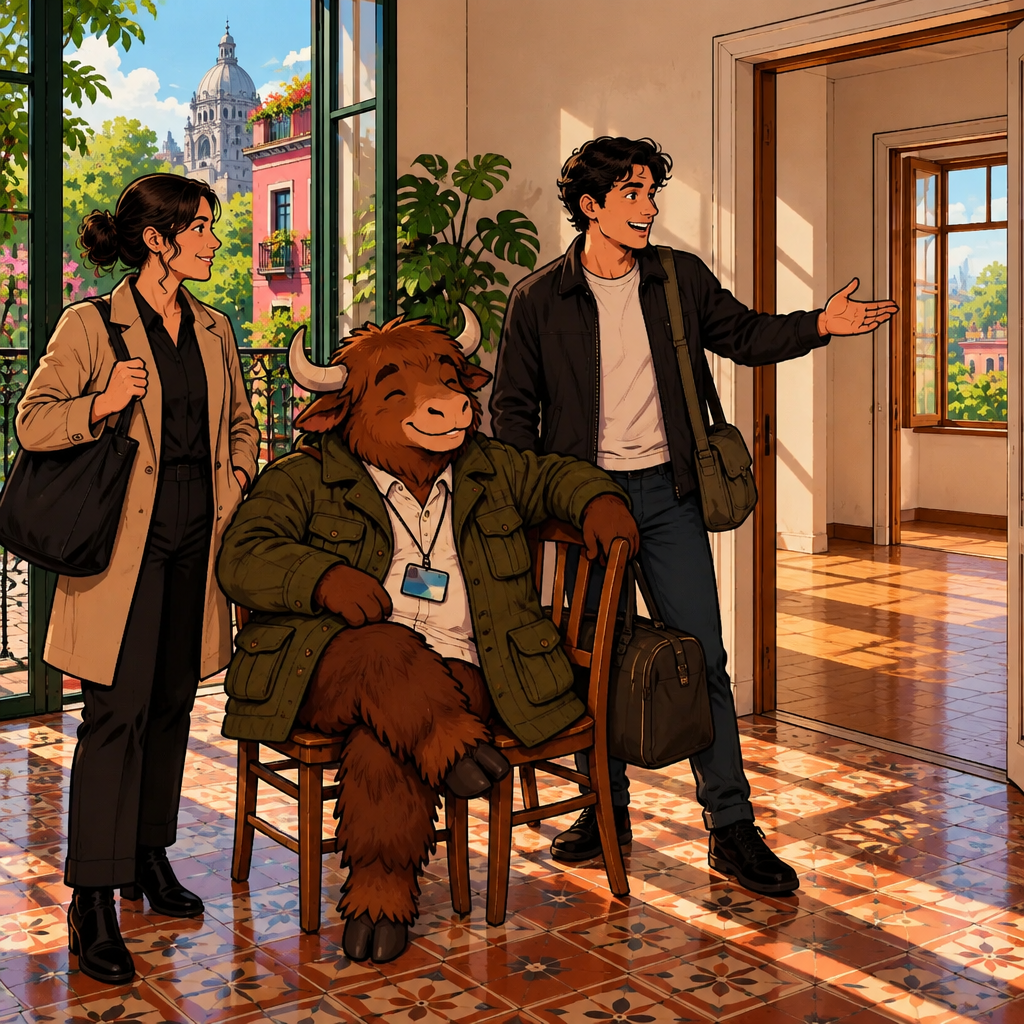
In the hallway of the building near Café Laurel, Amanda is heading out to work and Justin is asking about housing.
She names Colonia El Laurel, gives a monthly rent example, and asks how long he has lived there.
Yako listens from his usual two chairs and offers one unusual description of home.

Learn — rent, floors, and neighborhoods
These six chunks help you compare places and ask practical housing questions in everyday Mexican Spanish.
Learn each one as a useful piece, not as a word-for-word translation.

¿Cuánto cuesta la renta?
How much is the rent?
When to use it: Ask this when you want to know the monthly rent for a place.
La renta means rent; learn the whole question as one useful piece.
Say it: KWAN-toh KWEHS-tah lah REHN-tah

La renta es de ___ al mes
Rent is ___ a month
When to use it: Use this to state the monthly rent and put the amount in the blank.
Es de introduces the amount; al mes means per month.

Está en el piso ___
It's on the ___ floor
When to use it: Use this to say which floor a home or place is on.
Piso means floor in a building; add an ordinal after it.
Say it: ehs-TAH ehn ehl PEE-soh

Mi colonia es ___
My neighborhood is ___
When to use it: Use this to name the neighborhood where you live.
Colonia commonly means neighborhood in Mexico City.

¿Cuánto tiempo llevas viviendo ahí?
How long have you lived there?
When to use it: Ask this to find out how long someone has lived in that place.
Llevas viviendo asks about an ongoing time period, not a single past event.
Say it: KWAN-toh TYEHM-poh YEH-bahs bee-BYEN-doh ah-EE
Estoy buscando un lugar nuevo
I'm looking for a new place
When to use it: Say this when you are searching for a different home or place to live.
Estoy buscando describes an activity happening now.
Say it: ehs-TOY boos-KAN-doh oon loo-GAR NWEH-boh
Story — Amanda's hallway update
Amanda gives Justin a quick housing tour in the hallway before she goes to work.
Listen for rent, the floor, the colonia, and his search for a new place. Turn on Show English if needed.
- Amanda is carrying her work bag and checking the time before leaving.
 AmandaVivo en Colonia El Laurel. Mi casa es pequeña.I live in Colonia El Laurel. My place is small.
 Justin¿Cuánto cuesta la renta?How much is the rent?
- AmandaLa renta es de ocho mil pesos al mes.Rent is eight thousand pesos a month.
- Justin¿En qué piso está?What floor is it on?
- AmandaEstá en el piso tercero.It's on the third floor.
- JustinMi colonia es El Laurel también.My neighborhood is El Laurel too.
- Amanda¿Cuánto tiempo llevas viviendo ahí?How long have you lived there?
- JustinLlevo poco tiempo. Estoy buscando un lugar nuevo.I've lived there a short time. I'm looking for a new place.
 YakoMi casa es dos sillas.My home is two chairs.
- Amanda¿Dos sillas? Bueno, cada quien.Two chairs? Well, to each their own.
- AmandaMe tengo que ir a trabajar.I've got to go to work.
Practice — talk about a place
You'll hear meanings, fill gaps, swap neighborhood names, and put a short housing conversation in order.
The review items bring back language from Justin's earlier housing talk.
0 of 11 done
What did you hear?
What did you hear?
Match the pairs
Spanish
Rento ___Drop the English hereMi casa es ___Drop the English hereVivo en ___.Drop the English hereEnglish
Fill the gap
Fill the gap
Rent is ___ a month
La ____ es de ___ al mes
Fill the gap
Fill the gap
How long have you lived there?
¿Cuánto ____ llevas viviendo ahí?
What do you say?
What do you say?
Amanda tells you the apartment is on the third floor.
Pick the reply
Amanda says:
Pick the reply
¿Qué quieres?
What do you want?
And you reply with:
What does it mean?
What does it mean?
Estoy buscando un lugar nuevo
What do you say?
What do you say?
You tell Amanda that your neighborhood is Colonia El Laurel.
What do you say?
What do you say?
You tell Amanda that you rent an apartment.
Put the chat in order
- JustinWhat comes first?
- Amanda…
- Justin…
Build the line
Build the line
How much is the rent?
¿ ?
Tap the words in order.
Say it — ask and answer about housing
Now you're Justin in the hallway, talking with Amanda before she goes to work.
Tap ▶ to hear each model line, then tap the microphone for your turn. Your recording stays on your device.
- AmandaMi casa está en Colonia El Laurel.My place is in Colonia El Laurel.
- Justin (you)Ask how long she has lived there.
Ask how long she has lived there.
¿Cuánto tiempo llevas viviendo ahí?
How long have you lived there?
0 of 3 said
Recap — what you can say now
| Spanish | English | Play |
|---|---|---|
| ¿Cuánto cuesta la renta? | How much is the rent? | |
| La renta es de ___ al mes | Rent is ___ a month | |
| Está en el piso ___ | It's on the ___ floor | |
| Mi colonia es ___ | My neighborhood is ___ | |
| ¿Cuánto tiempo llevas viviendo ahí? | How long have you lived there? | |
| Estoy buscando un lugar nuevo | I'm looking for a new place |
Save your progress — it’s free
Keep your place in the course and see which lines you’ve learned.
Want the next lesson in your inbox?
Get the next lesson by email, one a day.
Join the newsletterDaily lesson emails are coming soon. Newsletter subscribers get them first.
Keep practicing with Yak Cards
Want to keep these housing chunks handy? Grab the Yak Cards for this lesson and review them anywhere.
A quick Yak Cards round helps you talk about rent and your neighborhood without translating every word.
Open Yak Cards