
New here? This is lesson 230 of a free 238-lesson Spanish course.
Free Spanish CourseLesson 230 of 238
Hotter every year in Spanish
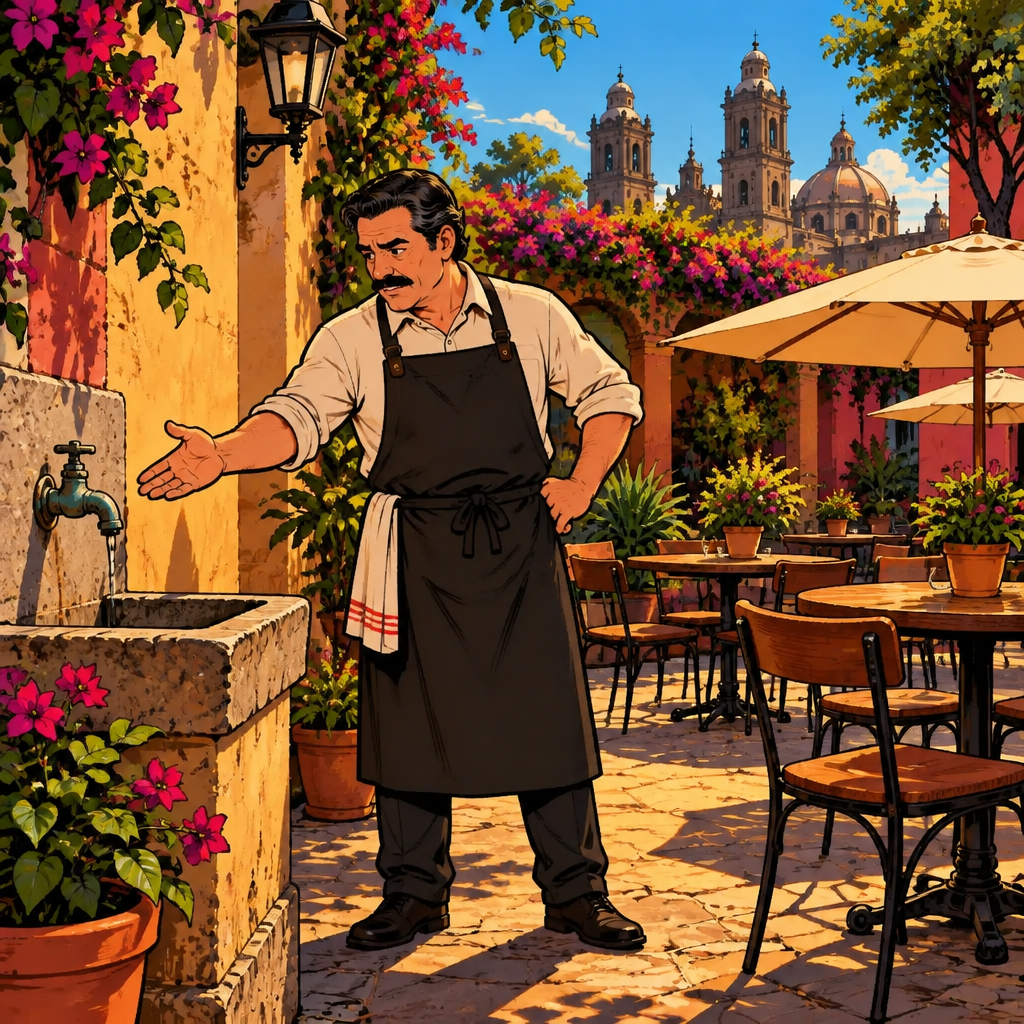
The tap is off again at Café Laurel, and this time the problem feels bigger than one dry afternoon.
You'll talk about changes over time, less water, your block, and one practical thing a neighbor can do.
The goal isn't a lecture. It's a natural conversation about what you can see and what you can try together.
By the end of this lesson
Describe a change over time and suggest one practical action for your block.
- Cada año hace más calorIt's hotter every year.
- Hay menos aguaThere's less water.
- En mi cuadra, ___On my block, ___.
- ¿Qué hacemos con ___?What do we do about ___?
- No es solo esta semanaIt isn't just this week.
- Yo puedo ___I can ___.
Scene — the dry tap
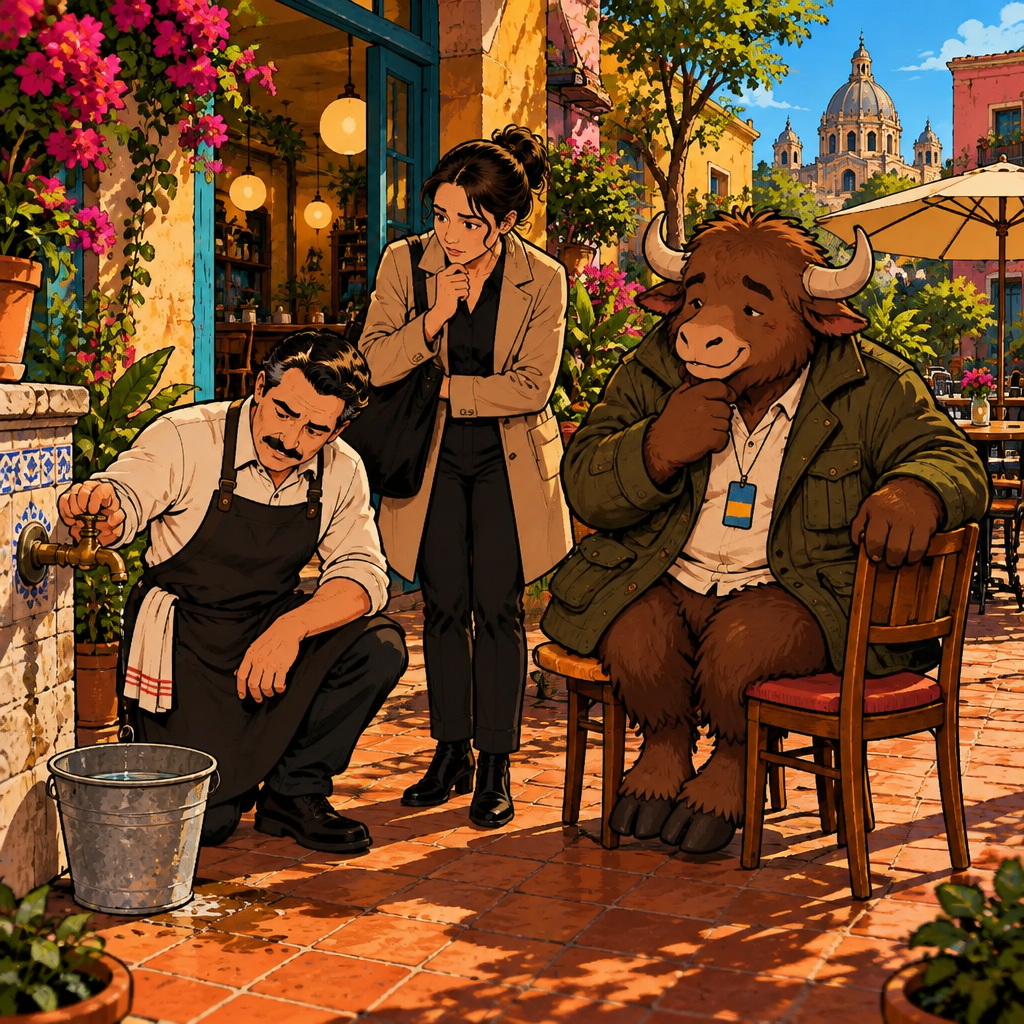
Late afternoon at Café Laurel, where the courtyard tap has stopped running. The pavement is hot, and a completely dry bucket sits beneath the faucet.
Michael has checked the valve twice. Amanda has come downstairs, and Yako is balancing on his usual two chairs near the doorway.
Learn — change and action
These chunks help you connect a current situation with a pattern over time, then move toward a specific, manageable action.
Notice how the frame lines let you add the detail that matters.
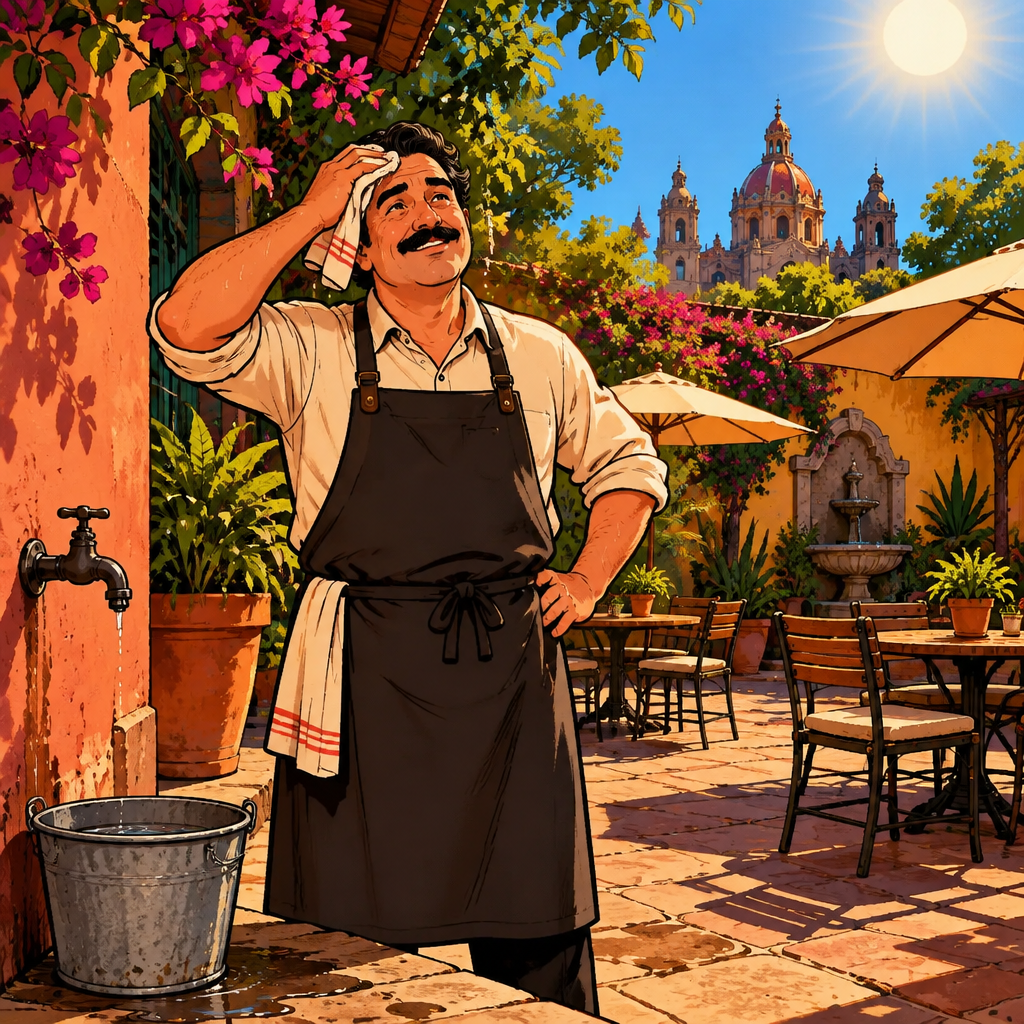
Cada año hace más calor
It's hotter every year.
When to use it: Use this to describe a continuing increase in heat from year to year.
Hace más calor means it is hotter, while cada año marks the repeated comparison over time.
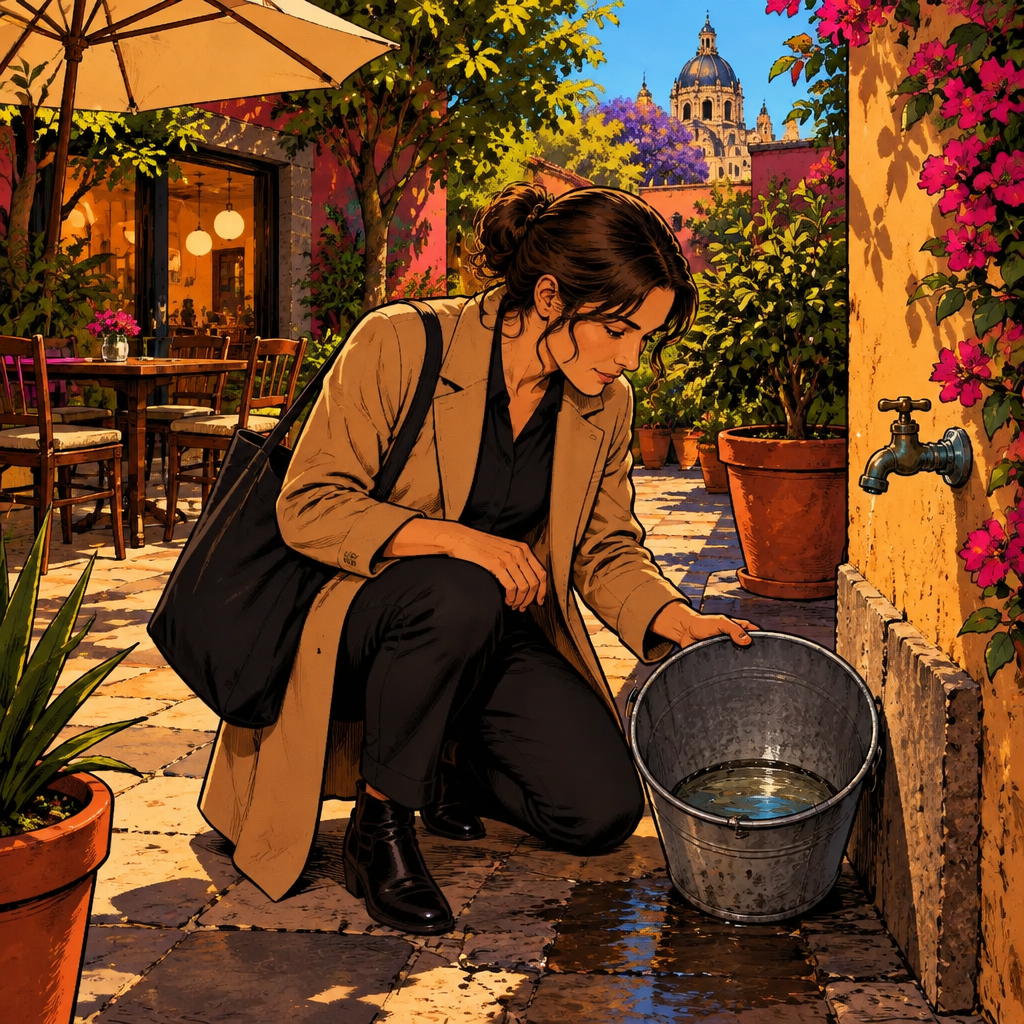
Hay menos agua
There's less water.
When to use it: Use this when the available amount of water has decreased.
Hay stays unchanged, and menos goes before the noun to mean a smaller amount.
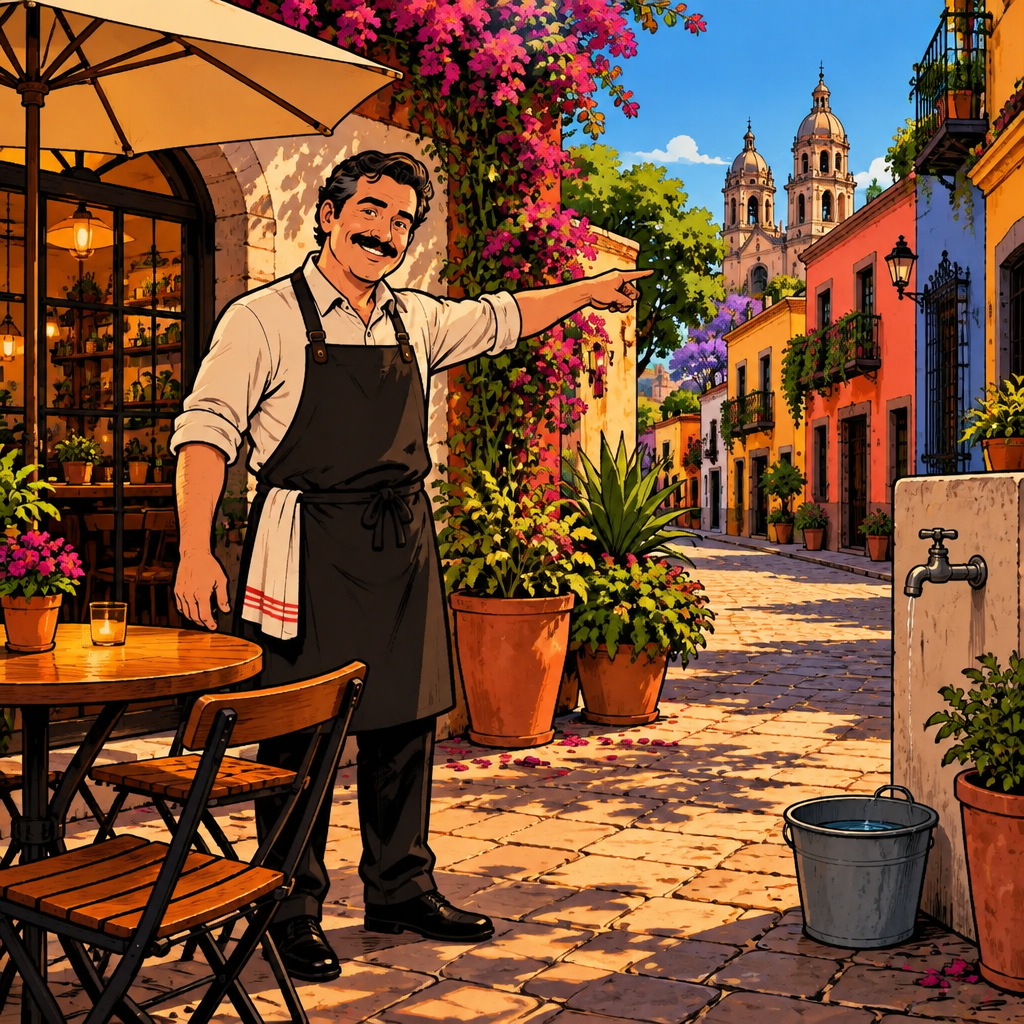
En mi cuadra, ___
On my block, ___.
When to use it: Use this frame to connect an observation or action specifically to your block.
Cuadra means a city block; fill the frame with a complete idea, not just a noun.

¿Qué hacemos con ___?
What do we do about ___?
When to use it: Ask this when you want a practical response to a problem or situation.
Hacemos means we do, so the question invites a shared solution rather than assigning blame.
No es solo esta semana
It isn't just this week.
When to use it: Use this to show that a current problem is part of a longer pattern.
Solo means just or only here, and esta semana points to the immediate situation.

Yo puedo ___
I can ___.
When to use it: Use this frame to volunteer one concrete thing you are able to do.
Puedo is the first-person form of poder; follow it with an infinitive such as revisar.
Story — one neighborly fix
Listen for how the neighbors move from a familiar weather observation to one small action they can actually take.
The highlighted chunks are today's lines. Show English can help if the conversation moves quickly.
- The courtyard tap is silent, and the bucket underneath it is completely dry.
 MichaelOtra vez está cerrado el paso de agua.The water supply is shut off again.
 JustinCada año hace más calor, ¿no?It's hotter every year, right?
 YakoY el patio se siente como comal.And the courtyard feels like a griddle.
- MichaelSí. Hay menos agua para todos.Yes. There's less water for everyone.
 AmandaNo es solo esta semana; lleva meses así.It isn't just this week; it's been like this for months.
- JustinYo vivo en El Laurel, ¿verdad?I live in El Laurel, right?
- AmandaSí, y en mi cuadra también pasa.Yes, and it happens on my block too.
- Yako¿Qué hacemos con la llave?What do we do about the faucet?
- MichaelPrimero revisamos si tiene fuga.First we check whether it has a leak.
- JustinEn mi cuadra, podemos ahorrar agua.On my block, we can save water.
- AmandaHace calor, pero podemos empezar con una cosa.It's hot, but we can start with one thing.
- JustinYo puedo revisar la llave antes de salir.I can check the faucet before I leave.
- MichaelEntonces, ¿qué hacemos?So, what do we do?
- JustinEntonces, ¿qué hacemos? Va. Hablamos con los vecinos y reviso la llave.So, what do we do? Okay. We talk with the neighbors, and I'll check the faucet.
- YakoSi el agua regresa, yo vigilo el balde.If the water comes back, I'll watch the bucket.
- AmandaPerfecto. Una cosa concreta para empezar.Perfect. One concrete thing to start with.
Practice — connect the ideas
You'll identify meanings, match ideas, fill a gap, swap a detail, and build complete responses.
The exercises keep the focus on one neighborhood problem instead of a general debate.
0 of 9 done
What did you hear?
What did you hear?
Match the pairs
Spanish
Hay menos aguaDrop the English hereNo es solo esta semanaDrop the English hereVivo en ___.Drop the English hereEnglish
Fill the gap
Fill the gap
It's hotter every year.
Cada año hace ____ calor
What do you say?
What do you say?
You want to explain that the dry tap is not a one-week problem.
What does it mean?
What does it mean?
¿Qué hacemos con ___?
True or false?
True or false?
This frame introduces a detail connected specifically to your city block.
Pick the reply
Yako says:
Pick the reply
¿Qué hacemos con la llave?
What do we do about the faucet?
And you reply with:
Sort them
Describes a change or situation
Moves toward a response
What did you hear?
What did you hear?
Say it — talk it through
Now you take Justin's side in a short exchange with Michael and Amanda about the dry tap.
Tap ▶ to hear each model line, then tap the microphone when it's your turn. Your recording stays on your device.
- MichaelCada año hace más calor.It's hotter every year.
- Justin (you)Agree that there's less water.
Agree that there's less water.
Hay menos agua
There's less water.
0 of 4 said
Recap — what you can say now
| Spanish | English | Play |
|---|---|---|
| Cada año hace más calor | It's hotter every year. | |
| Hay menos agua | There's less water. | |
| En mi cuadra, ___ | On my block, ___. | |
| ¿Qué hacemos con ___? | What do we do about ___? | |
| No es solo esta semana | It isn't just this week. | |
| Yo puedo ___ | I can ___. |
Save your progress — it’s free
Keep your place in the course and see which lines you’ve learned.
Want the next lesson in your inbox?
Get the next lesson by email, one a day.
Join the newsletterDaily lesson emails are coming soon. Newsletter subscribers get them first.
Keep practicing with Yak Cards
Want to review these neighborhood chunks away from the lesson? Grab the Yak Cards for quick practice.
Use the cards to connect a changing situation with one small action you can name.
Open Yak Cards