
New here? This is lesson 226 of a free 238-lesson Spanish course.
Free Spanish CourseLesson 226 of 238
So here's what happened in Spanish
Alex missed the weekend, so Justin has to tell the story again. This time, the goal isn't merely to list stops and meals.
You'll learn six chunks that give a retelling a shape: setting the scene, signaling a turn, adding a picture, and pausing when you're not ready for the next part.
At the next table, Yako remembers the weekend with suspicious confidence.
By the end of this lesson
Retell an experience with clear transitions, emphasis, and a natural pause.
- Resulta que ___So what happened was ___
- El detalle es que ___The thing is, ___
- Ahí fue cuando ___That's when ___
- Para que te des una ideaJust so you get the picture
- ¿Y sabes qué?And you know what?
- Todavía no llego a esoI'm not there yet
Scene — the weekend, retold
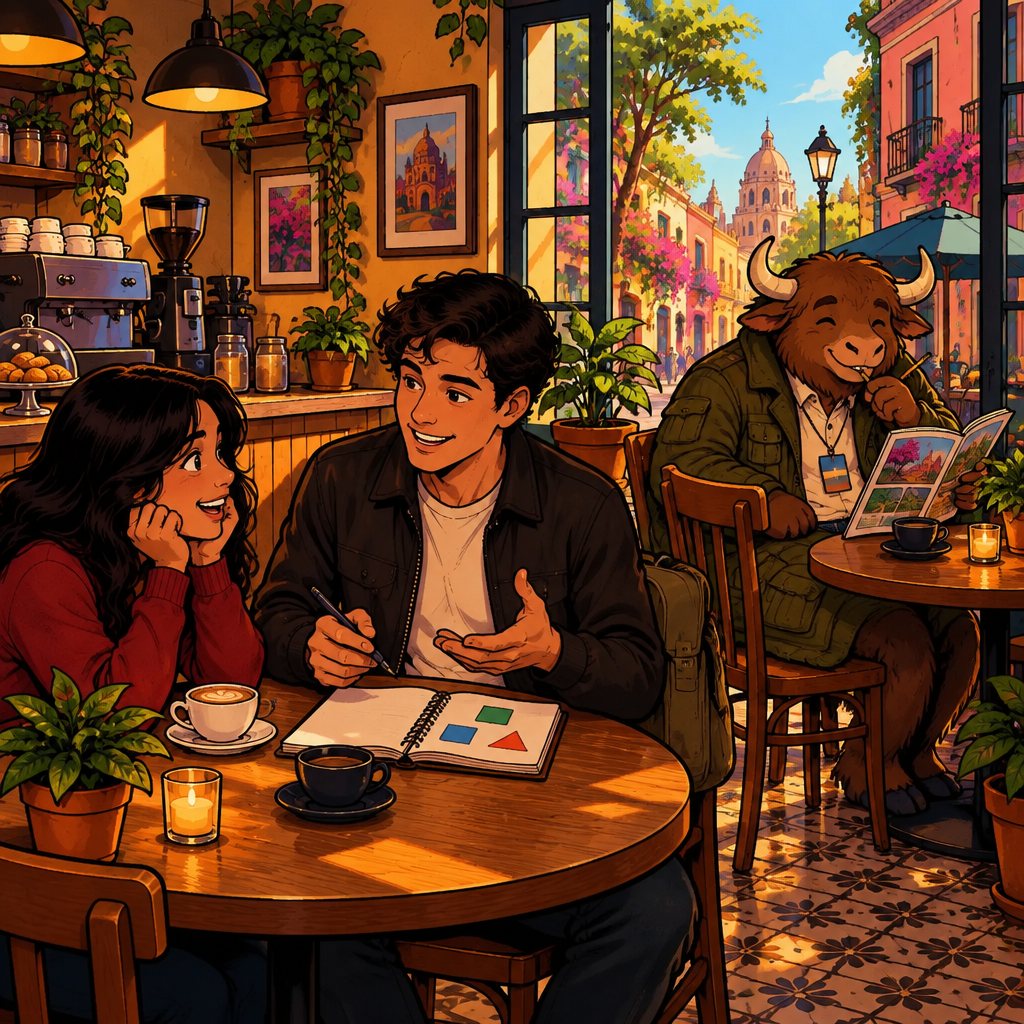
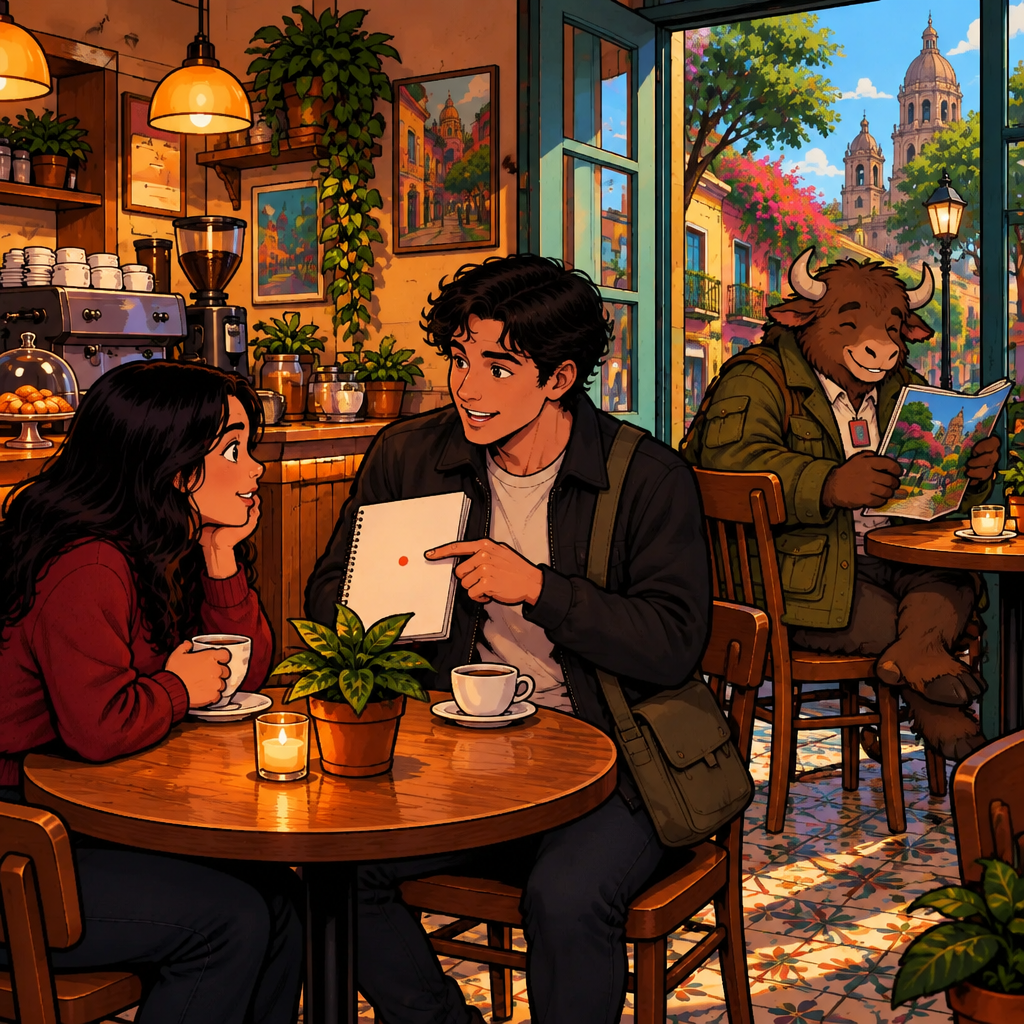
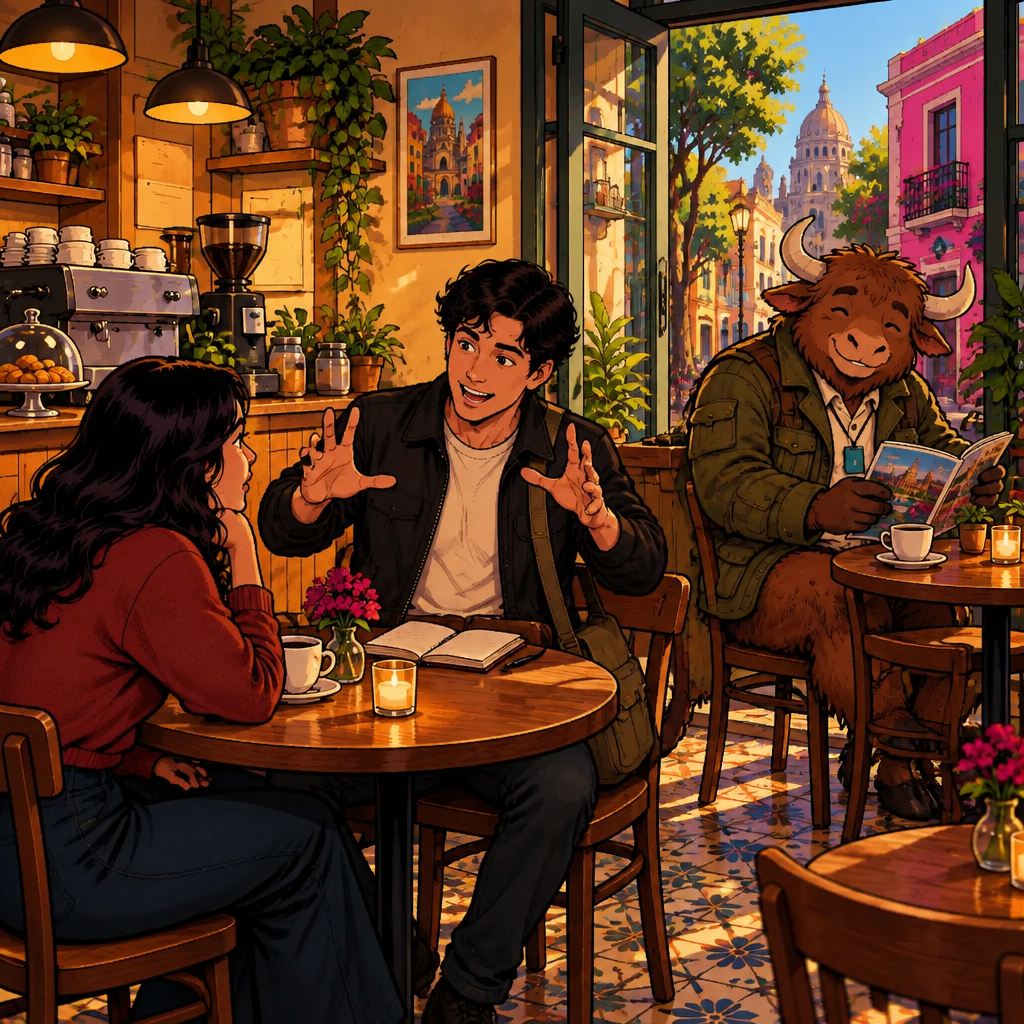
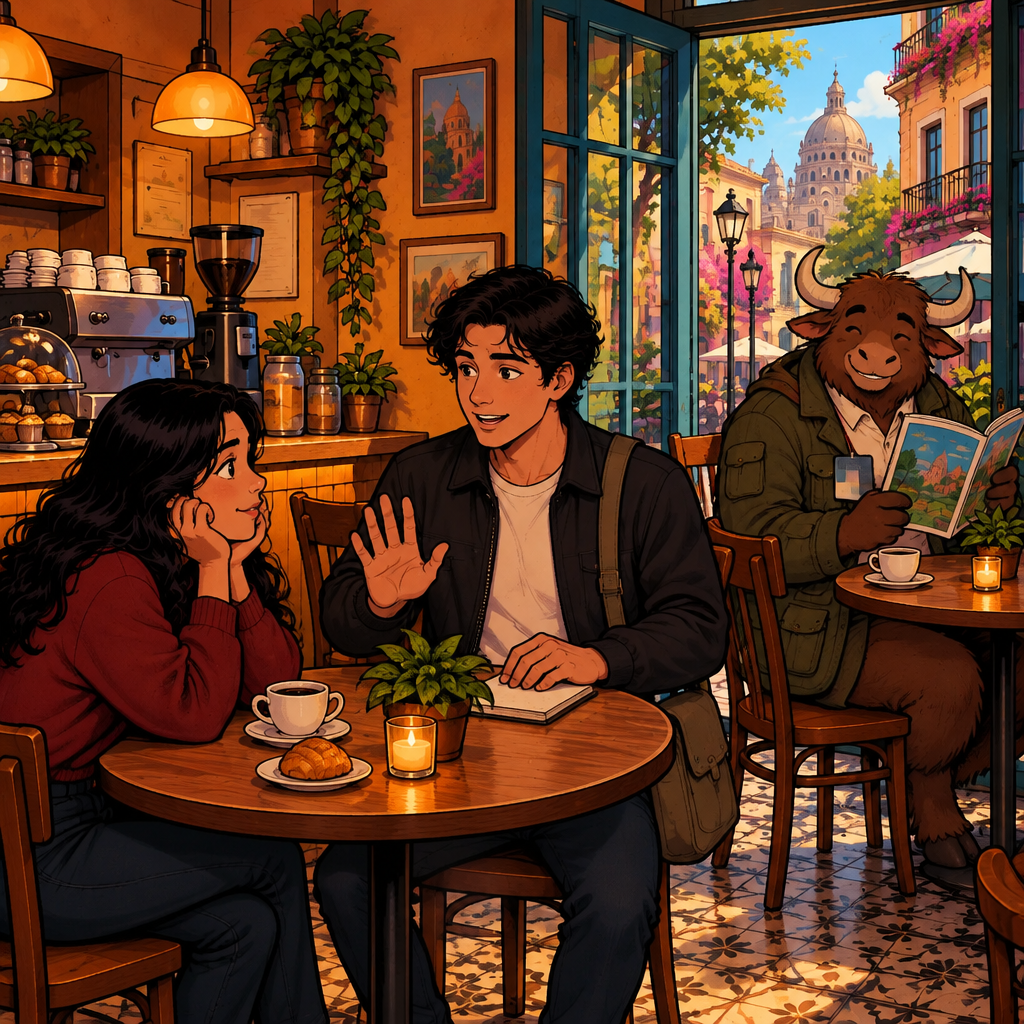
Late afternoon at Café Laurel. Alex has joined Justin at the front table and wants the weekend story, but Alex wasn't there for any of it.
Yako is at the next table, listening while pretending to read. Justin has notes, though the notes are already making the trip look unusually tidy.
Learn — shape the story
These chunks help you guide a listener through a story instead of dropping disconnected events on them.
Notice how some introduce information, while others signal a turning point or a pause.

Resulta que ___
So what happened was ___
When to use it: Use this to launch the real story behind an event or explain what actually happened.
It sounds conversational and often introduces background that the listener does not yet know.
Say it: reh-SOOL-tah keh
El detalle es que ___
The thing is, ___
When to use it: Use this to introduce the important complication or qualification in your account.
It focuses attention on one relevant detail, often gently correcting an overly simple version.
Say it: el deh-TAH-yeh ehs keh

Ahí fue cuando ___
That's when ___
When to use it: Use this to mark the moment when the next important event began.
It points back to a specific moment and gives the listener a clear turning point.
Say it: ah-EE fweh KWAHN-doh
Para que te des una idea
Just so you get the picture
When to use it: Use this before a concrete detail that helps your listener imagine the situation.
It is a natural conversational frame in Mexico; add the example immediately afterward.
Say it: PAH-rah keh teh dehs OO-nah ee-DEH-ah

¿Y sabes qué?
And you know what?
When to use it: Use this to create interest before revealing an unexpected or especially meaningful detail.
The question invites attention, but it usually leads straight into your own next sentence.
Say it: ee SAH-behs keh
Todavía no llego a eso
I'm not there yet
When to use it: Use this when someone jumps ahead and you need to hold your place in the story.
It means you have not reached that part of the account, not that you cannot physically get there.
Say it: toh-dah-VEE-ah noh YEH-goh ah EH-soh
Story — almost one stop too many
Alex wasn't there, so listen for how Justin turns a list of weekend events into a story with emphasis and a point.
Yako nearly supplies a stop that never happened. Turn on Show English if you need it.
- Alex opens a chair at Justin's table. Yako listens from the next table, one hoof resting on a notebook.
- Alex¿Qué hiciste el fin de semana?What did you do this weekend?
 JustinResulta que fui a un pueblo pequeño el sábado.So what happened was, I went to a small town on Saturday.
- Alex¿Y luego?And then?
- JustinEn el camino, paramos para comer; después caminamos por el centro.On the way, we stopped to eat; afterward, we walked through downtown.
- JustinEl detalle es que el lugar estaba cerrado, aunque el mapa decía que abría.The thing is, the place was closed, even though the map said it was open.
- Alex¿Y qué pasó después?And what happened next?
- JustinAhí fue cuando empezó a llover y tuvimos que cambiar de plan.That's when it started raining and we had to change our plan.
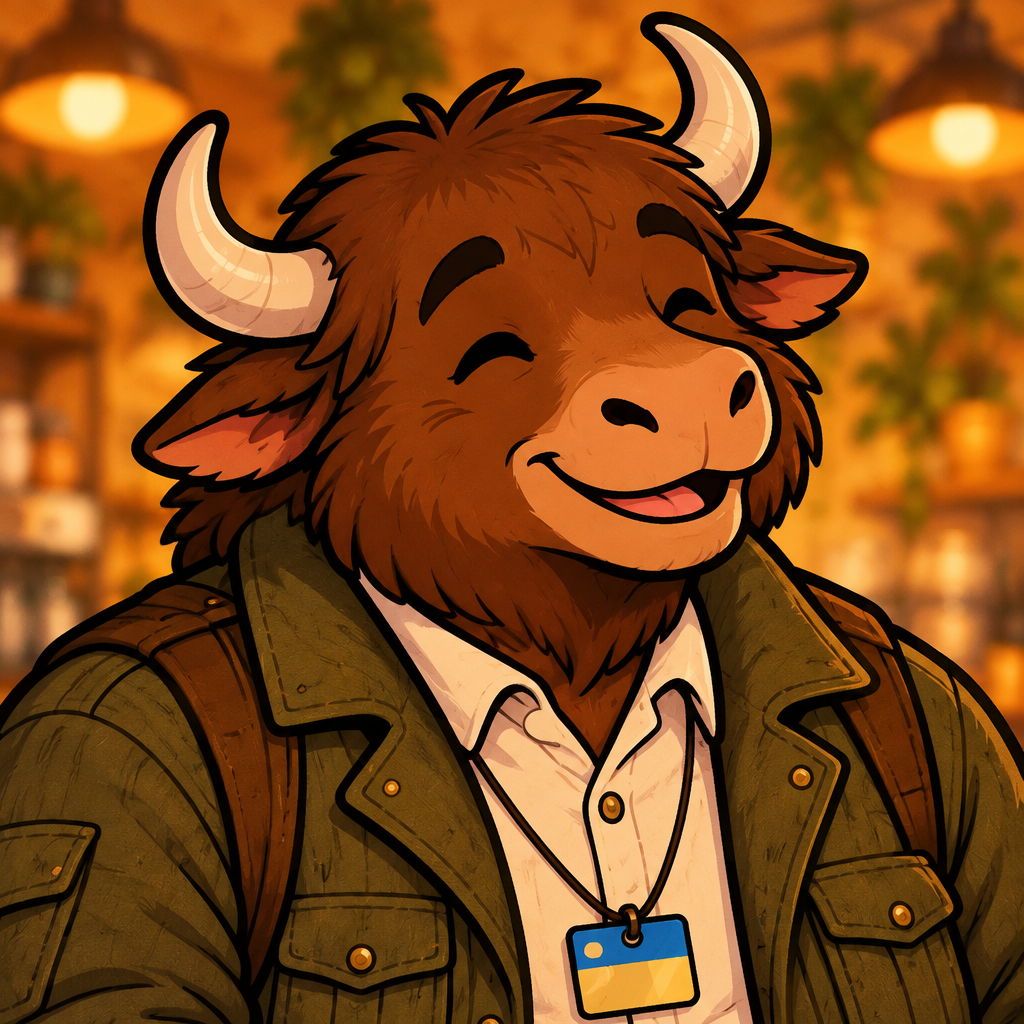 Yako¿También pasaron por el mirador?Did you also go by the overlook?
- JustinTodavía no llego a eso; de hecho, nunca fuimos al mirador.I'm not there yet; in fact, we never went to the overlook.
- YakoCasi lo recuerdo.I almost remember it.
- JustinPara que te des una idea, pasamos más tiempo esperando que visitando lugares.Just so you get the picture, we spent more time waiting than visiting places.
- AlexEntonces, ¿fue un mal fin de semana?So, was it a bad weekend?
- Justin¿Y sabes qué? No. Lo mejor fue que no tuvimos que seguir el plan.And you know what? No. The best part was that we didn't have to follow the plan.
- Yako quietly crosses out “mirador” in his notebook, then looks at the empty line beneath it.
Practice — make the point
Practice the chunks as tools for storytelling, then bring back a few trip lines from earlier lessons.
The point is to sound organized without making the weekend sound more perfect than it was.
0 of 12 done
What did you hear?
What did you hear?
Match the pairs
Spanish
Resulta que ___Drop the English hereEl detalle es que ___Drop the English herePara que te des una ideaDrop the English hereEnglish
Fill the gap
Fill the gap
So what happened was ___
____ que ___
What do you say?
What do you say?
Alex wants the important complication: the restaurant was closed even though the map said it was open.
Pick the reply
Alex says:
Pick the reply
¿Y sabes qué pasó después?
And you know what happened next?
And you reply with:
Build the line
Build the line
Just so you get the picture
Tap the words in order.
What does it mean?
What does it mean?
Fui a ___ el sábado
What do you say?
What do you say?
Yako jumps ahead to the overlook, but Justin has not reached that part and they never went there.
True or false?
True or false?
This chunk can create interest before an unexpected detail.
Pick the reply
Alex says:
Pick the reply
¿Entonces fue un mal fin de semana?
So, was it a bad weekend?
And you reply with:
What did you hear?
What did you hear?
What did you hear?
What did you hear?
Say it — tell Alex what happened
Now retell the weekend to Alex yourself. Use the microphone for each Justin turn, and listen for how the exchange stays conversational.
Tap ▶ to hear the model line first if you want it. Your recording stays on your device.
- Alex¿Qué hiciste el fin de semana?What did you do this weekend?
- Justin (you)Start the weekend story with what actually happened.
Start the weekend story with what actually happened.
Resulta que ___
So what happened was ___
0 of 5 said
Recap — what you can say now
| Spanish | English | Play |
|---|---|---|
| Resulta que ___ | So what happened was ___ | |
| El detalle es que ___ | The thing is, ___ | |
| Ahí fue cuando ___ | That's when ___ | |
| Para que te des una idea | Just so you get the picture | |
| ¿Y sabes qué? | And you know what? | |
| Todavía no llego a eso | I'm not there yet |
Save your progress — it’s free
Keep your place in the course and see which lines you’ve learned.
Want the next lesson in your inbox?
Get the next lesson by email, one a day.
Join the newsletterDaily lesson emails are coming soon. Newsletter subscribers get them first.
Keep practicing with Yak Cards
Want to keep these storytelling chunks handy? Grab the Yak Cards for this lesson and review them anywhere.
Use the Yak Cards to practice opening a story, marking a turn, and holding your place when someone jumps ahead.
Open Yak Cards