
New here? This is lesson 158 of a free 238-lesson Spanish course.
Free Spanish CourseLesson 158 of 238
The short version in Spanish
Someone asks you a big question and you only have a minute. Spanish has tidy openers for that: the short answer, the simple version, put another way.
In this lesson you'll learn six of them, plus the one everybody needs: the problem is. Michael explains tipping at Café Laurel, and Justin tries to keep up.
By the end you'll shrink any long explanation down to one sentence.
By the end of this lesson
Give the short answer, the basic rule, or say it another way.
- La respuesta corta es ___The short answer is ___
- La versión simple es ___The simple version is ___
- Dicho de otra forma, ___Put another way, ___
- La regla básica es ___The basic rule is ___
- En este caso, ___In this case, ___
- El problema es que ___The problem is ___
Scene — one big question
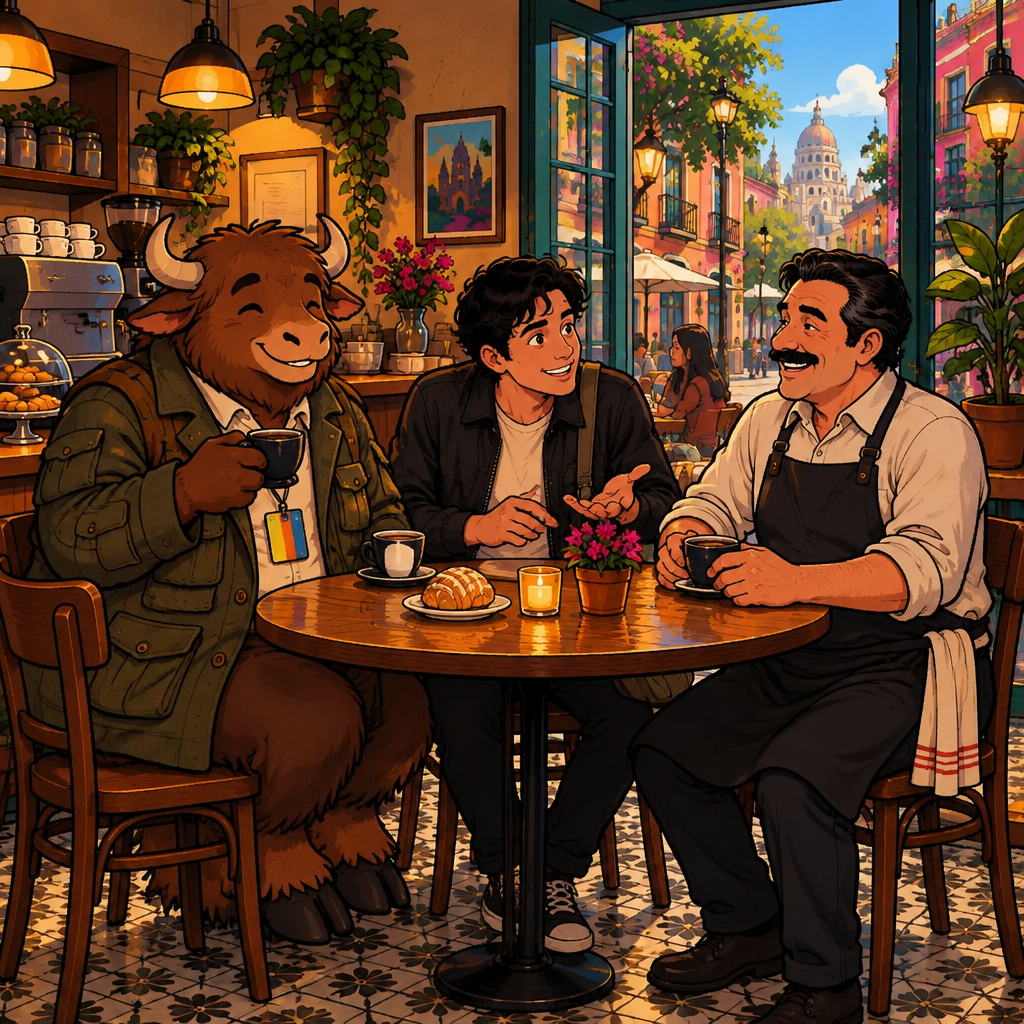
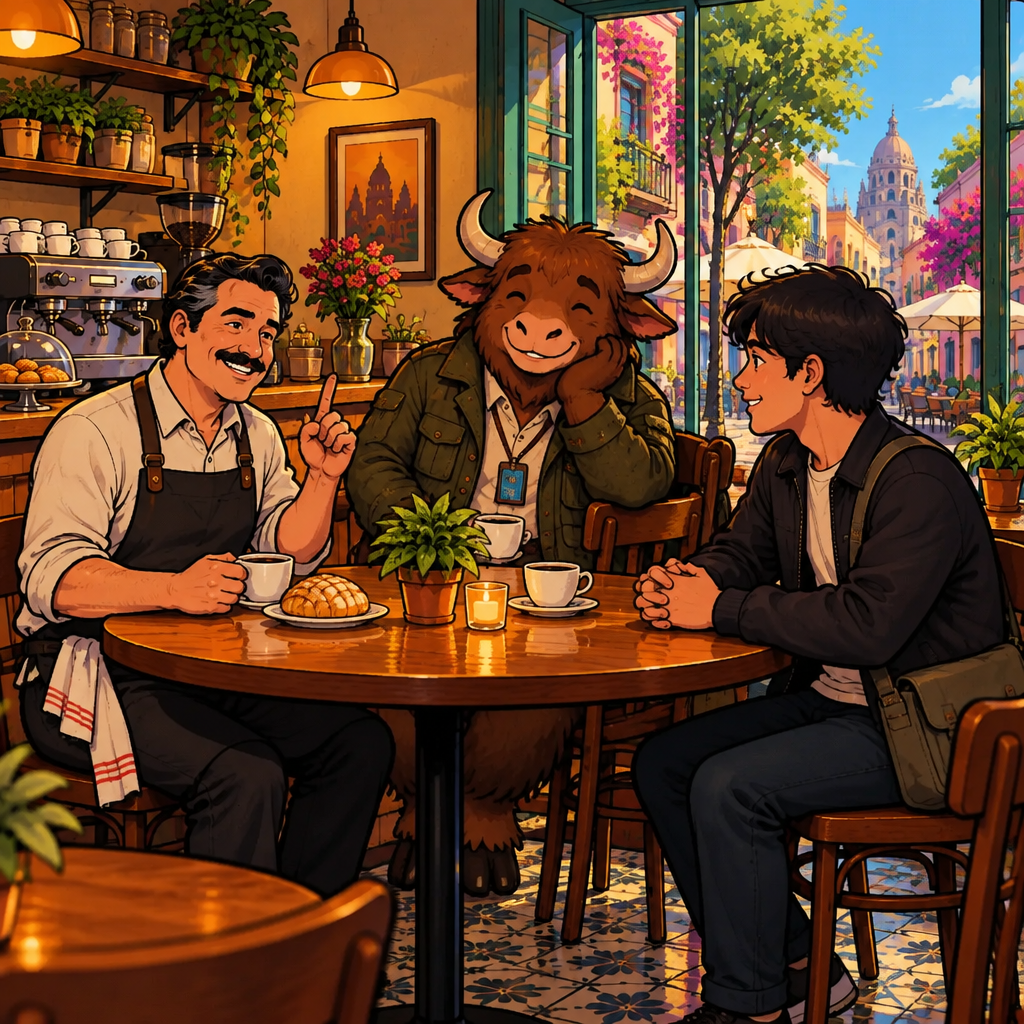
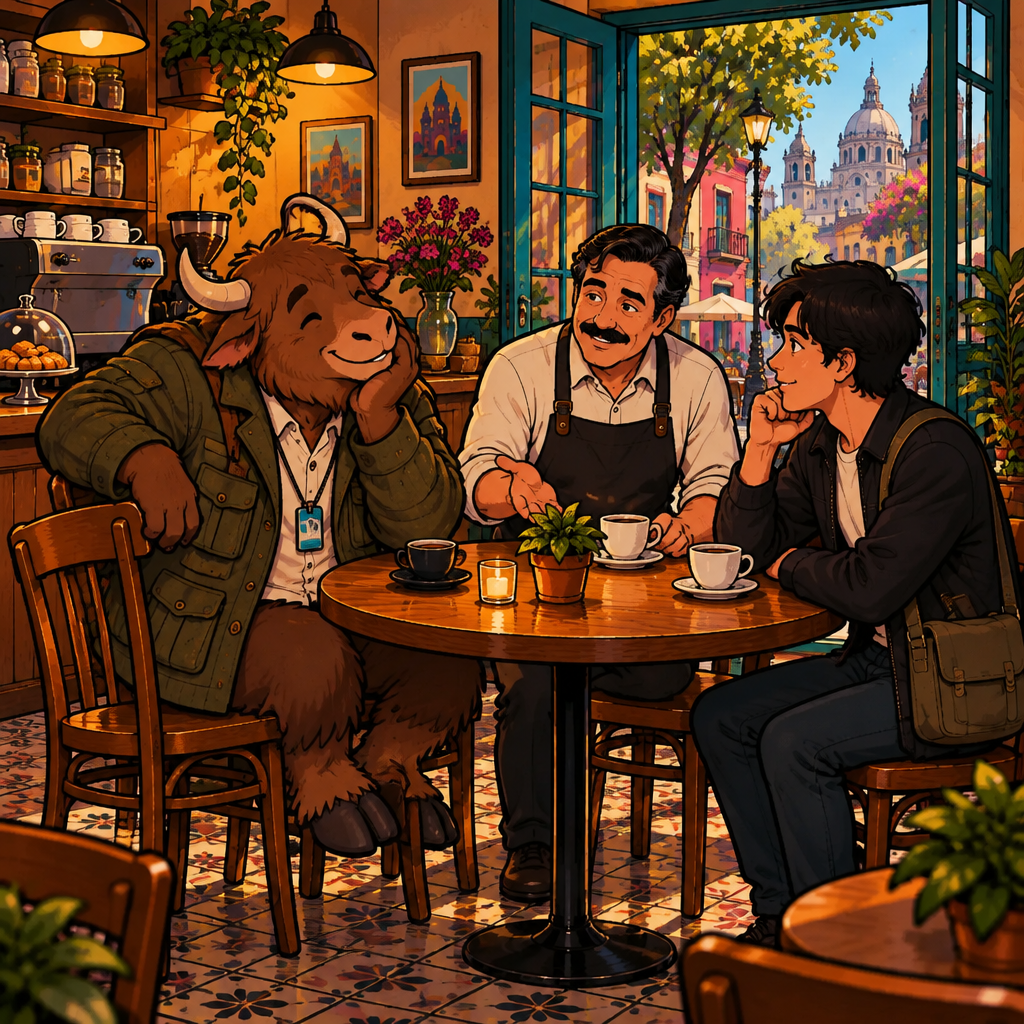
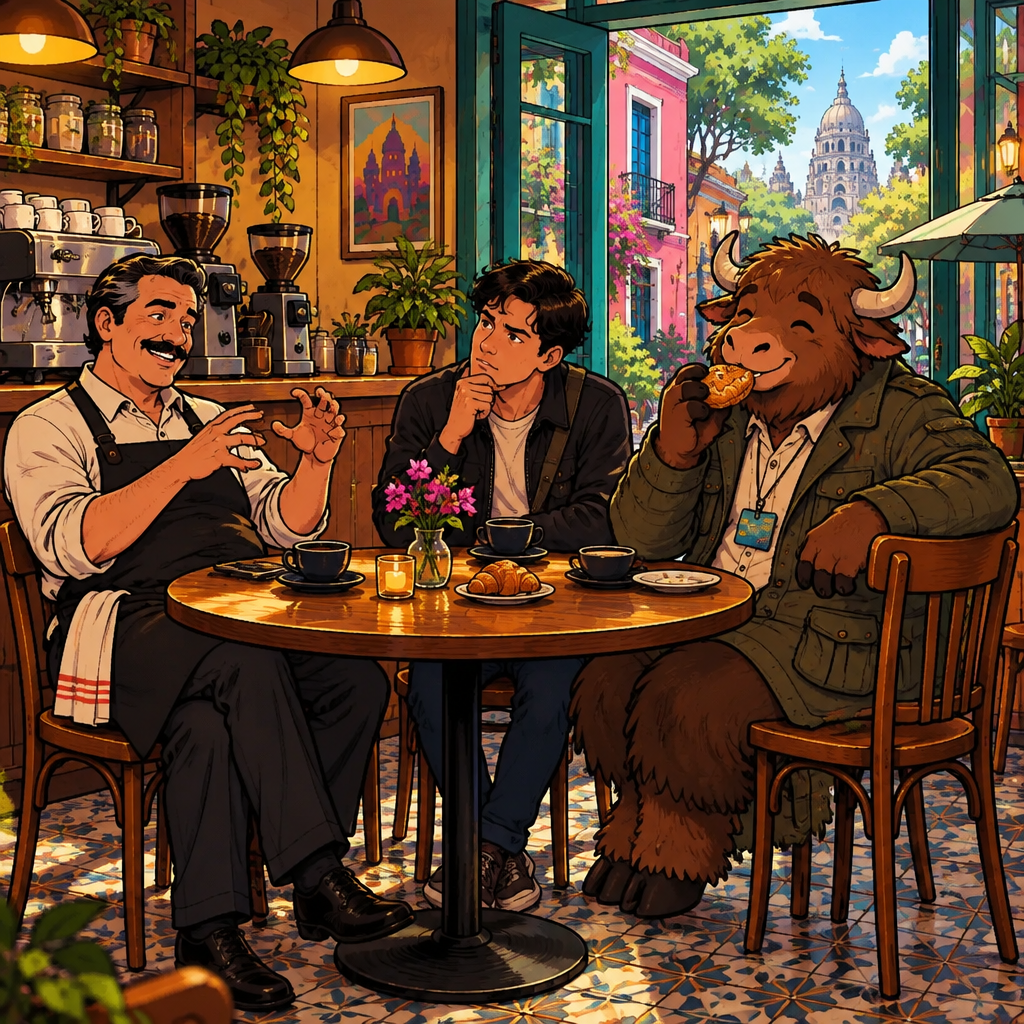
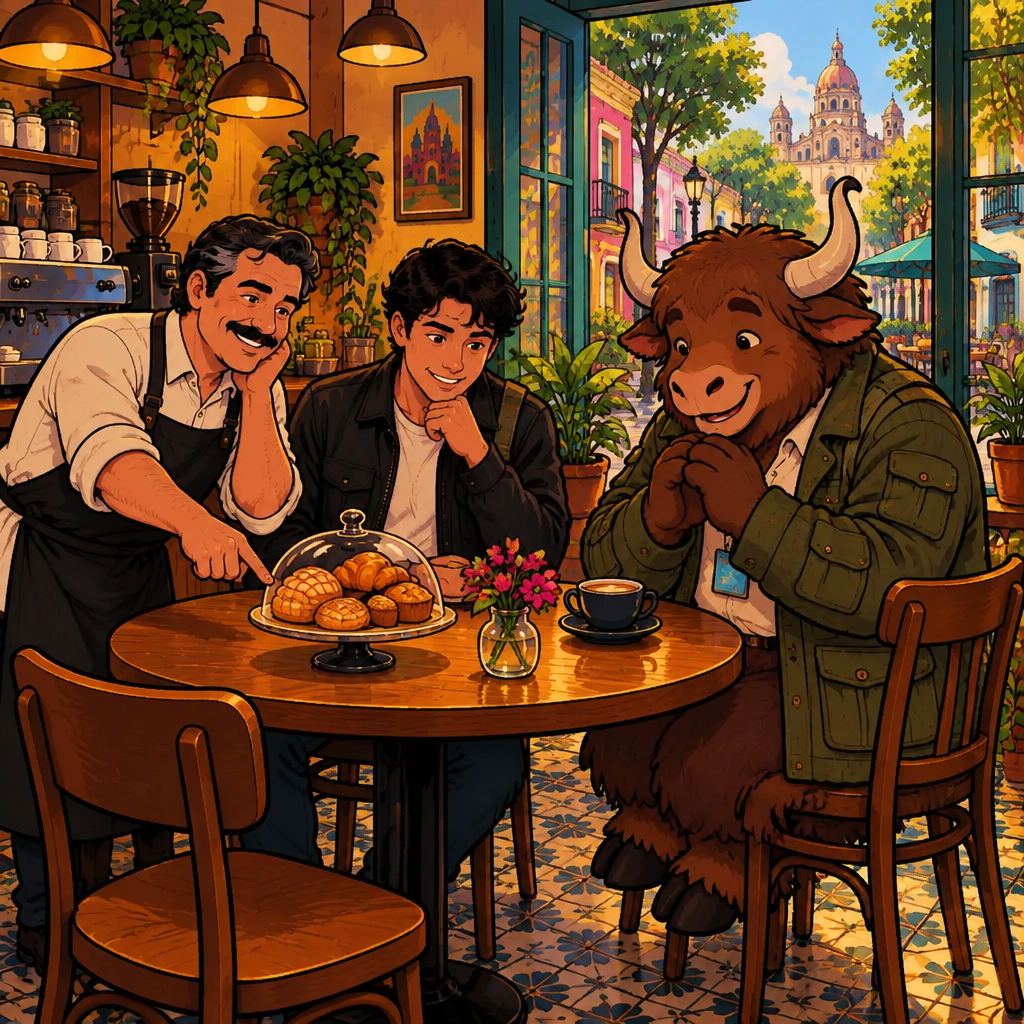
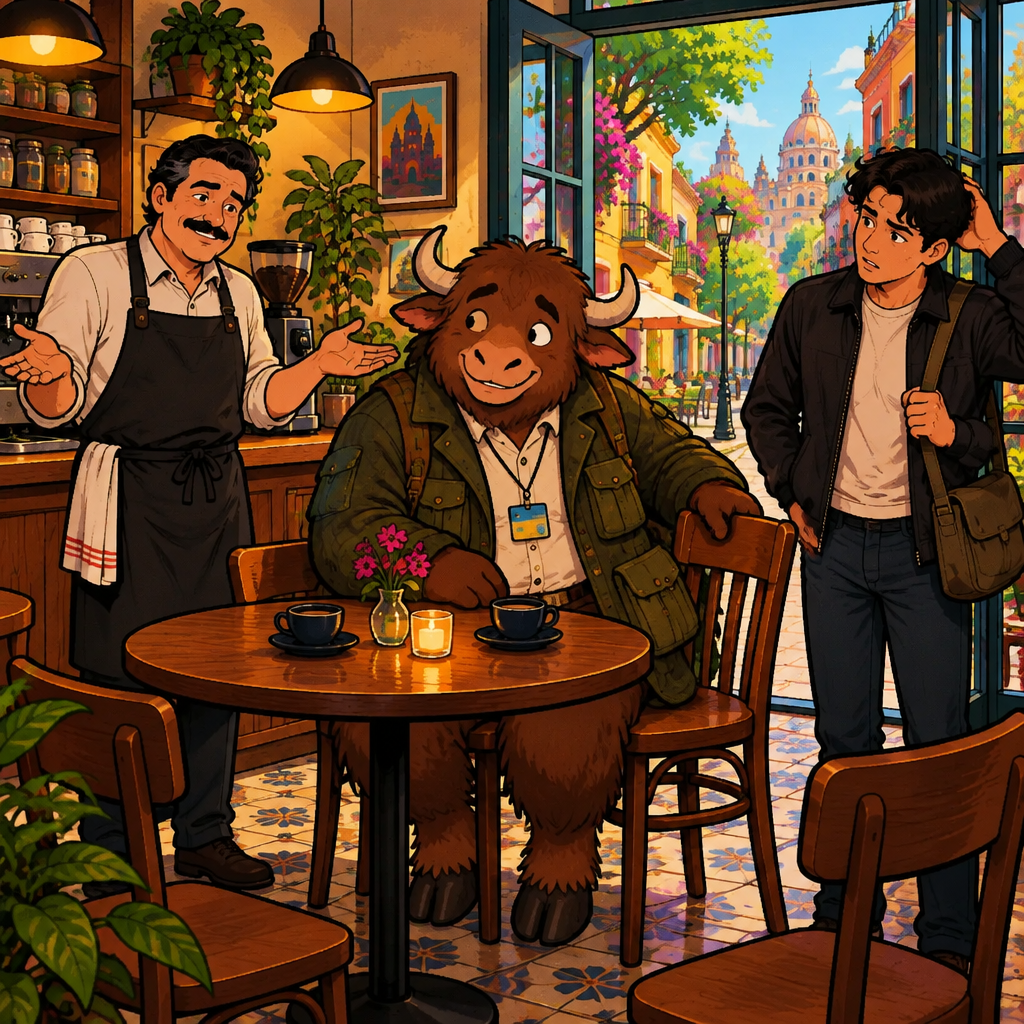
Café Laurel, mid-afternoon. The lunch rush is over, so Michael finally sits down at Justin and Yako's table.
Justin has been here a month and still isn't sure how tipping works, so he asks the big question.
Learn — the short answer
These six openers all follow the same shape: a short phrase, then your point.
Some end in es, some end in a comma. Listen for that difference and you'll pick them up fast.
La respuesta corta es ___
The short answer is ___
When to use it: Say this before giving the one-sentence version of a long answer.
Respuesta is feminine, so it takes la, not el.
Say it: The double rr in respuesta is a strong trill — the tongue taps several times quickly.
La versión simple es ___
The simple version is ___
When to use it: Say this when someone asks for a version that's easier to remember.
Versión keeps its accent so the stress stays on the last syllable: ver-SIÓN.
Dicho de otra forma, ___
Put another way, ___
When to use it: Say this right before you rephrase something the listener didn't get.
Dicho comes from decir; think of it as having said.
Say it: DEE-choh deh OH-trah FOHR-mah.

La regla básica es ___
The basic rule is ___
When to use it: Say this when you give the one rule that covers most cases.
Regla is feminine: la regla, las reglas.
En este caso, ___
In this case, ___
When to use it: Say this when your answer applies to this situation but not all of them.
Caso here is masculine: en este caso.
Say it: EHS-teh KAH-soh.
El problema es que ___
The problem is ___
When to use it: Say this to introduce the one thing that's going wrong.
Problema is masculine despite ending in a, so el problema.
Story — how tipping works
Michael finally has a free minute, and Justin has been saving up his questions.
Watch how each opener works: the short answer, the simple version, the basic rule. Two old lines, Por ejemplo and Por eso, come back too.
- Michael sits down with a coffee of his own, a rare sight.
 JustinMichael, ¿cómo funciona la propina aquí?Michael, how does tipping work here?
 MichaelBuena pregunta. La regla básica es dejar el diez por ciento.Good question. The basic rule is to leave ten percent.
- Justin¿Y si el servicio fue malo?And if the service was bad?
- MichaelEn este caso, puedes dejar menos, pero casi nadie lo hace.In this case, you can leave less, but almost nobody does.
 YakoYo siempre dejo propina grande.I always leave a big tip.
- Michael¿Por qué, Yako?Why, Yako?
- YakoEl problema es que me cae bien todo el mundo aquí.The problem is I like everyone here.
- Michael laughs; Yako gestures at the whole café.
- JustinEs mucha información, Michael. ¿Tienes algo más corto?That's a lot of information, Michael. Do you have something shorter?
- MichaelClaro. La respuesta corta es dejar diez por ciento, siempre.Sure. The short answer is to leave ten percent, always.
- Justin¿Y para saludar a la gente? También se me complica.And for greeting people? That's complicated for me too.
- MichaelLa versión simple es decir buenas tardes y seguir.The simple version is to say good afternoon and move on.
- Justin¿Y cuando no entiendo algo? ¿Puedo... preguntar algo?And when I don't understand something? Can I... ask something?
- MichaelDicho de otra forma, preguntar nunca está de más.Put another way, asking is never too much.
- JustinPor ejemplo, ¿puedo preguntarte la propina otra vez?For example, can I ask you about the tip again?
- MichaelSí, y por eso te la repito con calma: diez por ciento.Yes, and that's why I'm repeating it calmly: ten percent.
- YakoLa regla básica es que Yako nunca paga.The basic rule is that Yako never pays.
- MichaelEsa regla no existe, Yako.That rule doesn't exist, Yako.
- YakoEl problema es que me lo dicen todos los días.The problem is they tell me that every day.
Practice — say it simply
Ten quick exercises: listen, match, fill, build, and put a chat in order.
Two old friends from earlier lessons, Por eso and Por ejemplo, show up here too. Give them a warm welcome.
0 of 10 done
What did you hear?
What did you hear?
Match the pairs
Spanish
La respuesta corta es ___Drop the English hereDicho de otra forma, ___Drop the English hereEl problema es que ___Drop the English hereEnglish
What do you say?
What do you say?
Yako didn't understand your long explanation. You want to say the same thing in different words.
Fill the gap
Fill the gap
The basic rule is ___
La regla ____ es ___
What did you hear?
What did you hear?
What did you hear?
What did you hear?
Put the chat in order
- JustinWhat comes first?
- Michael…
- Justin…
What does it mean?
What does it mean?
Por eso ___
What do you say?
What do you say?
You want to give one concrete example to illustrate what you just said.
Pick the reply
Michael says:
Pick the reply
¿Me puedes explicar las propinas en una sola frase?
Can you explain tipping to me in one sentence?
And you reply with:
Say it — your turn to explain
Now you're Justin, and Michael wants to check that you really got it.
When it's your turn, tap the microphone and use the line you learned. Tap ▶ to hear the model first. Your recording stays on your device.
- MichaelA ver, Justin. ¿Cómo me explicas la propina en una frase?Let's see, Justin. How do you explain the tip to me in one sentence?
- Justin (you)Give him the short answer: leave ten percent.
Give him the short answer: leave ten percent.
La respuesta corta es ___
The short answer is ___
0 of 6 said
Recap — what you can say now
| Spanish | English | Play |
|---|---|---|
| La respuesta corta es ___ | The short answer is ___ | |
| La versión simple es ___ | The simple version is ___ | |
| Dicho de otra forma, ___ | Put another way, ___ | |
| La regla básica es ___ | The basic rule is ___ | |
| En este caso, ___ | In this case, ___ | |
| El problema es que ___ | The problem is ___ |
Save your progress — it’s free
Keep your place in the course and see which lines you’ve learned.
Want the next lesson in your inbox?
Get the next lesson by email, one a day.
Join the newsletterDaily lesson emails are coming soon. Newsletter subscribers get them first.
Keep practicing with Yak Cards
Want to keep these explanation openers handy? Grab the Yak Cards for this lesson and review them anywhere.
A quick round with the Yak Cards each day keeps la respuesta corta on the tip of your tongue.
Open Yak Cards