Estoy mejorando en ___.
I'm getting better at ___.
Estoy mejorando en la guitarra.
I'm getting better at the guitar.
Después de practicar, estoy mejorando en la fotografía.
After practicing, I'm getting better at photography.
Lesson 59 of 159
Goal: Talking about what you do, how often, and why you like it
Free Spanish lessons with guided practice, audio, and speaking support.
Ready to talk about your free time? This short, friendly lesson helps you say how you practice hobbies, how often, and what you think about them. Have fun — and say the phrases out loud as you learn.
Level A2: In this lesson you'll practice simple phrases to talk about hobbies — saying you're improving, admitting you're a beginner, explaining how long or how often you do something, and giving a short opinion. The activities are CEFR-aligned and focus on speaking and quick listening practice with everyday hobby language.
After this lesson you'll be able to:
Ready? Let's go!
When you tap play on phrases, we track your progress through this lesson.
Hear core phrases, repeat aloud.
Estoy mejorando en ___.
I'm getting better at ___.
Todavía soy principiante en ___.
I'm still a beginner at ___.
Hago ___ como una hora.
I do ___ for about an hour.
¿Te interesa ___?
Are you interested in ___?
Lo hago cuando tengo tiempo.
I do it when I have time.
Es divertido, pero es difícil.
It's fun, but it's hard.
Voy a ___ una vez a la semana.
I go ___ once a week.
Me gusta porque es ___.
I like it because it's ___.
Trato de ___ cada semana.
I try to ___ every week.
Hear phrases in a real mini-conversation.
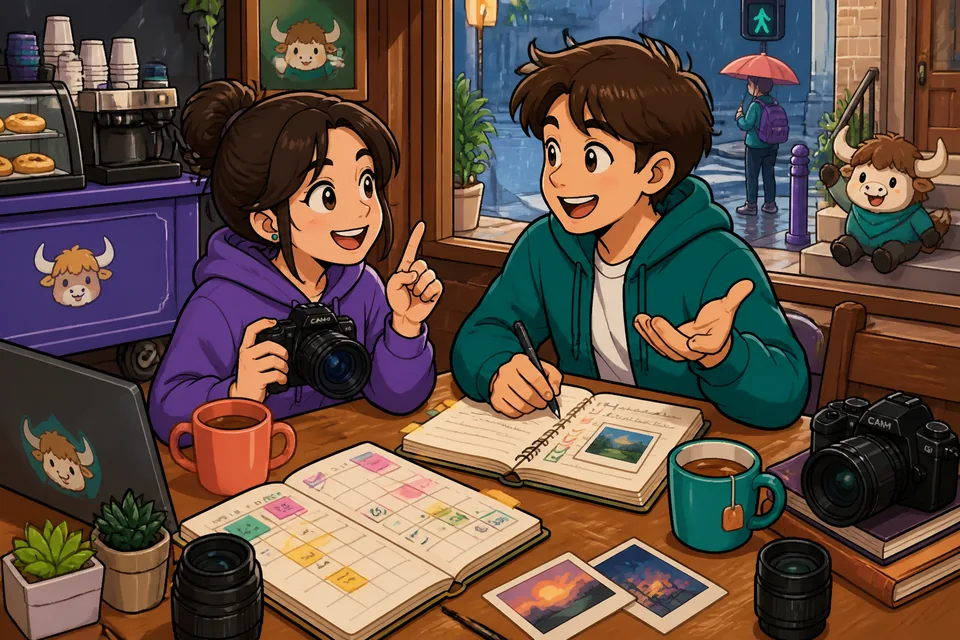
Two friends talk about photography and practice habits.

Anna
¿Te interesa la fotografía?
Are you interested in photography?

David
Sí, pero todavía soy principiante en fotografía.
Yes, but I'm still a beginner at photography.
Anna
¿Cuánto tiempo la practicas?
How long do you practice it?
David
Hago fotografía como una hora los sábados. Lo hago cuando tengo tiempo.
I do photography for about an hour on Saturdays. I do it when I have time.
Anna
Me gusta porque es creativo. ¿Vas a un curso?
I like it because it's creative. Do you go to a course?
David
Voy a un taller una vez a la semana y trato de practicar cada semana. Estoy mejorando en composición, pero es divertido, pero es difícil.
I go to a workshop once a week and I try to practice each week. I'm getting better at composition, but it's fun, and it's hard.
Quizzes and matching to lock in meaning.
I do painting for about an hour on Sundays: '____ los domingos.'
I try to practice guitar each week: '___ la guitarra cada semana.'
I go swimming once a week: '___ una vez a la semana.'
Say phrases yourself (mic/recording).
Recording stays on your device only. Check speech uses your browser's speech tools when available.
Say this phrase out loud:
Estoy mejorando en ___.
I'm getting better at ___.
Say this phrase out loud:
Todavía soy principiante en ___.
I'm still a beginner at ___.
Say this phrase out loud:
Hago ___ como una hora.
I do ___ for about an hour.
Say this phrase out loud:
¿Te interesa ___?
Are you interested in ___?
Say this phrase out loud:
Lo hago cuando tengo tiempo.
I do it when I have time.
Say this phrase out loud:
Es divertido, pero es difícil.
It's fun, but it's hard.
Say this phrase out loud:
Voy a ___ una vez a la semana.
I go ___ once a week.
Say this phrase out loud:
Me gusta porque es ___.
I like it because it's ___.
Say this phrase out loud:
Trato de ___ cada semana.
I try to ___ every week.