
New here? This is lesson 171 of a free 238-lesson Spanish course.
Free Spanish CourseLesson 171 of 238
What if in Spanish
Justin can't find his card after leaving Café Laurel, but this isn't a crisis yet. Yako and Michael help him think through a few realistic possibilities.
You'll learn several ways to float an idea, say that something might happen, and admit that it may not happen at all.
By the end, you can sound open-minded without making a big decision.
By the end of this lesson
Float a possibility and say it might not happen.
- ¿Y si ___?What if ___?
- Puede que ___It might ___
- A lo mejor ___Maybe ___
- No creo que paseI don't think that'll happen
- DependeIt depends
- Habría que verWe'd have to see
Scene — the missing card
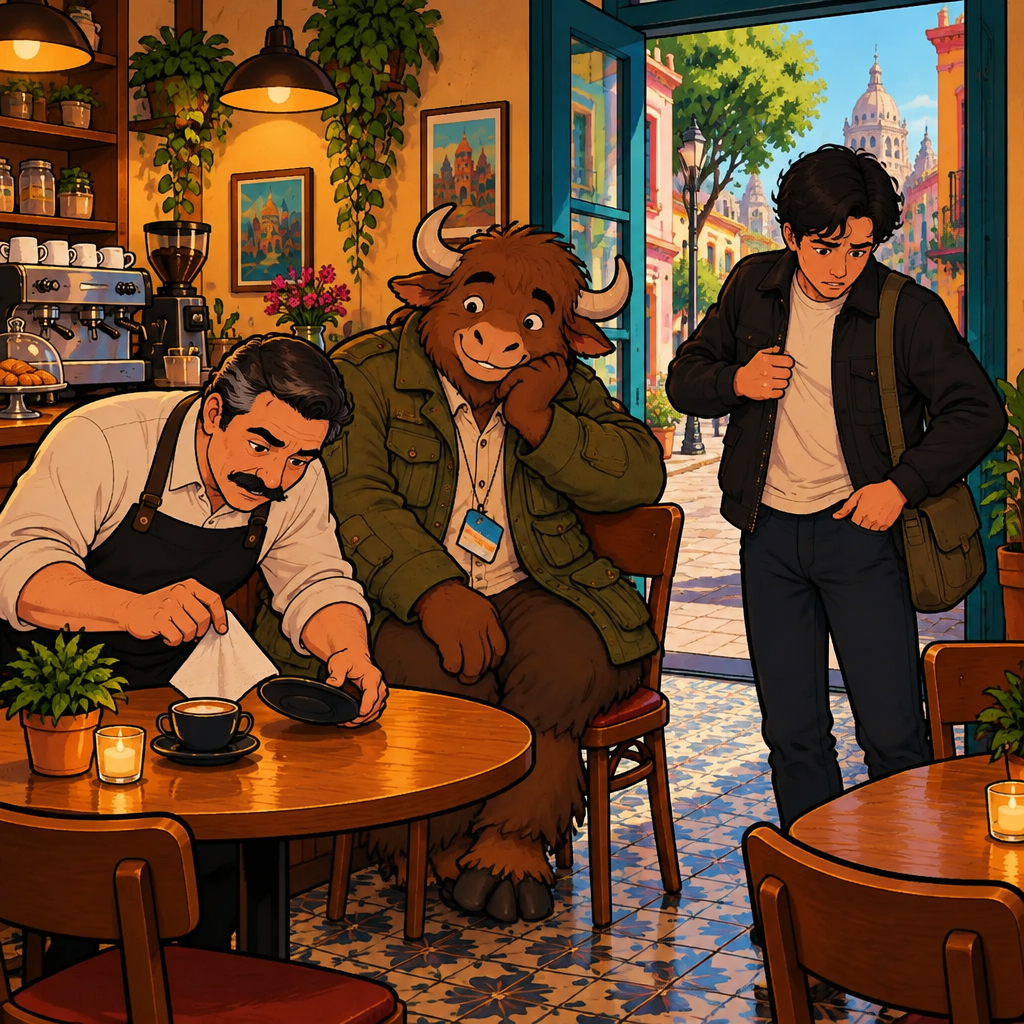
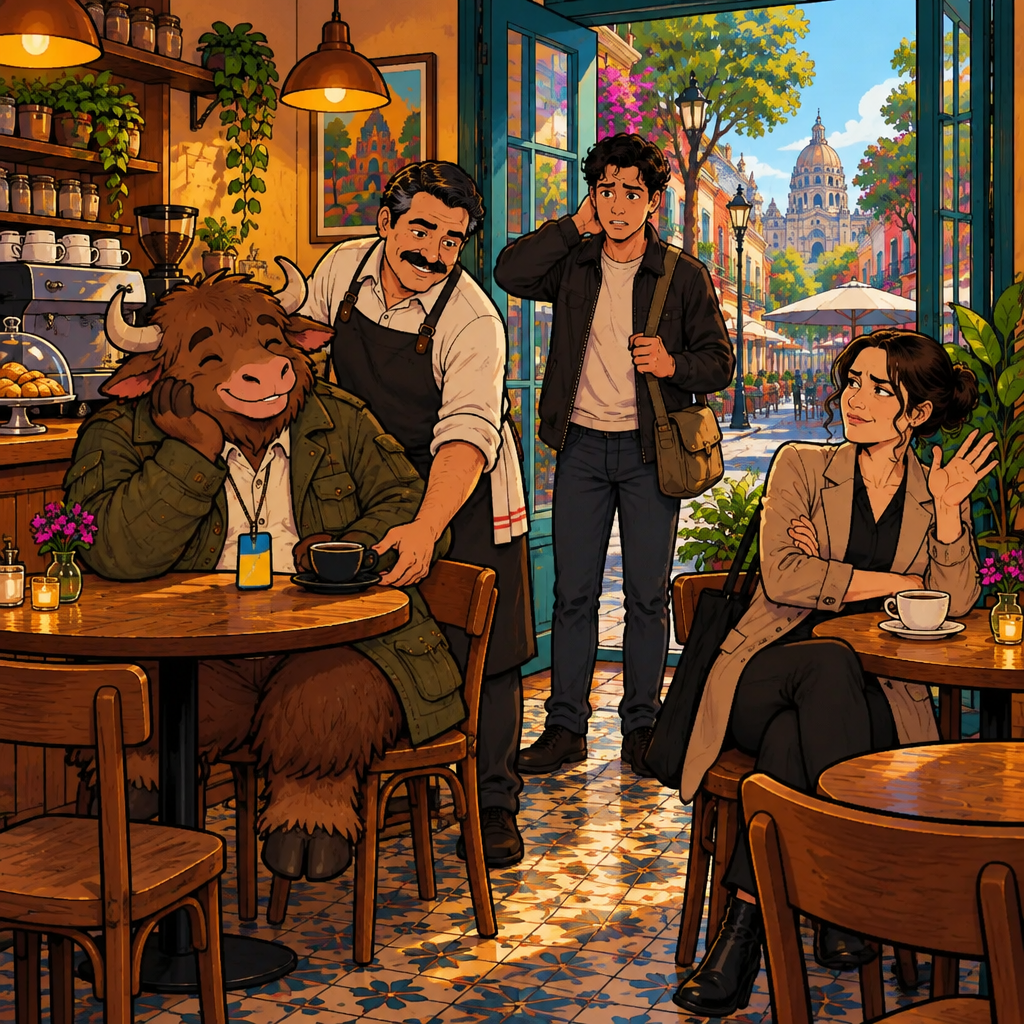
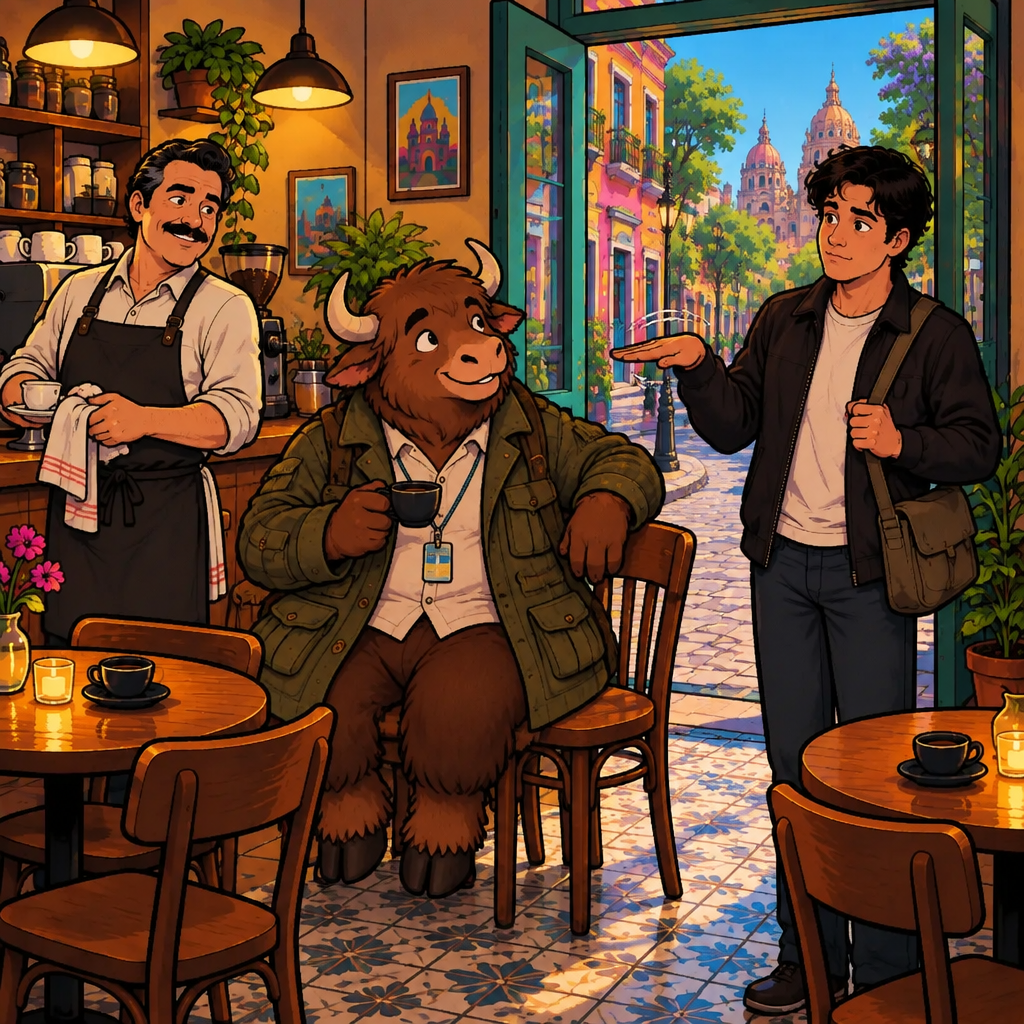
Justin is standing near the entrance of Café Laurel, checking his pockets after paying. His card is missing, but the café is still open.
Yako is balanced on his usual two chairs, and Michael is checking the table where Justin sat.
Learn — possibilities and uncertainty
These chunks help you discuss possibilities without presenting guesses as facts. Notice how some options sound more confident than others.
One line is a compact answer meaning “it depends,” while another leaves the question open for now.
¿Y si ___?
What if ___?
When to use it: Use this to introduce a possible explanation, plan, or problem for people to consider.
The blank needs a complete idea, such as the card still being in the café.
Say it: Y sounds like the English ee: ee SEE.
Puede que ___
It might ___
When to use it: Use this to say that an event or situation is possible, without claiming it is likely or certain.
Puede que normally introduces a subjunctive verb because the possibility is uncertain.
Say it: Say PWEH-deh keh, with both e sounds clear.
A lo mejor ___
Maybe ___
When to use it: Use this everyday phrase when offering a possible explanation or outcome with a fairly neutral tone.
A lo mejor can introduce a present or future possibility; learn the whole phrase as one chunk.
Say it: Link it smoothly: ah-loh-meh-HOR, with a strong final syllable.
No creo que pase
I don't think that'll happen
When to use it: Say this when someone suggests an outcome you consider possible but unlikely.
Pase is subjunctive because your belief is negative and the event remains uncertain.
Say it: Pase sounds like PAH-seh, with a short, open first vowel.
Depende
It depends
When to use it: Use this one-word answer when the result changes according to information you do not have yet.
Depende works alone, or you can add what the result depends on afterward.
Say it: Stress the second syllable: deh-PEN-deh.

Habría que ver
We'd have to see
When to use it: Say this when you cannot judge the outcome until you check more information or wait.
Habría softens the answer, so it sounds less definite than a direct statement about what will happen.
Say it: The h is silent: ah-BREE-ah keh BEHR, with a light Spanish r.
Story — a card may be nearby
Justin has lost something, but everyone treats the search as a possibility, not a disaster. Listen for the different levels of certainty.
The highlighted chunks are this lesson's new lines. Turn on Show English if you need help following the conversation.
- Justin checks his pockets beside the café entrance while Yako watches from two chairs.
 JustinNo encuentro la tarjeta. ¿Dónde está la tarjeta de Michael?I can't find the card. Where is Michael's card?
 MichaelRevisé la mesa, pero todavía no aparece.I checked the table, but it still hasn't turned up.
 Yako¿Y si la tarjeta sigue en el café?What if the card is still in the café?
- JustinPuede que siga en el café, pero no la veo.It might still be in the café, but I don't see it.
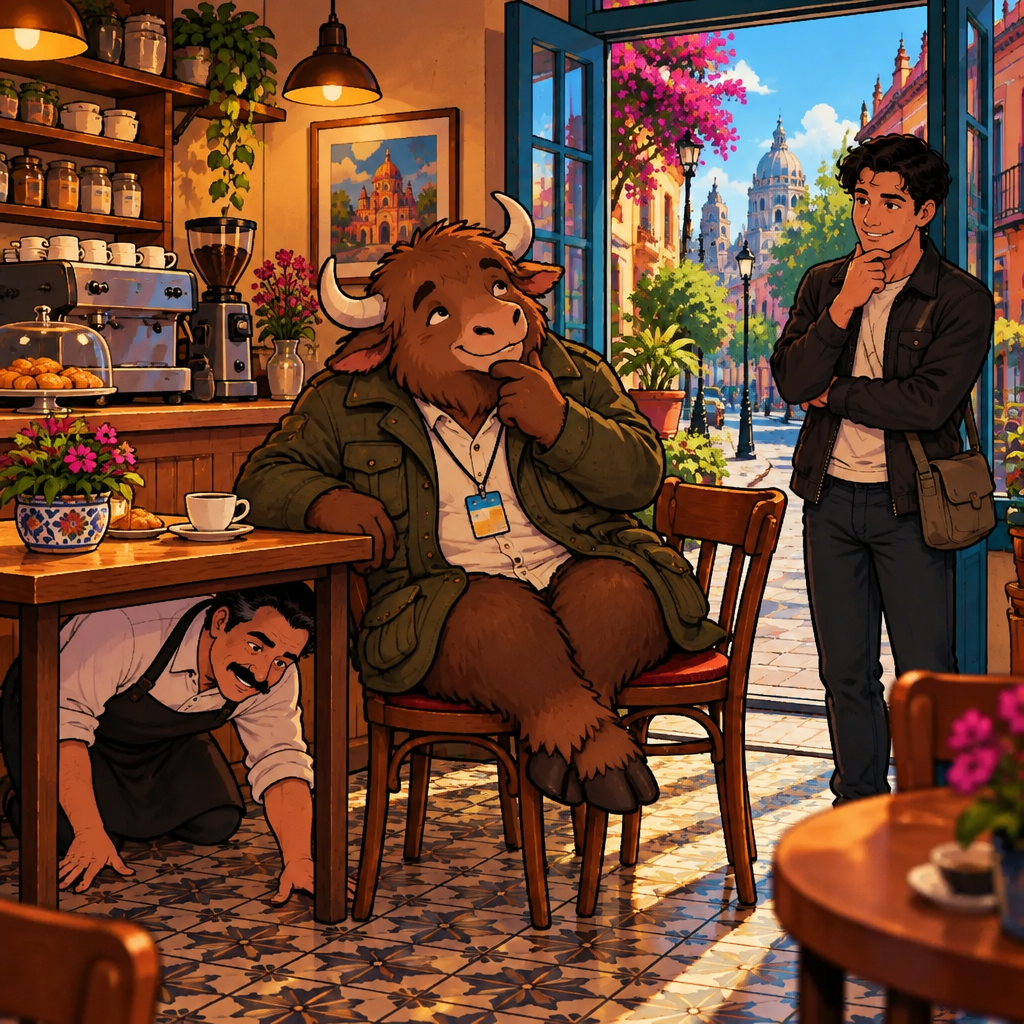
- MichaelA lo mejor cayó debajo de la mesa.Maybe it fell under the table.
- Justin¿Y si alguien la tira a la basura?What if someone throws it away?
- YakoNo creo que pase. Aquí nadie tira nada.I don't think that'll happen. Nobody throws anything away here.
- Justin¿La encontramos hoy?Will we find it today?
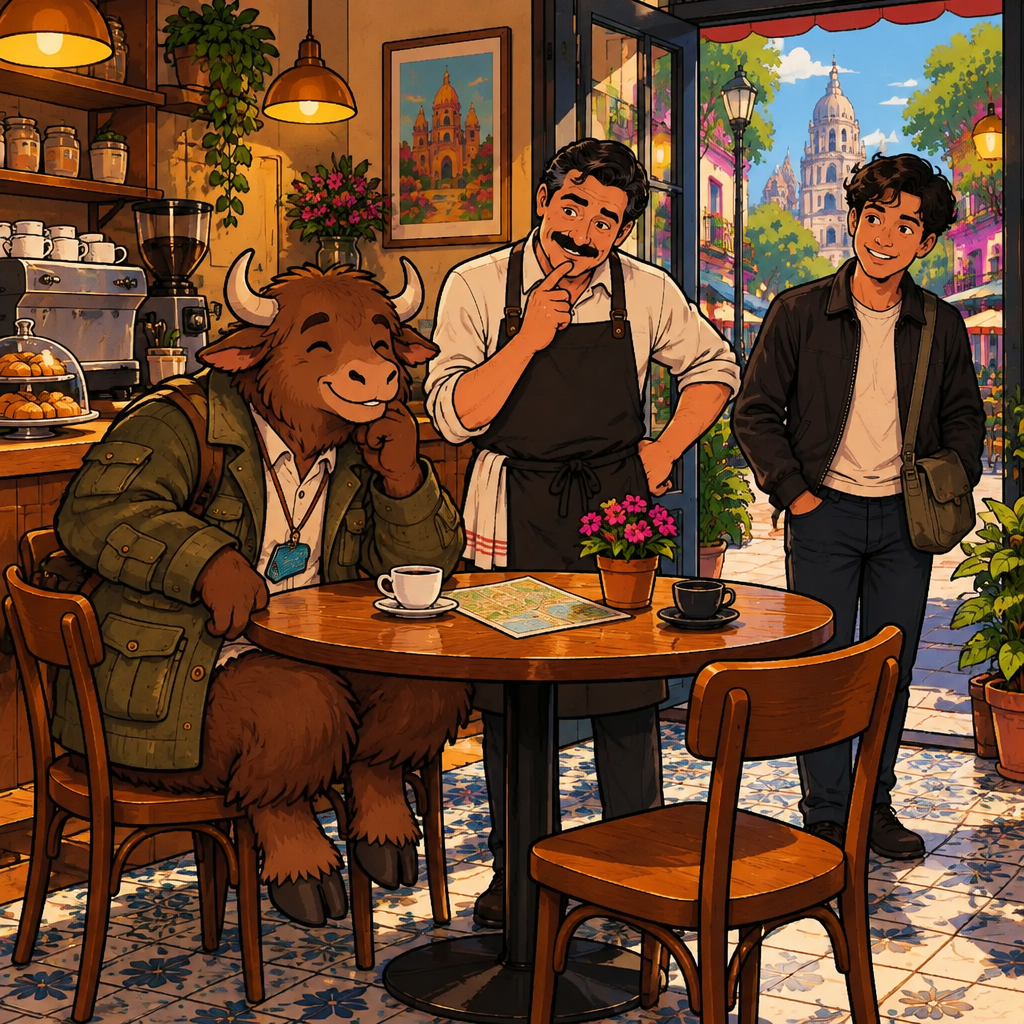
- MichaelDepende. Habría que ver debajo de las sillas.It depends. We would have to look under the chairs.
- JustinVoy a revisar; quizá está junto a mi mochila.I'll check; maybe it's next to my backpack.
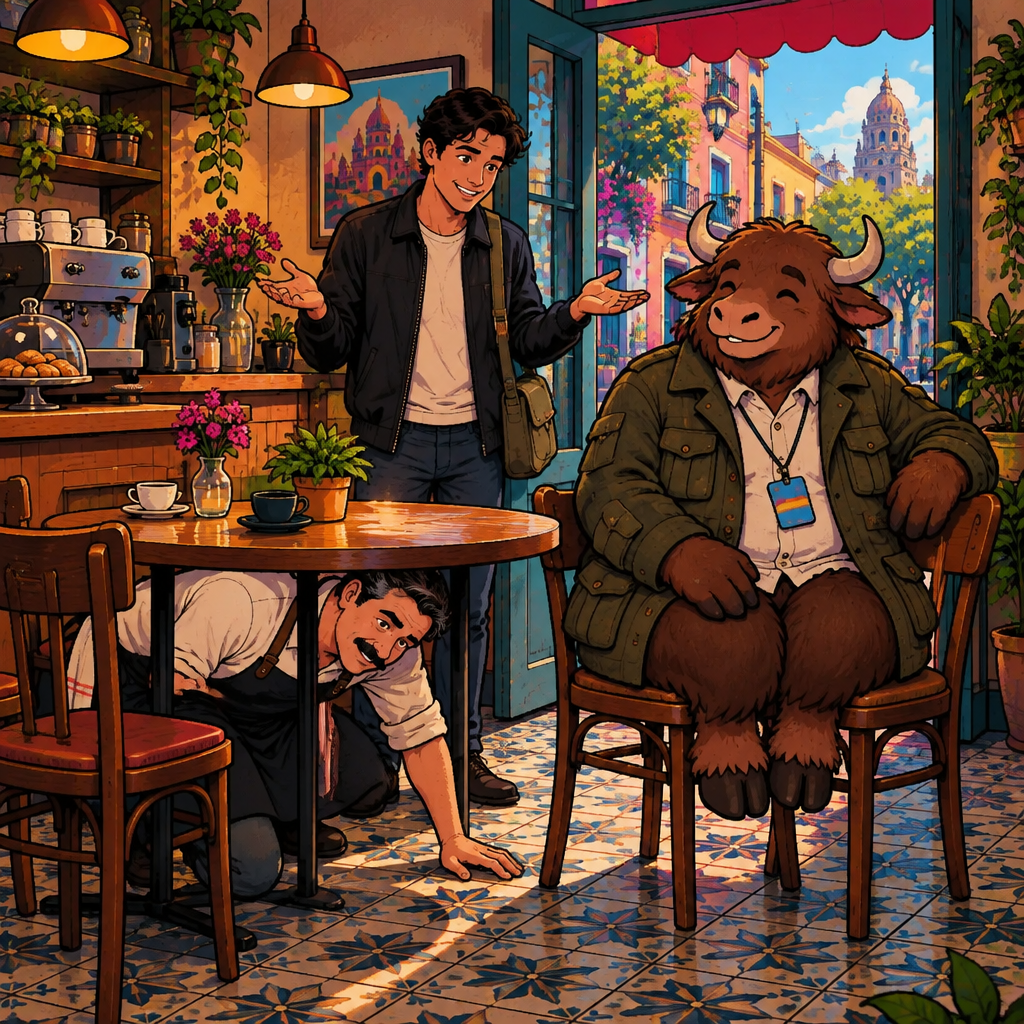
- Justin looks under Yako's two chairs; the card is beside the yak's hoof.
- JustinAquí está. No estaba tan lejos.Here it is. It wasn't that far away.
Practice — maybe or not
You'll hear, match, choose, complete, substitute, and build the new chunks in a small missing-card investigation.
Read the situation carefully: the best answer often depends on whether you know something or are only guessing.
0 of 12 done
What did you hear?
What did you hear?
Match the pairs
Spanish
¿Y si ___?Drop the English herePuede que ___Drop the English hereNo creo que paseDrop the English hereHabría que verDrop the English hereCreo que síDrop the English hereEnglish
What do you say?
What do you say?
You want to suggest that the missing card could still be inside Café Laurel.
Fill the gap
Fill the gap
It might ___
____ que ___
What did you hear?
What did you hear?
What does it mean?
What does it mean?
No creo que pase
True or false?
True or false?
Depende can answer alone when the result changes according to information you do not have.
What do you say?
What do you say?
Michael says the card may be under the table, but you cannot know until someone checks.
Build the line
Build the line
I don't think that'll happen
Tap the words in order.
What did you hear?
What did you hear?
What did you hear?
What did you hear?
True or false?
True or false?
This is a line from this lesson.
Say it — keep the options open
Now you're Justin, discussing the missing card with Yako and Michael. Keep your answers cautious because nobody knows where it is yet.
Tap ▶ to hear each model line, then tap the microphone for your turn. Your recording stays on your device.
- MichaelNo encuentro la tarjeta en la mesa.I can't find the card on the table.
- Justin (you)Suggest that it might still be in the café.
Suggest that it might still be in the café.
¿Y si ___?
What if ___?
0 of 5 said
Recap — what you can say now
| Spanish | English | Play |
|---|---|---|
| ¿Y si ___? | What if ___? | |
| Puede que ___ | It might ___ | |
| A lo mejor ___ | Maybe ___ | |
| No creo que pase | I don't think that'll happen | |
| Depende | It depends | |
| Habría que ver | We'd have to see |
Save your progress — it’s free
Keep your place in the course and see which lines you’ve learned.
Want the next lesson in your inbox?
Get the next lesson by email, one a day.
Join the newsletterDaily lesson emails are coming soon. Newsletter subscribers get them first.
Keep practicing with Yak Cards
Want to keep these possibility chunks handy? Grab the Yak Cards for this lesson and review them anywhere.
A quick review helps you separate a firm opinion from a careful maybe.
Open Yak Cards