
New here? This is lesson 156 of a free 238-lesson Spanish course.
Free Spanish CourseLesson 156 of 238
Not as good as in Spanish
Justin is stuck between two gyms, and Amanda is about to talk him through it.
You'll learn to say one thing isn't as good as another, that two things are almost the same, and that it depends. You'll also weigh both sides with 'on one hand, on the other'.
These are the lines that make a real comparison sound natural.
By the end of this lesson
Say the difference, say two things are almost the same, and say it depends.
- ___ no es tan ___ como ______ isn't as ___ as ___
- La principal diferencia es ___The main difference is ___
- Son casi igualesThey're almost the same
- No hay mucha diferenciaThere isn't much difference
- Depende de lo que necesitesIt depends what you need
- Por un lado, ___; por otro, ___On one hand, ___; on the other, ___
Scene — two gyms, one napkin
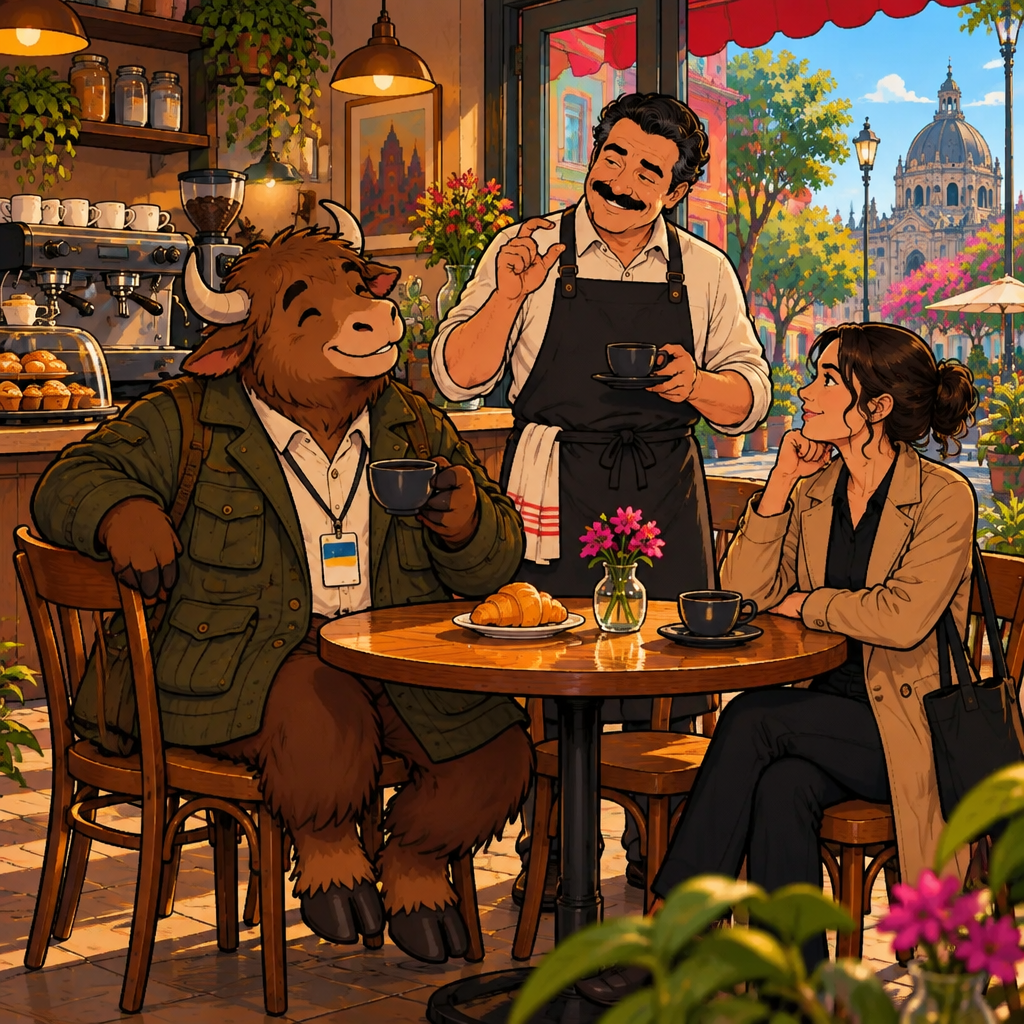
Café Laurel, late morning. Justin has drawn two columns on a napkin: Atila on one side, the park gym on the other.
Amanda walks in on her day off, coffee in hand, ready to settle the debate. Yako is already leaning over the napkin.

Learn — not as, almost the same, it depends
Six lines cover the whole middle ground of comparing: a little worse, nearly identical, no real gap, and 'it depends'.
Two of them are frames, so you'll fill them with your own words.

___ no es tan ___ como ___
___ isn't as ___ as ___
When to use it: Say this when something falls short of something else.
Tan sits between es and como; swap the adjectives in the blanks.

La principal diferencia es ___
The main difference is ___
When to use it: Use this to introduce the biggest difference between two things.

Son casi iguales
They're almost the same
When to use it: Say this when two things are nearly identical.
Say it: Casi is KAH-see, two short vowels.
No hay mucha diferencia
There isn't much difference
When to use it: Say this when the gap between two things is small.

Depende de lo que necesites
It depends what you need
When to use it: Say this when the answer changes with the person's needs.
After depende de lo que, Spanish uses the subjunctive: necesites.

Por un lado, ___; por otro, ___
On one hand, ___; on the other, ___
When to use it: Use this to weigh one point against another.
Story — Amanda sums it up
Amanda walks Justin through the two gyms, summing up with today's lines.
Watch how she weighs both sides before giving her verdict. Turn on Show English if you need it.
- Amanda arrives and finds Justin's napkin covered in notes about two gyms.
 JustinAmanda, ¿Atila o el gym del parque?Amanda, Atila or the park gym?
 AmandaEl del parque no es tan grande como Atila.The park one isn't as big as Atila.
 YakoPero Atila está siempre lleno.But Atila is always packed.
- AmandaCierto. La principal diferencia es el horario: Atila abre más temprano.True. The main difference is the schedule: Atila opens earlier.
- Justin¿Y en precio?And price-wise?
- AmandaEn precio son casi iguales.Price-wise they're almost the same.
- YakoNo hay mucha diferencia, créeme.There isn't much difference, believe me.
- AmandaAdemás, el del parque es tan nuevo como Atila.Besides, the park one is as new as Atila.
- JustinEntonces, ¿cuál escojo?So which one do I pick?
- AmandaPor un lado, Atila abre temprano; por otro, el del parque está más cerca.On one hand, Atila opens early; on the other, the park one is closer.
- Yako leans over the napkin and nearly knocks over the sugar.
- Justin¿Y tú qué opinas, Yako?And what's your take, Yako?
- YakoYo solo pasaba.I was just passing through.
- AmandaDepende de lo que necesites: madrugar o caminar menos.It depends what you need: getting up early or walking less.
- JustinNecesito caminar menos. Listo, el del parque.I need to walk less. Done, the park one.
Practice — compare and weigh
Ten exercises ahead: listen, match, fill gaps, and build one line from scratch.
One of them brings back the comparisons you learned last time, so watch for 'as as' and 'better than'.
0 of 10 done
What did you hear?
What did you hear?
Match the pairs
Spanish
La principal diferencia es ___Drop the English hereDepende de lo que necesitesDrop the English here___ es tan ___ como ___Drop the English hereEnglish
What do you say?
What do you say?
Yako asks which gym is bigger. Tell him the park gym isn't as big as Atila.
Fill the gap
Fill the gap
There isn't much difference
No hay ____ diferencia
What do you say?
What do you say?
Justin asks why you picked the smaller phone plan. Tell him the main reason is the price.
Fill the gap
Fill the gap
They're almost the same
Son ____ iguales
What do you say?
What do you say?
You've checked both gyms. Amanda asks if they're very different. Tell her the main difference is the schedule.
Build the line
Build the line
It depends what you need
Tap the words in order.
Put the chat in order
- JustinWhat comes first?
- Amanda…
- Justin…
- Amanda…
Which one doesn’t belong?
Which one doesn’t belong?
Say it — give your verdict
Now the gym debate is yours to run. Yako and Amanda ask, and you compare, weigh and decide.
Tap ▶ to hear the model line first. Tap the microphone when it's your turn. Your recording stays on your device.
- Yako¿Atila o el gym del parque?Atila or the park gym?
- Justin (you)Say the park gym isn't as big as Atila.
Say the park gym isn't as big as Atila.
___ no es tan ___ como ___
___ isn't as ___ as ___
0 of 5 said
Recap — what you can say now
| Spanish | English | Play |
|---|---|---|
| ___ no es tan ___ como ___ | ___ isn't as ___ as ___ | |
| La principal diferencia es ___ | The main difference is ___ | |
| Son casi iguales | They're almost the same | |
| No hay mucha diferencia | There isn't much difference | |
| Depende de lo que necesites | It depends what you need | |
| Por un lado, ___; por otro, ___ | On one hand, ___; on the other, ___ |
Save your progress — it’s free
Keep your place in the course and see which lines you’ve learned.
Want the next lesson in your inbox?
Get the next lesson by email, one a day.
Join the newsletterDaily lesson emails are coming soon. Newsletter subscribers get them first.
Keep practicing with Yak Cards
Want these comparison lines on hand for your next debate? Grab the Yak Cards for this lesson and review them anywhere.
A quick daily round with the Yak Cards keeps your 'almost the same' and 'it depends' ready to go.
Open Yak Cards