
New here? This is lesson 50 of a free 238-lesson Spanish course.
Free Spanish CourseLesson 50 of 238
I'll have this in Spanish
Justin is at Café Laurel, ready to order coffee and something to eat. Michael is taking orders, and Yako has his own lunch plans.
You'll order an item, say it's to go, and ask whether it's spicy before taking a bite.
These short lines also help you ask for the check. Yako needs two chairs, but apparently only one taco.
By the end of this lesson
Order something, choose for here or to go, ask if it's spicy, and request the check.
- Quisiera pedir ___I'd like to order ___
- Un ___, por favorOne ___, please
- ¿Me das ___?Can I get ___?
- Para llevar, por favorTo go, please
- ¿Me trae la cuenta, por favor?Can I get the check?
- ¿Pica?Is it spicy?
Scene — Coffee and a taco
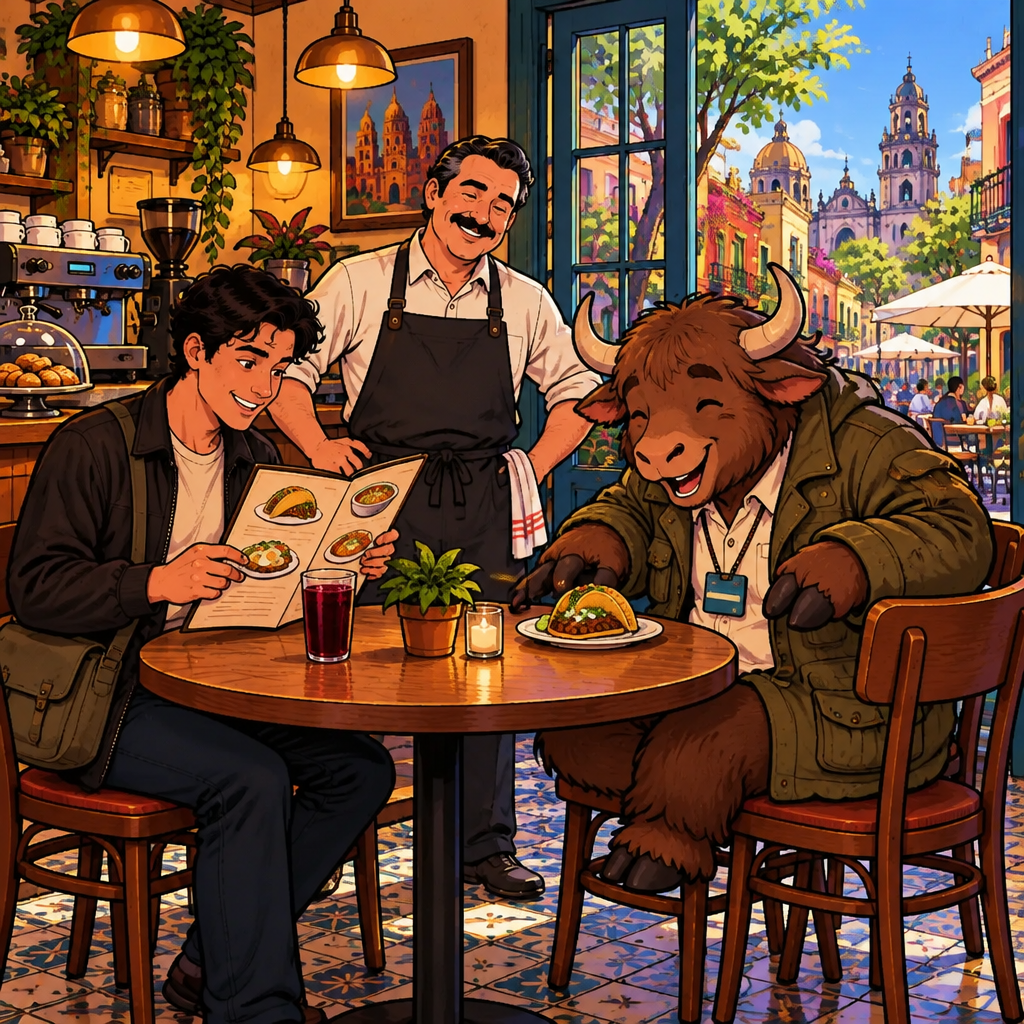
It's lunchtime at Café Laurel. Justin is looking at the menu while Michael waits beside the table.
Yako, a brown yak sitting on two chairs, has already spotted the tacos. His lunch order is smaller than his seating arrangement.
Learn — Make your order
There are six lines to learn. Tap ▶ and say each one aloud.
Fill the blanks with what you want, and keep the rest together.
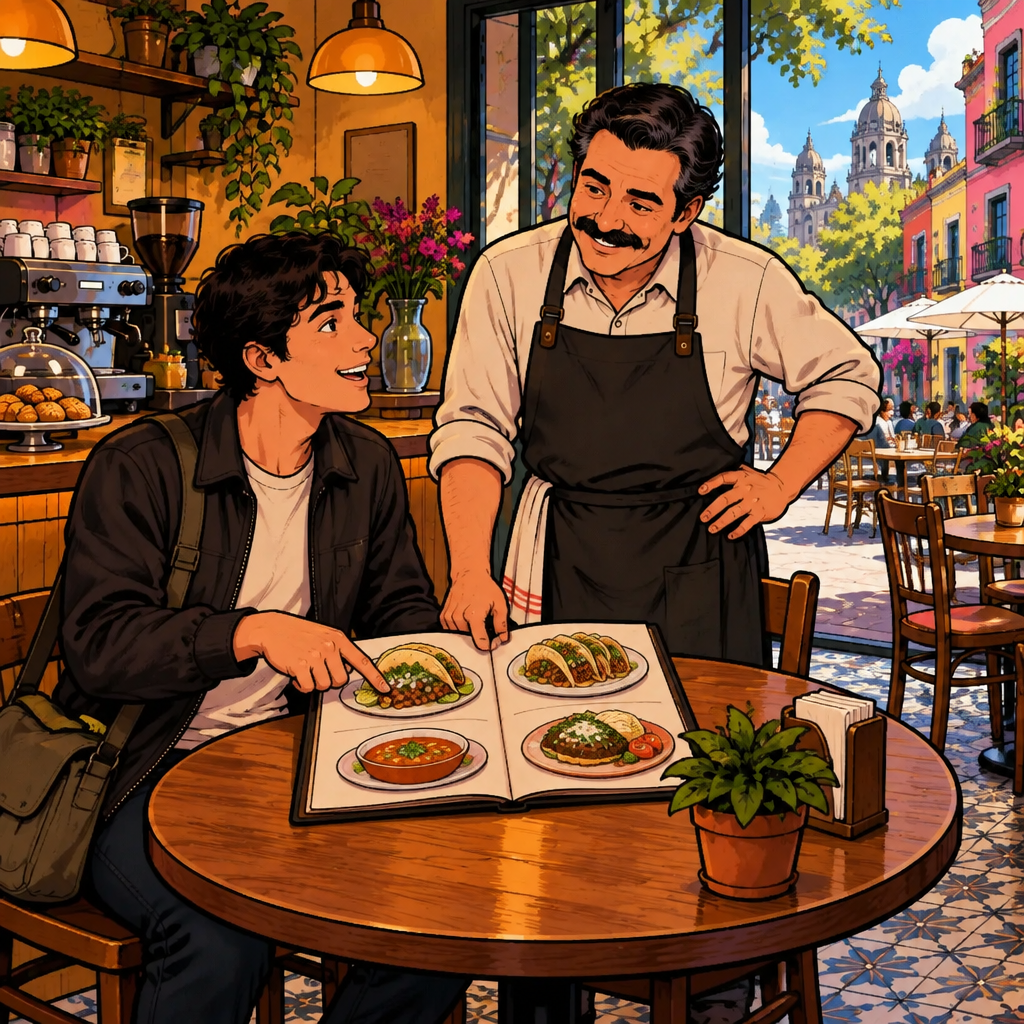
Quisiera pedir ___
I'd like to order ___
When to use it: Use this to begin a polite food or drink order.
Fill the blank with your order, such as un café.

Un ___, por favor
One ___, please
When to use it: Ask for one item, such as a taco or coffee.
This frame fits masculine words, like taco and café.
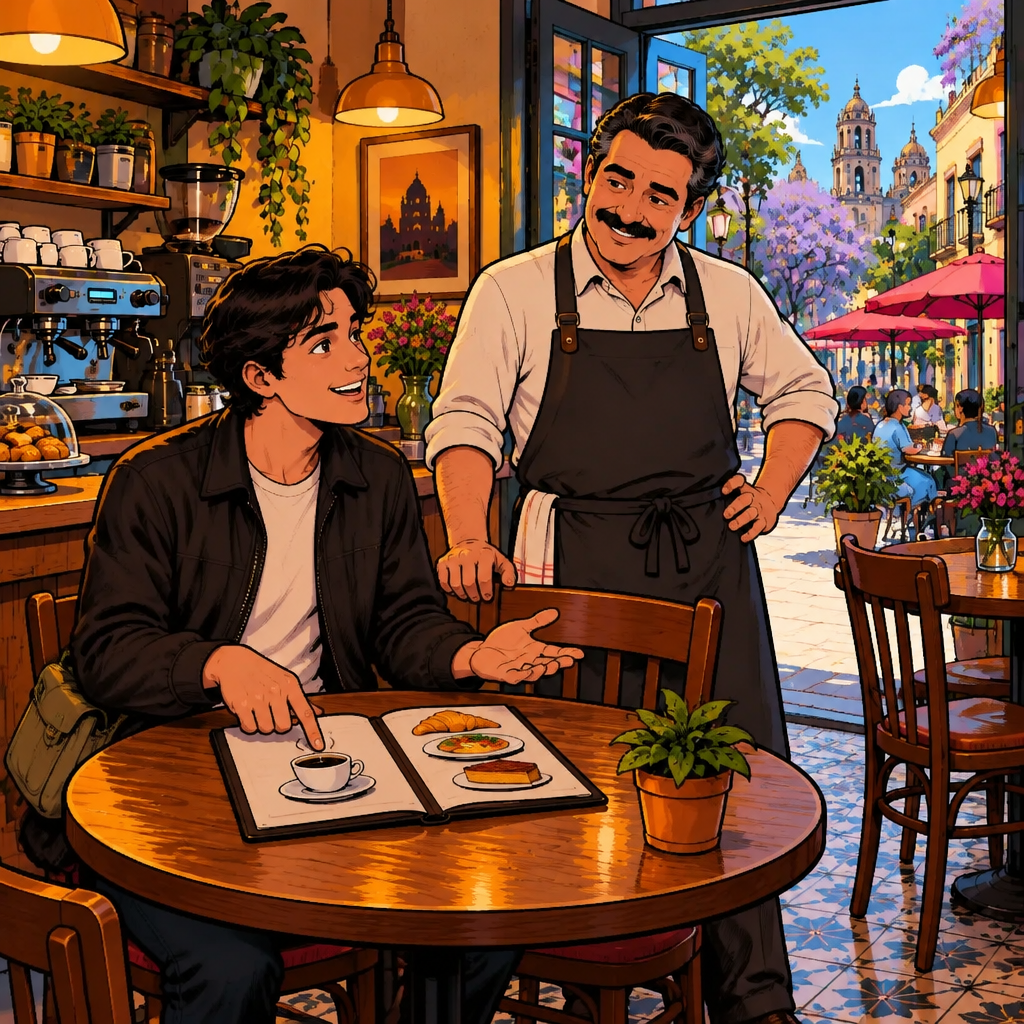
¿Me das ___?
Can I get ___?
When to use it: Ask someone you address casually for something.
Fill the blank with the thing you want.
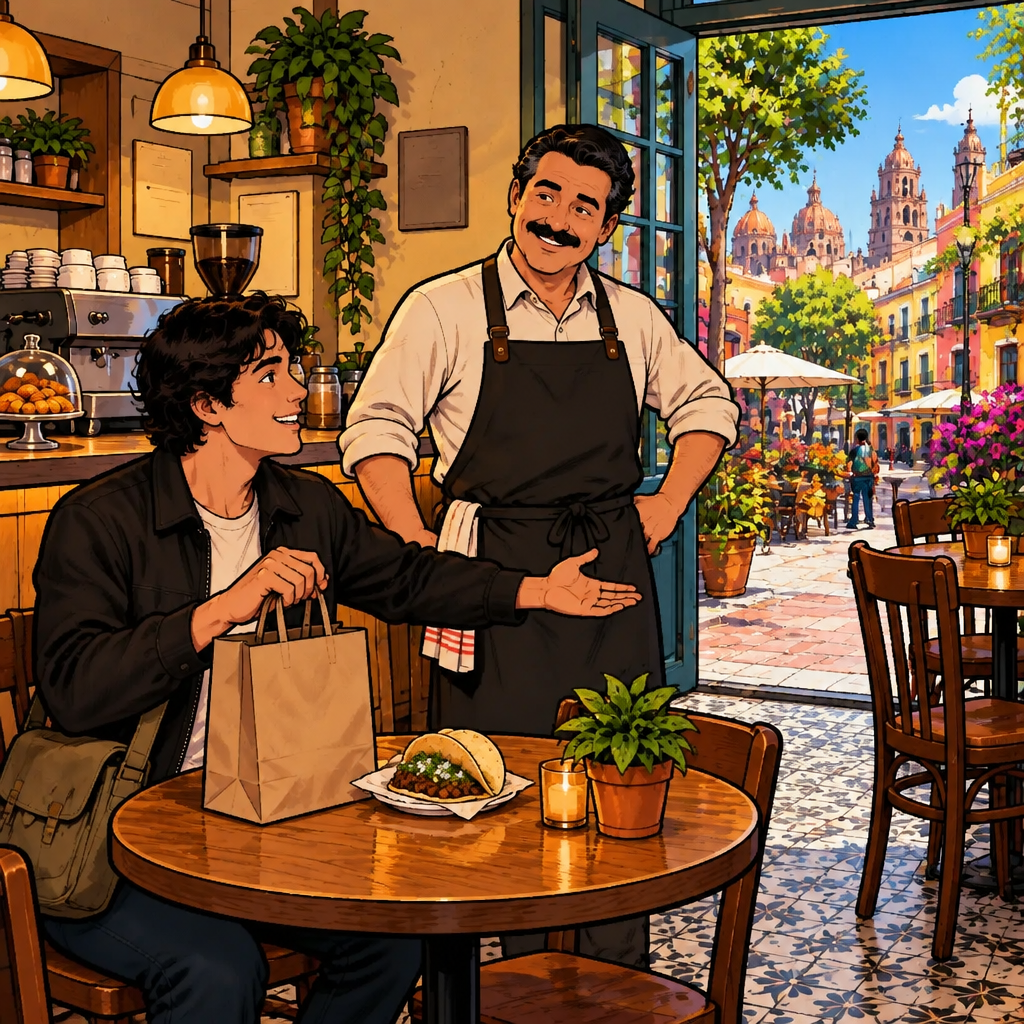
Para llevar, por favor
To go, please
When to use it: Tell the server you'll take your order away.
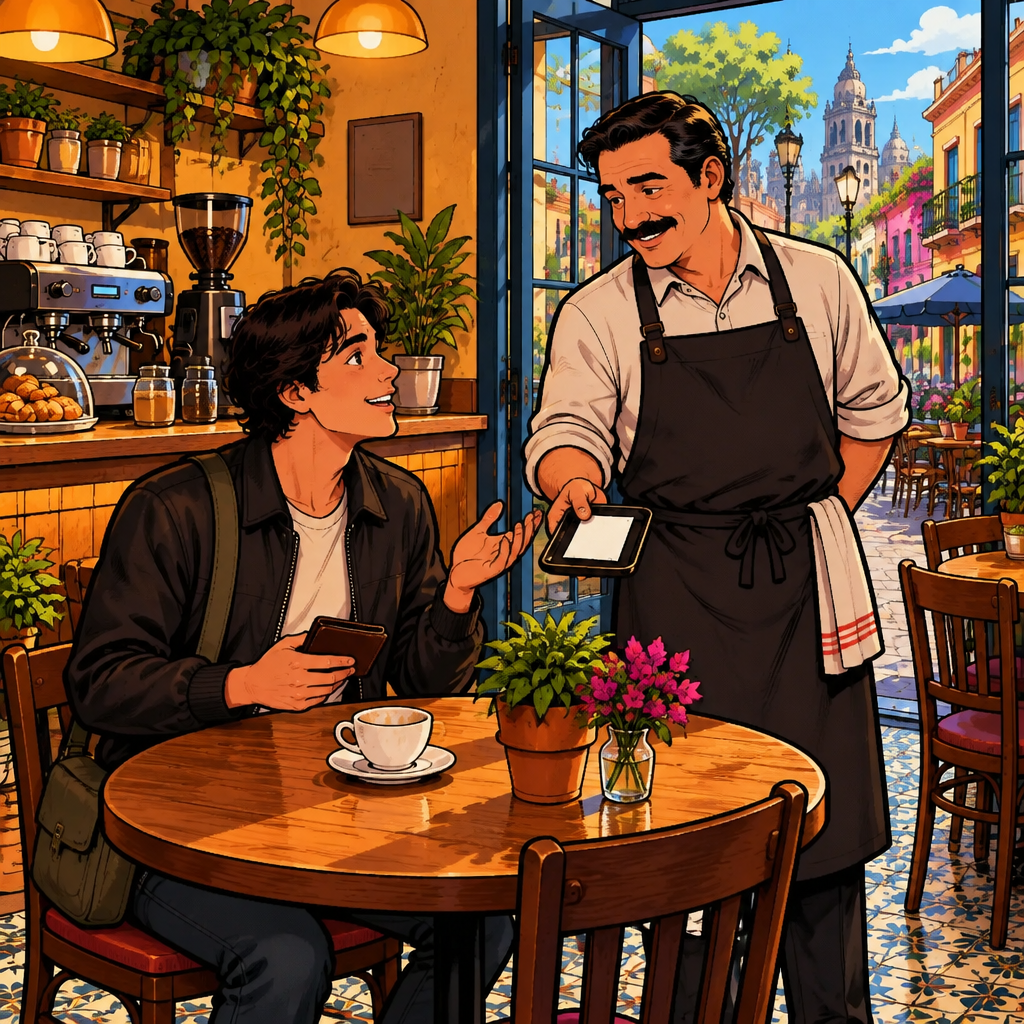
¿Me trae la cuenta, por favor?
Can I get the check?
When to use it: Politely ask a server for the check when you're finished.
This is a more formal way to ask your server.
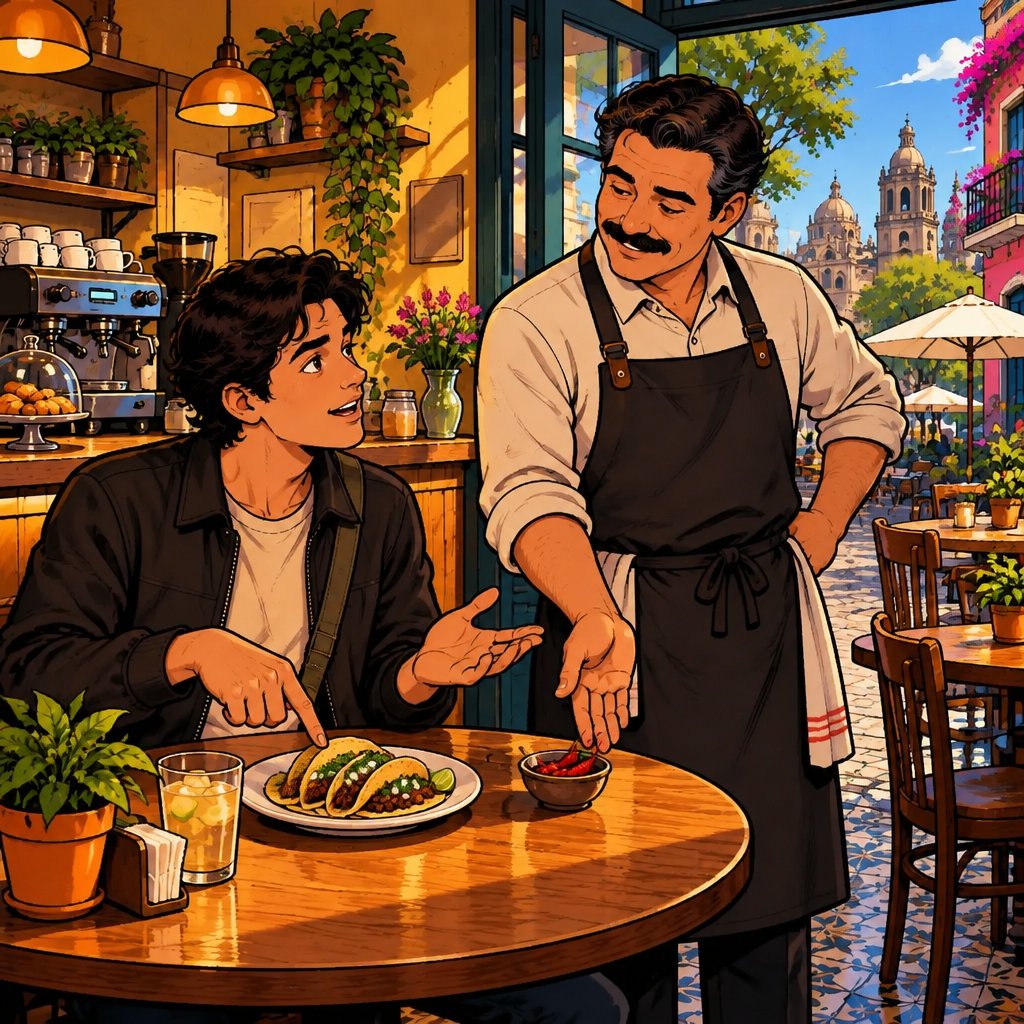
¿Pica?
Is it spicy?
When to use it: Ask whether food or sauce is spicy before trying it.
Say it: Say PEE-kah, with the first part stronger.
Story — One taco, two chairs
Watch Justin check the taco before ordering it for here. Yako chooses a different destination for his lunch.
Follow the highlighted lines, and use Show English when you need help.
 JustinQuisiera pedir un café.I'd like to order a coffee.
 MichaelClaro.Sure.
- Justin¿Me das un taco?Can I get a taco?
- Justin points at the taco on the menu before Michael writes it down.
- Justin¿Pica?Is it spicy?
- MichaelNo.No.
- JustinPara comer aquí.For here.
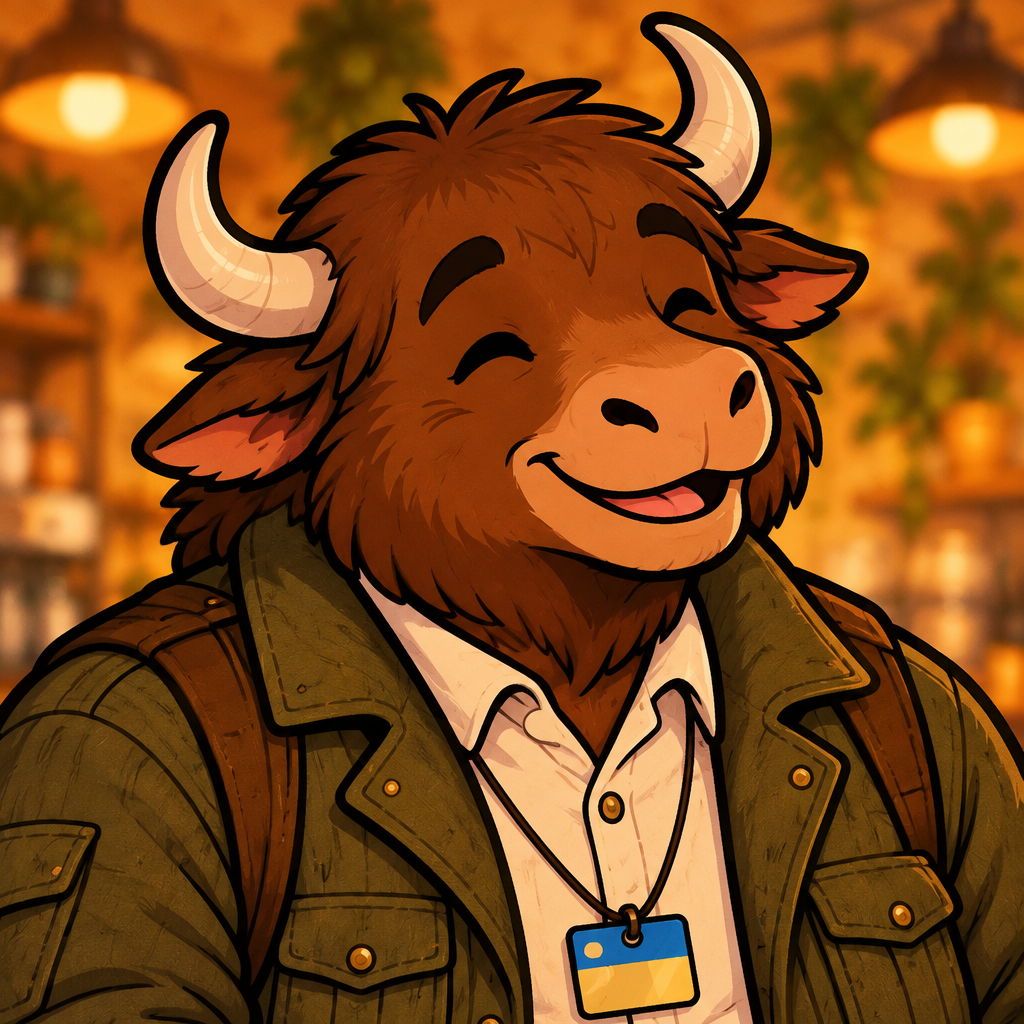 YakoUn taco, por favor.One taco, please.
- YakoPara llevar, por favor.To go, please.
- Michael serves Justin's lunch and hands Yako a bag. Yako keeps both chairs.
- MichaelAquí tienes.Here you go.
- After lunch, Justin's coffee cup is empty. He asks Michael for some water.
- JustinQuisiera agua.I'd like some water.
- MichaelClaro.Sure.
- Michael brings the water. Justin is ready to pay.
- Justin¿Me trae la cuenta, por favor?Can I get the check?
Practice — Choose what to say
Try ten exercises that mix listening, matching, and choosing what to say.
Keep trying or use the skip button. Each explanation helps you understand the answer.
0 of 10 done
What did you hear?
What did you hear?
Match the pairs
Spanish
Quisiera pedir ___Drop the English hereUn ___, por favorDrop the English here¿Me das ___?Drop the English hereEnglish
What do you say?
What do you say?
You're taking your taco home. Tell Michael to pack it to go.
What does it mean?
What does it mean?
Quisiera ___
What do you say?
What do you say?
You'll eat your lunch at the café. Tell Michael it's for here.
True or false?
True or false?
This question asks whether the food is spicy.
What does it mean?
What does it mean?
¿Me das ___?
What do you say?
What do you say?
Your coffee is finished. Politely ask the server to bring the check.
What does it mean?
What does it mean?
Un ___, por favor
Build the line
Build the line
To go, please
,
Tap the words in order.
Say it — Your turn to order
You play Justin, and Michael speaks first. Order coffee for here and a taco to take away.
Tap the microphone to answer or ▶ for the model. Your recording stays on your device.
- Michael¿Qué quieres?What do you want?
- Justin (you)Say you'd like to order a coffee.
Say you'd like to order a coffee.
Quisiera pedir ___
I'd like to order ___
0 of 6 said
Recap — what you can say now
| Spanish | English | Play |
|---|---|---|
| Quisiera pedir ___ | I'd like to order ___ | |
| Un ___, por favor | One ___, please | |
| ¿Me das ___? | Can I get ___? | |
| Para llevar, por favor | To go, please | |
| ¿Me trae la cuenta, por favor? | Can I get the check? | |
| ¿Pica? | Is it spicy? |
Save your progress — it’s free
Keep your place in the course and see which lines you’ve learned.
Want the next lesson in your inbox?
Get the next lesson by email, one a day.
Join the newsletterDaily lesson emails are coming soon. Newsletter subscribers get them first.
Keep practicing with Yak Cards
Keep your ordering lines handy with Yak Cards. A short review helps before your next café visit.
Practice ordering one item and asking if it's spicy before you take a bite.
Open Yak Cards