
New here? This is lesson 13 of a free 238-lesson Spanish course.
Free Spanish CourseLesson 13 of 238
Can I in Spanish
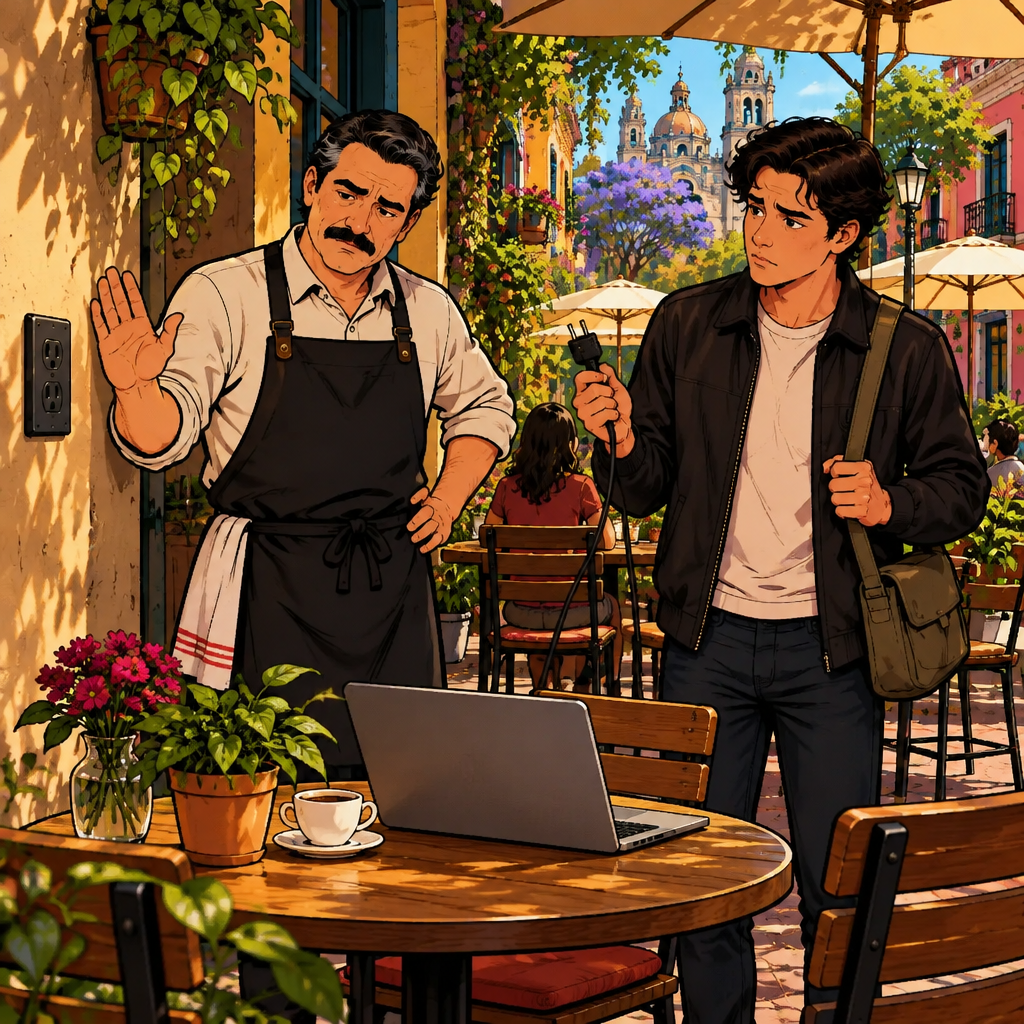
Justin wants the patio table, and he wants a plug for his phone. Michael is the one who can say yes or no.
You'll ask if you can do something, ask if you can use something, and hear yes, go ahead, or no, sorry.
You'll need that in cafés, shops, and a neighbor's doorway. One socket at Café Laurel is dead.
By the end of this lesson
Ask permission to do something or use something, and understand yes or no.
- ¿Puedo ___?Can I ___?
- ¿Está bien si ___?Is it okay if I ___?
- ¿Puedo usar ___?Can I use ___?
- Sí, puedesYes, you can
- Claro, adelanteSure, go ahead
- No, lo sientoNo, sorry
Scene — the patio and the plug
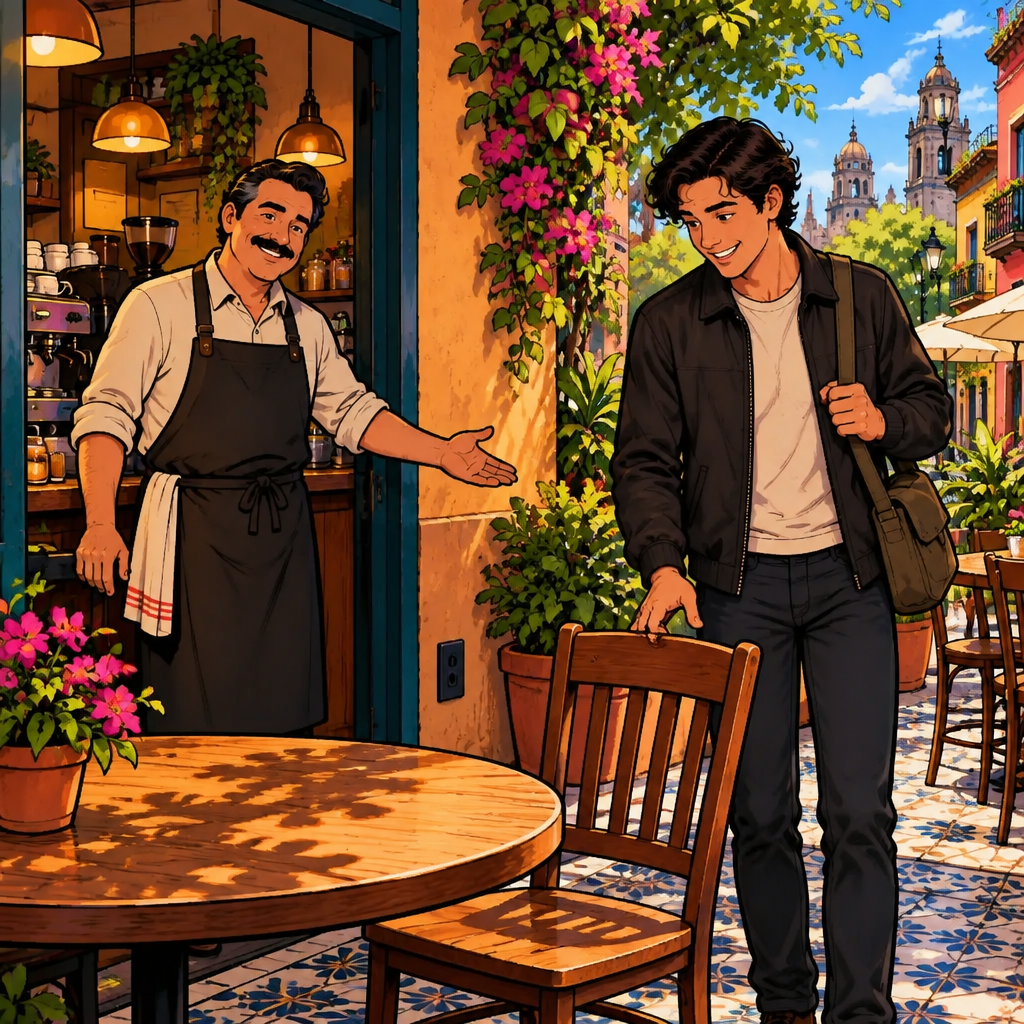
It's late morning at Café Laurel. An empty table sits on the patio, and a plug is on the wall by the door.
Justin has his phone in his hand. Michael is wiping the counter, close enough to ask.
Learn — asking permission
Six lines for asking and for the answer. Three are questions, and three are replies.
Tap ▶ and say each one out loud.

¿Puedo ___?
Can I ___?
When to use it: Ask this before you do something that needs a yes.
Put the action in the blank, like sentarme afuera.
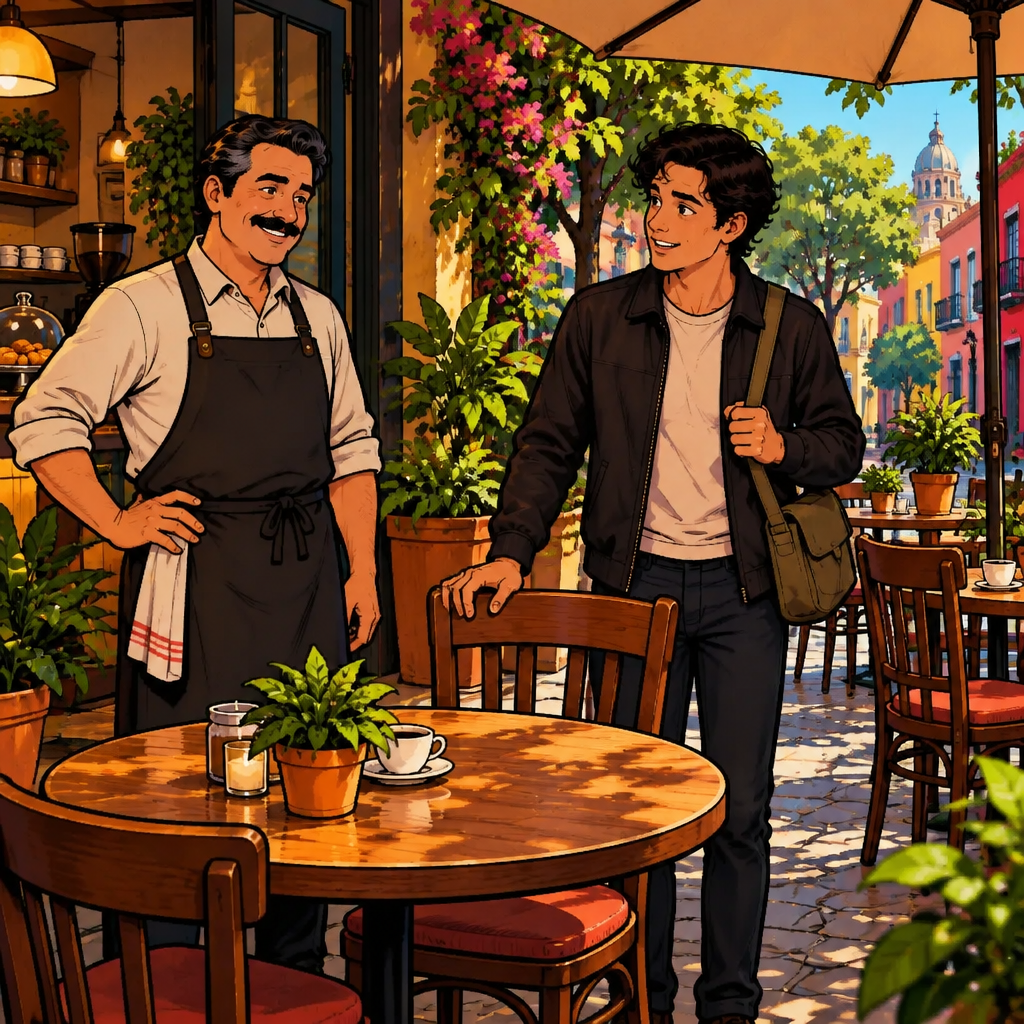
¿Está bien si ___?
Is it okay if I ___?
When to use it: Ask this when you want a softer is it okay.
Si here means if. Learn the whole question as one piece.
Say it: es-TAH byen see
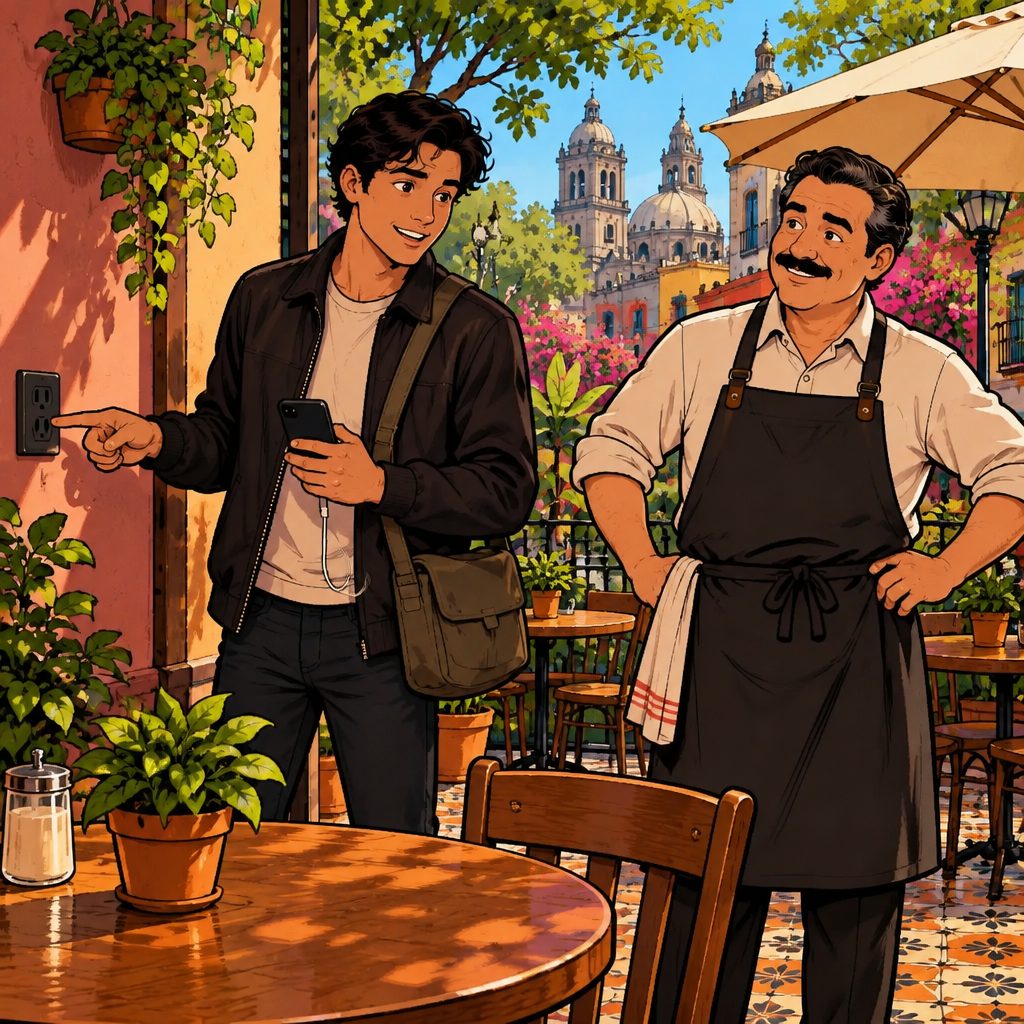
¿Puedo usar ___?
Can I use ___?
When to use it: Ask this before you use something that isn't yours.
Usar means to use. The blank is the thing.
Say it: oo-SAR

Sí, puedes
Yes, you can
When to use it: Say this to give someone a clear yes.
Sí has an accent because it means yes.
Say it: see PWEH-dehs
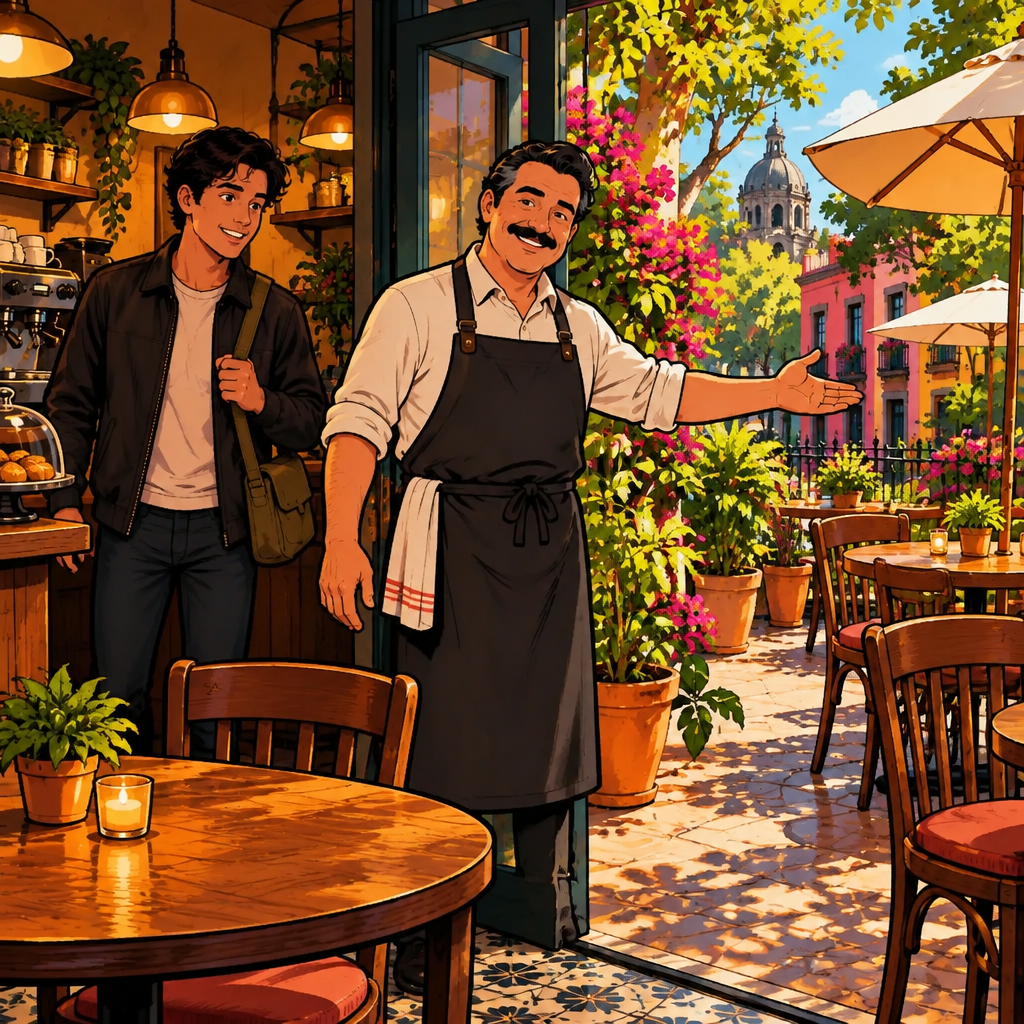
Claro, adelante
Sure, go ahead
When to use it: Say this to wave someone on.
Say it: ah-deh-LAHN-teh
No, lo siento
No, sorry
When to use it: Say this for a polite no.
Lo siento is sorry. The no is the answer.
Story — one yes and one no
Watch which ask gets a yes, and which plug gets a no. The highlighted words are the new lines.
Tap Play the scene to hear it, and turn on Show English if you get stuck.
- Justin looks at the empty patio table.
 Justin¿Está bien?Is that okay?
 MichaelClaro.Sure.
- Justin¿Puedo sentarme afuera?Can I sit outside?
- MichaelClaro, adelante.Sure, go ahead.
- Justin¿Puedo usar el enchufe?Can I use the plug?
- The socket by the door is dead. Justin points at a different one.
- MichaelNo, lo siento. No te preocupes.No, sorry. Don't worry.
- Justin¿Está bien si quiero este?Is it okay if I want this one?
- MichaelSí, puedes.Yes, you can.
Practice — may I
Eleven exercises. You'll listen, match, and pick the line that fits the moment.
If you miss, try again or skip. The reason shows after the right answer.
0 of 11 done
What did you hear?
What did you hear?
Match the pairs
Spanish
¿Puedo usar ___?Drop the English here¿Está bien si ___?Drop the English hereSí, puedesDrop the English hereClaro, adelanteDrop the English hereNo, lo sientoDrop the English hereEnglish
What does it mean?
What does it mean?
Sí, puedes
What do you say?
What do you say?
You want to sit at the patio table. Ask if you can.
Fill the gap
Fill the gap
No, sorry
No, lo ____
What do you say?
What do you say?
You want to use the plug. Ask about using it.
What do you say?
What do you say?
The socket is dead. Michael has to refuse.
Which one doesn’t belong?
Which one doesn’t belong?
What do you say?
What do you say?
You point at the patio table and check if that spot is okay, with the short question.
What do you say?
What do you say?
Michael agrees with the one-word yes from before. He does not say go ahead.
True or false?
True or false?
Claro, adelante means no, sorry.
Say it — ask Michael
You are Justin. You want the patio, then the plug. Michael answers.
Tap the microphone to say your line. Tap ▶ to hear it first. Your recording stays on your device.
- Justin (you)Ask if you can sit outside.
Ask if you can sit outside.
¿Puedo ___?
Can I ___?
0 of 3 said
Recap — what you can say now
| Spanish | English | Play |
|---|---|---|
| ¿Puedo ___? | Can I ___? | |
| ¿Está bien si ___? | Is it okay if I ___? | |
| ¿Puedo usar ___? | Can I use ___? | |
| Sí, puedes | Yes, you can | |
| Claro, adelante | Sure, go ahead | |
| No, lo siento | No, sorry |
Save your progress — it’s free
Keep your place in the course and see which lines you’ve learned.
Want the next lesson in your inbox?
Get the next lesson by email, one a day.
Join the newsletterDaily lesson emails are coming soon. Newsletter subscribers get them first.
Keep practicing with Yak Cards
Want these lines handy? Grab the Yak Cards and flip them anywhere.
Can I, can I use, and is it okay if come up every time you need a yes.
Open Yak Cards